
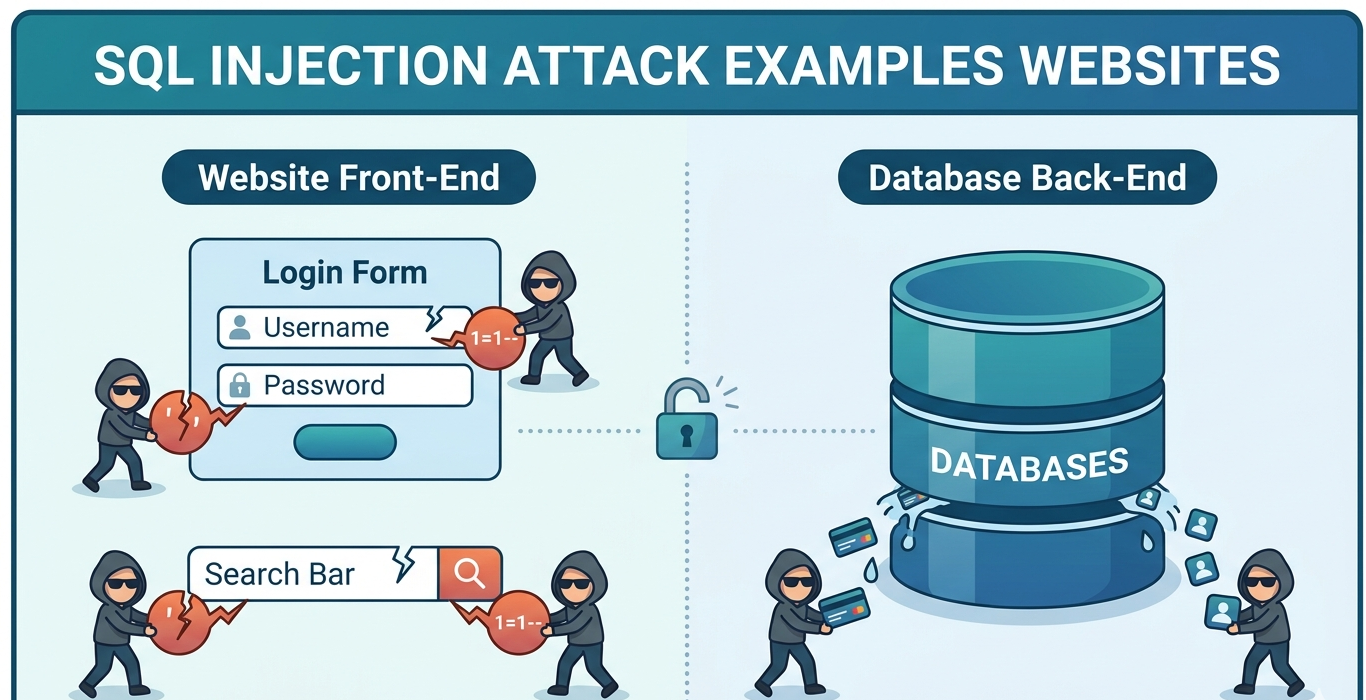

SQL injection attacks often target websites with unsafe database queries and weak input validation. Features like login forms, search bars, and URL parameters can become easy entry points for attackers. From our experience, many businesses only discover vulnerabilities after suspicious activity or database exposure happens.
Understanding SQL injection attack examples websites helps organizations improve secure coding and reduce risks earlier. Keep reading to explore how websites become vulnerable to SQL injection attacks and how businesses strengthen protection.
Key SQL Injection Insights
Studying SQL injection attack examples websites helps organizations identify common risk areas faster.
- Websites with database-driven features are common targets.
- Login pages and forms are frequent attack points.
- Secure coding reduces website exposure significantly.
Login Form SQL Injection Attacks
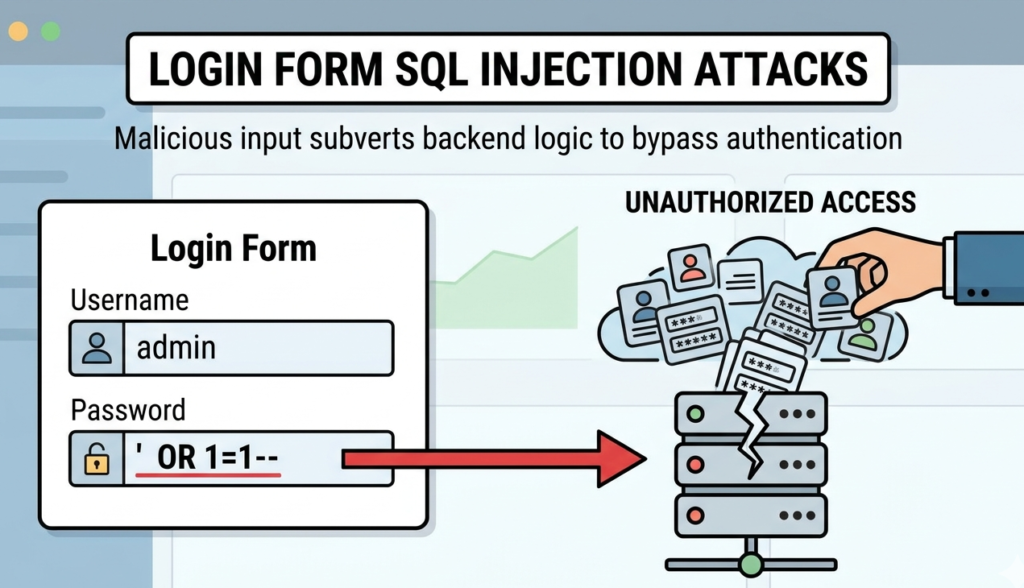
Login pages are frequent targets because the causes of SQL injection attacks often stem from processing credentials through unsafe database queries.
“about 75% of all attacks against Web servers target Web-based applications,” – Media.Neliti
Attackers often target:
- Admin logins
- Customer accounts
- Employee portals
- CMS dashboards
Common risks include:
- Authentication bypass
- Unauthorized access
- Privilege escalation
We often see older websites use dynamic login queries, making them easier targets for attackers.
Search Bar Injection Examples
Search bars often send user input directly into backend databases. Without proper validation, attackers can manipulate these queries.
Common vulnerable systems include:
- Product search pages
- Blog search tools
- Internal search portals
- Knowledge bases
Potential impacts:
- Data extraction
- Database enumeration
- Sensitive record exposure
Many organizations overlook search functionality during security testing, increasing risk.
URL Parameter SQL Injection
Credits: Cyb3rMaddy
Attackers frequently test website URL parameters because many applications pass URL values directly into SQL queries.
Example vulnerable areas include:
- Product IDs
- User profile pages
- Order tracking pages
- Report filters
| Website Feature | Possible Risk |
| Product Pages | Data exposure |
| User Profiles | Unauthorized access |
| Order Pages | Record manipulation |
| Reports | Database extraction |
From our experience, URL-based vulnerabilities often remain hidden longer.
Contact and Registration Forms
Forms collecting user data can become SQL injection entry points when backend validation is weak.
Common targets include:
- Contact forms
- Registration pages
- Feedback forms
- Newsletter signups
Potential risks:
- Stored malicious input
- Database manipulation
- User record exposure
Strong validation helps reduce these risks significantly.
E-commerce Website Examples
E-commerce websites often process large amounts of user input, making them attractive SQL injection targets.
“83% of all successful data breach attacks are based on SQL injection,” – European Commission
Common attack surfaces include:
- Checkout pages
- Customer accounts
- Payment forms
- Product searches
Attack impacts may include:
- Payment data exposure
- Customer record theft
- Order manipulation
We often recommend stronger testing for customer-facing e-commerce systems.
Content Management System Risks
CMS platforms can become vulnerable, but understanding SQL injection helps admins secure plugins, themes, and custom database queries.
Common CMS risks include:
- Admin panel exposure
- Plugin vulnerabilities
- Custom form weaknesses
- Legacy extensions
Organizations using older CMS versions often face higher SQL injection exposure.
Regular updates improve resilience significantly.
API-Based SQL Injection
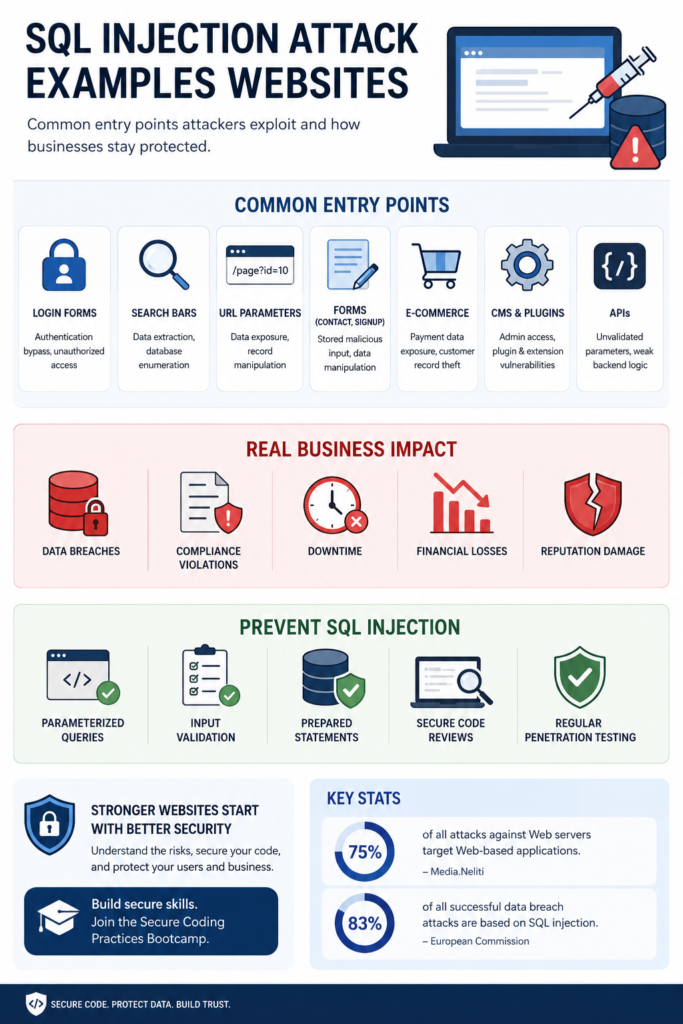
Modern websites rely heavily on APIs, which can also contain SQL injection vulnerabilities.
Common API risks include:
- Unvalidated parameters
- Weak backend logic
- Direct database queries
- Missing input filtering
API attacks often go unnoticed because they do not always affect visible website pages directly.
Continuous API security testing is critical.
Real Business Impact
SQL injection attacks can create serious operational and financial consequences.
Common impacts include:
- Data breaches
- Compliance violations
- Downtime
- Reputation damage
- Financial losses
From our experience, even small website vulnerabilities can lead to major business disruptions if ignored.
Preventing Website SQL Injection
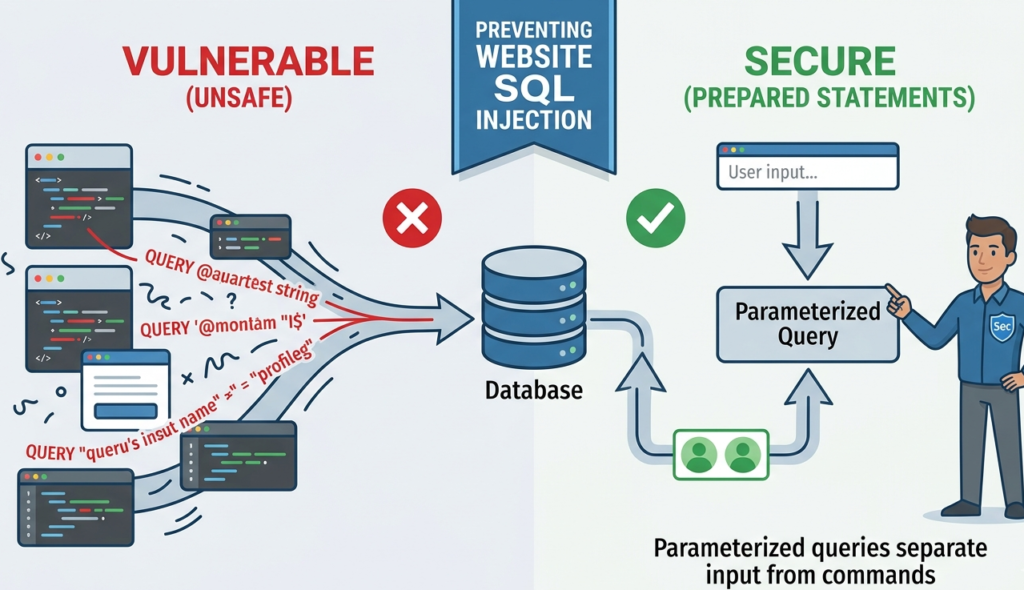
Organizations reduce website SQL injection risks through stronger secure development practices.
Important protections include:
- Preventing SQL injection through parameterized queries
- Prepared statements
- Input validation
- Secure coding reviews
- Regular penetration testing
Businesses that secure websites early usually reduce remediation costs significantly.
FAQ
What websites are most vulnerable to SQL injection?
Websites with login forms, search bars, APIs, and database-driven content are common targets.
Can small websites be attacked?
Yes. Attackers often scan both small and large websites for easy SQL injection opportunities.
Are APIs vulnerable to SQL injection?
Yes. APIs using unsafe backend queries can be exploited through manipulated requests.
How do businesses prevent website SQL injection?
Businesses improve protection through secure coding, validation, testing, and parameterized queries.
Stronger Websites Start With Better Database Security
SQL injection attack examples show how easily attackers exploit insecure queries hidden inside everyday website features. Organizations that understand these risks improve secure coding and input validation faster. Proactive security creates stronger resilience than reactive response, protecting customer trust and reducing operational risks.
To build these essential defenses, join the Secure Coding Practices Bootcamp. This hands-on, two-day course equips developers with practical skills in OWASP Top 10, encryption, and safe dependency use.
References
- https://media.neliti.com/media/publications/257981-detection-of-sql-injection-and-xss-vulne-3e81bb03.pdf
- https://publications.jrc.ec.europa.eu/repository/bitstream/JRC78087/lbna25251enn.pdf