
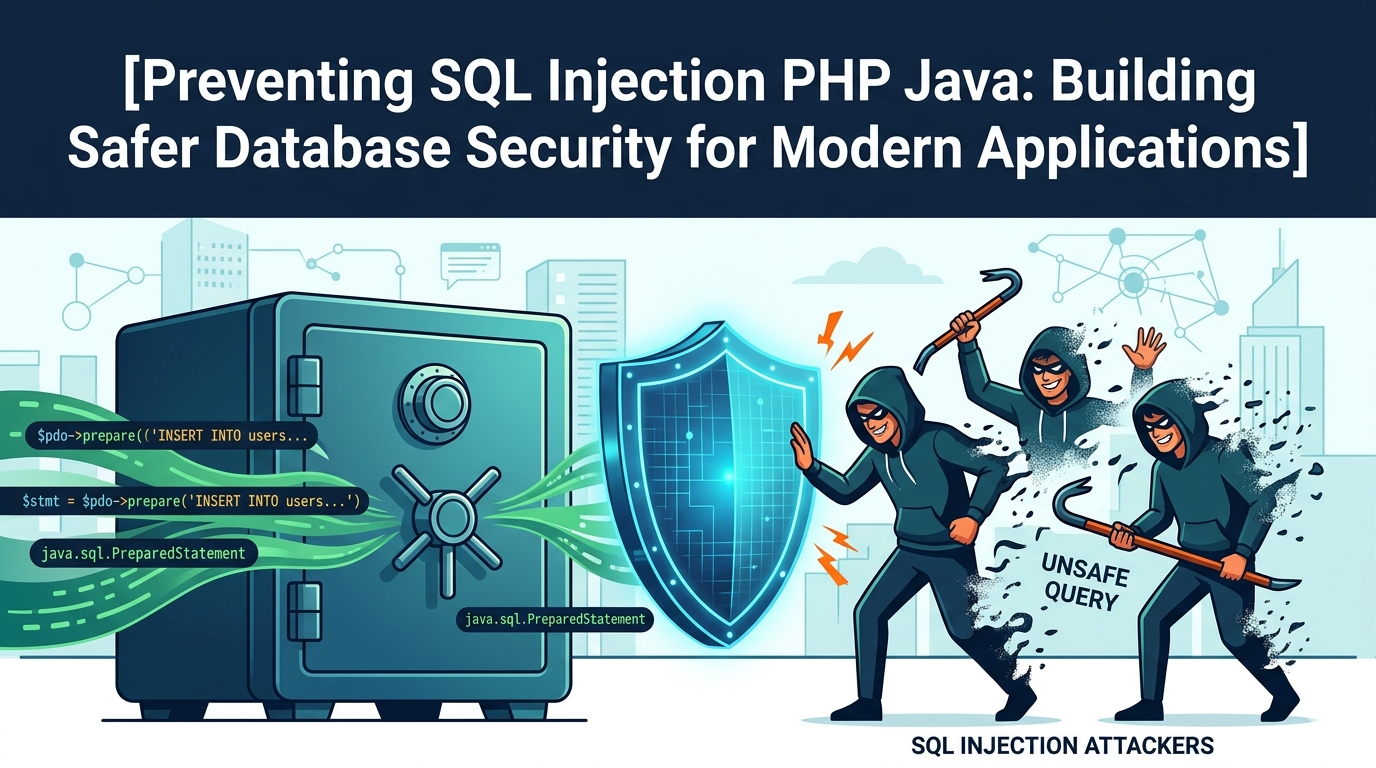

Preventing SQL injection PHP Java is important for businesses that manage websites, applications, and databases. SQL injection attacks often happen because of unsafe queries and weak input validation.
From our experience, organizations improve security faster when developers use prepared statements, parameterized queries, and secure coding practices early in development. Strong prevention methods help reduce database risks and protect sensitive information. Keep reading.
Key SQL Injection Prevention Insights
Preventing SQL injection PHP Java starts with securing how applications handle user input and database queries.
- Prepared statements greatly reduce SQL injection risks.
- Input validation strengthens application security.
- Secure coding improves long-term database protection.
Understanding SQL Injection Risks in PHP and Java
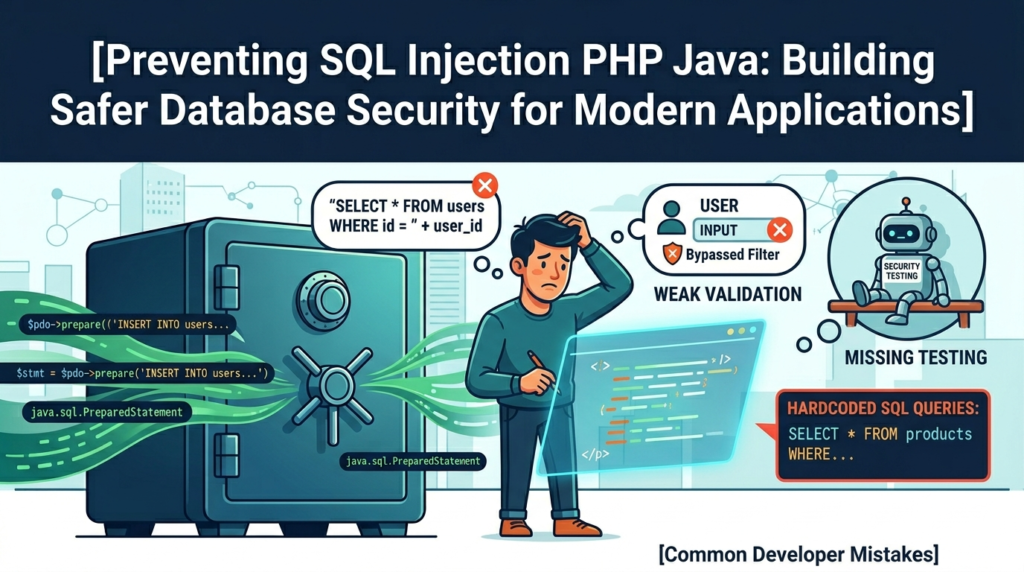
SQL injection attacks happen when applications allow unsafe user input inside database queries. Attackers manipulate queries to access or modify sensitive information.
Common SQL injection targets include:
- Login forms
- Search bars
- Customer portals
- APIs
- Admin dashboards
We often see vulnerabilities appear when applications build dynamic SQL queries through string concatenation instead of secure parameter handling. Applications connected to sensitive customer data usually face higher operational risks during SQL injection incidents.
Using Prepared Statements in PHP
Prepared statements are one of the strongest methods for preventing SQL injection PHP Java vulnerabilities. They separate SQL commands from user input safely.
“the SQL code structure should be distinctly separated from the user inputs” – Masri & Sleiman, 2015
Common PHP approaches include:
- PDO prepared statements
- MySQLi prepared queries
- Parameter binding
- Secure query execution
Benefits include:
- Reduced injection opportunities
- Safer database interactions
- Improved query consistency
- Better application security
From our experience, prepared statements significantly reduce risks compared to dynamically generated SQL queries.
Using PreparedStatement in Java
Credits: LinkedIn Learning
Java applications commonly prevent SQL injection through PreparedStatement APIs that safely handle query parameters.
Important security practices include:
- Parameterized SQL execution
- Strict data validation
- Safe query construction
- Controlled database permissions
| Query Method | Risk Level |
| Dynamic SQL Queries | High risk |
| String Concatenation | Very high risk |
| PreparedStatement API | Low risk |
| Parameterized Queries | Strong protection |
Organizations that standardize prepared queries usually improve database security consistency significantly.
Input Validation Best Practices
Input validation helps prevent malicious characters and unexpected input from reaching database systems.
Strong validation practices include:
- Character filtering
- Length restrictions
- Data type enforcement
- Server-side validation
- Input sanitization
We often recommend validating all user input before processing database interactions.
Frontend validation alone is not enough because attackers can bypass browser controls easily.
Parameterized Queries Prevent SQL Injection
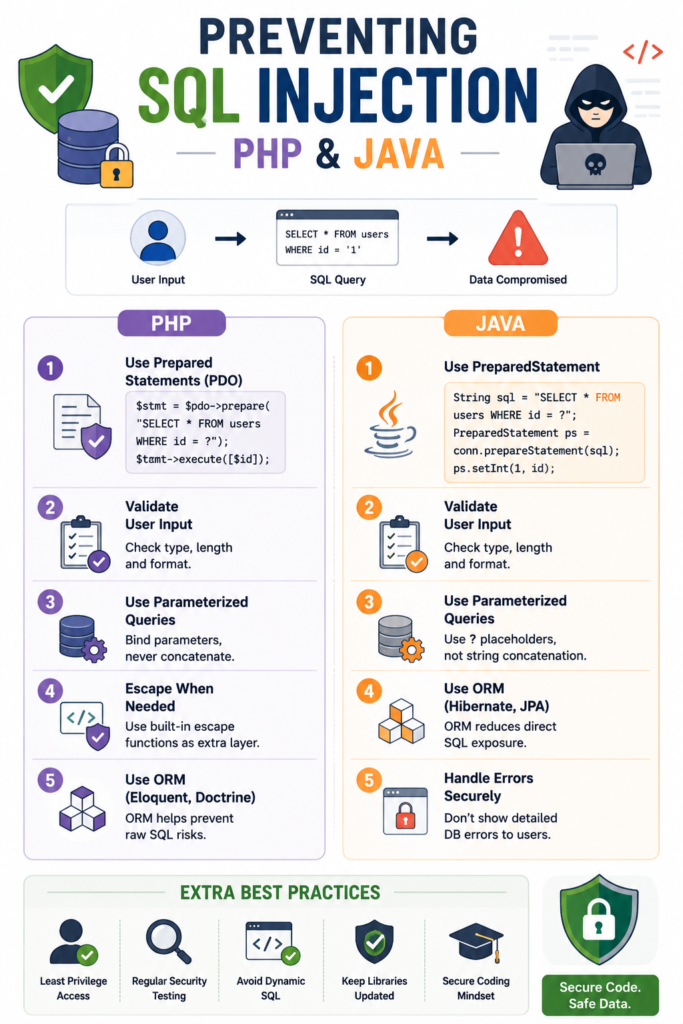
Parameterized queries are critical for preventing SQL injection PHP Java attacks because they isolate user input from SQL logic.
Key advantages include:
- Safer query execution
- Better database integrity
- Reduced code complexity
- Improved security consistency
Applications that rely on parameterized queries usually experience fewer injection-related vulnerabilities across development lifecycles.
From our perspective, parameterized queries should become a default development standard.
ORM Protection in PHP and Java Applications
ORM frameworks help abstract database interactions, but understanding SQL injection is still necessary to ensure custom queries don’t introduce vulnerabilities.
Common ORM benefits include:
- Automatic parameter binding
- Query abstraction
- Reduced raw SQL exposure
- Consistent database handling
Popular frameworks in PHP and Java environments often improve development security when configured properly.
However, insecure custom queries can still introduce SQL injection vulnerabilities even with ORM protection.
Escaping User Input Correctly
Escaping user input helps applications process special characters safely. However, escaping alone should not replace prepared statements.
“parameterized queries are widely considered to be the most secure method for preventing SQL injection attacks” – Abdullayev & Chauhan, 2023
Important escaping considerations include:
- Database-specific syntax
- Proper character encoding
- Query context awareness
- Special character handling
We often see vulnerabilities appear when applications build dynamic SQL queries. Reviewing sql injection attack examples on websites illustrates how string concatenation leads to serious operational risks.
Escaping works best as an additional security layer.
Limiting Database Permissions
Restricting database privileges helps reduce operational damage if SQL injection exploitation occurs.
Important permission strategies include:
- Least-privilege access
- Separate application accounts
- Restricted administrative access
- Limited query permissions
Applications running with excessive database permissions usually create larger attack surfaces during security incidents. Strong access controls improve resilience significantly.
Security Testing for SQL Injection
Continuous testing helps organizations identify SQL injection vulnerabilities before attackers exploit them.
Common testing methods include:
- Vulnerability scanning
- Penetration testing
- Manual code reviews
- Input fuzzing
- Secure development testing
We often recommend combining automated scanning with manual validation for stronger coverage. Continuous testing also improves long-term visibility across development environments.
Common Developer Mistakes
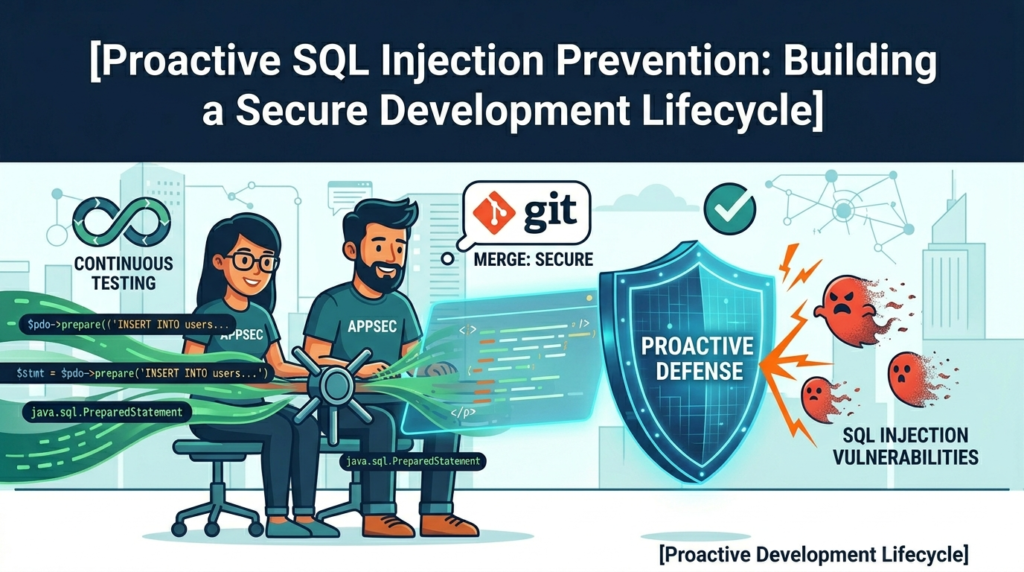
Many vulnerabilities appear because developers don’t recognize the causes of SQL injection attacks, such as using unsafe string concatenation or ignoring prepared statements.
Common mistakes include:
- Unsafe string concatenation
- Weak validation logic
- Hardcoded SQL queries
- Missing security testing
- Ignoring prepared statements
Organizations that prioritize secure coding education usually improve resilience faster. Consistent developer awareness helps reduce repeated security gaps across projects.
FAQ
What is preventing SQL injection PHP Java?
It refers to securing PHP and Java applications against SQL injection attacks using prepared statements, validation, and secure coding practices.
Why are prepared statements important?
Prepared statements separate user input from SQL commands, reducing injection opportunities significantly.
Can ORM frameworks fully prevent SQL injection?
ORM frameworks improve protection, but insecure custom queries may still create vulnerabilities.
How do organizations test SQL injection vulnerabilities?
Organizations use vulnerability scanners, penetration testing, secure code reviews, and manual testing methods.
Stronger Database Security Starts With Secure Development
Stronger database security begins during development. By prioritizing prepared statements and parameterized queries in PHP and Java, organizations neutralize SQL injection risks before deployment. Proactive secure coding and continuous testing build long-term resilience, far outweighing reactive fixes.
To master these skills, join the Secure Coding Practices Bootcamp. This hands-on, two-day course covers the OWASP Top 10 and input validation through practical labs, equipping developers to ship safer code immediately. Join the Bootcamp.
References
- https://onlinelibrary.wiley.com/doi/epdf/10.1002/sec.1199
- https://doi.org/10.58496/mjcs/2023/006