
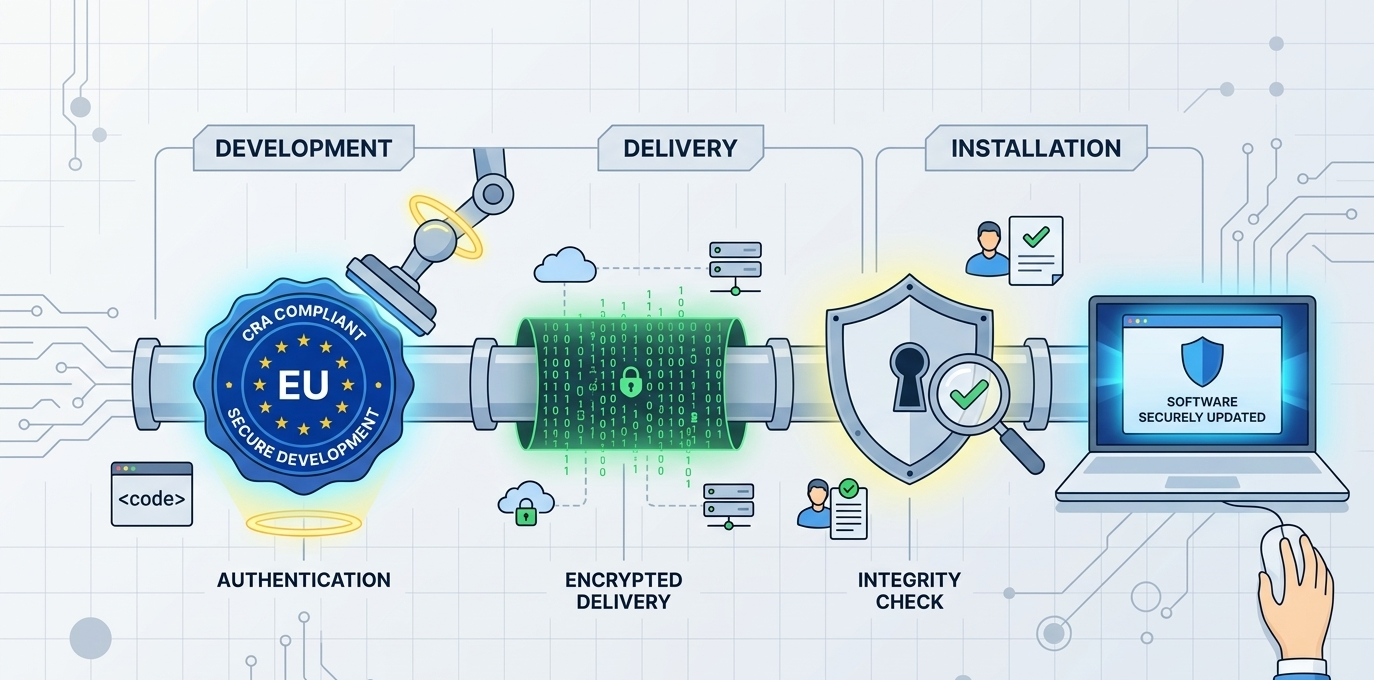

Secure software update obligations EU are becoming a central part of modern compliance. From our experience, many teams focus heavily on building features but overlook how risky updates can be if not handled securely.
EU regulations now expect organizations to protect every stage of the update process, from development to delivery. When done right, updates strengthen security and trust. When ignored, they create serious vulnerabilities. Keep reading.
Key Insights on Secure Software Update Obligations EU
To better understand secure software update obligations EU, here are key insights based on what we’ve seen in real-world implementation:
- Secure software update obligations EU require authentication, integrity checks, and encrypted delivery
- Timely patching and user transparency are essential to meet secure software update obligations EU
- Embedding secure coding early simplifies compliance with secure software update obligations EU
Why Secure Updates Matter More Than Ever
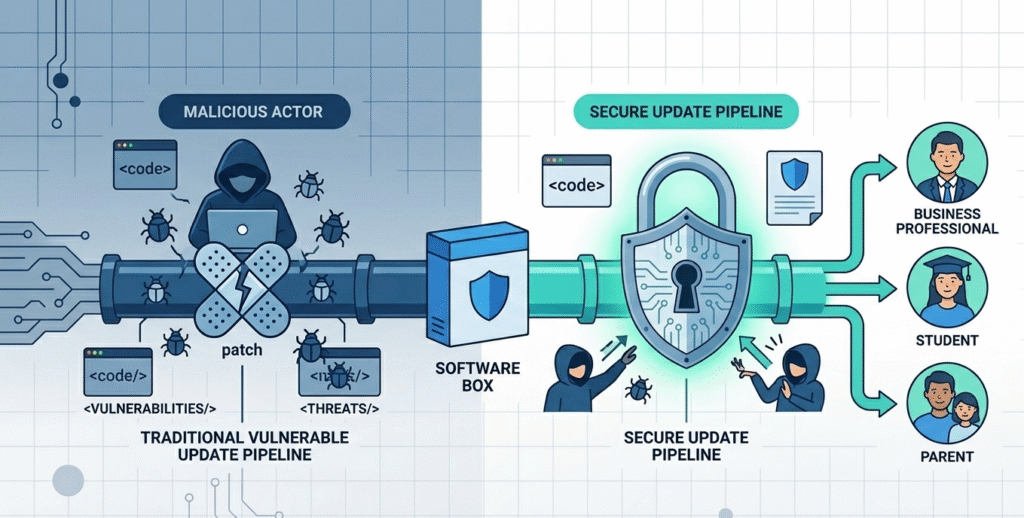
We’ve seen that insecure updates are one of the easiest entry points for attackers. If an update is compromised, it can impact all users at once.
“Major regulations, such as the EU’s Cyber Resilience Act, proactively embed resilience as a fundamental mode of operation. This approach structurally reallocates digital risks from users to manufacturers, reframing software security from a matter of compliance to one of social fairness and institutional trust.” – MDPI
Key risks include:
- Tampered update packages
- Unauthorized delivery channels
- Missing integrity verification
- Weak version control
- No rollback mechanisms
Teams that align early with a secure development lifecycle are often better prepared to manage these risks effectively and maintain consistency across every release.
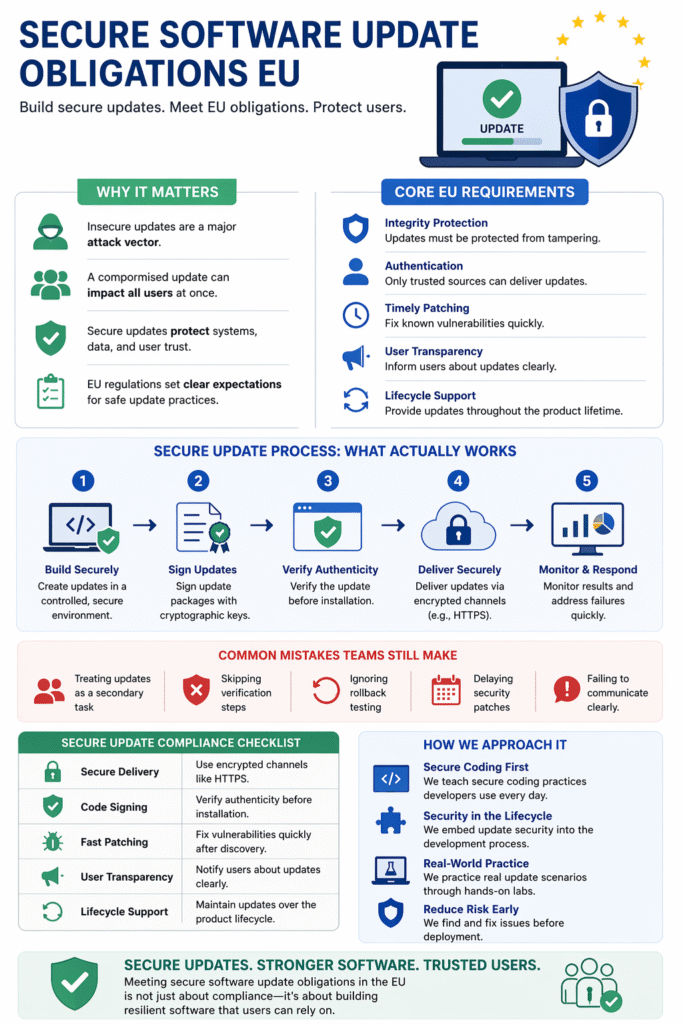
Core EU Requirements for Secure Software Updates
Credits: Somco Software
Secure software update obligations EU require organizations to treat updates as a critical security function.
“The policy requires software that are ‘reasonably expected’ to have automatic updates should roll out security updates automatically by default while allowing users to opt out. When feasible, security updates should be separated from feature updates. Companies would have to notify EU cybersecurity agency ENISA of any incidents within 24 hours of becoming aware of them, and take measures to resolve them.” – Wikipedia
This typically includes:
- Integrity protection to prevent tampering
- Authentication of update sources
- Timely vulnerability patching
- Clear user communication
- Lifecycle update support
These are not optional steps but expected standards for compliance across the EU.
Secure Update Process: What Actually Works
From our experience, a practical approach to secure software update obligations EU includes:
- Building updates in a secure environment
- Signing update packages with cryptographic keys
- Verifying updates before installation
- Delivering updates through encrypted channels
- Monitoring update performance and failures
Standardizing these steps helps organizations bridge the gap between technical execution and software risk management, ensuring that every patch is as resilient as the initial build.
Common Mistakes Teams Still Make
Even experienced teams can struggle with secure software update obligations EU:
- Treating updates as secondary tasks
- Skipping verification steps
- Ignoring rollback testing
- Delaying security patches
- Failing to communicate updates clearly
We’ve learned that update security requires coordination across development and operations to ensure that technical risk assessment requirements are met before any code reaches the end user.
Simple Compliance Checklist
| Requirement | Practical Implementation |
| Secure delivery | Use encrypted channels (HTTPS) |
| Code signing | Verify authenticity before installation |
| Fast patching | Fix vulnerabilities quickly |
| User transparency | Inform users about updates clearly |
| Lifecycle support | Maintain updates throughout product lifespan |
How We Approach It at Secure Coding Practices
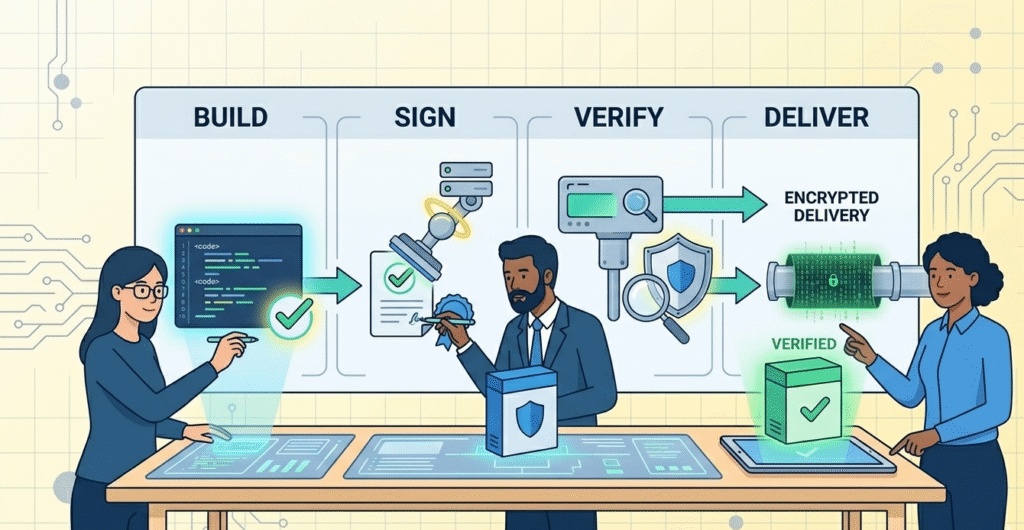
We approach secure software update obligations EU by integrating security from the beginning. Instead of reacting to issues later, we focus on prevention.
Our approach includes:
- Teaching secure coding fundamentals
- Embedding update security into development workflows
- Practicing real-world update scenarios
- Reducing risks before deployment
This helps teams stay compliant while building more resilient software.
FAQ
What are secure software update obligations EU for small development teams?
Secure software update obligations EU apply to teams of all sizes, including small ones. In simple terms, teams must ensure updates are delivered securely, verified before installation, and fix known vulnerabilities quickly.
Even small teams should use basic protections like code signing and encrypted delivery to meet secure software update obligations EU without adding too much complexity.
How often should updates be released under secure software update obligations EU?
There is no fixed schedule, but secure software update obligations EU expect timely updates when vulnerabilities are found. From what we’ve seen, updates should be released as soon as risks are identified and tested. Delaying patches can increase exposure.
Regular update cycles combined with emergency fixes help teams stay aligned with secure software update obligations EU.
Do secure software update obligations EU require user notification every time?
Secure software update obligations EU encourage transparency, but not every update needs detailed user alerts. Critical updates, especially security patches, should be clearly communicated.
For smaller updates, simple notifications are often enough. The goal is to ensure users understand important changes without overwhelming them while still meeting secure software update obligations EU expectations.
What tools help meet secure software update obligations EU effectively?
To meet secure software update obligations EU, teams typically use tools for code signing, version control, and secure delivery pipelines. These tools help ensure updates are authentic and protected from tampering.
However, tools alone are not enough. Proper processes and consistent practices are equally important to fully comply with secure software update obligations EU.
Secure Software Update Obligations EU: Final Thoughts
Secure software update obligations EU require consistent, secure practices from development to deployment. From our experience, teams that invest early in secure coding handle updates more confidently and stay aligned with compliance requirements. To build these skills, explore the Secure Coding Practices Bootcamp.
It offers hands-on training, real-world labs, and practical guidance to help developers implement secure updates, reduce risks, and ship safer software from day one.
References
- https://www.mdpi.com/2076-0760/14/1/15
- https://en.wikipedia.org/wiki/Cyber_Resilience_Act