


Insecure components security misconfiguration is one of the fastest ways attackers turn small weaknesses into major breaches. The real threat is insecure components and security misconfiguration working together. An exposed admin panel is the open door. That outdated library with a critical CVE? It’s the crowbar. Attackers don’t see isolated risks, they see a complete path through your defenses. Ignore the noise of a thousand alerts.
You need to find and close these specific, connected gaps. Secure Coding Practices maps these attack paths in live systems. Keep reading to see the method.
Risk Reduction in One Minute
Together, these practices reduce the risk from insecure components and security misconfiguration while keeping production stable
- Prioritize exploitable vulnerabilities using real-world data, not just high CVSS scores.
- Automate configuration baselines and dependency scanning to prevent human error from creating gaps.
- Build a risk-acceptance framework that allows your team to move fast without ignoring critical security flaws.
Where Is the Line in the Sand Between Two Risks?
The line between these two risks shows up when you have to clean up the mess. A security misconfiguration is a mistake we made. We left the debug endpoint active, set the S3 bucket to public, or shipped code with verbose error messages. The fix is often in a config file or cloud console. It’s about the environment we built.
An insecure component is a flaw we inherited. It’s in the Log4j version we used, the old jQuery library, or an outdated framework. The vulnerability existed before we wrote our logic. Fixing it means patching, updating, or replacing a dependency.
Think of it like a house. A misconfiguration is installing a good lock but leaving a window open. A component flaw is the lock itself being made of weak metal. An attacker will use whichever is easier.
- Security Misconfiguration: Our own incorrect setup or deployment.
- Insecure Components: Known flaws in third-party software we use.
The overlap is where trouble happens. An old, vulnerable library running in a poorly configured environment gives an attacker everything they need.
Why Do Attackers Love This Particular Combo?
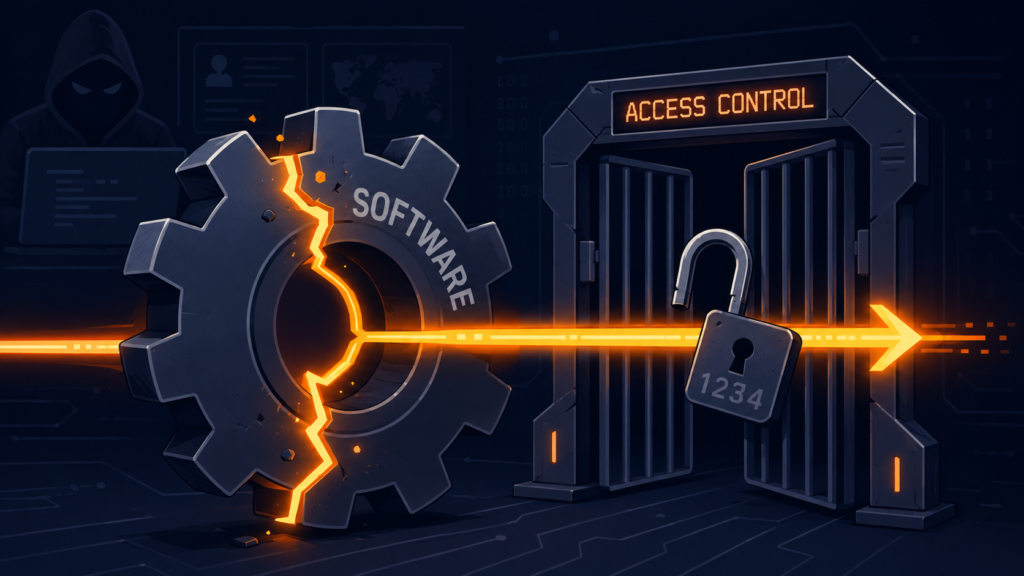
Attackers love this combination for pure efficiency. Why waste a complex exploit when “admin/admin” works? We’ve watched it happen.
First, a scan finds an old WordPress plugin with a public exploit. That’s the insecure component. An attacker uses it to drop a shell on the server. Once they’re in, they find the real prize: a misconfiguration. The service account running the app has sysadmin rights to the database.
Suddenly, a simple site defacement becomes a total customer data breach.
This one-two punch is brutally effective. The vulnerable component gets them inside. The configuration error gives them the keys to everything. Each step is easy, quiet, and reliable. Updating the plugin could have stopped the entry. Locking down those permissions would have limited the blast radius. You needed both fixes, not just one.
What Are the Misconfigurations We Keep Making?
We make the same common security misconfigurations. We promise to fix them later, but rarely do. Default credentials on new services, like admin/admin, are low-hanging fruit scanned by bots constantly.
Research from IEEE shows
“Many of the misconfigurations examined remained unresolved for long periods, often returned after being fixed, and showed different risk patterns across providers.” – IEEE
We also leak data. Verbose error messages shown to users provide a blueprint of our stack, revealing frameworks and file paths.
For convenience, we leave doors open. Admin panels exposed to the internet, old API endpoints still running, and debug ports left active are web server security misconfiguration mistakes that expand our attack surface.
The common culprits are:
- Default credentials and weak permissions.
- Overly informative error messages.
- Exposed management interfaces and debug endpoints.
- Missing security headers like CSP or HSTS.
We see these exact issues in our training labs all the time.
When Do Your Dependencies Betray You?
We use dependencies to build faster, but they often betray us. We rely on libraries and frameworks without checking their foundations.
A vulnerability like Log4Shell shows how code we didn’t write can cripple our systems. The danger is hidden in nested dependencies. Your project uses Library A, which pulls in B and C, which need others. You might update your direct list, but a critical flaw can linger unseen several layers down.
Then there’s end-of-life software the OS or framework the vendor no longer supports. No patches, not even for critical flaws. Running it is a huge risk. The question isn’t if it will be exploited, but when.
What Can We Learn From Equifax and the Open Bucket?
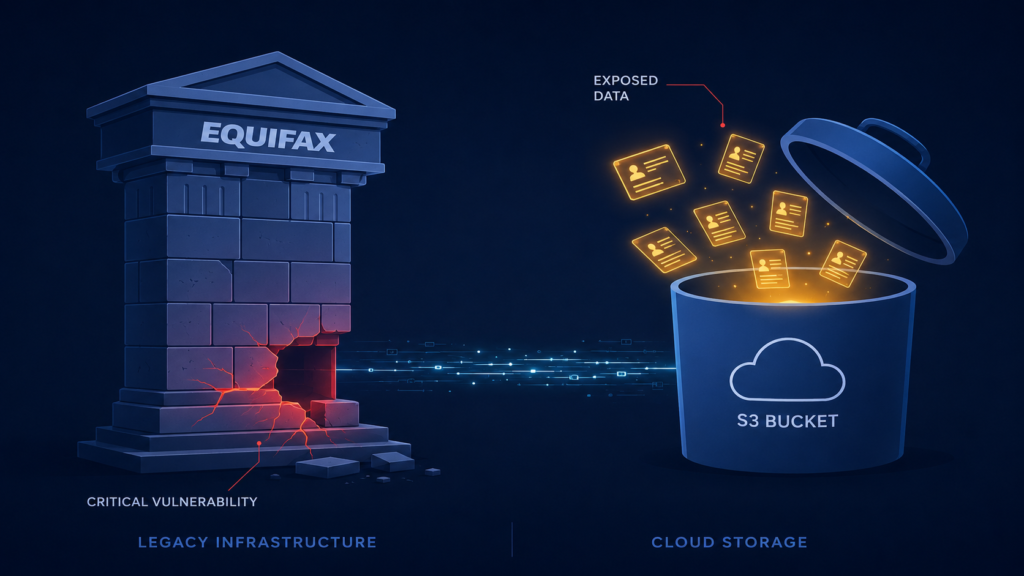
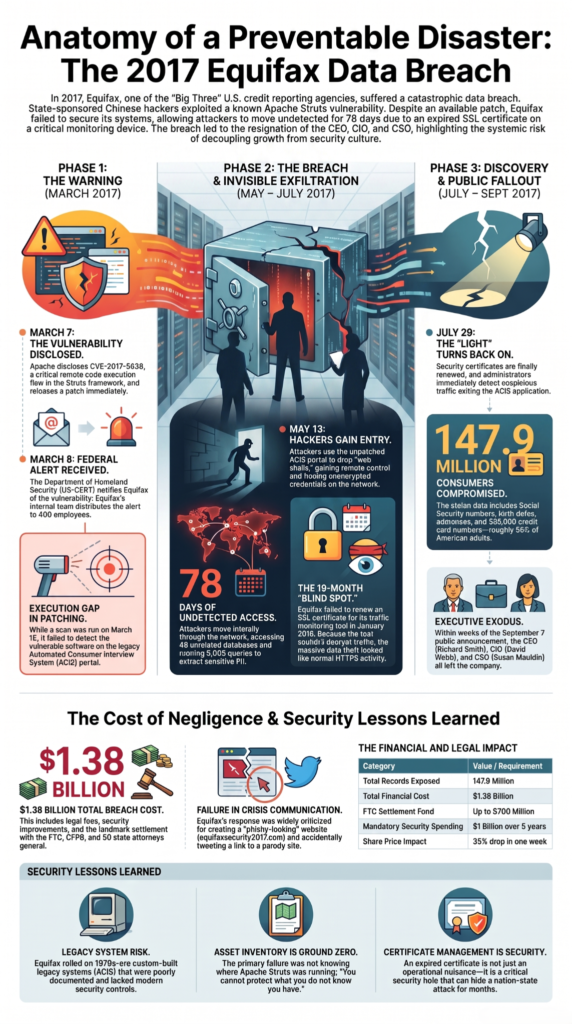
History teaches hard lessons. The Equifax breach was an insecure component. Apache Struts had a known, critical flaw. A patch was available, but not applied. Attackers used it to steal 147 million records.
As noted by TechTarget
“Equifax did not patch the Apache Struts software located within ACIS, leaving its systems and data exposed.” – TechTarget
Contrast that with exposed cloud storage. It’s pure misconfiguration. An S3 bucket set to “public” for convenience, left open. Automated tools scrape the internet for these buckets daily, harvesting data without any exploit needed. The service is secure; our setup is not.
The fixes seem simple: patch software, set buckets to private. Yet these same patterns cause breaches every week. The problem isn’t knowledge. It’s a process and priority.
Why Should You Stop Chasing CVSS Scores?
Relying on CVSS alone can lead to poor prioritization. We’ve seen it firsthand: engineers panic-patching a 9.8-rated flaw that’s irrelevant to our systems, while ignoring a 5.5 with active exploits. It’s a security theater.
You must triage like an ER doctor, not a collector. CVSS measures theoretical damage. Tools like EPSS are better because they calculate real-world exploitation odds using live attack data. Focus here to fix what attackers actually use.
| Priority Factor | Old Way | Smarter Way |
| Main Focus | CVSS score | Exploitation likelihood |
| Driver | Severity rating | Attack activity |
| Result | Low-impact patches | Real risk reduction |
Allow exceptions only through a documented, time-bound risk-acceptance process with compensating controls. Some patches break things; some systems can’t be touched. For those, use controls like a custom WAF rule or network segmentation. They contain the threat while you plan a real fix.
How Can You Manage the Dependency Chain Without Chaos?
Managing the dependency chain starts with knowing what you have. A Software Bill of Materials (SBOM) is more than a compliance checkbox, it’s your critical inventory. When a new CVE hits, you need to know in minutes, not days, if you’re exposed.
Lock your versions deliberately. Using flexible version ranges (like ^1.2.3) can silently pull in breaking changes. Pinning to an exact version creates stability, but you must be disciplined about updating that pin when security patches come out.
Automation is key. Integrate tools like Snyk or Dependabot directly into your pull requests. Let them flag vulnerable dependencies right where the code is being written.
For the legacy stuff, the tangled mess that can’t be easily updated, you sandbox it. Isolate it with strict network policies. Formally document the risk, assign an owner, and set a hard deadline for its removal. This isn’t ignoring the problem; it’s managing technical debt with your eyes wide open.
What Are Cloud and BaaS Misconfigurations?
Credits: Kushagra Agarwal
Modern development introduces new ways to slip up. Platforms like Firebase or Supabase are fantastic, they move so much complexity to the backend. But they shift the security burden too. Your security rules are now in a JSON document, not your server-side middleware.
A single logical error allowing auth != null to grant read access to an entire collection can expose every user’s data.
The same goes for infrastructure as code. A Terraform or CloudFormation script that defaults to opening a port, or assigns an overly permissive IAM role, will faithfully deploy that vulnerability every single time.
The cloud security misconfiguration is baked into your automation, replicating across environments. The fix is to make secure configurations the default, the only option your deployment pipeline even knows how to create.
FAQs
How can I spot security misconfiguration before attackers do?
Review your systems regularly for security misconfiguration, insecure defaults, weak default settings, and configuration drift. Compare every change against a secure baseline and a hardening checklist.
Why are default credentials still a serious security problem?
Default credentials allow attackers to access systems quickly, especially when an exposed admin panel, open management interfaces, or excessive privileges increase the available attack paths.
What configuration mistakes commonly expose sensitive information?
Verbose error messages, stack trace disclosure, directory listing enabled, and exposed configuration files reveal details that lead to information leakage and increase the risk of sensitive data exposure.
How can I reduce risk from vulnerable components without causing downtime?
Address missing patch management, outdated dependencies, unpatched software, and vulnerable components through staged updates, thorough testing, and planned production deployments to minimize disruption.
Which security hardening checks should I complete before production deployment?
Verify missing security headers, weak TLS configuration, insecure file permissions, least privilege violation, and configuration validation before deploying systems to reduce avoidable security risks.
How Do You Create Long-Lasting Security Defenses?
It all comes down to making the secure path the easy path. Automate your secure baselines. Start with a hardened container image or virtual machine template for every deployment. Use policy-as-code tools to enforce that S3 buckets are never public, that admin ports are never exposed, that security headers are always set.
Shift your security left, yes, but also spread the responsibility. It can’t just be the security team’s job. Developers need to see dependency alerts in their IDE. DevOps engineers need configuration validation in their CI/CD pipeline. Everyone needs a shared understanding that a secure default and a timely patch are features, not chores.
This is where a culture of Secure Coding Practices pays off. It’s not a separate phase, it’s the water in which we swim. It means writing code with an understanding of the context it will run in. It means reviewing configurations with the same scrutiny as logic. It means designing systems where the safe choice is the automatic choice. We build the guardrails so that moving fast doesn’t mean falling off the cliff.
Build Security That Lasts
Real security comes from blocking the risks that attackers are most likely to use, not from trying to fix every issue at once. Start with your most exposed service, review its dependencies, then check its configuration. That’s where small changes can make a real difference.
If you want your team to build these habits with confidence, the Secure Coding Practices Bootcamp offers practical, hands-on training that developers can use right away.
References
- https://ieeexplore.ieee.org/document/11541332
- https://www.techtarget.com/searchsecurity/news/252454340/Equifax-breach-report-highlights-multiple-security-failures?trk=article-ssr-frontend-pulse_little-text-block