
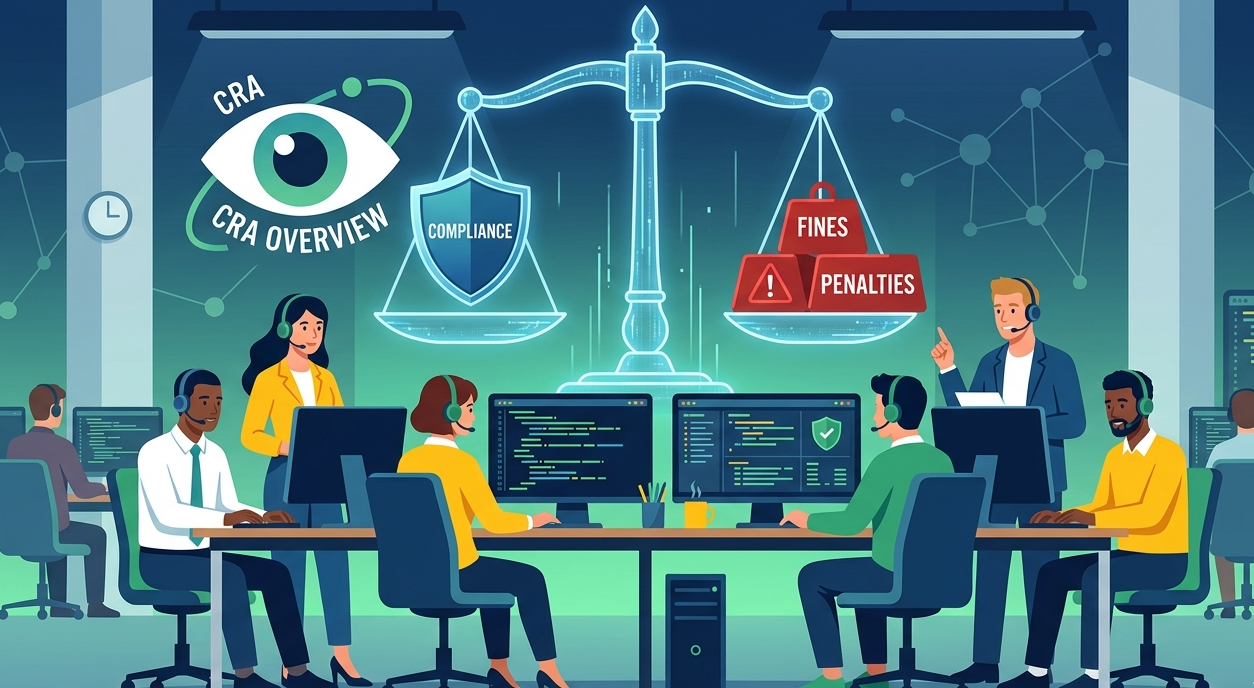

The keyword fines penalties cyber resilience act software is becoming increasingly relevant as regulators enforce stricter cybersecurity standards. From our experience, many teams underestimate how quickly penalties can arise, not from major breaches, but from poor processes.
Organizations that fail to integrate Secure Coding Practices early often struggle later with compliance gaps. This article explains how fines work, what triggers them, and how teams can reduce risks effectively. If you want to protect your software and avoid costly penalties, keep reading.
Key Insights on Fines Penalties Cyber Resilience Act Software
Understanding fines penalties cyber resilience act software helps teams align security with compliance goals.
- Penalties can reach millions of euros
- Documentation gaps are a major risk factor
- Secure Coding Practices reduce exposure early
How Fines Penalties Cyber Resilience Act Software Are Applied
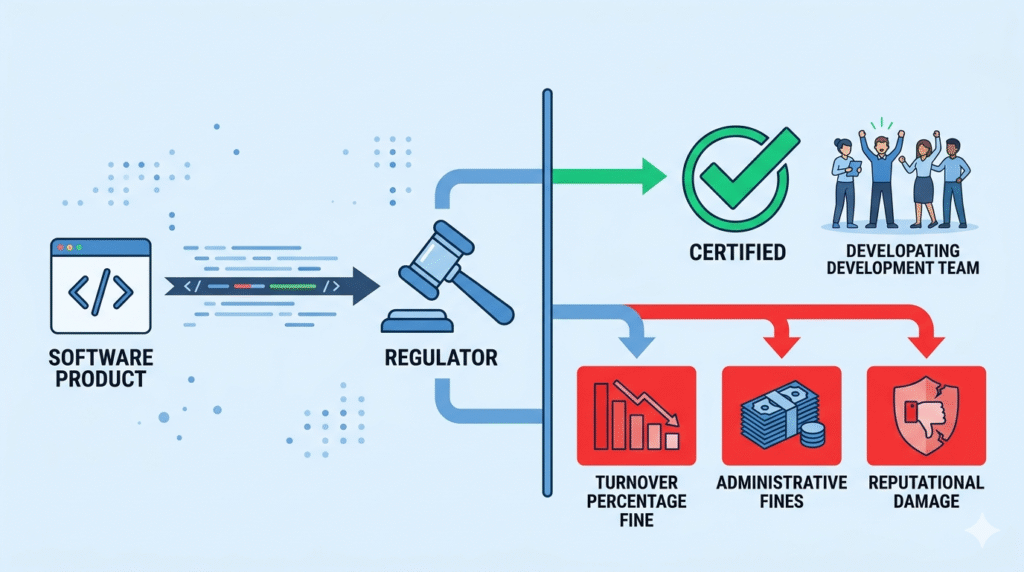
Regulators assess violations based on severity and organizational responsibility.
| Violation Type | Penalty Range | Risk Level |
| Security vulnerabilities | Up to €15 million or turnover percentage | High |
| Missing compliance records | Administrative fines | Medium |
| Delayed reporting | Escalating penalties | High |
| Weak lifecycle management | Financial + reputational damage | High |
In practice, fines penalties cyber resilience act software compliance and enforcement often focuses on patterns, not isolated incidents.
Secure Coding Practices as the First Line of Defense
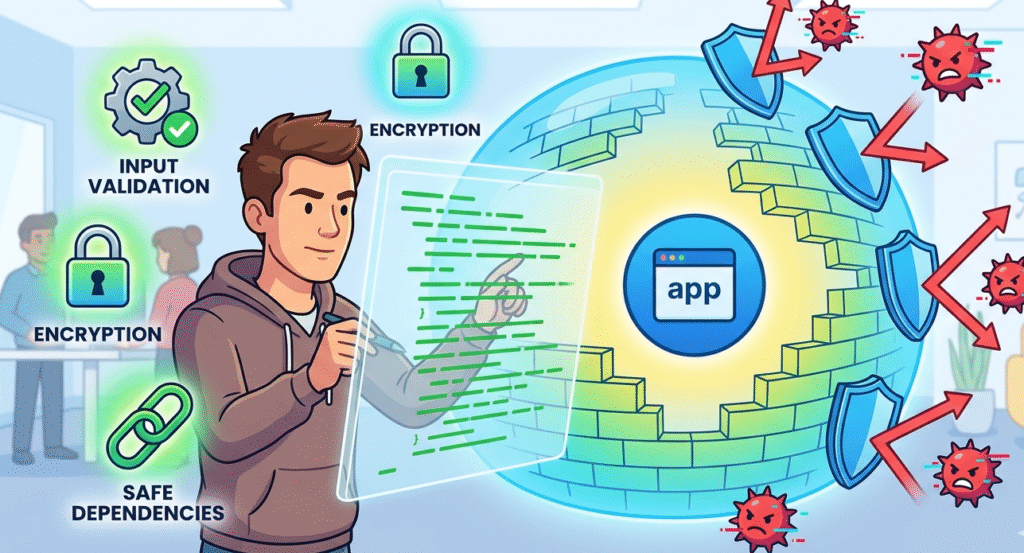
We consistently prioritize Secure Coding Practices because they directly reduce risks tied to fines penalties cyber resilience act software.
- Prevent vulnerabilities early
- Improve audit readiness
- Reduce long-term costs
- Strengthen software reliability
“Secure coding is the practice of developing software in a way that guards against the accidental introduction of security vulnerabilities.” – Wikipedia
Teams that follow a clear cyber resilience act compliance roadmap and embed security from the beginning are far less likely to face penalties.
Documentation: The Hidden Trigger Behind Penalties
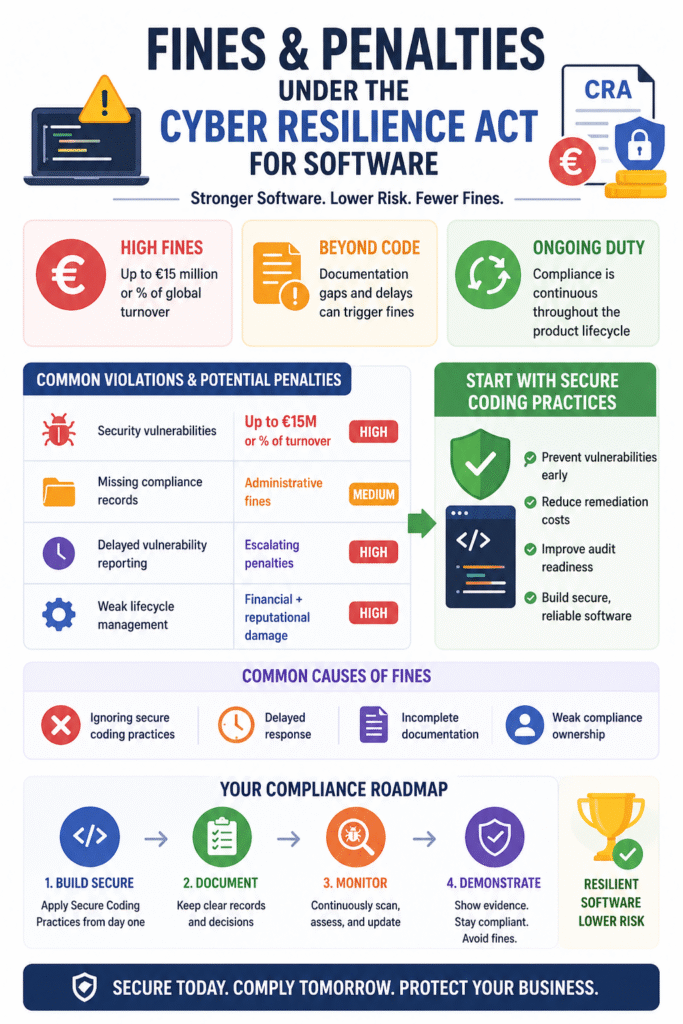
Beyond code, fines penalties cyber resilience act software are often triggered by missing documentation.
- Lack of traceability raises compliance concerns
- Incomplete records weaken audit preparation and final outcomes
- Poor accountability increases liability
“Accountability involves the ability to demonstrate that appropriate measures are taken to comply with regulations.” – Wikipedia
From what we’ve observed, even secure systems fail compliance checks without proper evidence.
Common Causes of Fines in Software Compliance
Credits: Somco Software
Many organizations face fines due to avoidable mistakes:
- Ignoring Secure Coding Practices
- Delayed vulnerability response
- Weak internal compliance ownership
- Inconsistent documentation processes
These issues repeatedly appear in compliance reviews and significantly increase risk.
FAQ
What are the main causes of fines under the Cyber Resilience Act?
Fines usually result from failing to meet security requirements, not reporting vulnerabilities on time, or lacking proper documentation. Regulators consider both the severity of the issue and how well the organization manages it over time.
How high can fines penalties cyber resilience act software reach?
Penalties can go up to millions of euros or a percentage of global turnover. The exact amount depends on the seriousness of the violation and whether it involves critical security failures.
Why are Secure Coding Practices important for compliance?
Secure Coding Practices reduce the likelihood of vulnerabilities, making compliance easier. They also help organizations demonstrate proactive risk management during audits.
Is compliance a one-time process?
No, compliance is continuous. Software must remain secure throughout its lifecycle, including updates and vulnerability management. Organizations that treat it as a one-time effort often face higher risks later.
Avoiding Fines Penalties Cyber Resilience Act Software Through Better Practices
Building secure software is no longer optional under the Cyber Resilience Act. To avoid heavy fines and ensure compliance, organizations must prioritize proactive security over reactive patching. By embedding Secure Coding Practices early in development, teams reduce vulnerabilities and strengthen system integrity.
Equip your developers with the hands-on skills needed to meet these regulatory standards. Join the Secure Coding Practices Bootcamp to master real-world defense techniques and ship safer code from day one.
References
- https://en.wikipedia.org/wiki/Secure_coding
- https://en.wikipedia.org/wiki/Accountability