


Cyber Resilience Act audit preparation has become a critical priority as organizations face stricter expectations around software security, vulnerability management, and product lifecycle accountability. We have seen in real audit readiness exercises that gaps often appear not in tools, but in documentation and coding discipline.
From our experience, early integration of Secure Coding Practices helps reduce last-minute compliance stress while improving product integrity. This article explores how teams like ours structure audit preparation effectively. Continue reading to strengthen your CRA readiness strategy.
Cyber Resilience Act Audit Preparation Essentials
Cyber Resilience Act audit preparation focuses on building consistent security and clear evidence across the software lifecycle.
- Secure Coding Practices reduce vulnerabilities early
- Continuous documentation supports audit readiness
- Strong traceability connects actions to evidence
Cyber Resilience Act Audit Preparation Framework
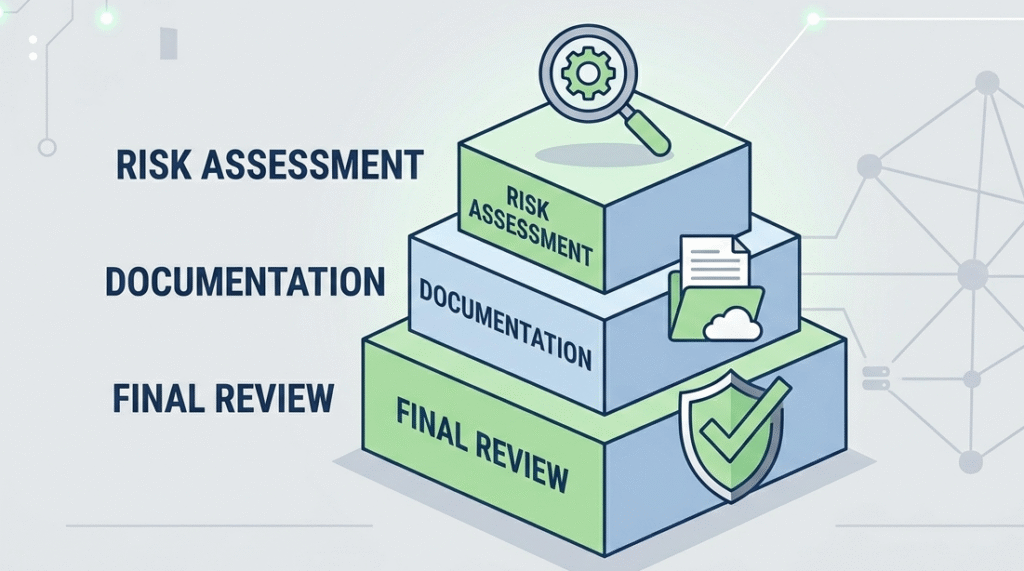
A structured cyber resilience act compliance roadmap ensures organizations are not reacting at the last stage. We typically approach it through layered governance and engineering alignment.
“Cyber resilience is the ability of an organization to prepare for, respond to, and recover from cyber attacks.” – Wikipedia
We’ve observed that teams applying structured frameworks reduce audit findings significantly.
Secure Coding Practices in CRA Compliance
Credits: Somco Software
Secure Coding Practices are often the first and most effective layer of CRA audit preparation. We consistently prioritize them because vulnerabilities are cheapest to fix at the source.
From our internal reviews, teams that adopt secure coding early reduce remediation workload by more than half during audits. This includes input validation, authentication hardening, and dependency control.
By embedding Secure Coding Practices into daily development, we shift cyber resilience act compliance for developers from reactive correction to proactive prevention.
Audit Readiness Checklist
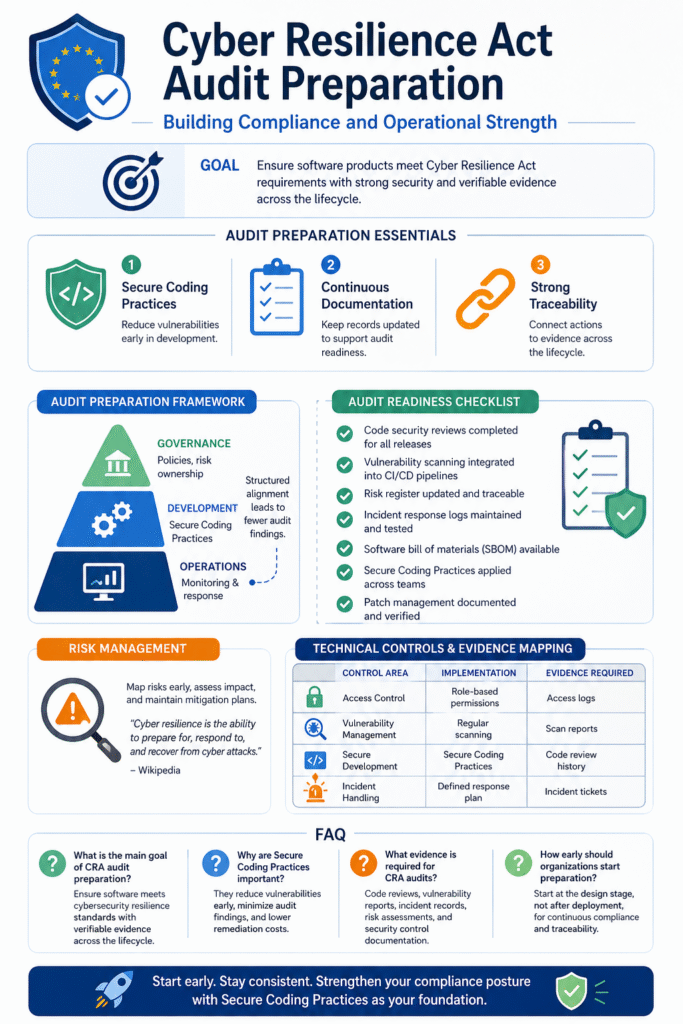
Audit readiness requires consistent tracking rather than last-minute compilation. We often use this checklist internally to validate preparedness:
- Code security reviews completed for all releases
- Vulnerability scanning integrated into CI/CD pipelines
- Risk register updated and traceable
- Incident response logs maintained and tested
- Software bill of materials (SBOM) available
- Secure Coding Practices applied across development teams
- Patch management documented and verified
This structured checklist ensures teams remain aligned with compliance for developers and reduces audit uncertainty.
Risk Management in Cyber Resilience Act Audit Preparation
Risk management plays a central role in CRA audit preparation because it connects technical vulnerabilities with business impact. In our practice, we map risks early in the development cycle and update them continuously as systems evolve. This helps avoid last-minute audit gaps and improves decision-making across teams.
“Secure coding practices are techniques applied during software development to prevent vulnerabilities and security flaws.” – Wikipedia
We usually categorize risks based on severity, exploitability, and system exposure. Each identified risk must have a clear mitigation plan and responsible owner. When Secure Coding Practices are applied from the start, many risks are prevented before they even reach production, reducing audit pressure significantly.
Technical Controls and Evidence Mapping
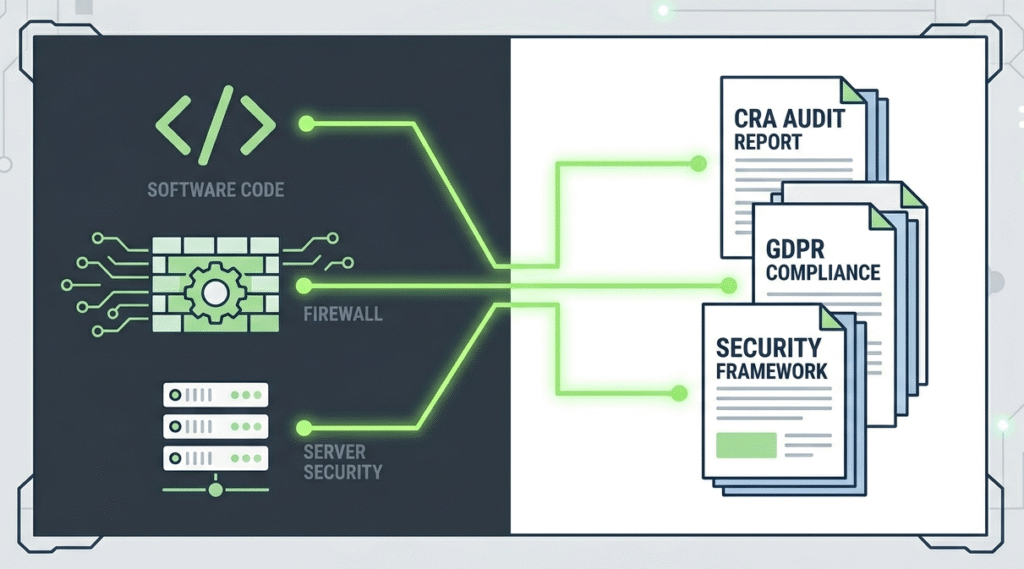
Effective CRA audit preparation depends on linking technical controls with verifiable evidence. We’ve found auditors prioritize traceability over complexity.
| Control Area | Implementation | Evidence Required |
| Access Control | Role-based permissions | Access logs |
| Vulnerability Management | Regular scanning | Scan reports |
| Secure Development | Secure Coding Practices | Code review history |
| Incident Handling | Defined response plan | Incident tickets |
This mapping helps bridge engineering activity with compliance requirements, ensuring no gaps during audit evaluation.
FAQ
What is the main goal of CRA audit preparation?
The main goal is to ensure software products meet cybersecurity resilience standards across their lifecycle, including development, deployment, and maintenance, with verifiable evidence.
Why are Secure Coding Practices important in CRA compliance?
They reduce vulnerabilities at the source, minimizing audit findings and lowering long-term remediation costs by preventing security issues early in development.
What evidence is required for CRA audits?
Auditors typically require code review logs, vulnerability reports, incident records, risk assessments, and documentation of security controls across systems.
How early should organizations start CRA audit preparation?
Preparation should begin at the design stage of software development, not after deployment, to ensure continuous compliance and traceability.
Strengthening CRA Audit Readiness Through Secure Practices
CRA audit success depends on consistent execution over last-minute paperwork. By embedding resilience into daily workflows, organizations significantly reduce risk while improving software quality.
To bridge the gap between theory and execution, our Secure Coding Practices Bootcamp provides hands-on, real-world training tailored for developers. Start early, stay consistent, and strengthen your compliance posture by mastering the practical skills needed to ship safer, audit-ready code from day one.
References
- https://en.wikipedia.org/wiki/Cyber_resilience
- https://en.wikipedia.org/wiki/Secure_coding