


A cyber resilience act compliance roadmap helps teams turn complex regulations into clear, actionable steps. Instead of reacting to security issues later, the Cyber Resilience Act (CRA) requires a structured approach from planning to long-term maintenance.
From our experience, teams that follow a defined roadmap reduce risks and avoid last-minute compliance pressure. This guide breaks down each stage into simple actions you can apply directly. Keep reading to build a roadmap that actually works.
Key Insights: Cyber Resilience Act Compliance Roadmap
A strong cyber resilience act compliance roadmap focuses on structure and consistency.
- Start with clear security planning
- Integrate security during development
- Validate systems through testing
What Is a Cyber Resilience Act Compliance Roadmap?
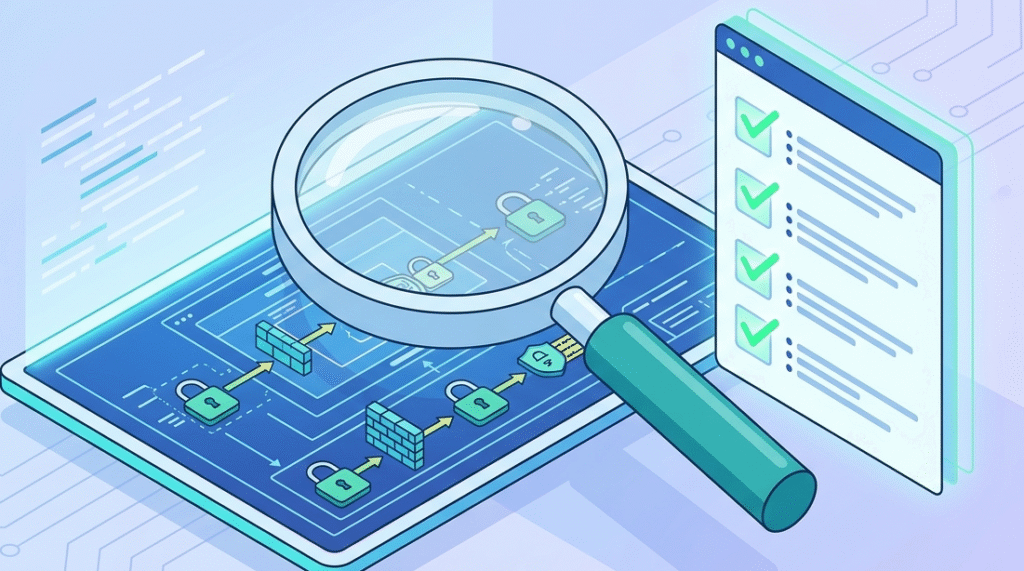
A cyber resilience act compliance roadmap is a structured plan that guides developers and organizations through CRA requirements across the product lifecycle.
- Aligns development with security goals
- Ensures compliance at every stage
- Reduces risk through proactive actions
“A roadmap is a strategic plan that defines a goal and includes the major steps needed to reach it.” – Wikipedia
From our experience, having a roadmap turns compliance from a burden into a manageable workflow.
Stage 1: Plan, Define Security Requirements
The roadmap begins with planning. This stage sets the foundation for compliance.
- Identify potential risks and threats
- Define security requirements early
- Align teams on compliance goals
- Choose standards and frameworks
We often start with Secure Coding Practices at this stage to ensure security is considered from day one, especially as the landscape of compliance and enforcement becomes more rigorous. Planning reduces uncertainty and prevents costly fixes later.
Planning reduces uncertainty and prevents costly fixes later.
Stage 2: Build, Integrate Security into Development
Credits: Hogan Lovells
In this stage, security becomes part of daily development work. Practical cyber resilience act compliance for developers involves applying secure coding standards and using trusted libraries and dependencies to minimize vulnerabilities.
- Apply secure coding standards
- Use trusted libraries and dependencies
- Integrate security tools into CI/CD
- Conduct code reviews regularly
Teams that embed security during development spend less time fixing issues later.
Stage 3: Test, Validate Security and Resilience
| Testing Type | Purpose | Example Action |
| Static Testing | Find code vulnerabilities | Run automated code scans |
| Dynamic Testing | Test running applications | Perform penetration testing |
| Dependency Checks | Identify third-party risks | Scan libraries for issues |
| Compliance Testing | Validate CRA requirements | Review against standards |
Testing ensures the product meets both security and compliance expectations.
“Security testing is a process intended to reveal flaws in the security mechanisms of an information system.” – Wikipedia
Stage 4: Maintain, Continuous Monitoring & Updates
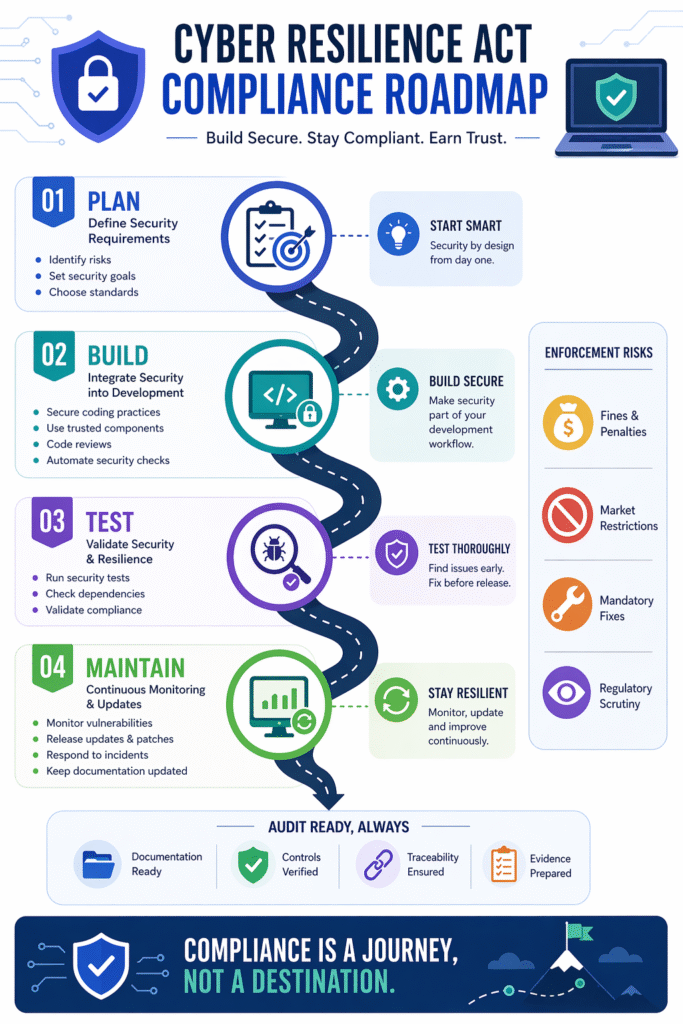
Compliance does not stop after release. Maintenance is ongoing.
- Monitor systems for new vulnerabilities
- Release secure updates and patches
- Track incidents and responses
- Update documentation continuously
From our experience, continuous monitoring is where many teams struggle, but it’s critical for CRA compliance.
Audit Preparation in the Compliance Roadmap
Audit readiness should be built into every stage of the roadmap. Thorough cyber resilience act audit preparation ensures that you keep documentation organized and maintain full traceability of all changes made during the development cycle.
- Keep documentation organized
- Ensure traceability of all changes
- Maintain records of testing and fixes
- Prepare evidence for regulators
Teams that document continuously avoid last-minute audit stress.
Common Challenges in CRA Roadmap Implementation
Organizations often face challenges such as:
- Lack of clear processes
- Limited security knowledge in teams
- Managing complex systems and dependencies
We’ve seen that a clear roadmap and automation tools can solve most of these issues effectively.
Practical Tips for Building a CRA Compliance Roadmap
To make your roadmap effective:
- Start small and scale gradually
- Automate security checks where possible
- Train developers on secure practices
- Review and update the roadmap regularly
- Align security with business goals
These steps make compliance sustainable and realistic
FAQ
What is a cyber resilience act compliance roadmap?
It is a structured plan that helps organizations and developers meet CRA requirements through defined stages like planning, building, testing, and maintaining secure systems.
Why is a roadmap important for CRA compliance?
A roadmap provides clarity and structure. Without it, teams may miss key requirements or address security too late, increasing risks and costs.
How often should the roadmap be updated?
The roadmap should be reviewed regularly, especially when new threats, technologies, or regulatory updates arise. Continuous improvement is essential for compliance.
Can small teams implement a CRA roadmap?
Yes, small teams can adopt a simplified roadmap by focusing on key risks, automating processes, and integrating security into their existing workflows.
Building an Effective Cyber Resilience Act Compliance Roadmap
A cyber resilience act compliance roadmap transforms complex legal requirements into manageable operational steps. By prioritizing early planning and integrating security into the development lifecycle, teams maintain innovation while meeting EU standards.
Ready to bridge the gap between compliance and execution? Join our Secure Coding Practices Bootcamp. This hands-on, expert-led training equips developers with practical skills like encryption and secure authentication to ship safer code and achieve long-term resilience from day one.
References
- https://en.wikipedia.org/wiki/Roadmap
- https://en.wikipedia.org/wiki/Security_testing