
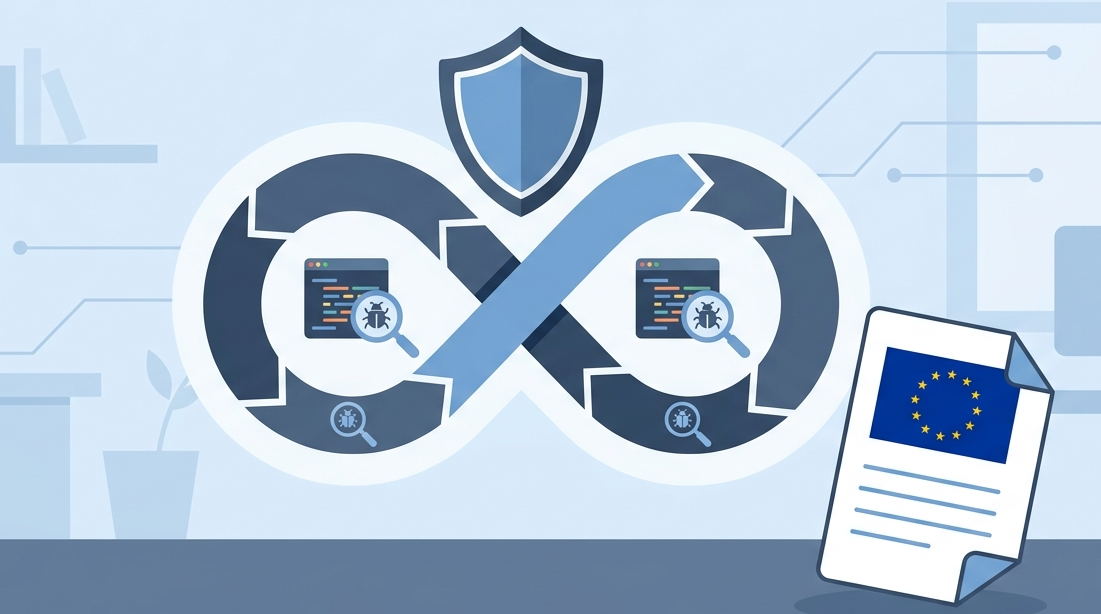

Cyber Resilience Act vulnerability disclosure requirements are changing how organizations manage software security from development to post-release. Instead of treating vulnerabilities as isolated incidents, CRA requires a structured, continuous approach to identification, reporting, and mitigation.
From our experience working with development teams, this shift forces security to be integrated much earlier in the lifecycle. We consistently observe fewer critical findings when Secure Coding Practices are applied from the beginning. Keep reading to understand how CRA reshapes real-world vulnerability management.
Cyber Resilience Act Vulnerability Disclosure Requirements
Before we go deeper into how Cyber Resilience Act vulnerability disclosure works in practice, it’s important to understand the main shifts it introduces.Cyber Resilience Act vulnerability disclosure is now a legal requirement across software products
- Structured reporting improves coordination between technical and non-technical teams
- Early prevention reduces the number of vulnerabilities that need disclosure
- Transparency becomes part of compliance, not optional communication
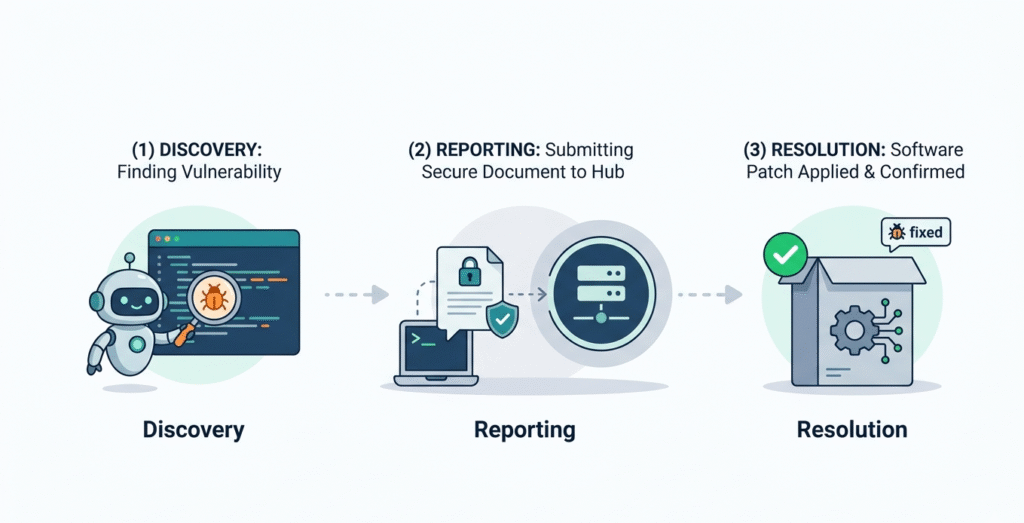
Cyber Resilience Act Vulnerability Disclosure Workflow
| Stage | Purpose | Responsible Team |
| Intake | Receive vulnerability reports | Security Team |
| Validation | Confirm severity and impact | Developers + Security |
| Coordination | Align disclosure timeline and stakeholders | Legal + Compliance |
| Mitigation | Develop fix or workaround | Engineering |
| Disclosure | Communicate vulnerability status externally | Compliance Team |
In practice, Cyber Resilience Act vulnerability disclosure workflows and long-term patch management requirements only run smoothly when upstream development issues are minimized.. From our experience, applying Secure Coding Practices early significantly reduces the number of vulnerabilities entering this pipeline.
“Security is not a product, but a process.” – NIST
Why Cyber Resilience Act Vulnerability Disclosure Matters
Credits: hopelabs
Cyber Resilience Act vulnerability disclosure ensures that security issues are handled transparently and consistently across organizations. Without structured disclosure and proactive vulnerability and risk management, vulnerabilities can remain unreported or poorly managed, increasing risk exposure.
In real development environments we’ve observed, delayed disclosure often leads to fragmented responses and duplicated incidents.
Third-person analysis of security operations shows that communication gaps are one of the main failure points. Strong secure development habits help reduce these breakdowns by limiting the number of issues that require formal disclosure in the first place.
Challenges in Cyber Resilience Act Vulnerability Disclosure
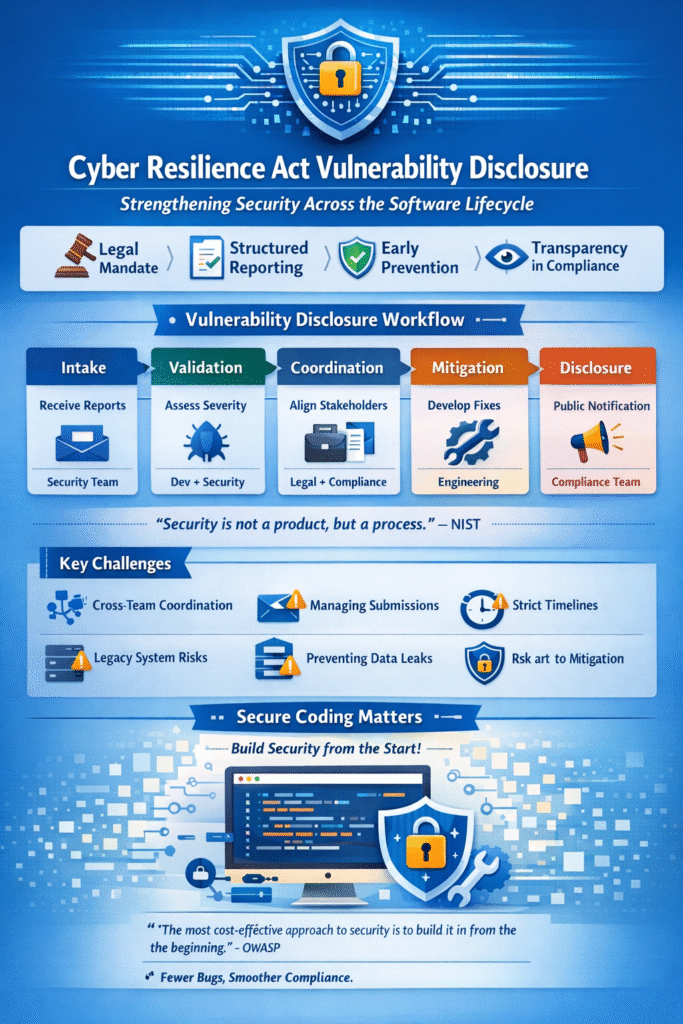
Implementing Cyber Resilience Act vulnerability disclosure introduces operational complexity across teams.
- Coordinating security, legal, and engineering responsibilities
- Maintaining structured vulnerability handling to manage external submissions efficiently
- Meeting strict response and disclosure timelines
- Preventing accidental early disclosure of sensitive details
- Handling legacy systems with high vulnerability density
We’ve seen that these challenges are amplified when development practices are inconsistent. When Secure Coding Practices are not standardized, vulnerability volume increases, which directly adds pressure to disclosure workflows.
Secure Coding Practices in Cyber Resilience Act Vulnerability Disclosure
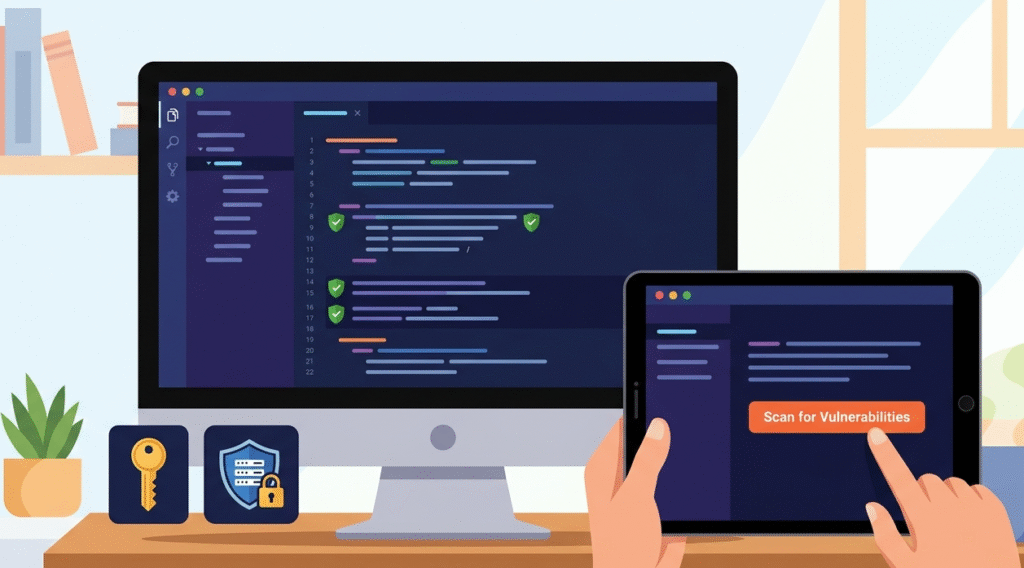
Secure coding plays a foundational role in reducing Cyber Resilience Act vulnerability disclosure workload. Instead of treating security as a post-development task, it shifts prevention into the coding phase itself.
“The most cost-effective approach to security is to build it in from the beginning.” – OWASP
From our experience, teams that consistently apply secure coding principles generate fewer critical vulnerabilities and face smoother compliance processes. Third-party audits also show that disciplined coding reduces remediation effort significantly.
That is why Secure Coding Practices are often considered the first layer of defense before formal disclosure systems are even activated.
FAQ
What is Cyber Resilience Act vulnerability disclosure?
It is the structured process required under the Cyber Resilience Act for identifying, reporting, managing, and communicating software vulnerabilities throughout the product lifecycle.
Who is responsible for Cyber Resilience Act vulnerability disclosure?
Responsibility is shared across multiple teams, including security, development, legal, and compliance teams, depending on the stage of the vulnerability handling process.
Why is structured disclosure important under the Cyber Resilience Act?
It ensures vulnerabilities are handled consistently, reduces response delays, and improves coordination between stakeholders while maintaining transparency.
How does secure coding affect Cyber Resilience Act vulnerability disclosure?
Secure coding reduces the number of vulnerabilities introduced during development, which directly decreases the burden on disclosure and remediation processes.
Cyber Resilience Act Vulnerability Disclosure in Practice
Cyber Resilience Act vulnerability disclosure requires organizations to manage security across the full software lifecycle, not only after release. From our experience, the most effective approach is reducing vulnerabilities early so disclosure becomes manageable and predictable. This is where prevention matters most.
Strengthening Secure Coding Practices helps teams achieve this foundation. Developers can further build practical skills through the Secure Coding Practices Bootcamp, which focuses on real coding scenarios and secure development fundamentals.
References
- https://www.nist.gov
- https://owasp.org