
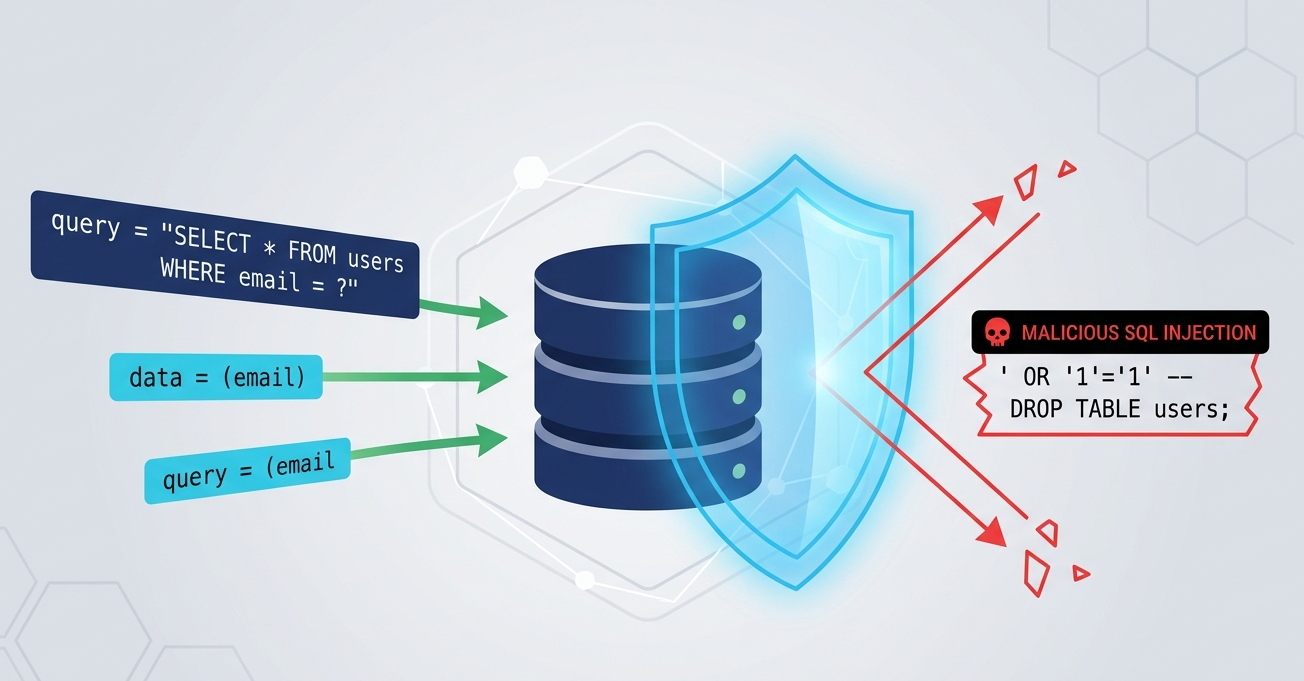

Modern applications often use ORM frameworks to simplify database management and speed up development. However, SQL injection risks can still appear when developers use unsafe queries or weak validation.
In our experience, many vulnerabilities happen because teams rely too much on default ORM protections without reviewing custom database logic carefully. This ORM SQL injection protection guide explains simple ways developers improve database security and reduce SQL injection risks in modern applications. Keep reading.
ORM Security Still Needs Strong Coding Habits
ORM frameworks improve development efficiency, but secure coding remains essential.
- ORMs reduce direct SQL handling, not all vulnerabilities
- Unsafe raw queries may still create injection risks
- Secure Coding Practices supports safer database workflows
What Is an ORM?
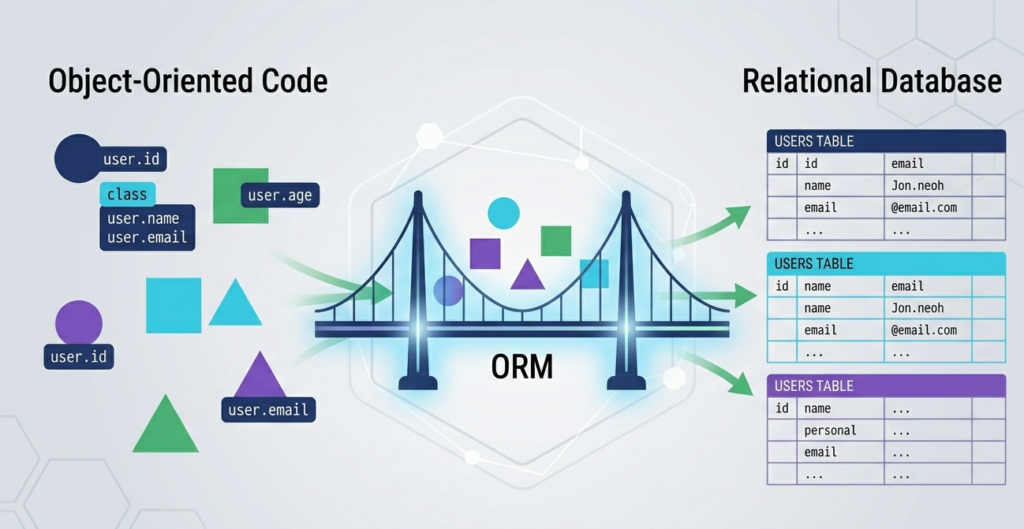
ORM stands for Object Relational Mapping. It allows developers to interact with databases using application objects instead of writing full SQL queries manually.
Benefits of ORM frameworks include:
- Faster development
- Cleaner database interaction
- Reduced repetitive SQL code
- Easier maintenance
- Better application structure
Popular application areas include:
- Authentication systems
- E-commerce platforms
- REST APIs
- Content management systems
Although ORMs simplify development, unsafe implementation can still expose applications to SQL injection attacks.
How SQL Injection Happens in ORM Applications
ORM applications may still become vulnerable when developers bypass safe query handling, making it essential to understand SQL injection risks within abstraction layers.
Common risky practices:
- Using raw SQL queries
- Dynamically building filters
- Concatenating user input
- Weak API validation
- Unsafe search functionality
Unsafe example:
“SELECT * FROM users WHERE email = ‘” + userInput + “‘”
“SQL injection remains a critical security issue… it typically arises when untrusted input is incorporated into query strings without proper sanitization, enabling attackers to manipulate query logic” – IeeExplore
In many real-world cases, developers accidentally introduce vulnerabilities while customizing ORM behavior or adding advanced filtering features.
Using Parameterized Queries Inside ORM Frameworks
Most modern ORM systems support parameterized queries automatically.
“Testing results prove that operations are vulnerable to SQL Injection when not using parameterized queries, while successfully mitigating attacks when using parameterized queries” – Atlantis
Safe example:
SELECT * FROM users WHERE email = ?;
Parameterized queries help by:
- Separating user input from SQL commands
- Preventing query manipulation
- Improving database consistency
- Reducing injection opportunities
We regularly see stronger application security after teams replace raw SQL logic with parameterized queries that enforce strict data separation. Secure Coding Practices often prioritizes parameterized queries because they provide reliable protection without slowing development significantly.
Avoiding Raw Query Risks
Credits: Bert Wagner
Raw queries may still be necessary in some advanced applications, but they require extra caution.
Best practices include:
- Avoid direct string concatenation
- Use ORM parameter binding
- Validate all user input
- Restrict dynamic query generation
- Review custom SQL carefully
Common vulnerable areas:
- Admin dashboards
- Reporting tools
- Search systems
- API filtering
- Export functions
In our experience, raw queries are one of the most common sources of SQL injection vulnerabilities inside ORM-based applications.
Input Validation Still Matters
ORM protection alone is not enough. Applications still need strong validation before data reaches the database layer.
Helpful validation techniques:
- Limiting input length
- Validating email and numeric formats
- Using allowlists for accepted values
- Sanitizing user-generated content
- Rejecting malformed requests
We often notice safer applications when validation is applied consistently across forms, APIs, and backend services instead of focusing only on frontend controls.
Secure Database Permission Management
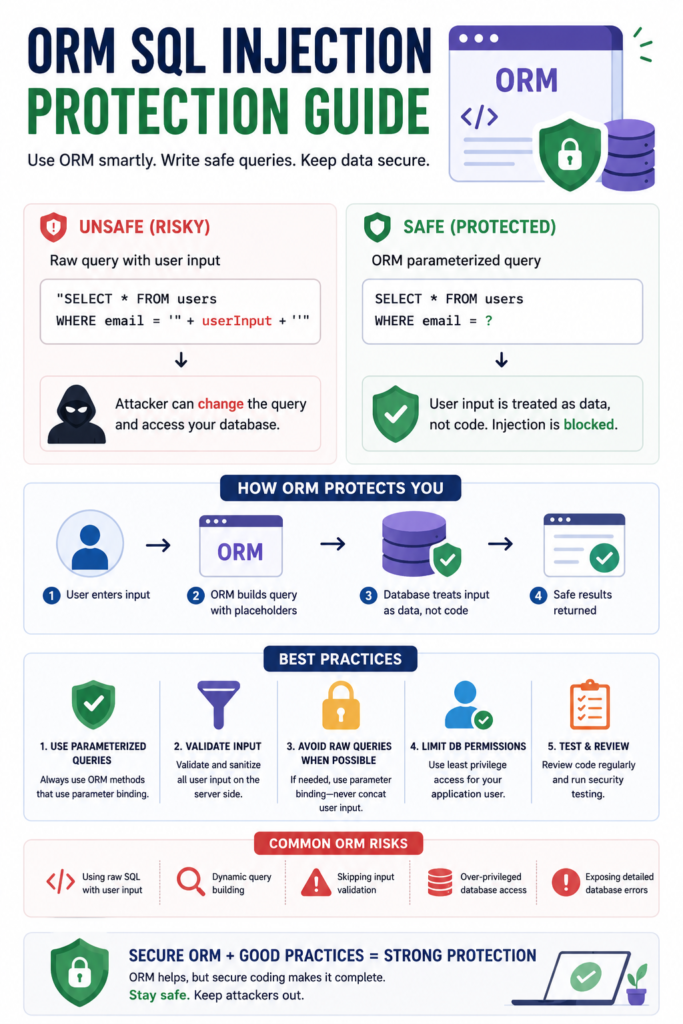
Applications should only receive the minimum database access required for operation.
| Security Practice | Main Benefit | Risk Reduction |
| Least Privilege Access | Limits attacker actions | Reduces database compromise |
| Separate Admin Accounts | Improves access control | Prevents privilege escalation |
| Read-Only Database Roles | Protects critical data | Reduces modification risks |
| Permission Audits | Detects excessive access | Improves security posture |
Overprivileged accounts can increase damage during successful attacks.
ORM Security Testing and Code Reviews
Regular testing helps identify hidden vulnerabilities before deployment, allowing teams to implement effective SQL injection mitigation strategies across the entire codebase.
Useful review methods:
- Static code analysis
- Manual code review
- Automated vulnerability scanning
- Penetration testing
- Peer review processes
In many development teams, unsafe patterns spread when developers copy insecure examples between projects. Continuous testing and review processes help reduce repeated mistakes.
Secure Coding Practices supports continuous security testing because vulnerabilities are easier to fix early in development than after production release.
Common ORM Security Mistakes
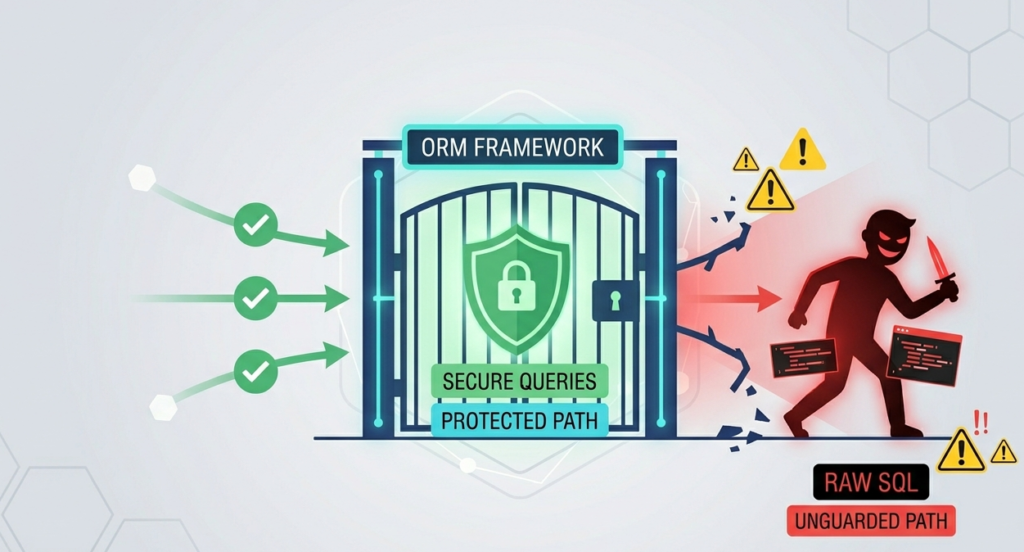
Some teams mistakenly believe ORMs fully prevent SQL injection automatically.
Frequent mistakes include:
- Mixing raw SQL with ORM queries
- Trusting user input without validation
- Exposing detailed database errors
- Ignoring API security checks
- Using excessive database privileges
We regularly observe that most ORM-related vulnerabilities come from insecure implementation choices rather than the ORM framework itself.
FAQ
Does ORM automatically prevent SQL injection?
No. ORMs reduce risk, but developers can still create vulnerabilities through unsafe raw queries or poor validation practices.
Why are parameterized queries important in ORM applications?
Parameterized queries separate SQL commands from user input, making injection attacks much harder to perform.
Are raw SQL queries dangerous in ORM frameworks?
They can be risky if developers directly concatenate user input into queries without proper parameter binding or validation.
What is the best ORM security practice?
Using parameterized queries, validating all input, limiting database permissions, and performing regular security testing are among the best practices.
Building Safer Applications With ORM Security Best Practices
Using an Object-Relational Mapper (ORM) is only the first step in database defense. True security requires combining framework tools with intentional habits like strict input validation and least-privilege permissions.
To master these defenses, join the Secure Coding Practices Bootcamp. This developer-focused, 2-day hands-on course covers the OWASP Top 10 and input validation without the jargon. Build practical skills through live labs and expert-led sessions. Register for the Bootcamp here
References
- https://ieeexplore.ieee.org/document/11355472
- https://www.atlantis-press.com/article/125996187.pdf