

SQL injection attacks still affect many websites and applications because unsafe database queries remain common. A small coding mistake can expose sensitive data and create major security problems. In our experience, developers reduce many risks by using safer query methods and stronger validation practices.
This article explains practical SQL injection mitigation strategies code techniques that help improve application security and reduce database vulnerabilities. Keep reading.
Better Security Starts With Safer Code
Strong SQL protection begins during development, not after deployment.
- Unsafe database queries remain a major security risk
- Prepared statements reduce injection opportunities
- Secure Coding Practices supports safer development workflows
Why Applications Become Vulnerable to SQL Injection
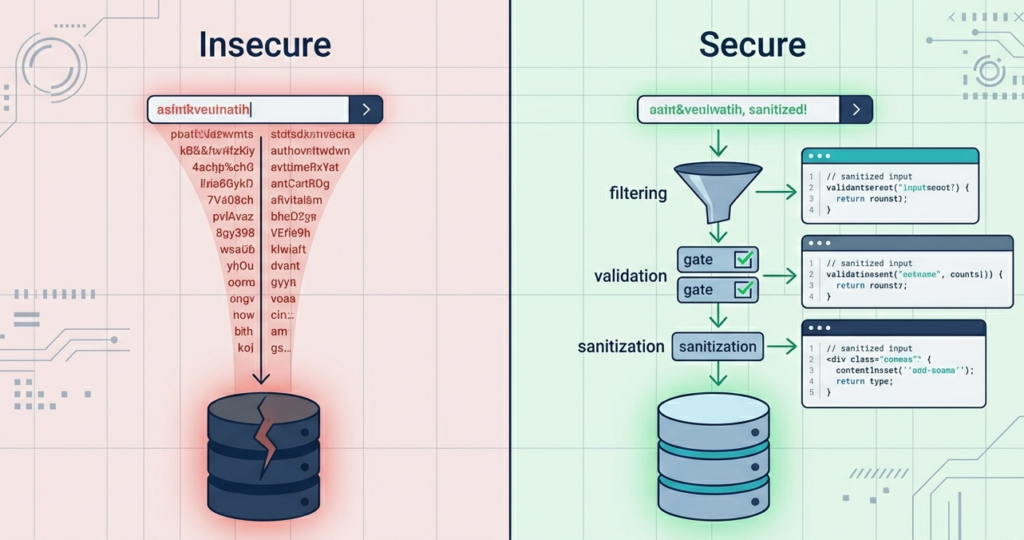
SQL injection usually happens when applications insert raw user input directly into database queries. In many real projects, developers assume modern frameworks automatically prevent attacks.
However, when teams lack a fundamental understanding of SQL injection, insecure custom queries still create major vulnerabilities because coding standards remain inconsistent.
Unsafe example:
SELECT * FROM users WHERE email = ‘user_input’;
Common causes include:
- Weak input validation
- Dynamic SQL generation
- Poor authentication logic
- Insecure API parameters
- Excessive database permissions
In many real projects, developers assume modern frameworks automatically prevent attacks. However, insecure custom queries still create major vulnerabilities when coding standards are inconsistent.
Parameterized Queries as a Core Defense
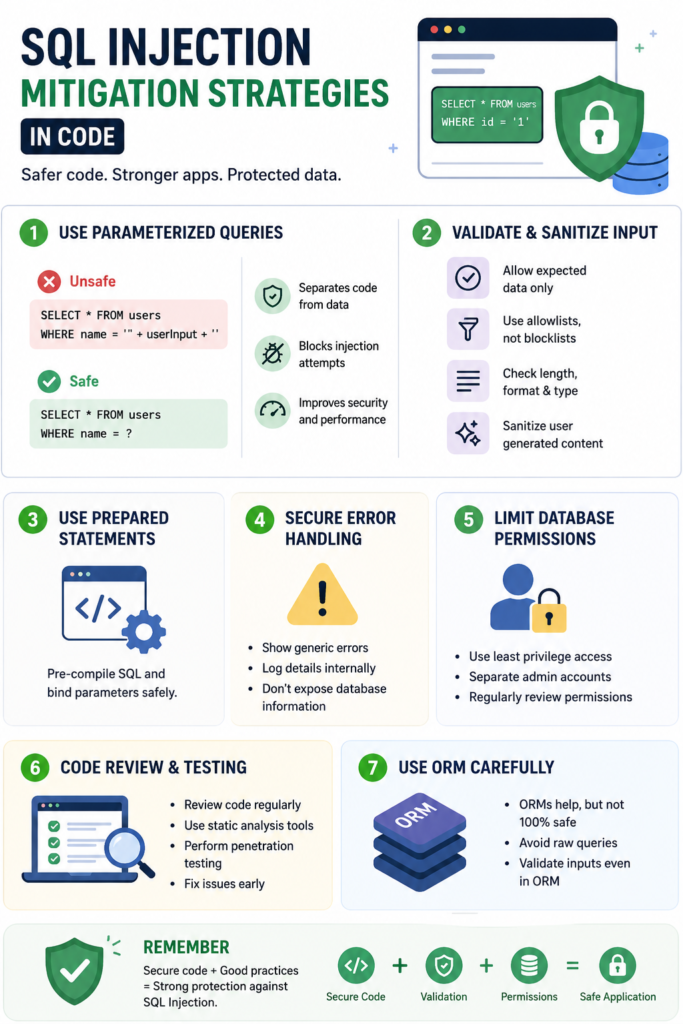
Parameterized queries are one of the most effective SQL injection mitigation strategies code methods available today.
“parameterized queries were the most effective in preventing SQL injection attacks” – Diva-portal
Safe example:
SELECT * FROM users WHERE email = ?;
Benefits include:
- Separating commands from user input
- Reducing query manipulation risks
- Improving code consistency
- Supporting safer database interactions
We regularly see security improvements after teams replace dynamic SQL with parameterized queries. Secure Coding Practices often prioritizes this method because it offers strong protection without slowing development significantly.
Prepared Statements and Stored Procedures
Credits: LinkedIn Learning
Prepared statements help applications safely process repeated database commands.
Advantages:
- Prevent direct SQL manipulation
- Reduce developer mistakes
- Improve query stability
- Support safer application architecture
Stored procedures can also improve security when written correctly. However, poorly designed procedures using dynamic SQL may still become vulnerable.
Teams should review stored procedures carefully instead of assuming they automatically prevent SQL injection.
Input Validation and Sanitization
Input validation helps stop malicious data before it reaches database queries.
Effective validation techniques include:
- Limiting character length
- Verifying expected formats
- Blocking unexpected symbols
- Using allowlists for accepted input
- Sanitizing user-generated content
We often find that applications relying only on keyword filtering remain vulnerable because attackers constantly adapt payloads, such as those used in a blind SQL injection tutorial, to bypass weak defenses. Secure Coding Practices encourages layered validation because multiple security controls work better together than isolated protection methods.
Secure Coding Practices encourages layered validation because multiple security controls work better together than isolated protection methods.
Secure Error Handling Techniques
Detailed database errors may unintentionally help attackers understand application weaknesses.
Exposed errors can reveal:
- Database structure
- Table names
- Query syntax
- Server configuration details
Safer approaches include:
- Displaying generic error messages
- Logging technical details internally
- Restricting production debug access
- Monitoring failed requests
During real-world testing, exposed SQL errors frequently make exploitation easier. Proper error handling reduces information leakage and limits attacker visibility into backend systems.
Database Permission Management
Applications should only receive the minimum permissions required for operation.
| Security Practice | Main Benefit | Risk Reduction |
| Least Privilege Access | Limits attacker capabilities | Reduces full database compromise |
| Read-Only Accounts | Protects critical records | Prevents unauthorized changes |
| Separate Admin Access | Improves access control | Limits privilege escalation |
| Permission Audits | Identifies unnecessary access | Strengthens security posture |
Overprivileged database accounts often increase the impact of successful attacks.
Secure Code Reviews and Testing
Regular security testing helps identify vulnerabilities before deployment.
“the best strategy for combating SQL injection… calls for integrating defensive coding practices with both vulnerability detection and runtime attack prevention methods” – Shar & Tan, 2013
Common review methods:
- Static code analysis
- Manual code review
- Penetration testing
- Automated vulnerability scanning
- Peer security assessments
In many development environments, insecure coding patterns spread between projects because teams reuse unsafe examples. Continuous review processes help reduce repeated mistakes and improve long-term code quality.
Regular security testing helps identify vulnerabilities before deployment. Proactively testing for SQL injection vulnerabilities through methods like static code analysis, manual reviews, and automated scanning ensures that weaknesses are caught in the development phase rather than in production.
ORM Frameworks and SQL Injection Risks
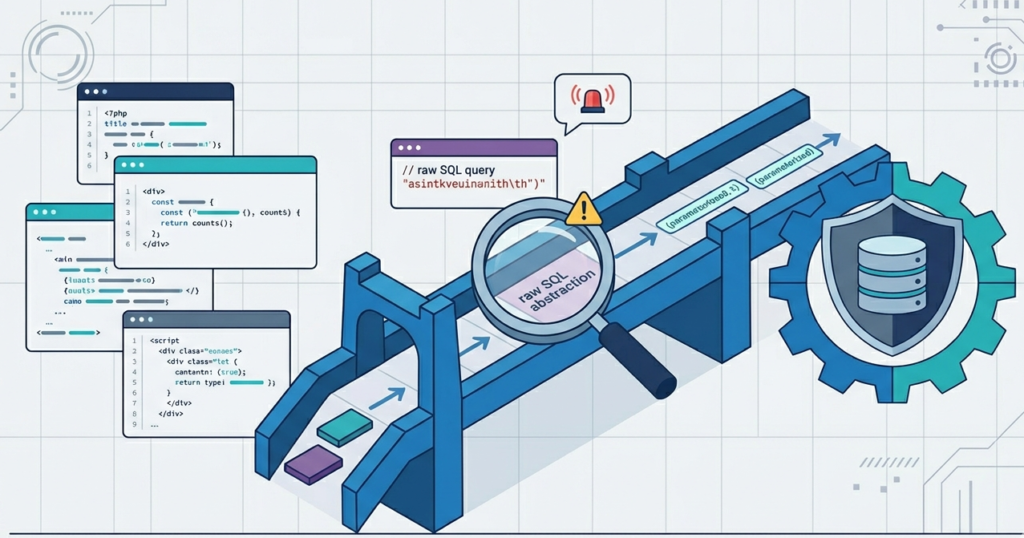
Object Relational Mapping (ORM) frameworks reduce direct SQL usage, but they do not completely remove risk.
Vulnerabilities may still appear through:
- Unsafe raw queries
- Dynamic filtering logic
- Weak API validation
- Poor authentication controls
Benefits of ORM frameworks include:
- Cleaner database interaction
- Faster development
- Reduced manual SQL handling
However, developers still need strong security awareness and proper validation practices.
FAQ
What are SQL injection mitigation strategies code techniques?
They are coding methods developers use to prevent attackers from manipulating SQL queries through unsafe user input.
Why are parameterized queries important?
Parameterized queries separate SQL commands from user data, making injection attacks much harder to perform.
Can input validation alone prevent SQL injection?
No. Input validation helps reduce risk, but it should be combined with prepared statements and secure database practices.
Are ORM frameworks fully safe from SQL injection?
No. ORM frameworks reduce risk, but developers can still introduce vulnerabilities through unsafe custom queries or poor validation practices.
Building Stronger Applications Through Secure Development
SQL injection mitigation strategies code works best when security is a daily habit. Safer applications combine parameterized queries, prepared statements, and strict validation. Organizations integrating these early reduce vulnerabilities more effectively than those relying on occasional audits.
The Secure Coding Practices Bootcamp offers hands-on, jargon-free training covering the OWASP Top 10 and encryption. This 2-day course equips teams to ship resilient code from day one. Join the Secure Coding Practices Bootcamp.
References
- https://www.diva-portal.org/smash/get/diva2:1787822/FULLTEXT01.pdf
- https://doi.org/10.1109/mc.2012.283