
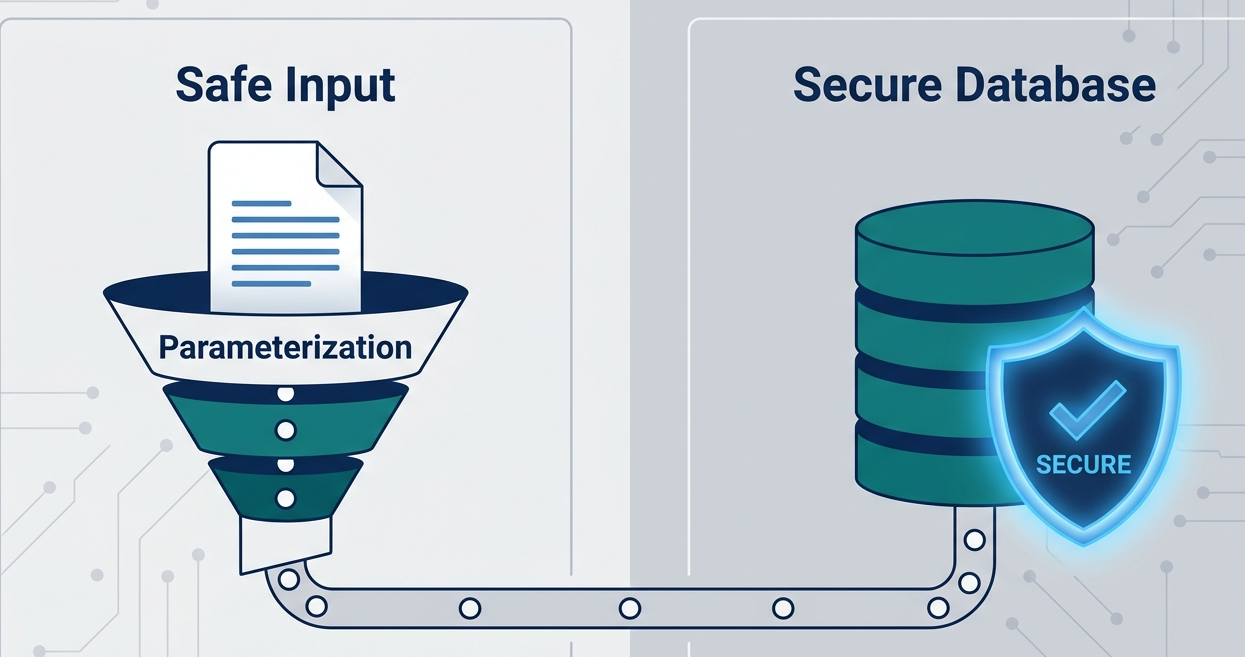

SQL injection attacks remain one of the most common web application threats because attackers continue targeting unsafe database queries. In many cases, vulnerabilities happen when applications directly combine user input with SQL commands.
From our experience reviewing applications, simple coding improvements often prevent major security incidents. One of the most effective defenses is using parameterized queries. This article explains how parameterized queries prevent SQL injection and why they are important for secure application development. Keep reading.
Why Safer Queries Matter More Than Ever
Database security starts with how developers handle user input inside application code.
- Unsafe queries allow attackers to manipulate databases
- Parameterized queries separate data from SQL commands
- Secure Coding Practices helps teams reduce recurring vulnerabilities
What Is SQL Injection?

SQL injection happens when attackers insert malicious input into database queries to manipulate application behavior.
“The persistence of [SQL injection] attacks is largely due to insecure coding practices… and insufficient use of parameterized queries” – Sikorskyi, 2026
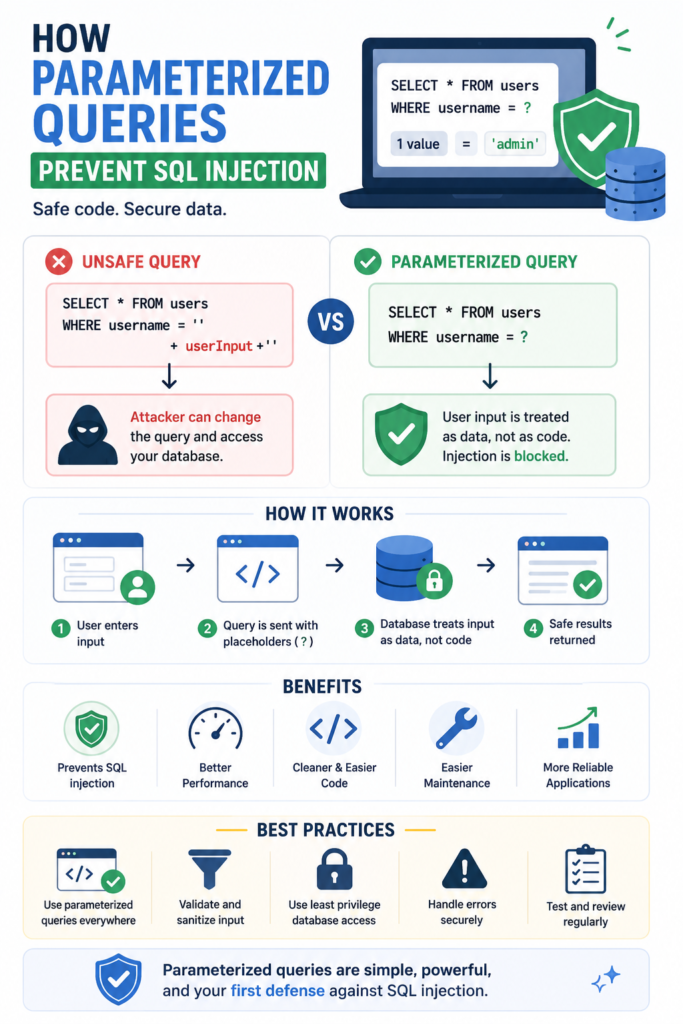
Unsafe example:
SELECT * FROM users WHERE username = ‘user_input’;
Potential risks include:
- Unauthorized database access
- Stolen customer information
- Deleted records
- Authentication bypass
- Full database compromise
In many real-world cases, attackers exploit login forms and search bars because applications fail to separate input from commands; therefore, a thorough understanding of SQL injection is the first step in identifying these weak points.
How Parameterized Queries Prevent SQL Injection
Parameterized queries provide strong protection, but additional validation and testing for SQL injection vulnerabilities remain important to identify edge cases in complex environments.
Safer example:
SELECT * FROM users WHERE username = ?;
Instead of treating user input as executable SQL code, the database processes it only as data.
Main security benefits:
- Blocks query manipulation
- Prevents malicious SQL execution
- Improves input handling
- Reduces coding mistakes
We regularly see applications become significantly safer after replacing dynamic SQL queries with parameterized statements.
Why Dynamic Queries Create Risk
Credits: Vickie Li Dev
Dynamic SQL queries often combine raw input directly into commands.
Example of risky logic:
“SELECT * FROM products WHERE id = ” + userInput
Attackers may inject harmful SQL commands into the input field.
Common vulnerable areas:
- Login pages
- Search functions
- API parameters
- Admin dashboards
- Report generators
In our experience, rushed development and copied code snippets frequently introduce unsafe dynamic query patterns into production systems.
Benefits Beyond Security
Parameterized queries improve more than application protection.
Additional advantages include:
- Better database performance
- Cleaner application code
- Easier maintenance
- Improved query consistency
- Reduced debugging complexity
Secure Coding Practices often recommends parameterized queries because they strengthen security while also improving development reliability and long-term scalability.
Prepared Statements and Parameterized Queries
Prepared statements are closely connected to parameterized queries because they predefine SQL structures before user input is added.
“Prepared statements are resilient to SQLIAs [SQL Injection Attacks]… guaranteeing that malicious input will always be treated as data and never as SQL commands” – Masri & Sleiman, 2015
Benefits include:
- Reusable query execution
- Faster repeated operations
- Safer parameter binding
- Reduced parsing overhead
Many modern frameworks support prepared statements automatically, but developers still need to use them correctly. Unsafe custom queries may still create vulnerabilities even inside secure frameworks.
Input Validation Still Matters
Parameterized queries provide strong protection, but additional validation remains important.
Helpful validation methods:
- Restricting unexpected characters
- Limiting input length
- Validating email and numeric formats
- Sanitizing user-generated content
- Blocking malformed requests
We often observe stronger application security when multiple protection layers and proactive SQL injection mitigation strategies work together rather than relying on a single defense method.
Common Developer Mistakes
Some applications still become vulnerable even when developers believe they are using safe queries.
Frequent mistakes include:
- Mixing raw SQL with parameterized code
- Using unsafe ORM raw queries
- Failing to validate API input
- Exposing database errors
- Granting excessive database permissions
| Common Mistake | Security Impact | Better Practice |
| Raw SQL Concatenation | Injection exposure | Use parameters |
| Overprivileged Database Accounts | Larger attack impact | Apply least privilege |
| Weak Validation | Malicious input accepted | Validate all inputs |
| Debug Errors in Production | Information leakage | Use generic errors |
ORM Frameworks and Safe Query Handling
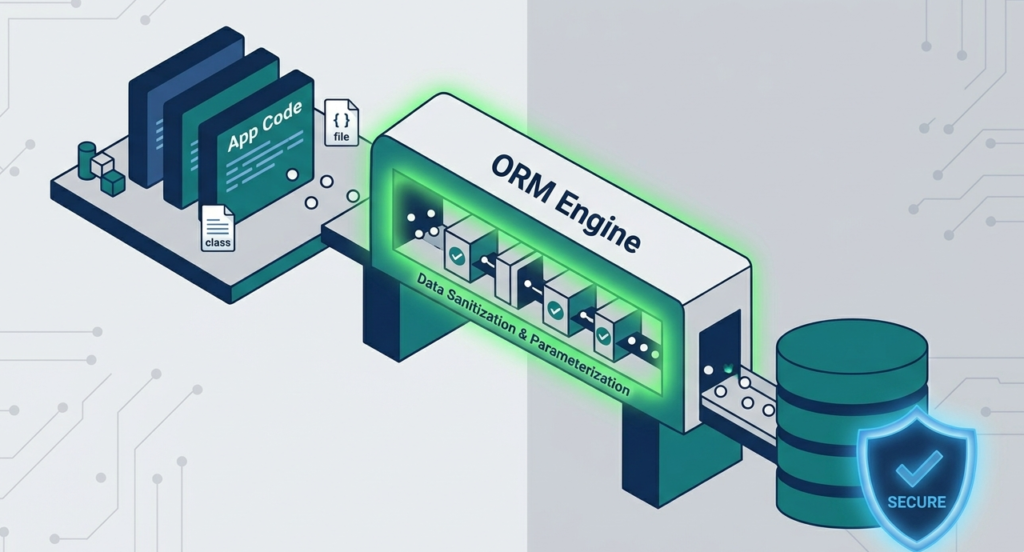
Object Relational Mapping (ORM) frameworks reduce manual SQL writing, but developers must still follow secure practices.
ORM risks may appear through:
- Unsafe raw query execution
- Dynamic filtering logic
- Poor API handling
- Weak authentication flows
Advantages of ORM systems:
- Cleaner development structure
- Faster query building
- Reduced manual database interaction
However, parameterized queries and secure coding principles remain essential even when using modern frameworks.
FAQ
How do parameterized queries prevent SQL injection?
Parameterized queries separate SQL commands from user input, preventing attackers from injecting malicious SQL code into database queries.
Are parameterized queries better than input filtering?
Yes. Input filtering helps reduce risk, but parameterized queries provide much stronger protection against SQL injection attacks.
Can SQL injection still happen with ORM frameworks?
Yes. Developers may still introduce vulnerabilities through unsafe raw queries or poor validation practices.
Do parameterized queries improve performance?
In many cases, yes. Prepared statements and parameterized queries can improve efficiency for repeated database operations.
Building Safer Applications With Better Query Design
Secure database interaction means keeping user data separate from commands. By using parameterized queries, you ensure input is treated as text, not executable code, effectively blocking SQL injection.
Building security in from the start is more efficient than fixing later vulnerabilities. To master these practical skills, join the Secure Coding Practices Bootcamp and ship safer code today.
References
- https://ceur-ws.org/Vol-4146/paper16.pdf
- https://onlinelibrary.wiley.com/doi/epdf/10.1002/sec.1199