

SQL injection remains one of the most dangerous web application risks because a single vulnerable query can expose sensitive data, user accounts, or entire databases. In our experience working with application security reviews, many vulnerabilities appear in simple login forms, search bars, and URL parameters developers assumed were safe.
Effective testing helps organizations identify weak input handling before attackers exploit it. This guide explains practical ways security teams approach testing for SQL injection vulnerabilities and how Secure Coding Practices supports stronger application defense. Keep reading.
Smarter Lessons From Real SQL Injection Testing
Testing for SQL injection vulnerabilities is not only about running scanners. Most successful assessments combine automated detection with human analysis.
- Weak input validation is still a common cause of exposure
- Manual testing often finds flaws scanners miss
- Secure Coding Practices helps reduce repeated vulnerabilities
Why SQL Injection Still Happens
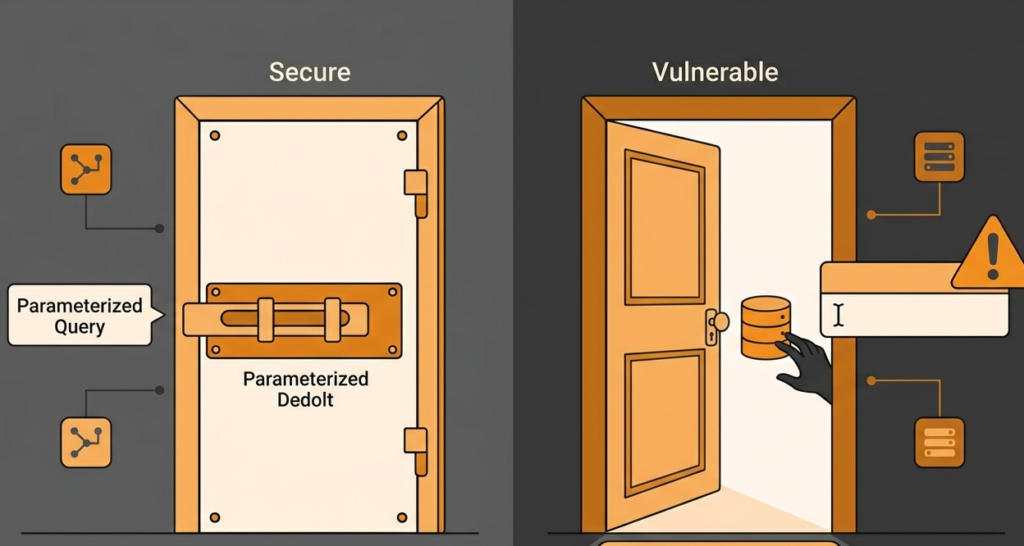
Even modern applications can still contain vulnerable database queries. Success for an attacker often begins with a fundamental understanding of SQL injection (SQLi) and how it can bypass traditional security layers. Attackers mainly target applications that directly insert user input into SQL commands without proper validation or parameterization.
Common vulnerable areas include:
- Login pages
- Search features
- Contact forms
- API parameters
- URL query strings
In many real assessments, developers believed frameworks automatically prevented SQL injection. However, unsafe custom queries or poorly handled user input still introduced risk. Secure Coding Practices encourages layered protection because relying on a single defense rarely works long term.
Common Methods Used for Testing SQL Injection Vulnerabilities
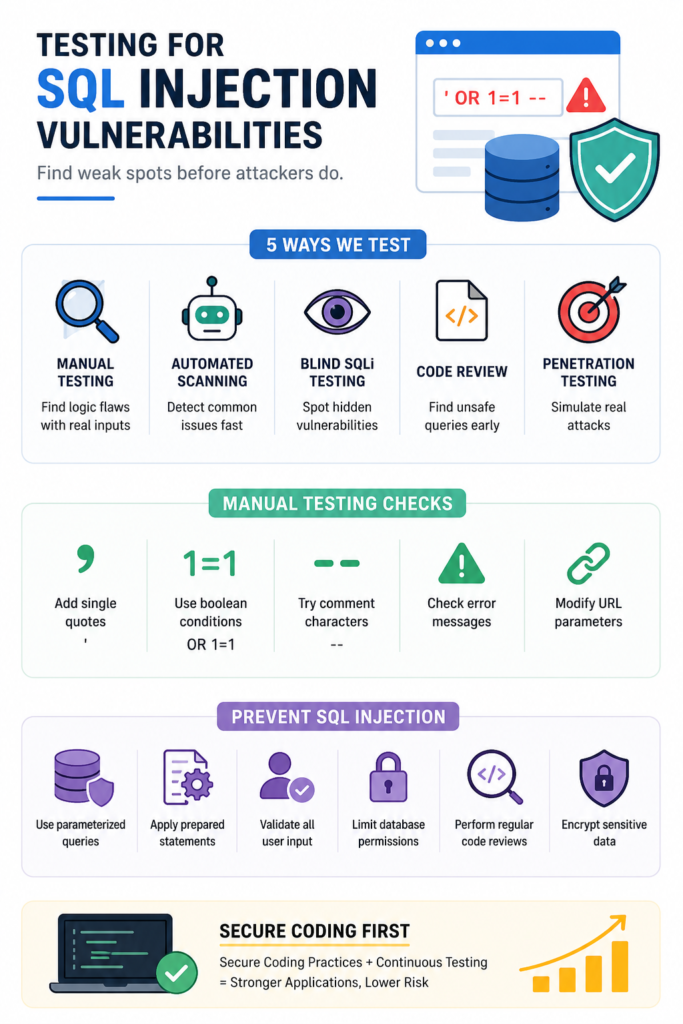
Security teams typically combine several testing approaches to improve accuracy.
| Testing Method | Purpose | Common Use |
| Manual Testing | Identify logic flaws | Login forms and filters |
| Automated Scanning | Quickly detect common issues | Large applications |
| Blind SQL Injection Testing | Detect hidden vulnerabilities | Error-suppressed systems |
| Code Review | Find unsafe queries directly | Development environments |
| Penetration Testing | Simulate real attacks | Enterprise applications |
Manual testing remains valuable because experienced analysts can identify unusual behavior automated tools may ignore.
“The accuracy and detection coverage of the penetration testing report depend on the testers’ knowledge and experience… this method uses automated tools for initial scanning and identification of vulnerabilities, followed by manual testing to delve deeper into the findings” – Bugingo et al., 2026
Manual SQL Injection Testing Techniques
Credits: Hacksplaining
Manual testing helps analysts understand how the application reacts to manipulated input.
Typical techniques include:
- Adding single quotation marks (‘)
- Using boolean-based conditions
- Testing comment characters like —
- Observing database error messages
- Modifying URL parameters
We often find that small inconsistencies reveal major weaknesses. Reviewing real-world SQL injection attack examples shows that a login form returning different error messages after modified input often indicates unsafe query handling behind the application.
Manual testing also helps security teams verify whether automated scanner results are real vulnerabilities or false positives.
Automated Tools for Vulnerability Detection
Automated scanning tools speed up large-scale security assessments. They help security teams identify:
- Vulnerable parameters
- Database error disclosures
- Injection points
- Weak API endpoints
However, scanners are not perfect. In practice, they sometimes miss business-logic vulnerabilities or produce inaccurate alerts. This is why many organizations combine automation with experienced manual validation.
Secure Coding Practices often recommends integrating automated testing into development pipelines so vulnerabilities can be detected earlier before production deployment.
How Developers Reduce SQL Injection Risk
The best defense starts during development rather than after deployment.
Effective prevention strategies include:
- Using parameterized queries
- Applying prepared statements
- Validating all user input
- Limiting database permissions
- Performing regular code reviews
- Encrypting sensitive information
We consistently see safer applications when security becomes part of daily development workflows. Teams that treat security testing as continuous maintenance usually experience fewer severe incidents later.
“We found that parameterized queries were the most effective in preventing SQL injection attacks” – Diva-Portal, 2023
Secure Coding Practices supports proactive security habits by helping organizations improve secure application development processes from the beginning.
Blind SQL Injection and Hidden Risks
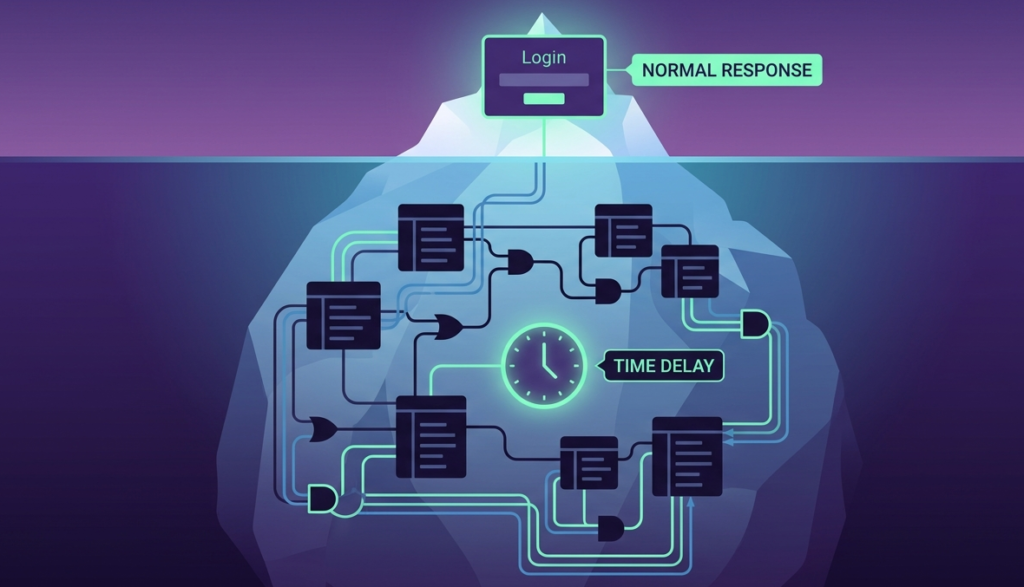
Blind SQL injection occurs when applications hide database errors but still respond differently to malicious queries.
Indicators may include:
- Delayed responses
- Different page behavior
- Slight content changes
- Unexpected redirects
These vulnerabilities are harder to detect because applications appear normal on the surface. Mastering blind SQL injection techniques allows analysts to spend time comparing response patterns and time delays to confirm these hidden weaknesses.
This is why advanced testing for SQL injection vulnerabilities requires patience and behavioral analysis instead of depending entirely on visible database errors.
FAQ
What is testing for SQL injection vulnerabilities?
It is the process of identifying whether an application improperly handles user input in database queries, allowing attackers to manipulate SQL commands.
Why is manual SQL injection testing important?
Manual testing helps analysts identify logic flaws, hidden behaviors, and complex vulnerabilities automated scanners may miss.
Can automated scanners fully prevent SQL injection?
No. Automated tools improve detection speed, but human analysis is still necessary for accurate validation and deeper assessment.
What is the safest way to prevent SQL injection?
Using parameterized queries, prepared statements, proper input validation, and following Secure Coding Practices are among the most effective prevention methods.
Building Stronger Security Habits Moving Forward
Building stronger security habits requires moving beyond reactive fixes toward a proactive, developer-driven culture. By integrating manual testing and automated analysis into daily workflows, teams can neutralize threats like SQL injection before they reach production.
To ship safer code from day one, join the Secure Coding Practices Bootcamp. This hands-on, two-day course offers practical labs on the OWASP Top 10, encryption, and secure authentication without the jargon. Join the Bootcamp.
References
- http://juti.if.its.ac.id/index.php/juti/article/download/1372/586
- https://www.diva-portal.org/smash/get/diva2:1787822/FULLTEXT01.pdf