

Cyber resilience act incident reporting is reshaping how organizations detect, document, and communicate security incidents. When a breach occurs, delays and unclear reporting can increase damage and regulatory risk. From our experience, structured reporting reduces chaos and improves coordination across teams.
This guide explains how incident reporting works under the regulation and how teams can align processes early. Clear workflows, accountability, and secure development all play a role. Keep reading.
Cyber Resilience Act Incident Reporting Essentials
Cyber resilience act incident reporting requires organizations to act quickly, document clearly, and report consistently.
- Timely reporting is mandatory, not optional
- Standardized processes reduce confusion during incidents
- Documentation must be accurate and continuous
What Is Cyber Resilience Act Incident Reporting?

Cyber resilience act incident reporting refers to the obligation to notify authorities about security incidents affecting digital products or services.
“Computer security incident management is a critical component of an organization’s information security program.” – Wikipedia
- Focuses on early detection and rapid disclosure
- Requires reporting within defined timeframes
- Applies across the software lifecycle
From what we’ve seen, teams struggle most with unclear ownership. Without defined roles, reporting becomes delayed or inconsistent. This is why organizations must treat reporting as a core operational process, not an afterthought.
Why Incident Reporting Matters Under the Regulation
Incident reporting is not just compliance, it directly impacts security outcomes. Integrating these reports into broader vulnerability and risk management strategies ensures that technical gaps are closed quickly
“Timely detection and reporting of incidents significantly reduce the impact of cybersecurity breaches.” – ResearchGate
- Reduces response time during attacks
- Improves transparency with regulators
- Helps prevent repeated vulnerabilities
We’ve learned that organizations with strong reporting frameworks recover faster. They already know who reports, what to report, and how to escalate. Without this clarity, even small incidents can escalate into major risks.
Core Requirements for Cyber Resilience Act Incident Reporting
Credits: Hogan Lovells
Organizations must follow structured reporting obligations, which often overlap with vulnerability handling procedures to ensure a complete audit trail.
- Initial notification: Early alert after detection
- Detailed report: Technical and impact analysis
- Follow-up updates: Continuous communication
| Requirement | Description | Impact |
| Initial Notification | Early disclosure of incident | Faster regulatory response |
| Detailed Report | Full technical breakdown | Better risk assessment |
| Follow-up Updates | Ongoing status communication | Continuous transparency |
In practice, missing even one step can lead to compliance gaps.
Building an Effective Incident Reporting Workflow
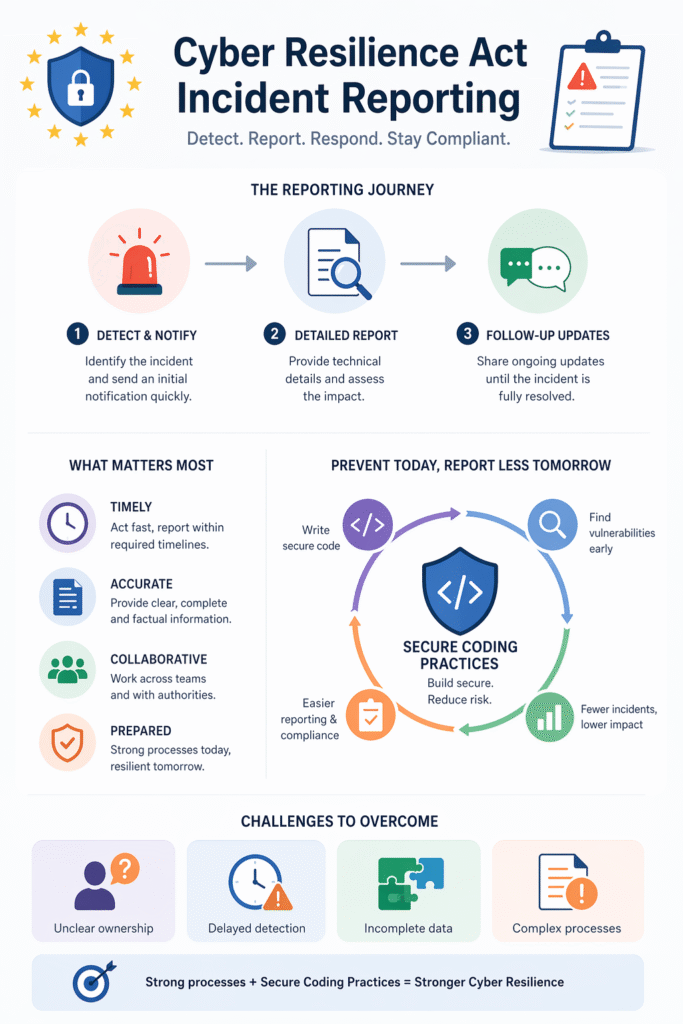
A strong workflow ensures consistency and speed.
- Define roles and responsibilities clearly
- Use templates for faster documentation
- Automate alerts and escalation paths
From our experience, the best workflows are simple and repeatable. Overcomplicated processes slow teams down during real incidents. Keep it structured, but practical.
We also prioritize Secure Coding Practices early. By reducing vulnerabilities during development, we naturally reduce the number of incidents that require reporting.
The Role of Secure Coding Practices in Incident Reporting
Prevention and reporting are closely connected.
- Secure coding reduces vulnerabilities at the source
- Fewer vulnerabilities mean fewer reportable incidents
- Improves overall compliance readiness
We’ve seen that when teams adopt Secure Coding Practices, reporting becomes more manageable. Instead of reacting constantly, teams shift toward proactive security.
This doesn’t eliminate incidents, but it significantly reduces their frequency and severity while simplifying the mandatory vulnerability disclosure process for developers
Common Challenges and How to Overcome Them
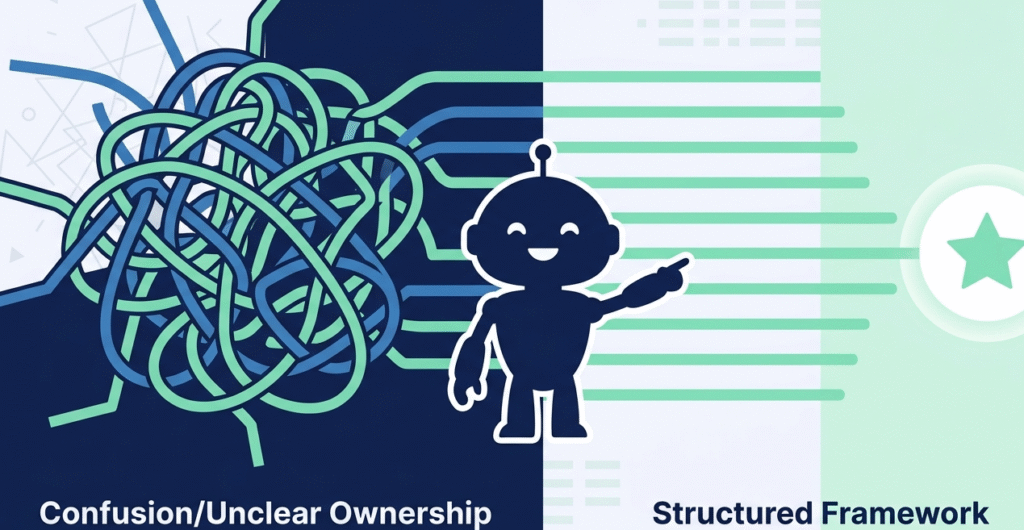
Many organizations face similar issues.
- Unclear ownership → Assign dedicated reporting roles
- Delayed detection → Improve monitoring systems
- Incomplete data → Standardize reporting templates
From what we’ve handled, the biggest issue is hesitation. Teams often delay reporting because they’re unsure. A clear framework removes that uncertainty and encourages faster action.
FAQ
How do organizations determine whether an incident is reportable under the Cyber Resilience Act?
Determining reportability depends on impact and risk level. Organizations must assess whether the incident affects product security, user safety, or data integrity. In practice, we rely on predefined severity criteria and risk scoring models.
If an incident has potential cross-border or systemic impact, it is usually safer to report early. Clear internal thresholds help teams avoid delays and ensure consistent decisions under pressure.
What are the risks of underreporting or delayed reporting in incident management?
Underreporting or delays can lead to regulatory penalties, reputational damage, and prolonged security exposure. From our experience, the bigger issue is operational, teams lose valuable time coordinating responses.
Regulators expect transparency, and failure to report promptly may signal weak internal controls. A structured reporting workflow minimizes these risks and ensures organizations stay aligned with compliance expectations.
How can teams balance speed and accuracy in incident reporting?
Speed and accuracy often conflict, but both are essential. The best approach is phased reporting: start with an initial notification containing verified facts, then follow up with detailed analysis.
We’ve found that using standardized templates and automation tools helps maintain consistency without slowing down response time. This balance ensures organizations meet deadlines without compromising data quality.
How do Secure Coding Practices influence incident reporting obligations?
Secure Coding Practices reduce the likelihood of vulnerabilities turning into reportable incidents. By addressing security issues during development, teams minimize exposure before deployment. From our experience, this shifts reporting from reactive to manageable.
Fewer critical incidents mean less pressure on reporting systems and better compliance outcomes. It’s a proactive strategy that strengthens both security posture and regulatory readiness.
Strengthening Cyber Resilience Act Incident Reporting
Cyber resilience act incident reporting helps organizations respond faster, stay compliant, and reduce long-term risks. From our experience, combining structured reporting workflows with Secure Coding Practices creates a stronger security foundation.
It ensures teams are not only reacting effectively but also preventing incidents earlier. If you want to build practical, real-world security skills, explore the Secure Coding Practices Bootcamp.
References
- https://en.wikipedia.org/wiki/Computer_security_incident_management
- https://www.researchgate.net/publication/Incident_Response_and_Management