
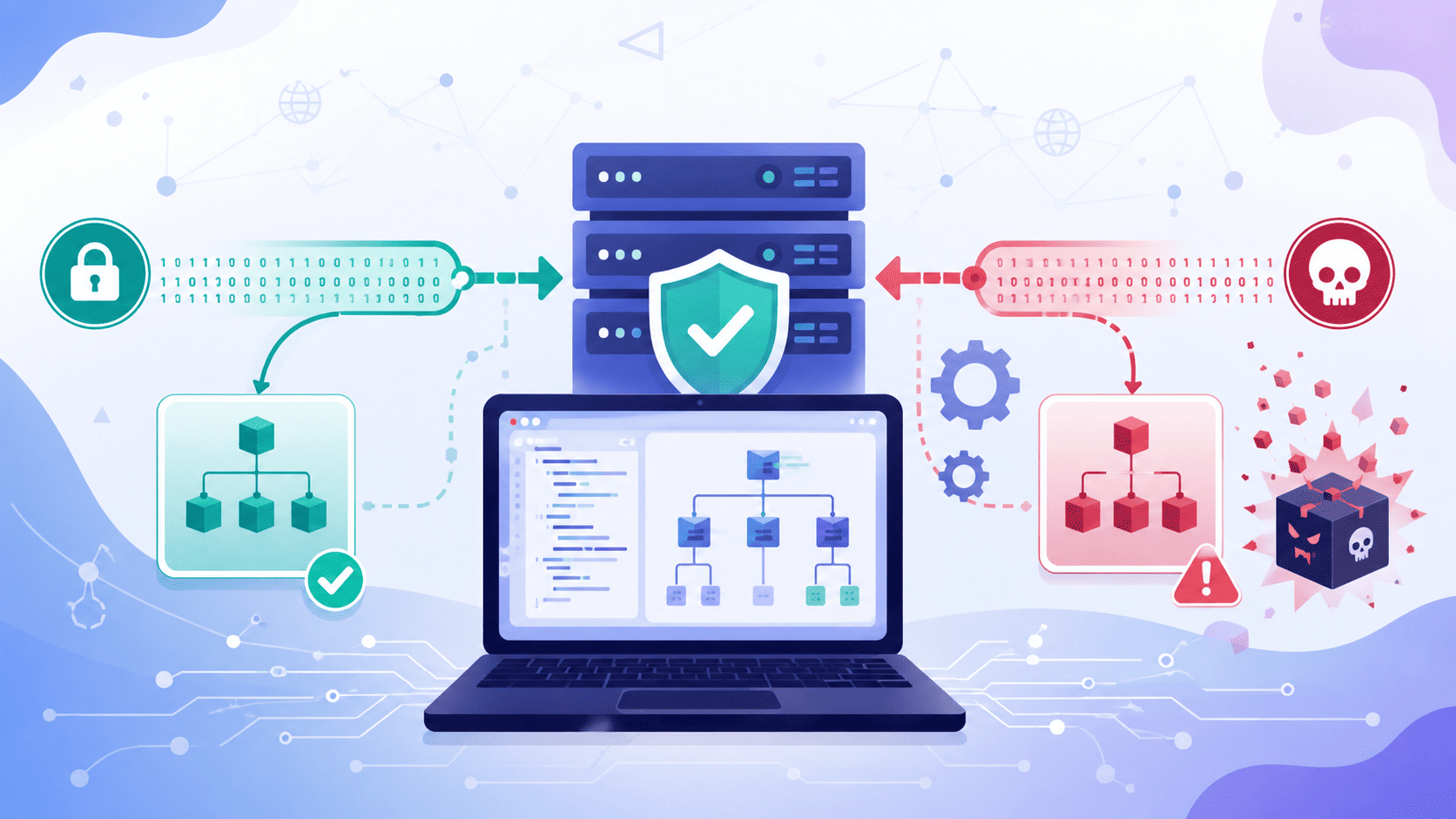

Insecure deserialization lets attackers tamper with serialized data so an application processes it in ways the developer never intended. That can open the door to remote code execution, privilege escalation, or denial-of-service attacks. The risk is serious because the application may trust the manipulated data before key security checks happen. And that gives attackers a chance to interfere with normal behavior or gain deeper access.
Secure Coding Practices help teams reduce this risk by validating data, limiting unsafe deserialization, and applying safer design choices from the beginning. Keep reading to see how these attacks work and what defenses make a real difference.
Security Snapshot: Insecure Deserialization at a Glance
- Insecure deserialization occurs when an application reconstructs objects from untrusted data without sufficient validation.
- Attackers can alter a serialized payload to trigger object injection, authentication bypass, or remote code execution.
- We have found that adopting Secure Coding Practices early in development, combined with layered security testing, provides one of the most effective ways to reduce exposure before deployment.
What Does Insecure Deserialization Mean?
Deserialization is the process of taking formatted data (like JSON, XML, or binary) received from an outside source, a user, a service, or a file, and converting it back into native objects that an application can use.
Insecure deserialization happens when an application unpacks that incoming data without verifying that it is safe first.
When untrusted data is accepted blindly, attackers can tamper with the serialized object structure to inject malicious payloads. Once the application unpacks the tampered object, it executes the embedded logic, giving the attacker a direct doorway into the server.
Serialization vs. Deserialization
To see how the vulnerability works, it helps to understand the two-step cycle applications use to move data around.
- Serialization (Packing): The process of translating live, complex objects in memory into a flat format (like JSON, XML, or a language-specific binary stream) so they can be stored in a database, saved to a file, or sent over a network. Think of it like disassembling furniture to pack it into a shipping box.
- Deserialization (Unpacking): The reverse process. The receiving application reads the stream of data and reconstructs the exact object structure back into memory. This is like unboxing and reassembling that furniture on the other end.
Applications rely on this cycle everywhere: storing user sessions, passing messages between microservices, and caching application state.
Why Apps Use Serialization?
Developers rely on serialization because it handles complex data structures natively without requiring manual conversion code for every field.
Common use cases across modern architectures include:
- Session Management: Storing user credentials, roles, and state directly inside cookies or tokens.
- Microservice Communication: Passing structured objects back and forth over HTTP or RPC protocols.
- Caching & Performance: Saving heavy in-memory objects to Redis or Memcached to speed up database queries.
- Message Queues: Packaging background job data into queues like RabbitMQ or Kafka.
While this makes development faster, processing objects from outside users without validation hands attackers direct control over application logic.
Why Deserialization Is So Risky?
When an application unpacks untrusted data blindly, it assumes the data is benign. Attackers exploit this blind trust by crafting “gadget chains”, sequences of existing application code that trigger automatically during the reconstruction process.
[ Attacker crafts tampered payload ]
│
▼
[ App receives data (Cookie/API/Queue) ]
│
▼
[ Deserialization begins (No validation) ]
│
▼
[ Exploit code executes in server memory ]
An unvalidated deserialization flaw can lead to severe operational impacts:
- Remote Code Execution (RCE): The worst-case scenario. The server executes arbitrary system commands embedded in the payload, granting the attacker full shell access to the underlying server.
- Authentication Bypass: Tampering with serialized session objects to change user IDs or escalate privileges to administrator level without credentials.
- Data Tampering & Theft: Modifying object state to alter financial transactions, access restricted records, or extract sensitive customer databases.
- Denial of Service (DoS): Injecting payloads designed to consume infinite CPU or memory resources during the unpack process, crashing the application.
Common Vulnerable Tech Stacks
Different programming languages handle serialization natively, and many include built-in mechanisms that are inherently dangerous when exposed to external input.
| Language / Framework | Native Serialization Tools | Risk Profile |
| Python | pickle, shelve, marshal | Extremely high risk. pickle executes arbitrary Python code by design during unpacking. |
| Java | java.io.Serializable, ObjectInputStream | High risk. Extensively targeted via gadget chains in popular libraries (e.g., Apache Commons). |
| PHP | unserialize(), serialize() | High risk. Triggers magic methods (like, wakeup or, destruct) that attackers chain together. |
| .NET | Binaryformatter, Net DataContractSerializer | High risk. Microsoft explicitly recommends avoiding BinaryFormatter due to inherent flaws. |
How to Prevent Insecure Deserialization?
Fixing deserialization flaws requires moving away from implicit trust and enforcing strict data validation boundaries.
1. Avoid Native Object Serialization
The single most effective defense is to never accept serialized native objects from untrusted sources. Instead, switch to structured, language-neutral data formats like JSON or Protocol Buffers (protobuf) that only pass raw data attributes rather than complex code logic.
2. Sign and Encrypt Payloads
If you must pass serialized data through untrusted clients (such as browser cookies), protect it using strong cryptographic signatures like HMAC (Hash-based Message Authentication Code).
Crucial Rule: Always verify the cryptographic signature before passing the payload to the deserializer. If the signature doesn’t match, drop the payload immediately.
3. Enforce Strict Type Whitelisting
If using native Java or .NET deserialization, implement strict type lookups. Limit the deserializer so it only reconstructs a specific, pre-approved list of safe classes, blocking unexpected gadget classes before they execute.
4. Run Deserialization Code with Least Privilege
Ensure the background processes and application servers performing object deserialization operate under isolated, low-privilege service accounts. This limits the blast radius if an attacker successfully achieves execution.
How Does Insecure Deserialization Work?
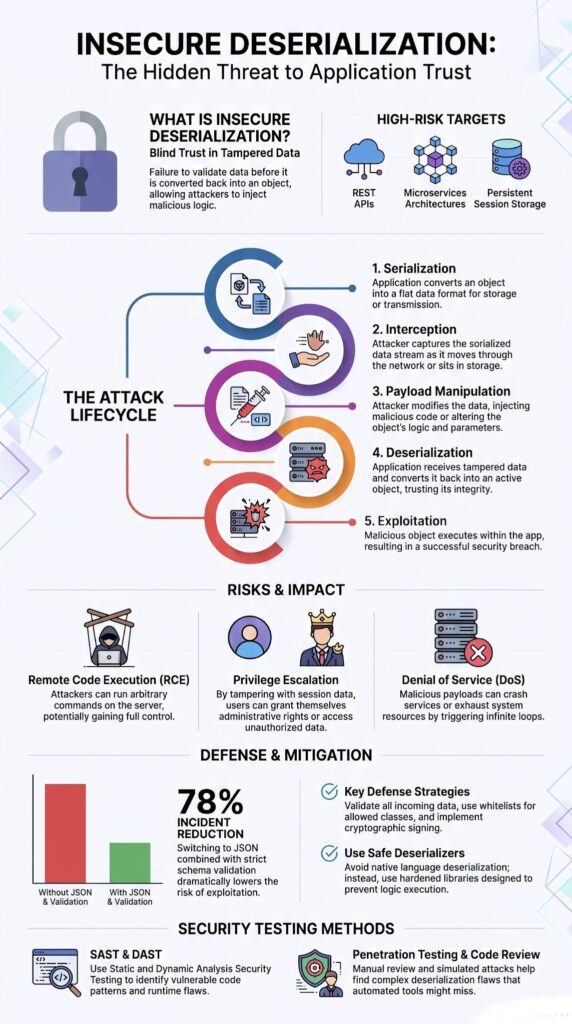
At its core, serialization is just packing up an application’s object data into a transportable format, much like zipping up a folder so it can travel across a network. Deserialization is the process of unpacking that data back into a live object on the server side.
The security flaw happens when an application blindly unpacks data sent from an untrusted source, assuming that if the format matches, the content must be safe. An attacker intercepts the packed data, alters the underlying object properties or logic, and sends it right back. The application reconstructs the object and executes whatever behavior was embedded inside.
Common Vector Surfaces
When looking for deserialization vulnerabilities in real-world applications, pay close attention to where state data moves back and forth:
- Session Cookies: Storing serialized state objects in client-side cookies without cryptographic signing.
- Hidden Form Fields: Passing serialized application state through POST parameters.
- API Payloads: Accepting serialized native objects (like Java, Python pickle, or PHP objects) via standard JSON or XML web service endpoints.
A frequent mistake development teams make is trusting old session data simply because it originated from a previous valid request. If an endpoint lets the client hold onto or pass back a serialized state, an attacker can tamper with it. Once they control object values or types during reconstruction, they can force the application into performing unintended actions.
Step-by-Step Execution Flow
| Stage | What Happens | Security Risk |
| Serialization | The application converts an object into a transferable format. | Sensitive object data may leave the application’s trusted environment. |
| Interception | An attacker captures the serialized payload. | The payload can be inspected and modified. |
| Payload Manipulation | The attacker changes object values or injects a malicious payload. | Malicious data is prepared for execution. |
| Deserialization | The server reconstructs the object without sufficient validation. | The application trusts attacker-controlled data. |
| Exploitation | Unexpected methods or gadget chains execute automatically. | Can result in remote code execution, privilege escalation, or denial of service. |
Why Are Object “Gadgets” Important?
A common misconception is that exploitation requires writing fresh, malicious code onto the server. It doesn’t. Modern deserialization exploits rely on gadget chains, pre-existing, legitimate classes already sitting in the application’s codebase or imported libraries linked together in an unintended order.
Why Gadgets Are So Lethal?
- Zero New Code Required: Attackers don’t upload executable files; they manipulate existing software logic already on the target machine.
- Legitimate Dependencies become Attack Vectors: Well-known utility libraries (like Apache Commons Collections 3.2.1 in Java) contain standard classes that, when instantiated in a specific sequence, can invoke system commands.
- Bypasses Traditional Source Code Scans: Static analysis tools often miss gadget chains because every individual class in the chain looks completely benign on its own.
A classic example involves chaining standard utility classes together, such as InvokerTransformer, ConstantTransformer, and ChainedTransformer. When the server deserializes the initial container object, it automatically triggers a cascade of internal method calls that end up spawning a system shell. The code executing the command belongs entirely to the vendor library; the attacker just provided the blueprints for how those classes interact.
In a recent analysis by Bruno Kreyszig and Alexandre Bartel, Umeå University
“As discovered in previous research, fully comprehending this type of vulnerability is no easy task due to the complexity of exploitation, mostly relying on so-called gadget chains. It follows that exploitable gadget chains are generally not the result of a single programming weakness, but rather the combination of all gadgets in the gadget chain. This makes gadget chains hard to detect and remediate.” – Umeå University
Ecosystem Impact
While Java gets the most spotlight due to its massive ecosystem of enterprise frameworks, this vulnerability pattern isn’t unique to one language. We see identical exploitation concepts across:
- Java Ecosystem: Heavy reliance on native binary serialization (java.io.Serializable) and deep library dependency trees.
- .NET Ecosystem: Dynamic object deserialization formats (like BinaryFormatter or custom JSON.NET configurations using type names).
- Dynamic Languages: Python (pickle), PHP (unserialize), and Ruby (Marshal) all suffer from native deserialization flaws when unauthenticated data is processed.
To secure an application against these threats, security teams cannot rely solely on searching for “bad code.” Defending against deserialization requires strict input verification, avoiding native object serialization wherever possible, and enforcing robust integrity checks (such as HMAC signatures) before data gets reconstructed on the server.
Why Is Insecure Deserialization So Dangerous?
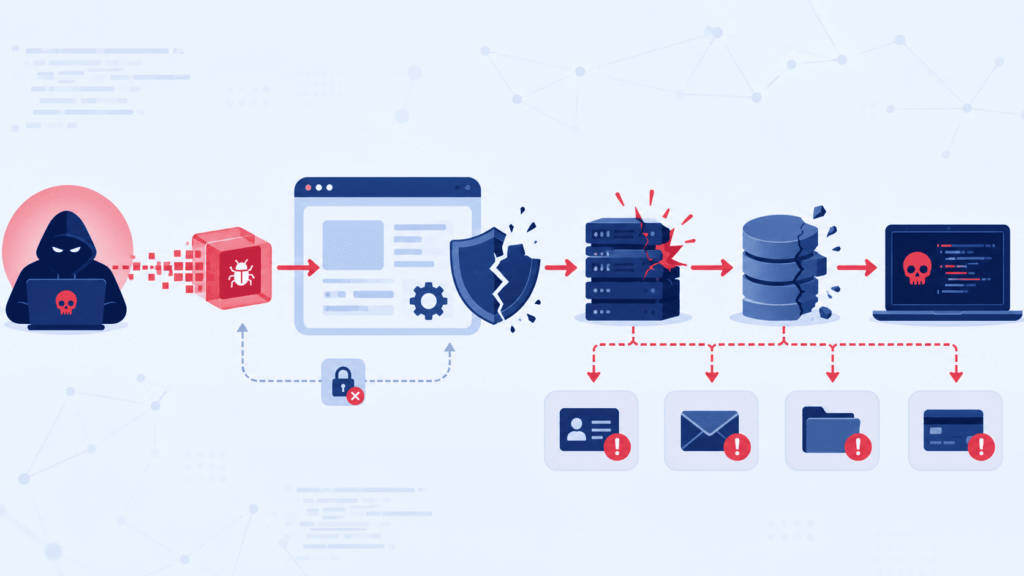
One weak spot in deserialization can compromise an entire application. What makes this vulnerability uniquely dangerous is execution order: deserialization often occurs before the application validates who the user is or what permissions they hold.
Most security bugs only affect a single feature or endpoint. Deserialization vulnerabilities operate at a foundational level, altering how the application constructs objects and handles execution logic underneath.
Core Business & Technical Impacts
- Pre-Authentication Execution: Attackers can deliver payloads to endpoints before logging in, bypassing boundary controls entirely.
- High-Impact Outcomes: A single unvalidated object can lead to Remote Code Execution (RCE), privilege escalation, authentication bypass, data tampering, or Denial of Service (DoS).
- Severe Financial Risk: According to IBM’s Cost of a Data Breach Report, the average data breach cost reached $4.88 million. Beyond direct monetary loss, organizations face prolonged downtime, regulatory penalties, and reputational damage.
Research from Sayar, Bartel, Bodden, and Le Traon shows
“Another important aspect is that ‘dormant’ serialization vulnerabilities can be super easily enabled, once new gadgets are accidentally introduced. When studying patches of such libraries, we observed that the time used to remove gadgets varies between several months and almost 12 years, with an average of almost six years. It thus appears that deserialization vulnerabilities do not yet get the attention of practitioners that they should actually deserve.” – Eric Bodden’s Research
Not every deserialization bug results in full server takeover, the final impact depends heavily on available gadget chains, process privileges, and environment controls. However, because it is difficult to predict how an attacker might combine existing libraries, security teams routinely classify these flaws as critical risks.
Why Does This Concern Security Teams?
Traditional security perimeters were built around network traffic patterns and standard input filtering. Deserialization flaws exploit the application’s implicit trust in its own internal data structures, allowing malicious payloads to slip past standard defenses.
Key Operational Challenges
- Blind Spots in Perimeter Defenses: Web Application Firewalls (WAFs) and network inspection tools easily detect standard SQL injection or cross-site scripting patterns, but often fail to parse binary or encoded object streams.
- Dormant Vulnerabilities: An application might not be exploitable today, but adding a third-party dependency tomorrow can instantly introduce the “gadget” required to complete an attack chain.
- Long Remediation Lifecycles: As research shows, identifying and removing dangerous gadget classes across deep dependency trees often takes years rather than weeks.
To defend against these threats effectively, modern security programs combine static source code analysis, threat modeling, and dynamic runtime protection (RASP). Training development and auditing teams to understand both object reconstruction mechanics and defensive validation is the most reliable way to catch these flaws before production deployment.
Which Applications Are Most at Risk?
Credits: StackHawk
Some apps are just inherently easier to break into than others. The highest-risk targets take raw data from users and rebuild objects in memory without validating what’s packed inside first. This pattern crops up constantly in systems that rely on native serialization for core functions like handling logins, serving APIs, caching data, or facilitating server-to-server communication.
In our security labs, we see this surface repeatedly across enterprise environments:
- Heavy internal traffic: Large corporate architectures move streams of serialized objects back and forth across microservices every second.
- Unchecked input pipelines: The moment unverified user input trickles into those internal data streams, an attacker gets a direct foothold.
- Over-reliance on “trusted” networks: Teams often forget to sanitize traffic once it gets past the perimeter fence.
Where the Vulnerabilities Actually Hide?
After reviewing countless systems, we’ve found that the real danger almost never lives where teams expect it to. Everyone knows to lock down the front door, the public login page, password resets, or payment checkouts. But background infrastructure often runs completely wide open.
You will almost always find this blind spot sitting inside:
- REST APIs: Especially endpoints using custom binary or JSON object payloads.
- Web session storage: Cookie-based sessions holding complex serialized state.
- Message brokers: Systems like RabbitMQ or Kafka shuffling job payloads between internal nodes.
- File uploads: Handlers processing serialized attachments or data imports.
- Distributed microservices: Interservice calls that blindly trust upstream data.
- Background task queues: Asynchronous workers processing user-triggered jobs out of sight.
High-Risk Tech Stacks
A specific group of languages continues to dominate insecure deserialization research and real-world exploit reports:
- Java: Famous for classic object-stream vulnerabilities across enterprise frameworks.
- PHP: Frequently targeted via magic methods and unsafe string handling.
- Python: Highly vulnerable when using modules like pickle on untrusted input.
- .NET: At risk through unsafe type handling in various XML and JSON formatters.
None of these languages or environments are inherently flawed on their own. The real breakdown happens when a team relies on an unsafe deserialization method, imports a vulnerable library, or simply assumes a payload is safe just because it originated from “inside the corporate network.”
How Can You Recognize an Insecure Deserialization Vulnerability?
Recognizing insecure deserialization comes down to a simple habit: treat every incoming object like a potential payload. When an application reconstructs objects directly from untrusted sources, such as cookies, HTTP parameters, API payloads, or uploaded files, without strict integrity controls, it opens the door to arbitrary code execution, object injection, and privilege escalation.
Red Flags & Detection Methods
Spotting this vulnerability early requires looking for specific structural weaknesses in how an application processes serialized data.
Common Red Flags
- Exposed native serialization formats: Using native binary or text formats (like Java ObjectInputStream, PHP unserialize(), Python pickle, or .NET BinaryFormatter) directly on user-contributed input.
- Missing digital signatures or MACs: Accepting serialized streams without validating a Message Authentication Code (MAC) or cryptographic signature to verify data integrity.
- Unsafe parser configurations: Utilizing generic object parsers that allow arbitrary class instantiation during the deserialization phase.
- Lack of strict allowlisting: Failing to restrict reconstructed objects to a predefined, safe set of classes before unpacking them.
- Reliance on denylist filtering: Attempting to block known “gadget” classes instead of explicitly permitting only safe ones, a strategy that almost always fails against new bypasses.
Recommended Detection Methods
- Static Application Security Testing (SAST): Scans source code automatically to flag unsafe deserialization APIs and unvalidated input paths.
- Dynamic Application Security Testing (DAST): Probes running applications by injecting altered serialized payloads to observe error messages or out-of-band interactions.
- Manual Secure Code Review: Traces data flows from entry points (sinks) to deserialization methods, verifying if integrity checks exist before object construction.
- Penetration Testing: Simulates real-world exploit chains, leveraging existing application libraries to achieve remote code execution.
- Threat Modeling: Maps out trust boundaries to identify where external objects enter the internal application logic.
What Are Real World Examples of Insecure Deserialization?
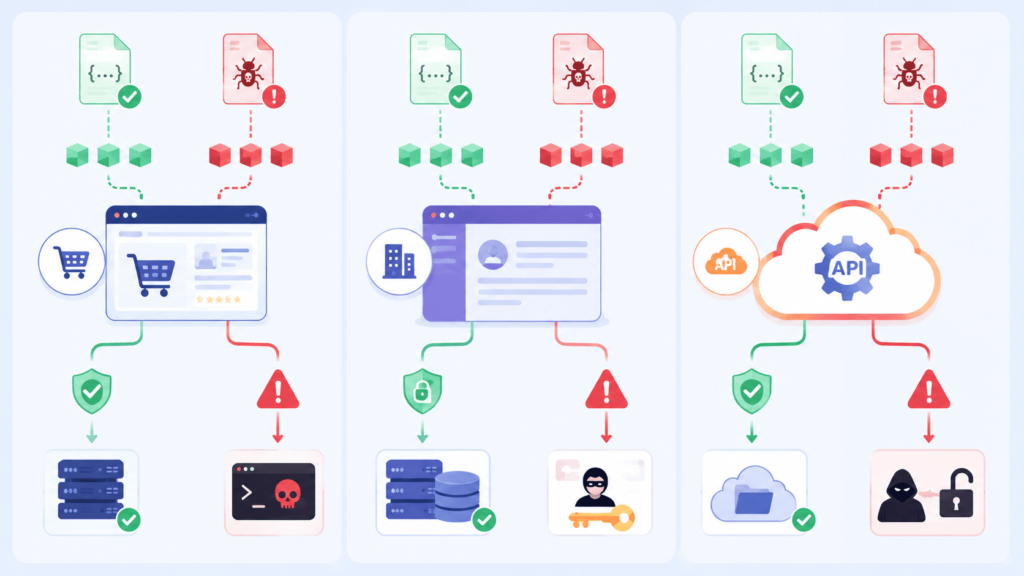
Historically, some of the most impactful application breaches stemmed from insecure deserialization, particularly across Java, PHP, and .NET ecosystems. Attackers rarely need to upload fresh malware; instead, they construct “gadget chains”, reusing existing, legitimate classes already present in the application’s classpath or dependencies to execute unintended commands.
Patterns in Historical Exploits
- Over-reliance on client trust: Assuming that cookies or hidden form fields containing serialized state cannot be tampered with by the end user.
- Unpatched third-party dependencies: Operating legacy libraries (such as older Commons Collections versions) that contain known execution gadgets.
- Default framework behaviors: Running older framework versions where unsafe native object deserialization was enabled by default.
Key Defense Strategies
- Minimize serialized data usage: Prefer structured, language-agnostic data formats like JSON or Protocol Buffers wherever possible.
- Enforce cryptographic validation: Always sign serialized blobs with a HMAC before sending them to the client, and verify the signature prior to deserialization.
- Implement strict type allowlists: Override default resolveClass methods (or use framework equivalents) to strictly limit which classes can be instantiated.
- Maintain active dependency management: Keep all third-party libraries patched to neutralize known gadget chains before they can be leveraged.
- Monitor and log deserialization activity: Track unexpected class instantiation attempts or malformed payloads in application logs to detect early probing efforts.
How Can Developers Prevent Insecure Deserialization?
Preventing insecure deserialization requires moving away from implicit trust. When building systems that accept serialized payloads, security must be integrated directly into the data handling pipeline rather than added as an afterthought.
core Prevention Strategies
A defense-in-depth approach combines strict architectural choices with runtime validation to neutralize object injection risks before execution occurs.
Essential Security Measures
- Avoid native serialization formats: Transition from native binary or object formats (such as Java ObjectInputStream, PHP unserialize(), or .NET BinaryFormatter) toward structured, data-only formats like JSON or Protocol Buffers.
- Enforce cryptographic signatures: Sign every serialized payload using an HMAC or digital signature before sending it across a trust boundary, verifying the signature prior to unpacking.
- Implement class allowlisting: Restrict deserialization strictly to pre-approved object types through custom lookahead object streams or framework-level type filters.
- Apply strict schema validation: Validate all incoming structured data (including JSON and XML) against defined schemas to reject unexpected fields or malformed structures.
- Enforce least privilege execution: Run the application runtime under restricted user accounts to limit potential operating system access if a payload bypasses initial checks.
Production Guidance
| Security Practice | Purpose | Benefit |
| Validate All Incoming Data | Ensure serialized data matches expected formats and values. | Prevents malicious payloads from being processed. |
| Use Allowlists (Whitelists) | Restrict deserialization to approved object types. | Reduces object injection risks. |
| Verify Data Integrity | Apply digital signatures or message authentication. | Detects tampered serialized data. |
| Use Safer Serialization Formats | Prefer JSON with strict schema validation over native object serialization where appropriate. | Lowers the attack surface. |
| Configure Secure Deserializers | Disable unnecessary features and restrict object creation. | Minimizes unintended object execution. |
| Apply Least Privilege | Run applications with only the permissions they require. | Limits the impact of successful exploitation. |
| Perform Security Testing | Use SAST, DAST, code reviews, and penetration testing. | Identifies vulnerabilities before deployment. |
Implementation Best Practices
Relying on blocklists to stop attacks creates a constant game of catch-up, as new gadget chains bypass static block rules. Building defensive controls around proven guidelines, such as these OWASP deserialization prevention tips, directly within the application architecture provides long-term resilience.
Critical Defense Steps
- Architect for safe formats early: Replace language-native object streams during initial design rather than refactoring legacy endpoints under pressure.
- Disable unsafe parser features: Configure JSON and XML parsers to disallow auto-typing, external entity resolution, or unrestricted polymorphic deserialization.
- Monitor deserialization sinks: Log unexpected class instantiation attempts and failed integrity checks to flag early exploitation probing.
- Maintain active dependency hygiene: Regularly update third-party libraries to eliminate known gadget classes from the application’s classpath.
What Role Does Security Testing Play?
Security testing acts as the ultimate reality check for application defenses. Even well-designed architectures can develop subtle flaws during implementation, making regular and multi-layered testing critical to uncovering insecure deserialization vectors before attackers do.
Testing Methods & Integration
Automated tools offer speed and coverage, but complex vulnerabilities like deserialization flaws often bypass automated scanners. Building a robust strategy involves testing insecure deserialization vulnerabilities across multiple phases of the development lifecycle.
Primary Testing Approaches
- Static Application Security Testing (SAST): Scans source code and dependencies to flag calls to unsafe deserialization functions (like Java ObjectInputStream or Python pickle.loads) without running the code.
- Dynamic Application Security Testing (DAST): Tests running applications by sending modified serialized payloads to endpoints, looking for altered responses, execution errors, or out-of-band signals.
- Manual Secure Code Review: Employs experienced human reviewers to trace data flows from user input directly into deserialization sinks, evaluating whether integrity controls exist.
- Penetration Testing: Simulates realistic attack scenarios, attempting to construct gadget chains out of available classpath dependencies to achieve remote code execution.
- Software Composition Analysis (SCA): Monitors third-party libraries to flag outdated components known to contain deserialization gadget chains.
SDLC Integration Strategy
| Security Testing Phase | Primary Objective | Deserialization Coverage |
| Design & Architecture | Identify trust boundaries and data flow paths | Plan for safe formats and cryptographic signatures |
| Development (Code) | Catch unsafe APIs early via SAST & SCA | Detect unsafe parser settings and known gadget libraries |
| Testing & Staging | Validate live app behavior via DAST & Pen Testing | Verify that modified payloads are rejected before parsing |
| Production & Runtime | Monitor logs and application behavior | Track failed integrity checks and anomalous class loadings |
Why Automated Scanners Aren’t Enough?
Relying solely on automated security tools creates a false sense of security. While scanners excel at finding known patterns across thousands of files, they lack the contextual awareness needed to understand how custom objects interact.
Limitations of Automated Scanning
- Context blindness: Automated tools rarely understand custom data structures or application logic, making it hard to judge whether a serialized object is actually untrusted.
- Complex gadget chains: Scanners often fail to recognize multi-step exploit paths where harmless-looking classes are chained together to execute commands.
- Custom wrapper bypasses: Automated rules frequently miss deserialization vulnerabilities hidden behind proprietary encryption or custom encoding protocols.
- High false-negative rates: Standard DAST tools struggle to generate valid serialized payloads that pass initial application sanity checks to reach the vulnerable sink.
How Does Insecure Deserialization Compare With Other OWASP Risks?
While OWASP categorizes insecure deserialization under the broader umbrella of Software and Data Integrity Failures, it operates differently from most web application threats. Instead of manipulating query logic or executing scripts in a victim’s browser, deserialization attacks directly target the application’s memory and server-side object structure.
Technical Comparison of Core OWASP Threats
Understanding how insecure deserialization compares to other high-profile web vulnerabilities highlights why its impact is often far more severe.
OWASP Risk Matrix
| Vulnerability | Primary Target | Typical Impact |
| SQL Injection (SQLi) | Database queries and backend databases | Data theft, unauthorized data modification, database compromise |
| Cross-Site Scripting (XSS) | User browsers and client-side scripts | Session theft, malicious script execution, account hijacking |
| Insecure Deserialization | Application objects and server-side processing | Remote code execution (RCE), privilege escalation, denial of service (DoS), authentication bypass |
Key Differences in Attack Mechanics
- Target location: SQLi focuses on data stores, and XSS executes on client devices, whereas deserialization exploits execute directly within the application’s backend process space.
- Payload construction: XSS uses JavaScript and SQLi uses query syntax, but deserialization attacks repurpose existing application code (“gadgets”) already present on the server to execute arbitrary commands.
- Detection difficulty: Standard web application firewalls (WAFs) easily flag obvious SQL or script patterns, while serialized object payloads are often encoded, encrypted, or buried inside binary streams, making them much harder to inspect.
Why Deserialization Attacks Are Uniquely Dangerous?
A reclassification under broader security frameworks doesn’t diminish the severity of insecure deserialization. In practice, it remains one of the most destructive flaw types a developer can introduce.
High-Impact Factors
- Immediate path to Remote Code Execution (RCE): Successful exploitation frequently yields total system control, allowing attackers to run arbitrary OS commands without needing to find a secondary vulnerability.
- Bypassing traditional authentication: Because applications often deserialize user state or session cookies before verifying authentication, malformed payloads can elevate privileges or grant access automatically.
- Exploitation of implicit trust: Developers routinely write code that implicitly trusts object state sent from the client, creating a systemic architectural blind spot that automated scanners often miss.
Why Should Businesses Prioritize Insecure Deserialization?
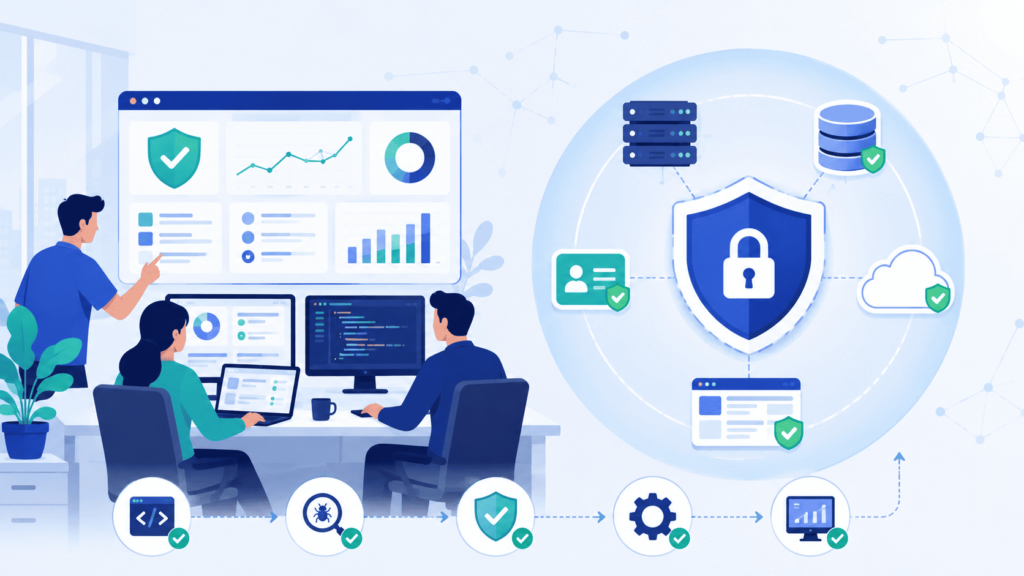
One bad deserialization bug can shut a business down for days. We’ve seen it happen. Right in our own training labs, a tiny mistake in how an app reads serialized data, and suddenly the whole system is wide open. Scary, honestly.
And it doesn’t stop there. Companies end up dealing with leaked customer information, compliance trouble, and a damaged reputation that takes years to rebuild. Sometimes longer.
OWASP has been warning about this for a while now. Once an attacker slips in through a weak spot like this, they usually don’t stop at the front door. They dig deeper into systems that were never supposed to be reachable in the first place.
Why Insecure Deserialization Deserves Top Priority?
Understanding the dangers of insecure deserialization helps business leaders prioritize secure development practices before small weaknesses become expensive incidents.
Here is why addressing it matters right now:
- Massive Blast Radius: Unlike simple bugs, insecure deserialization often grants full Remote Code Execution (RCE). An attacker goes from outside the fence to controlling your server in seconds.
- Cascading Systems Fallout: Once inside, attackers use these flaws to move laterally, reaching sensitive internal networks and databases that were meant to be completely isolated.
- Extremely High Remediations Costs: Fixing security problems early, while the app is still being built, costs way less than fixing them after it’s already out in the world. Teams that catch things early simply spend less time, less money, and avoid massive operational headaches later.
Key Defense Areas to Protect Your Business
We tell every group we train the same thing. Businesses that stay ahead of this problem usually invest in a few key areas:
- Secure Coding Practices: Validating inputs and avoiding native object deserialization wherever possible.
- Vulnerability Management & Patching: Regularly hardening systems and staying ahead of known framework exploits.
- Penetration Testing & Security Assessments: Rigorously testing data flows to catch hidden flaws before attackers do.
- Continuous Monitoring: Catching suspicious object manipulation in real time.
- Incident Response Planning: Ensuring your team can isolate and contain a breach immediately if something slips through.
FAQ
Can unsafe deserialization cause remote code execution or privilege escalation?
Yes. When an application processes untrusted data without proper validation, attackers can send a malicious payload inside a serialized object. This deserialization attack may result in remote code execution, code execution, privilege escalation, authentication bypass, or object injection. The impact depends on the serialization format, the available classes, and how the application handles incoming serialized data.
How can developers prevent insecure deserialization vulnerabilities?
Developers should never trust user-controlled input. They should implement defensive deserialization, apply strong input validation, use whitelist validation and schema validation, and verify data with an integrity check, digital signature, or message authentication. Using a secure deserializer, reducing the attack surface, following secure coding practices, and performing regular patching and hardening further reduce the risk of exploitation.
Which serialization methods are most vulnerable to deserialization attacks?
Attackers commonly target binary serialization, JSON deserialization, XML deserialization, YAML deserialization, PHP unserialization, Java serialization, Python pickle, and .NET serialization when applications use them insecurely. Each technology has different serialization vulnerability risks. However, every method becomes vulnerable when unsafe deserialization allows a malicious object to cross a trust boundary without proper validation.
What signs can indicate a deserialization attack is occurring?
A deserialization attack may produce several warning signs. Security teams may detect unexpected object manipulation, failed integrity checks, repeated payload crafting attempts, or tampered data reaching the application. They may also observe application logic abuse, exploit detection alerts, server-side exploit activity, data corruption, or a denial of service (DoS) attack. Prompt incident response helps limit the impact and supports faster recovery.
Why is threat modeling important for preventing serialization vulnerabilities?
Threat modeling helps developers identify where serialized payloads, object marshalling, and object unmarshalling cross a trust boundary. It also reveals potential attack vectors, gadget chain and exploitation chain opportunities, and weaknesses that could enable parser abuse, type confusion, or access control bypass. When combined with a secure development lifecycle, runtime security, and strong application security practices, threat modeling significantly improves web application security.
Understanding What Insecure Deserialization Means Going Forward
Insecure deserialization can quickly become a serious security problem when applications trust data they shouldn’t. You could face remote code execution, privilege escalation, or authentication bypass before you even notice something is wrong. That’s a costly risk. Reducing exposure starts with secure coding, careful validation, regular testing, and keeping dependencies up to date.
If you’re ready to strengthen your team’s skills, Secure Coding Practices offers practical training that helps developers build safer applications from the start. Join the bootcamp and take a straightforward step toward reducing security risks with proven secure development techniques.
References
- https://dl.acm.org/doi/fullHtml/10.1145/3661167.3661176
- https://ar5iv.labs.arxiv.org/html/2208.08173