

Software supply chain security EU is becoming a critical focus as organizations rely on third-party components, open-source libraries, and external vendors. A single weak link can expose entire systems to risk. From our experience, most incidents don’t start in core code, but in dependencies.
This is why the EU is pushing for stronger visibility, accountability, and control across the supply chain. In this guide, we explain how it works and how to prepare effectively. Keep reading.
Software Supply Chain Security EU Essentials
Software supply chain security EU focuses on managing risks across all software components and dependencies.
- Third-party components are a major risk source
- Transparency is required across the supply chain
- Continuous monitoring is essential
What Is Software Supply Chain Security in the EU Context?
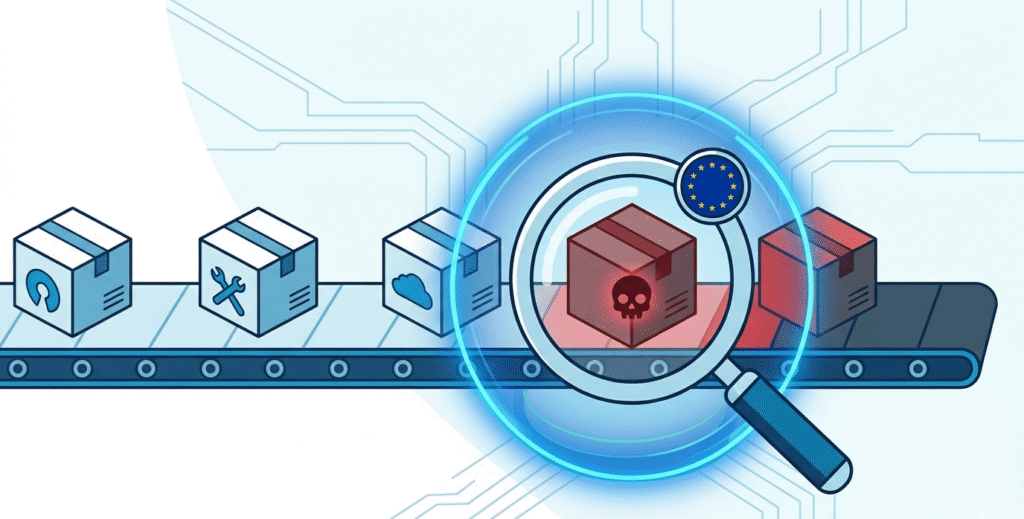
Software supply chain security EU refers to protecting all components involved in software development and delivery.
- Includes open-source libraries, vendors, and tools
- Focuses on risk visibility and control
- Applies across development and deployment stages
“A software supply chain attack occurs when a malicious actor infiltrates a system through an external partner or provider.” – Wikipedia
From what we’ve seen, many organizations underestimate dependency risks. They trust external components without proper validation, which creates hidden vulnerabilities.
Why Software Supply Chain Security Matters
Supply chain attacks are increasing and becoming more complex.
- Attackers target weaker third-party components
- One vulnerability can impact multiple systems
- Detection is often delayed
“Modern software is rarely built from scratch, making supply chain security a critical concern in cybersecurity.” – ResearchGate
We’ve learned that organizations with strong supply chain controls respond faster and reduce exposure. Implementing clear protocols for incident reporting ensures that when risks are no longer hidden, the response is immediate and compliant.
Core Requirements for Software Supply Chain Security EU
Credits: Red Hat
Organizations must implement structured security measures.
- Component transparency: Know what is used
- Risk assessment: Evaluate third-party dependencies
- Continuous monitoring: Track vulnerabilities through proactive vulnerability and risk management strategies.
| Requirement | Description | Impact |
| Transparency | Full visibility of components | Better risk awareness |
| Risk Assessment | Evaluate third-party risks | Reduced exposure |
| Continuous Monitoring | Ongoing vulnerability tracking | Faster response |
Missing visibility is one of the biggest compliance gaps.
Building a Secure Software Supply Chain Workflow
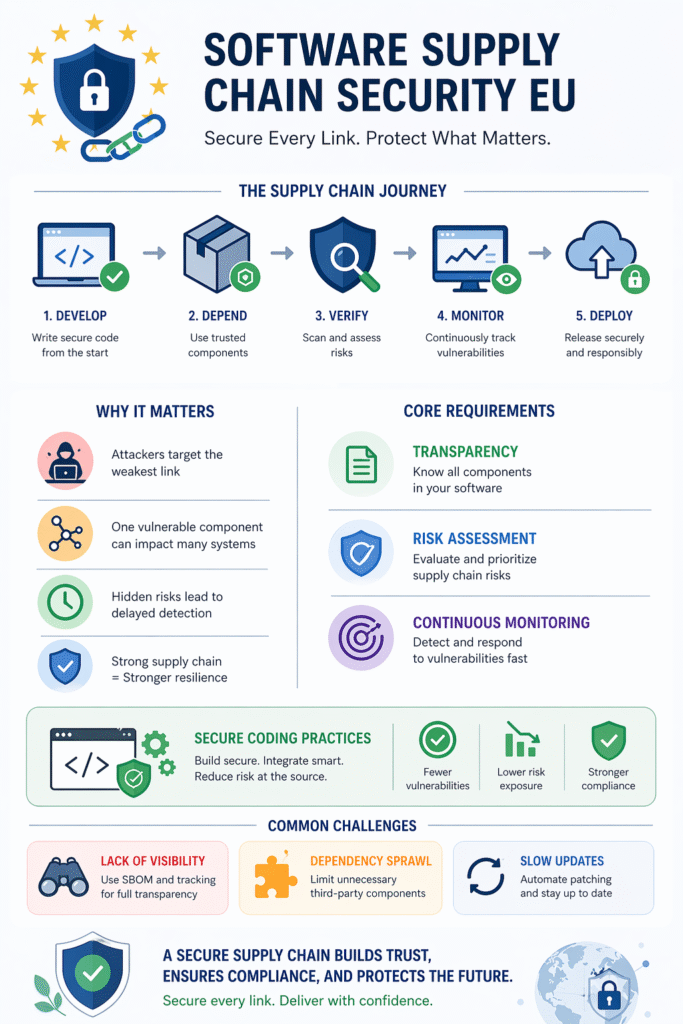
A structured workflow improves control and resilience.
- Maintain a Software Bill of Materials (SBOM)
- Verify and validate all dependencies
- Automate vulnerability scanning
From our experience, simple workflows work best. Overly complex systems slow teams down and reduce adoption.
We also integrate Secure Coding Practices early. By writing secure code from the start, we reduce reliance on risky fixes later in the lifecycle.
The Role of Secure Coding Practices in Supply Chain Security
Prevention starts at the development level.
- Reduces reliance on vulnerable external components
- Encourages safer integration of dependencies
- Strengthens overall system integrity
We’ve seen that teams using Secure Coding Practices are more selective with dependencies. They validate, test, and monitor continuously.
This proactive mindset reduces both security risks and compliance pressure.
Common Challenges and How to Overcome Them
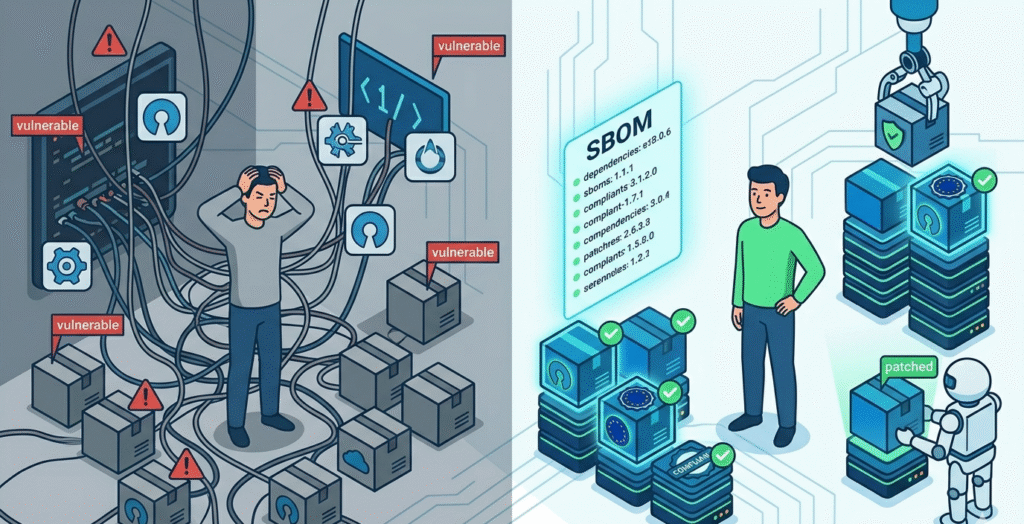
Organizations often face recurring issues.
- Lack of visibility → Use SBOM and tracking tools
- Dependency sprawl → Limit unnecessary libraries
- Slow updates → Adhere to structured patch management requirements to ensure timely fixes.
From what we’ve handled, the biggest issue is over-reliance on third-party trust. A zero-trust mindset within the supply chain helps reduce this risk significantly.
FAQ
How does the EU regulate software supply chain security?
The EU enforces supply chain security through frameworks like the Cyber Resilience Act, requiring transparency, vulnerability management, and secure development practices. Organizations must demonstrate control over their software components, including third-party dependencies.
From our experience, compliance is less about documentation and more about consistent implementation of security processes across the lifecycle.
What is the role of SBOM in supply chain security?
A Software Bill of Materials (SBOM) provides a complete list of components used in an application. It improves visibility and helps teams quickly identify vulnerable dependencies. We’ve found that SBOMs are essential during incident response, as they allow organizations to trace risks efficiently and take targeted action without wasting time.
Why are third-party dependencies a major security risk?
Third-party dependencies are often not fully controlled or audited by internal teams. Attackers exploit this gap to inject malicious code or target known vulnerabilities. From what we’ve seen, many breaches originate from outdated or unverified libraries. Regular validation and monitoring are critical to reducing this risk.
How do Secure Coding Practices improve supply chain security?
Secure Coding Practices help teams write safer, more reliable code while integrating external components responsibly. This reduces the attack surface and ensures vulnerabilities are addressed early. In our experience, teams that prioritize secure coding rely less on reactive fixes and maintain stronger control over their entire supply chain.
Strengthening Software Supply Chain Security EU
Software supply chain security EU requires organizations to move beyond basic security and take full control of their dependencies. From our experience, combining visibility, structured workflows, and Secure Coding Practices creates a resilient and compliant system.
It helps teams prevent risks before they escalate and respond effectively when issues arise. If you want to strengthen your development security skills, explore the Secure Coding Practices Bootcamp.
References
- https://en.wikipedia.org/wiki/Supply_chain_attack
- https://www.researchgate.net/publication/Software_Supply_Chain_Security