
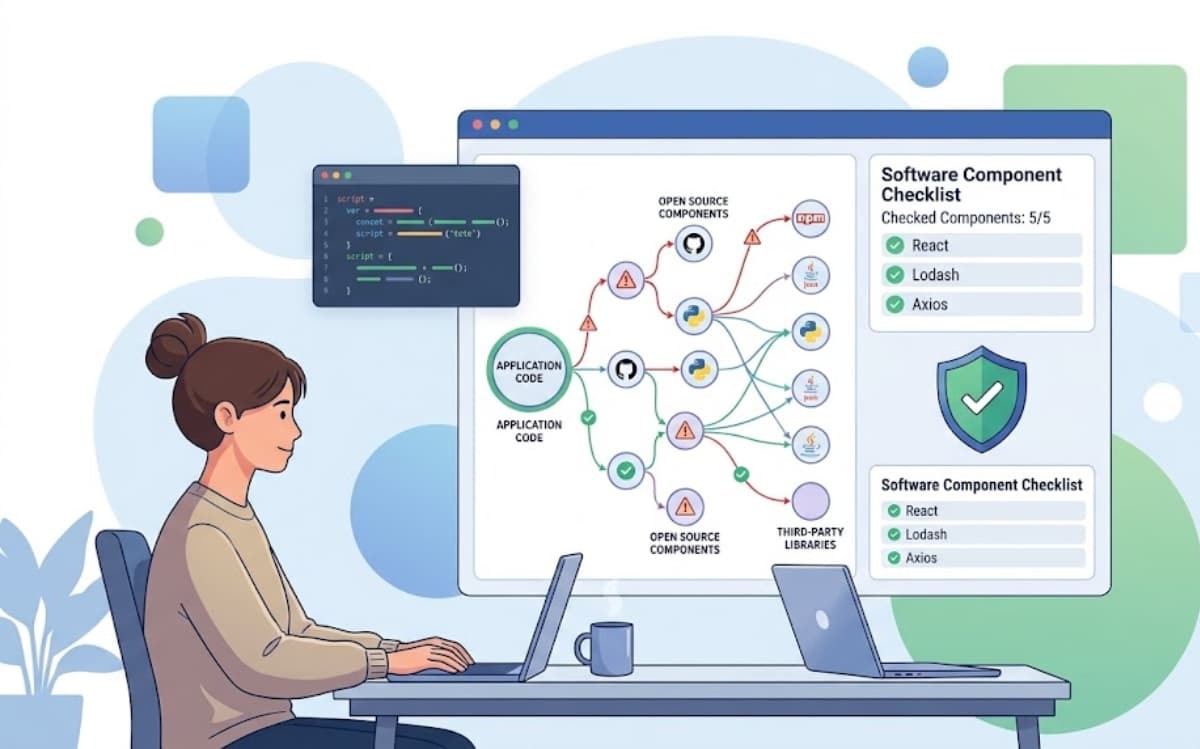

Software Composition Analysis should be part of every modern development process because it helps teams find vulnerable dependencies early, reduce compliance risks, and improve software supply chain security before problems reach production.
Secure Coding Practices recommends making dependency scanning a regular part of development instead of treating it as a final check, since early visibility usually saves time and reduces costly fixes later. Secure Coding Practices helps developers strengthen secure development skills through hands-on training and real-world examples.
Secure Software Supply Chain Essentials
Software Composition Analysis (SCA) helps teams manage open source dependencies, improve software security, and support long-term maintenance.
- SCA identifies vulnerable dependencies and generates SBOMs.
- It supports dependency monitoring and license compliance.
- Combining SCA with secure development strengthens software supply chain security.
What Is Software Composition Analysis?
Software composition analysis, or SCA, helps teams understand exactly what is inside their software. It scans an application, finds open source components, third party libraries, and software dependencies, then checks whether any of them could create security or compliance problems.
Most applications today rely on open source code. Microsoft Learn estimates that enterprise software is often made up of 70 to 90 percent open source components. That means developers need more than a list of the code they wrote themselves. They also need to know what came from somewhere else.
SCA looks through package manifests, dependency trees, binaries, build artifacts, and repositories. Then it builds an inventory of the components that make up the application. From there, it compares those components against vulnerability and license information.
SCA helps teams build component inventories, track versions, detect vulnerabilities, review licenses, and understand dependency relationships.
Why Is SCA Important For Dependency Management?
SCA maps those relationships and strengthens dependency management by showing both direct dependencies and the packages that were installed automatically. That gives developers a much clearer picture of what is running inside the application.
Vulnerabilities can exist inside indirect dependencies, making manual tracking difficult as applications grow.
Good dependency management helps organizations:
- Keep an accurate inventory
- Track package changes
- Support security policies
- Reduce supply chain risk
- Make updates easier
How Do SCA Tools Work?
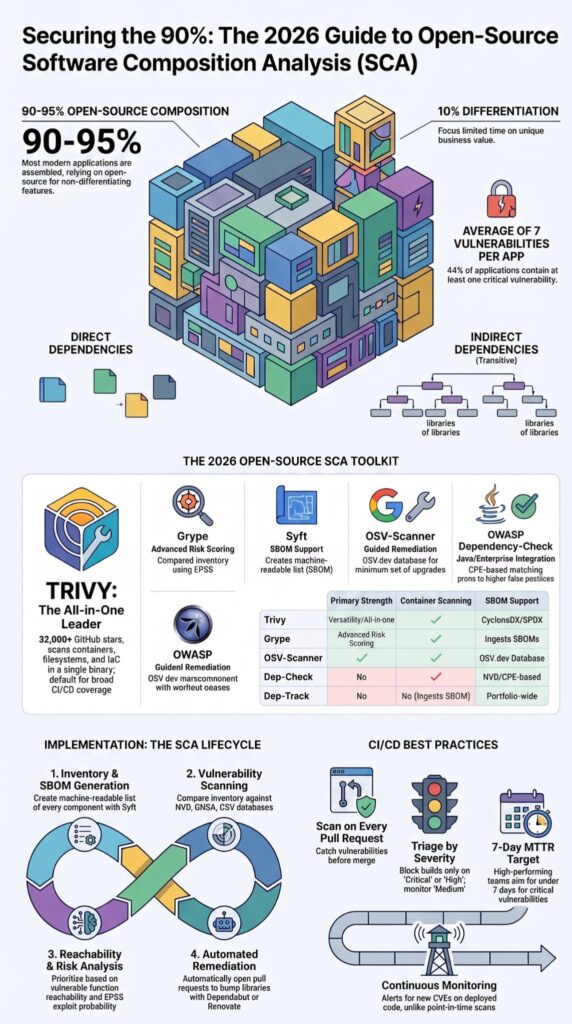
Most SCA tools follow a similar process.
They scan the application, identify its components, compare those components against trusted databases, and detect common vulnerabilities that may affect software dependencies. Behind the scenes, though, a lot of information is being collected and matched.
SCA works best when integrated throughout development because earlier feedback allows teams to fix issues before release.
A typical workflow includes:
- Scan package manifests
- Build a dependency inventory
- Identify package versions
- Compare vulnerability data
- Check software licenses
- Report findings
- Suggest remediation
How Does SCA Improve The Development Lifecycle?
That is where SCA fits naturally. It checks dependencies while code is still being written, making issues easier to fix before they spread through the project. Understanding how SCA tools work also helps teams decide where dependency checks fit best within their development process.
Microsoft Learn also notes that fixing vulnerabilities during development is usually less expensive than waiting until after deployment.
Earlier dependency alerts help developers fix issues before they spread across environments. These SCA benefits in the development lifecycle make security checks easier to integrate without slowing down development.
Some of the biggest benefits include:
- Faster remediation
- Better CI and CD security
- Automated dependency scanning
- Better version tracking
- Continuous monitoring
- Stronger application security
How Can Teams Manage Vulnerable Third Party Libraries?
Every library added to an application also becomes something the team needs to manage.
SCA helps teams find vulnerable components, check available updates, and understand where those libraries are being used. A structured approach to managing vulnerable third party libraries helps teams reduce security risks without unnecessary disruption.
Not every alert has the same impact. Teams should prioritize vulnerabilities based on severity, exploitability, application usage, and business impact.
Good dependency management looks at:
- Vulnerability severity
- Real world exploit risk
- Application usage
- Available fixes
- Business impact
This approach helps teams reduce risk without creating unnecessary disruption.
How Does SCA Help Create A Software Bill Of Materials (SBOM)?
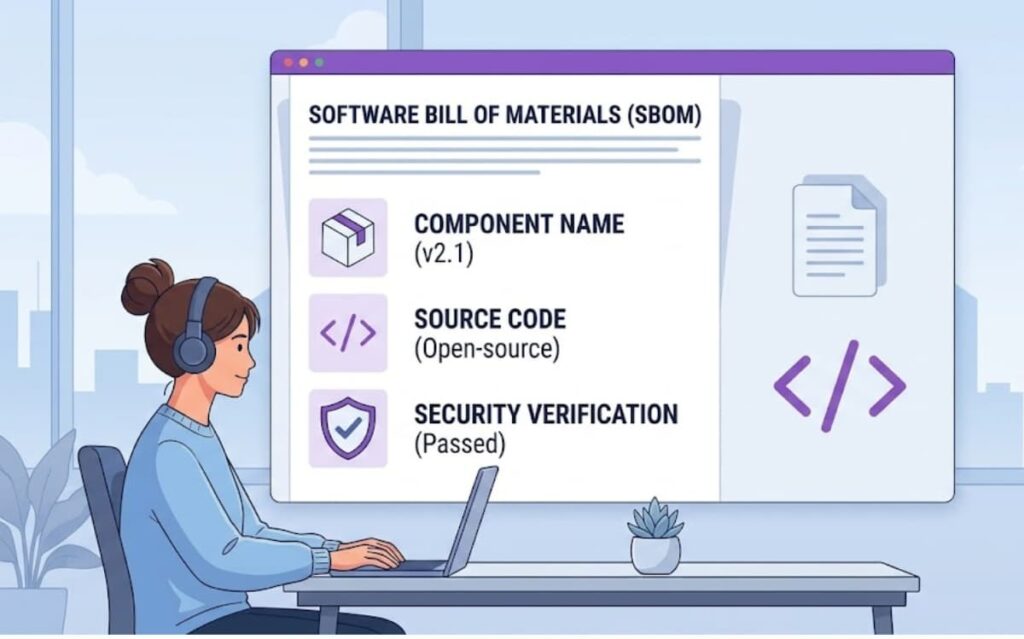
A Software Bill Of Materials (SBOM) is a detailed inventory of software components, versions, licenses, and dependencies inside an application.
The Cybersecurity and Infrastructure Security Agency, or CISA, and the National Telecommunications and Information Administration, or NTIA, highlight SBOMs as an important part of software supply chain transparency.
“An SBOM is a formal, machine-readable inventory of software components and dependencies.” – NTIA Software Component Transparency
Manual dependency tracking becomes difficult as applications grow, making automated SBOM generation more practical.
SCA makes this process easier by generating SBOM information automatically. This supports creating a software bill of materials with accurate component details that security teams can review when managing software supply chain risks.
A typical SBOM includes:
- Open source components
- Third party libraries
- Direct dependencies
- Transitive dependencies
- Version details
- License information
- Dependency relationships
How Can You Integrate SCA Into A CI/CD Pipeline?
SCA works best when it becomes part of the normal development process.
Teams can improve this workflow by focusing on integrating SCA into CI/CD pipelines, allowing dependency checks to happen during commits, builds, and deployments instead of only before release
A common CI/CD workflow includes:
- Scan project dependencies
- Check vulnerable packages
- Generate SBOM files
- Review security policies
- Block risky builds
- Track remediation progress
Why Is Open Source License Compliance Important?
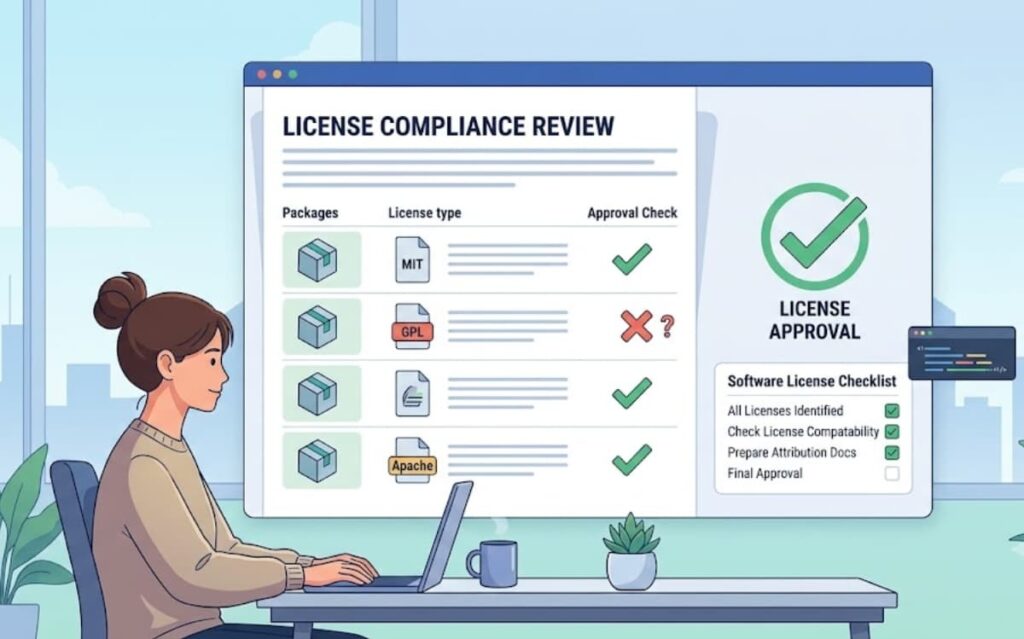
An application may contain many open source packages, and each package can have different license requirements. Missing those details can create problems later, especially before a product release.
SCA helps by identifying the licenses connected to software components and comparing them against company policies. Using SCA for open source license compliance helps teams maintain better visibility into legal and security requirements.
Common license activities include:
- License detection
- Compliance reviews
- Open source tracking
- Policy checks
- Component reviews
A secure application that violates licensing rules can still create problems for an organization.
What Challenges Can Organizations Face When Implementing SCA?
Installing an SCA tool is only the first step. Understanding the challenges of implementing SCA effectively helps organizations prepare better processes for handling alerts, ownership, and remediation.
Large applications can contain thousands of dependencies across different languages, platforms, and environments. Without a clear process, security teams may receive too many alerts and developers may not know where to start.
“The security of software depends on the security of its components, including open source software.” – NIST Secure Software Development Framework (SSDF)
Common challenges include:
- False positives
- Alert fatigue
- Complex dependencies
- Limited ownership
- Policy confusion
- Slow remediation
The solution is not ignoring alerts. It is creating a process that helps teams focus on the right problems first.
Software Composition Analysis Comparison Overview
Source: IT Achiever YT
SCA solutions differ in vulnerability detection, SBOM support, license checks, and development workflow integration. A proper SCA tools comparison overview helps teams evaluate which capabilities match their security and development needs.
A useful SCA solution usually provides:
| Capability | Purpose | Value |
| Dependency Scanning | Find software components | Better visibility |
| Vulnerability Detection | Identify security issues | Faster response |
| SBOM Generation | Track software inventory | Better supply chain awareness |
| License Checking | Review open source licenses | Reduce compliance problems |
| CI/CD Integration | Scan during development | Earlier fixes |
| Policy Enforcement | Apply security rules | Consistent security decisions |
FAQs
How often should I run Software Composition Analysis (SCA)?
You should run Software Composition Analysis (SCA) whenever you add, remove, or update dependencies, and include it in every CI/CD security workflow. Regular dependency scanning helps identify vulnerable dependencies, detect newly disclosed known vulnerabilities, and strengthen dependency management. Continuous monitoring also supports timely security remediation and improves overall application security.
Does Software Composition Analysis (SCA) detect risks in transitive dependencies?
Yes. Software Composition Analysis (SCA) identifies both direct dependencies and transitive dependencies within your dependency tree. This visibility helps uncover hidden library vulnerabilities, improves risk assessment, and supports component vulnerability management. As a result, development teams can address security issues before they affect production environments.
Why is an SBOM important for software supply chain security?
A Software Bill of Materials (SBOM) provides a complete component inventory of your open source components and third-party components. It improves supply chain security by helping organizations identify affected software when new vulnerabilities are disclosed. An SBOM also supports license compliance, simplifies compliance auditing, and speeds up vulnerability detection across software dependencies.
Can Software Composition Analysis (SCA) improve license compliance?
Yes. Software Composition Analysis (SCA) identifies the licenses associated with open source packages, making license detection and license compliance more accurate. It also supports open source governance, policy enforcement, and dependency governance, helping organizations reduce license risk and maintain consistent software development practices.
What should I review before updating vulnerable dependencies?
Before updating vulnerable dependencies, review the security findings, exploitability, version tracking, and available update recommendations. You should also evaluate patch prioritization, component metadata, and the potential impact on your application dependency structure. This process supports effective risk mitigation while reducing compatibility issues after deployment.
Strengthening Software Starts with Software Development
Software Composition Analysis helps identify dependency risks early, but secure development practices remain essential for reducing vulnerabilities and improving response.
If you want to build those skills, the Secure Coding Practices Bootcamp is a practical next step. It gives developers hands-on experience with secure coding, safe dependency management, and common application security risks, helping your team write more secure software with greater confidence from the start.
References
- https://www.ntia.gov/page/software-bill-materials
- https://csrc.nist.gov/projects/ssdf
Related Articles
- https://securecodingpractices.com/common-vulnerabilities-attacks/
- https://securecodingpractices.com/what-is-software-composition-analysis/
- https://securecodingpractices.com/importance-SCA-dependency-management/
- https://securecodingpractices.com/how-SCA-tools-work-process/
- https://securecodingpractices.com/benefits-using-SCA-development-lifecycle/
- https://securecodingpractices.com/managing-vulnerable-third-party-libraries/
- https://securecodingpractices.com/creating-software-bill-materials-SBOM/
- https://securecodingpractices.com/integrating-SCA-CI-CD-pipeline/
- https://securecodingpractices.com/open-source-license-compliance-SCA/
- https://securecodingpractices.com/challenges-implementing-SCA-effectively/
- https://securecodingpractices.com/top-SCA-tools-comparison-overview/