
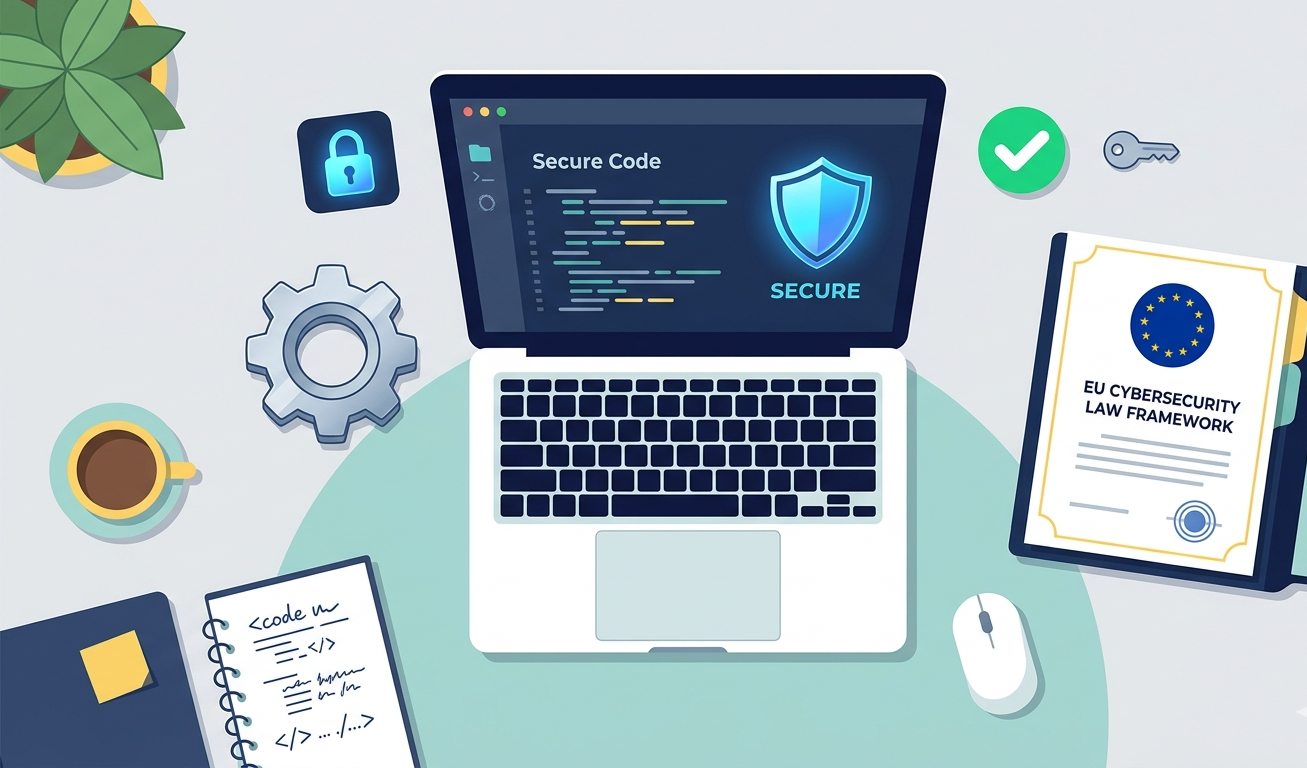

Software is now part of almost everything. Businesses use apps, cloud systems, websites, smart devices, and online platforms every day. Because of this, software security is becoming more important than ever.In recent years, we have seen many companies face ransomware attacks, software vulnerabilities, and data leaks.
Some businesses only improved security after serious problems affected customers and operations. That is one reason why Europe is creating stronger cybersecurity regulations. This article explains secure software development EU law using simple language and practical examples. We will also discuss how Secure Coding Practices can help businesses improve security earlier and reduce risks. Keep reading.
Important Things Businesses Should Know
Before discussing the regulations, it is important to understand the bigger picture. Many companies think compliance is only about documents and audits. In reality, secure software development is also about preventing problems before they happen.
Here are the key points businesses should remember:
- EU cybersecurity laws now expect stronger software security during development.
- Companies may need better risk management, testing, and vulnerability handling.
- We often see businesses reduce risks earlier by using Secure Coding Practices during software development.
Why Europe Is Focusing on Secure Software Development
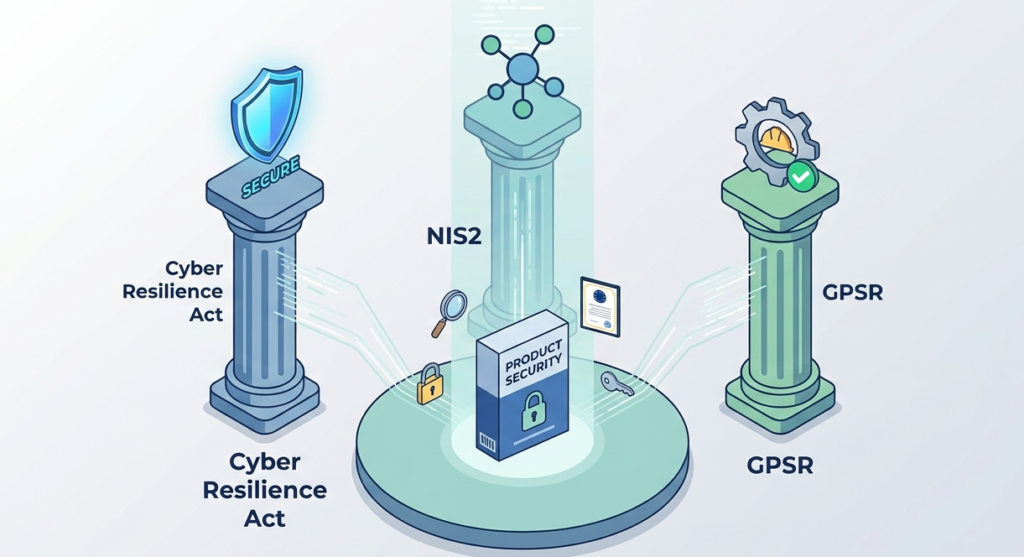
Software is now connected to many important services.
This includes:
- Banking systems
- Healthcare platforms
- Transportation services
- Online shopping
- Smart devices
- Cloud systems
At the same time, cyberattacks are increasing.
In recent years, many companies lost money because of:
- Ransomware attacks
- System outages
- Data leaks
- Software vulnerabilities
Some attacks affected hospitals, government systems, and public services.
Because of these risks, the European Union wants businesses to improve software security before attacks happen.
The main goals include:
- Reducing vulnerabilities
- Improving cybersecurity
- Protecting users
- Making software safer
- Increasing company responsibility
This is why secure software development EU law is becoming more important.
What Is Secure Software Development?
Secure software development means building software with security in mind from the beginning.
Instead of waiting until problems appear, companies try to reduce risks during development.
This may include:
- Security testing
- Code review
- Vulnerability scanning
- Strong authentication
- Secure updates
- Risk management
We often notice development teams improve software quality when security becomes part of daily development work.
“computer security is the protection of computer systems from theft, damage, or disruption of their services.” – Wikipedia
This is also why Secure Coding Practices are important. Secure coding helps developers reduce security problems before software reaches users.
Why Secure Software Development Matters
Credits: Somco Software
A few years ago, many businesses focused mostly on:
- Fast software releases
- New features
- Lower costs
- Faster development
Security sometimes became less important.
Today, customers expect safer software. Businesses also face stricter cybersecurity regulations.
Weak software security can lead to:
- Financial loss
- Customer trust problems
- Service downtime
- Data leaks
- Compliance penalties
From our experience, companies that improve security early usually avoid larger problems later.
Main EU Laws Related to Secure Software Development
Several European regulations now affect software security. Understanding how eu cybersecurity law for software functions can help development teams stay ahead of these requirements.
The Cyber Resilience Act (CRA)
The Cyber Resilience Act is one of the most important EU cybersecurity regulations today.
The CRA focuses on products with digital elements.
This includes:
- Software
- Mobile apps
- Smart devices
- IoT products
- Connected systems
Before the CRA, some companies released software with weak security protection. The CRA changes this approach by creating a strict eu product security legislation overview that impacts all connected devices. It encourages businesses to keep software secure during the full product lifecycle.
The CRA changes this approach. It encourages businesses to keep software secure during the full product lifecycle.
This means companies may need to:
- Fix vulnerabilities
- Provide security updates
- Improve software testing
- Monitor security risks
The regulation also encourages stronger security during development.
Why the CRA Matters for Developers
The CRA pushes companies to think about security earlier.
This is important because many cyberattacks start from software vulnerabilities.
“security must be integrated into every phase of the software development lifecycle to effectively reduce vulnerabilities.” – ResearchGate
We often see Secure Coding Practices help developers reduce:
- Unsafe code
- Weak passwords
- Data exposure
- Injection attacks
- Security mistakes
Preventing security problems early is usually easier than fixing them later.
NIS2 Directive
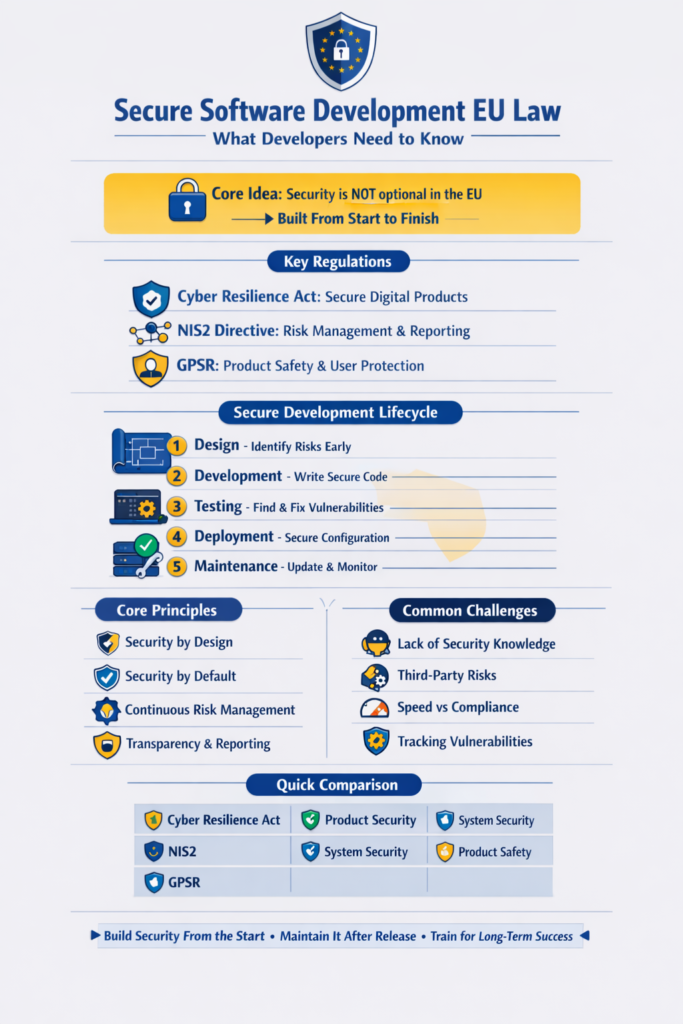
Another important regulation is NIS2.
Unlike the CRA, NIS2 focuses more on organizations and important services instead of software products themselves.
NIS2 applies to sectors such as:
- Healthcare
- Banking
- Energy
- Transportation
- Cloud services
- Public infrastructure
The goal is to improve cybersecurity management and reduce operational risks.
Organizations may need:
- Incident response plans
- Security monitoring
- Employee training
- Risk management systems
- Supply chain controls
NIS2 also increases management responsibility for cybersecurity.
This means company leaders must also understand cyber risks.
GDPR and Secure Software Development
The General Data Protection Regulation (GDPR) mainly focuses on privacy, but it also affects software security.
Companies handling personal data must:
- Protect user information
- Prevent unauthorized access
- Reduce data risks
- Report breaches
Weak software security may increase GDPR risks.
Examples include:
- Weak passwords
- Unsafe databases
- Poor encryption
- Vulnerable software code
We often see Secure Coding Practices help businesses reduce these risks earlier during development.
EU AI Act and Software Security
The EU AI Act is another important regulation.
This law focuses on artificial intelligence systems and risk management.
High-risk AI systems may need:
- Better security
- Risk assessments
- Transparency
- Monitoring
As AI systems become more common, software security will become even more important.
Simple Comparison Table
RegulationMain FocusAffects Software DevelopmentCyber Resilience ActProduct cybersecurityYesNIS2Organizational cybersecurityIndirectlyGDPRData privacy and protectionYesEU AI ActAI system safety and riskYes
Why Secure Coding Practices Matter
Many software security problems begin during development.
Common examples include:
- Weak authentication
- Unsafe code
- Injection vulnerabilities
- Poor encryption
- Vulnerable dependencies
This is why we often recommend Secure Coding Practices early during development.
Secure coding may include:
- Input validation
- Secure authentication
- Code review
- Security testing
- Dependency management
- Secure session handling
From our experience, development teams often improve software quality and reduce risks when secure coding becomes part of daily work.
Instead of fixing problems later, businesses reduce risks earlier.
This also helps companies prepare for EU cybersecurity regulations.
Product Lifecycle Security Is Becoming More Important
EU cybersecurity laws now focus more on lifecycle security.
This means businesses should continue protecting software after release.
Companies may need to:
- Provide security updates
- Monitor vulnerabilities
- Fix security issues
- Respond to incidents
- Support users
This creates a major change for many organizations.
In the past, some companies focused mostly on releasing software quickly. Today, long-term security support is becoming more important.
Supply Chain Security Challenges
Supply chain security is another major concern.
Many businesses depend on:
- Third-party software
- Open-source libraries
- External vendors
- Cloud providers
A vulnerability in one supplier can affect many companies.
Because of this, EU regulations encourage stronger supply chain security.
Businesses should:
- Review dependencies
- Monitor vendors
- Remove unused software
- Test systems regularly
Secure Coding Practices also help reduce hidden software risks.
Common Challenges Businesses Face
Many companies still struggle with secure software development EU law.
1. Complex Regulations
Some businesses find cybersecurity laws difficult to understand because they lack familiarity with the broader legal and regulatory context of these new mandates.
2. Older Systems
Legacy software may contain outdated security controls.
3. Limited Security Knowledge
Some development teams still have limited cybersecurity training.
4. Fast Development Pressure
Companies often focus more on speed than security.
5. Limited Resources
Smaller businesses may not have large cybersecurity teams.
However, improving security early usually reduces long-term costs.
How Businesses Can Prepare
Organizations should improve software security before problems happen.
Understand Which Regulations Apply
Businesses should review:
- Product types
- Customer locations
- Industry requirements
- Data handling processes
Improve Development Security
We often recommend Secure Coding Practices as an early step for development teams.
Train Employees
Cybersecurity awareness helps reduce human mistakes.
Monitor Vulnerabilities
Businesses should monitor:
- Security updates
- Product risks
- Software dependencies
Improve Documentation
Good documentation supports compliance and security management.
Test Software Regularly
Regular testing helps identify vulnerabilities earlier.
Why Early Security Investment Matters
Some companies delay cybersecurity improvements because of cost concerns.
However, cyber incidents often become more expensive later.
Security problems may lead to:
- Financial loss
- Downtime
- Customer complaints
- Legal problems
- Reputation damage
From our experience, organizations that improve security early often reduce future risks and operational problems.
Security is usually easier to manage when businesses include it during software planning and development.
The Future of Secure Software Development EU Law
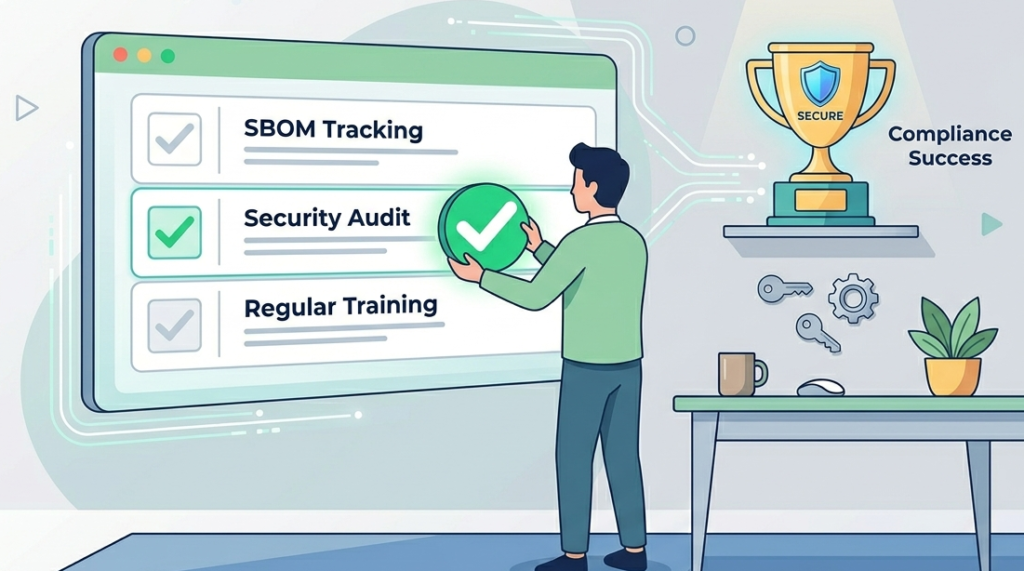
EU cybersecurity regulations will likely continue growing.
Future changes may include:
- Stronger security requirements
- Faster incident reporting
- Larger penalties
- Broader software coverage
As businesses depend more on software, governments want stronger protection for users and organizations.
Companies that improve security now will likely adapt more easily later.
FAQ
What is secure software development EU law?
Secure software development EU law refers to European regulations that encourage stronger cybersecurity during software development and product management.
Which EU regulation affects software security the most?
The Cyber Resilience Act is one of the most important regulations because it focuses directly on digital product cybersecurity.
Why are Secure Coding Practices important?
Secure Coding Practices help developers reduce vulnerabilities early and improve software security during development.
Does GDPR affect software development?
Yes. GDPR affects how businesses protect personal data and manage software security.
Better Software Security Starts Earlier
Secure software development EU law is changing how businesses build and manage software. Regulations like the Cyber Resilience Act, NIS2, GDPR, and the EU AI Act encourage stronger cybersecurity, safer software, and better risk management. Companies that improve security early will likely reduce future risks and compliance problems.
From our experience, Secure Coding Practices help businesses create safer software, improve development quality, and support long-term cybersecurity readiness in a world that depends heavily on digital systems.
References
- https://en.wikipedia.org/wiki/Regulation_(European_Union)
- https://www.researchgate.net/publication/220623408_Integrating_Security_into_the_Software_Development_Lifecycle