


Preventing IDOR vulnerabilities code level starts with enforcing authorization on every database fetch. Every request should verify object ownership before returning data. It’s not about hiding IDs. We’ve seen apps with perfect UUIDs still breached because one ownership check was missed deep inside a GraphQL resolver.
This guide details how to build object-level authorization directly into your code, making IDOR architecturally impossible. Follow along to lock down your data layer with Secure Coding Practices.
IDOR Prevention in Practice
Strong IDOR protection depends on consistent server-side authorization at every step, not hidden identifiers alone. These takeaways summarize the coding practices that keep object access secure.
- Authorization must be embedded directly into your database queries, scoping every lookup to the current user’s context.
- Modern framework features like Laravel Policies or Django QuerySet scoping can automate and centralize these checks, reducing human error.
- UUIDs and input validation are defensive layers, but they do not replace the fundamental requirement to validate object ownership on the server.
Do UUIDs Create a False Sense of Security?
UUIDs can create a false sense of security. We teach that moving to UUIDv4 stops mass enumeration, but it’s not a cure-all. If the UUID leaks through a logged error or a client-side script the flaw is exposed. The code is still fetching data by a user-controlled ID, often without checking ownership, a common broken access control mistake.
Research from OWASP Cheat Sheet Series shows
“In some cases, using more complex identifiers like GUIDs can make it practically impossible for attackers to guess valid values.” – OWASP
Take a URL like /api/v1/report/3e22b03b.... It looks secure. The ID is random. But the query is often just SELECT * FROM reports WHERE public_id = ?. If User 123 requests a report owned by User 456, it should fail. In our bootcamp labs, we see this fail constantly. The UUID fixed enumeration but did nothing for authorization.
A common setup uses an internal integer key and a public UUID. The risk comes when you only validate the UUID’s format, not the user’s rights. Validation passes, the query runs, and data leaks. We’ve corrected this specific mistake in many code reviews.
How Do You Enforce Ownership Inside Every Database Query?
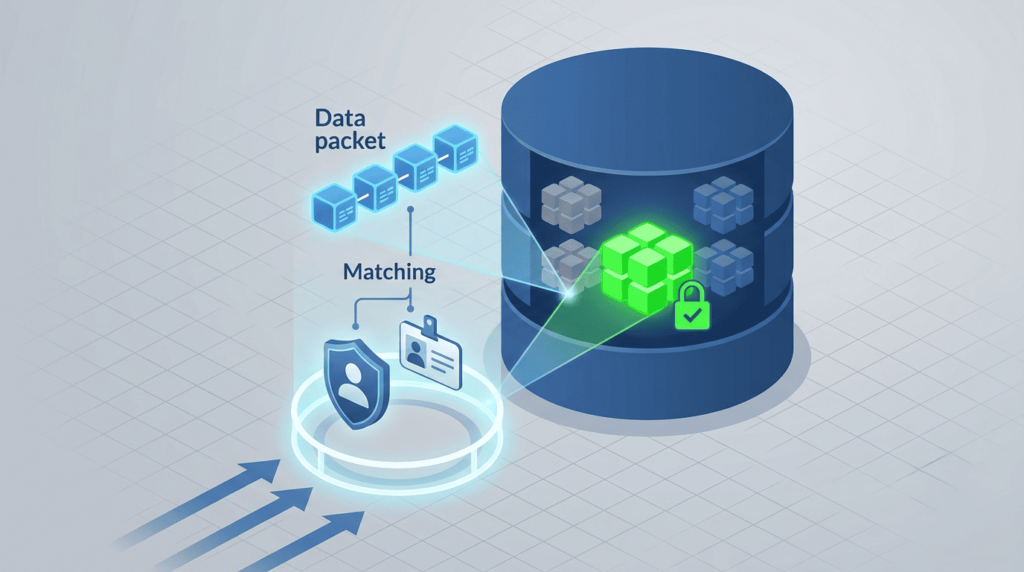
To stop IDOR, enforce ownership in every database query. Bake the user’s context directly into your retrieval logic. Never fetch an object by ID alone. Always filter for the owner or tenant.
We constantly see this vulnerable pattern.
# Flask-like vulnerable endpoint
@app.route('/invoice/<uuid:invoice_id>')
def get_invoice(invoice_id):
    invoice = db.session.query(Invoice).filter_by(public_id=invoice_id).first()
    return jsonify(invoice)
The fix joins the filter. The query must answer: “Does this ID exist?” and “Does it belong to you?”
# Secure query with ownership scope
@app.route('/invoice/<uuid:invoice_id>')
@login_required
def get_invoice(invoice_id):
    invoice = db.session.query(Invoice).filter(
        Invoice.public_id == invoice_id,
        Invoice.user_id == current_user.id  # Critical ownership check
    ).first()
    if not invoice:
        return jsonify({"error": "Not found"}), 404
    return jsonify(invoice)
This pattern applies everywhere:
- In multi-tenant SaaS, scope by
tenant_id. - In team apps, check
team_idmembership.
The principle is the same: the database must verify permission. This issue appears across many types of broken access control. We correct this missing filter more than any other issue.
How Do You Centralize Authorization Logic Outside Controllers?
Preventing IDOR vulnerabilities code level becomes much more reliable when authorization logic is centralized instead of being repeated across individual controllers. Relying on developers to remember AND user_id = ? in every controller will eventually fail. Humans miss things. The fix is to centralize authorization in the framework or service layer.
| Approach | Authorization Location | Outcome |
| Controller checks | Individual controllers | Easy to miss checks and introduce IDOR. |
| Framework policies | Shared authorization layer | Applies consistent rules across endpoints. |
| Scoped database queries | Data access layer | Returns only objects the current user can access. |
Laravel’s Policy system is a good example. Define a policy class, then in your controller call $this->authorize('view', $invoice). The framework checks it. If denied, the request stops. It’s declarative.
Django scopes QuerySets. Override get_queryset() in a ViewSet to automatically filter objects to the requesting user. The developer can’t accidentally fetch the wrong data.
We learned this after an incident. A developer added checks to a main admin view but forgot to add the same filter to a CSV export function. For months, admins could export any user’s data. Centralized logic in a shared base class would have prevented it.
How Do You Validate and Normalize Inputs First?
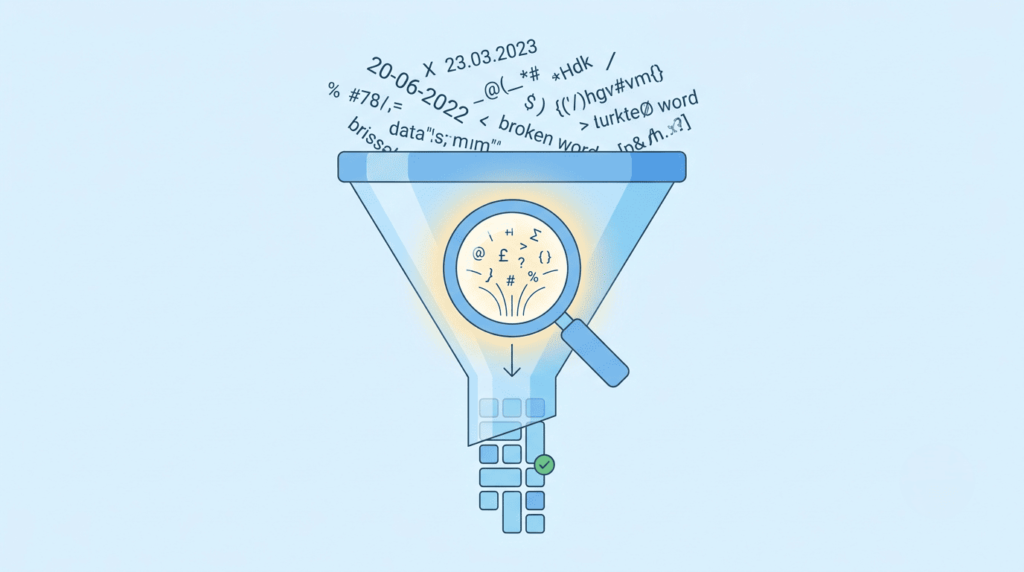
Before you even get to the authorization check, you should validate that the provided identifier is legitimate. This is a gatekeeping function. Reject malformed input immediately with a 400 Bad Request error. Don’t let garbage propagate to your business logic.
If an endpoint expects a UUID, validate its structure strictly. Use a library like Joi for Node.js or Pydantic for Python. For integer IDs, ensure they’re within an expected positive range. This prevents some weird edge cases and potential database errors, but more importantly, it establishes a clear contract for the request.
Consider this Node.js example with Joi:
const schema = Joi.object({
    documentId: Joi.string().guid({ version: 'uuidv4' }).required()
});
const { error } = schema.validate(req.params);
if (error) { return res.status(400).send('Invalid identifier'); }
// Now proceed to authorization...
This step also handles parameter pollution attempts. An attacker might send {"id": [102, 103]} hoping your code will process the first ID and ignore the rest, or cause an error that leaks data. Strict schema validation rejects the entire payload if the type isn’t a string.
Why Are GraphQL and Nested Resolvers a Security Problem?
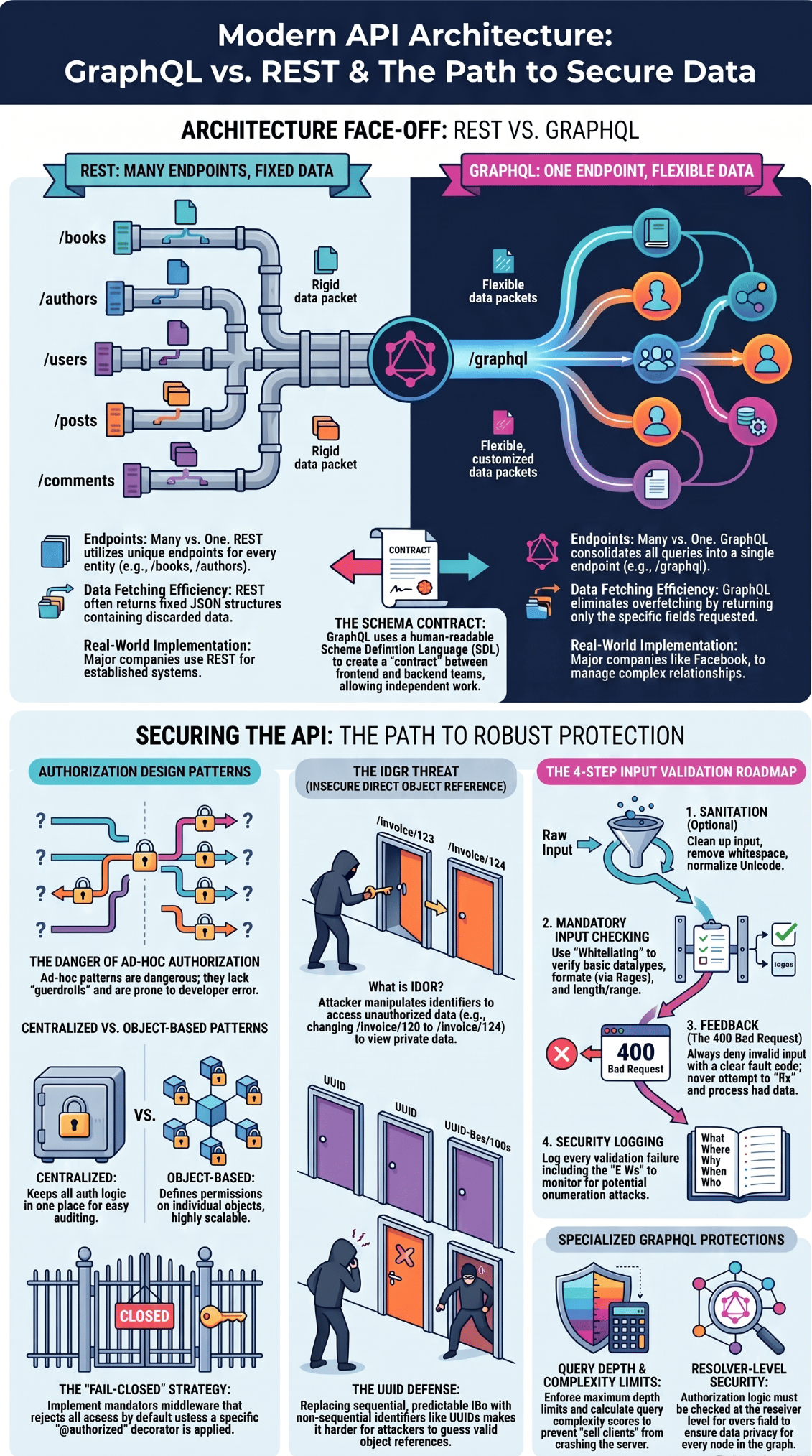
Credits: CODELUNCH
GraphQL introduces a unique IDOR challenge. A root query might be properly authorized, but deep field resolvers often are not. An attacker can write a query that jumps through relationships, and if authorization isn’t revalidated at each node, they can traverse into unauthorized data.
Imagine a query like this:
query {
  user(id: "abc123") {
    name
    teams {
      id
      name
      projects {
        id
        internalNotes  # Sensitive field!
      }
    }
  }
}
The root user resolver might check if the requester is an admin. But the teams and projects resolvers might just fetch data based on relational IDs, assuming the parent object was authorized.
As noted by circl.lu
“The userCollection GraphQL query accepts an arbitrary collection ID and returns the full collection data to any authenticated user, without verifying that the requesting user owns the collection. This is an IDOR caused by a missing authorization check” – circl.lu
Authorization must be enforced at every resolver that returns sensitive objects, not just at the entry point. Each resolver needs its own logic to verify the requesting user has rights to the specific team or project being accessed, preventing an insecure direct object reference.
How Can You Automate Testing to Catch What Humans Miss?
Preventing IDOR vulnerabilities code level requires more than secure authorization logic. Automated tests verify users cannot access resources they don’t own, catching missing ownership checks that manual reviews and static analysis often overlook.
Static Application Security Testing (SAST) tools are notoriously bad at finding IDOR. The code Invoice.find(invoice_id) is syntactically perfect. The tool has no way of knowing if invoice_id should be scoped to current_user. The only reliable detection is dynamic, integration-level testing.
You need automated tests that act like an attacker.
- Create two test users: Alice and Bob.
- Have Alice create a resource (e.g.,
POST /notes), and save its ID. - Use Bob’s session token to try and access that resource (e.g.,
GET /notes/{alices_note_id}). - The test must assert that Bob’s request fails with a 403 or 404.
This should be part of your CI/CD pipeline for every endpoint that handles object IDs. It’s the only way to ensure an authorization check isn’t accidentally removed during a refactor. We make this a non-negotiable part of our pull request process. If a new endpoint manipulates objects, it must come with these cross-user authorization tests.
FAQs
How can I stop users from accessing someone else’s records?
Preventing IDOR vulnerabilities requires object-level authorization checks on every request. The server must validate resource ownership, verify current user context, and scope database queries by user before returning data.
Are UUIDs enough to prevent IDOR attacks?
No. UUIDs for resource IDs and other non-guessable resource identifiers only make identifiers harder to guess. You still need server-side ID validation, authenticated user validation, and consistent access control enforcement.
Which coding practices reduce IDOR risks the most?
The most effective IDOR mitigation techniques include secure coding for IDOR, centralize authorization logic, framework authorization helpers, secure ORM queries, and parameterized object lookup to enforce permissions consistently.
How should APIs validate object requests securely?
Every API request should use API object authorization, secure REST endpoint design, and data-layer authorization checks. Apply role-based object access or attribute-based access control before returning protected resources.
How can developers verify IDOR protections before deployment?
Developers should test IDOR in QA, create test accounts for IDOR, perform automated IDOR scanning, write authorization unit tests, complete code review for object access, and conduct threat modelling for IDOR.
Secure Every Query from the Start
Preventing IDOR vulnerabilities code level starts with one simple rule: never trust access by default. Every query should verify ownership before returning protected data. Every query should confirm who the user is before returning data, making ownership checks part of your normal workflow.
If you want hands-on practice building secure applications, join the Secure Coding Practices Bootcamp and learn practical techniques that help you write safer code with confidence from your very next project.
References
- https://cve.circl.lu/vuln/CVE-2026-28217
- https://github.com/cyberneticsglobal/OWASP-CheatSheetSeries/blob/master/cheatsheets/Insecure_Direct_Object_Reference_Prevention_Cheat_Sheet.md