
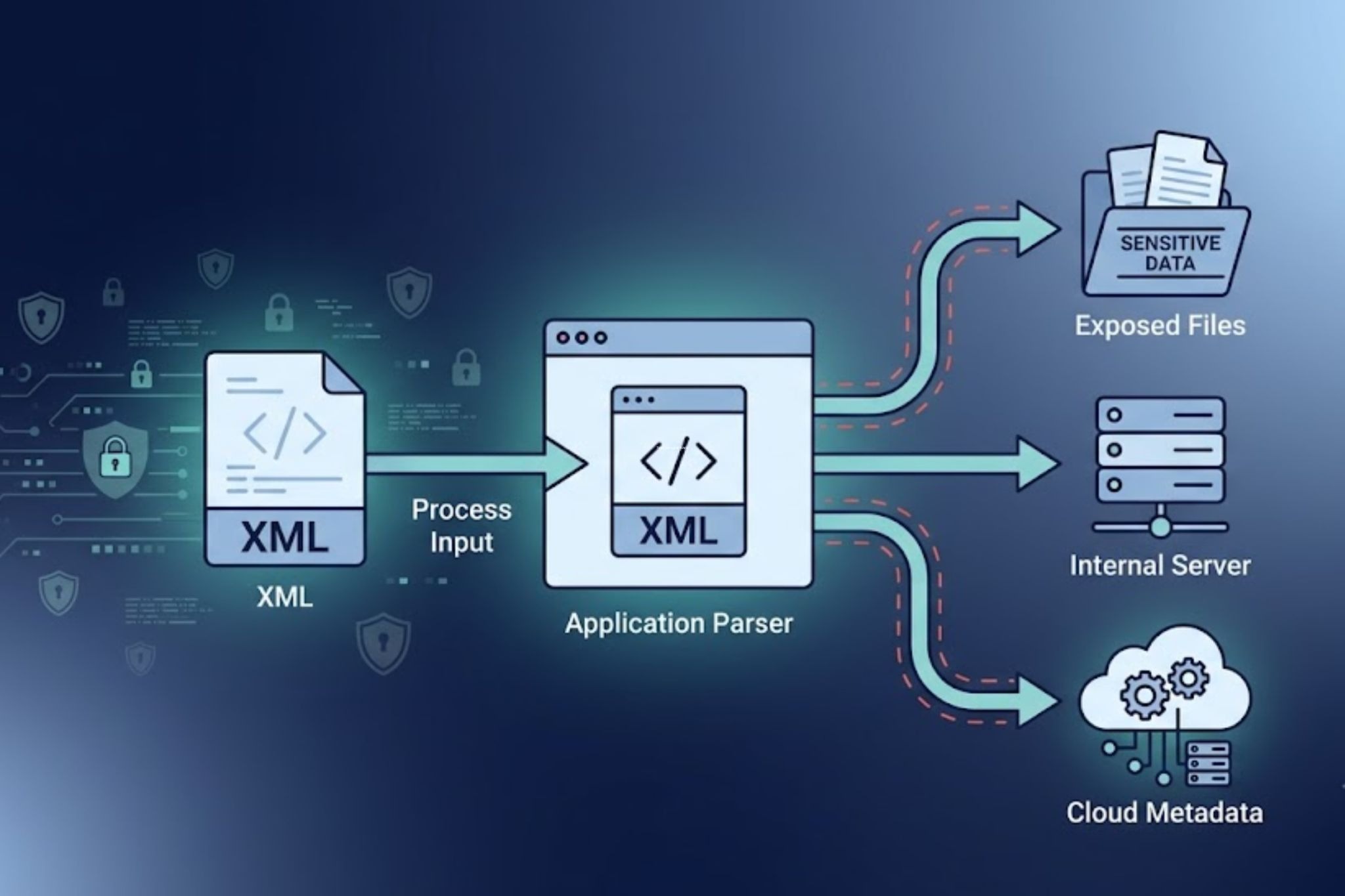

A successful XML External Entity attack can expose sensitive files, trigger internal network requests, and weaken system security. Guidance from OWASP shows how XML parsing flaws can turn a small configuration mistake into a wider security issue.
In practice, XXE does not stop at file access alone. In real systems, the impact can shift depending on parser configuration, network permissions, and isolation boundaries. This variability often catches teams off guard because the same weakness can affect confidentiality, integrity, and availability in different ways.
For Secure Coding Practices, our guide examines how these failures appear in real environments and what they mean for system security today. Keep reading.
What You Should Know About XXE Impacts
XXE attacks can start small but quickly grow into serious security risks depending on system setup and access control. Here’s a quick breakdown of the main impacts:
- CWE-611 XXE can escalate from simple file exposure to full system compromise depending on configuration and network access.
- Most cases start with local file disclosure, exposing configs, credentials, and system data.
- XXE can enable SSRF, letting attackers access internal services and cloud metadata endpoints.
What Happens When XXE Breaks Through?
A successful XXE issue usually starts small on the surface. We see a normal-looking XML request, nothing unusual at first glance. But under the hood, unsafe parsing changes everything.
In our bootcamp labs, we walk learners through how XML input can shift from harmless data exchange into a doorway for unintended system behavior. The attack path is rarely one step. It grows through small exposures that stack up.
From a defender’s view, the system stops acting like a simple parser and starts behaving like a bridge into other services. That shift is where things get serious.
Typical entry points we’ve seen in real systems include:
- API services using XML payloads
- Legacy authentication flows
- SOAP-based integrations still running in enterprise stacks
No surprise. Older systems tend to carry more of this risk.
What Goes Wrong During Parsing?
When entity expansion is left enabled, XML stops being just data and becomes a mechanism for referencing external or local resources.
This behavior is defined at the specification level, where entity processing is part of XML’s core design. In secure development practices, this is exactly why teams emphasize strict XML hardening as part of XXE vulnerability attack prevention strategies.
“XML documents may contain entity references; when parsed, the XML processor replaces these references with their replacement text.” – W3C XML 1.0
This is exactly why unsafe configurations become critical: the parsing layer is not just reading input, it is actively resolving references that can point outside the intended data boundary.
Local File Exposure In Real Systems?
One of the earliest impacts we teach is file exposure. It shows up quickly once XXE is triggered.
In lab environments, we often simulate reads like system configuration files or environment settings. In real production cases, the same pattern applies.
Common targets include:
- App configuration files
- Environment variables with secrets
- System-level account data
Breach of these files usually changes everything fast. One exposed credential often leads to a wider chain of access.
We’ve seen this progression repeatedly during training exercises. Once the first file drops, the rest tends to follow.
Why File Exposure Escalates Quickly?
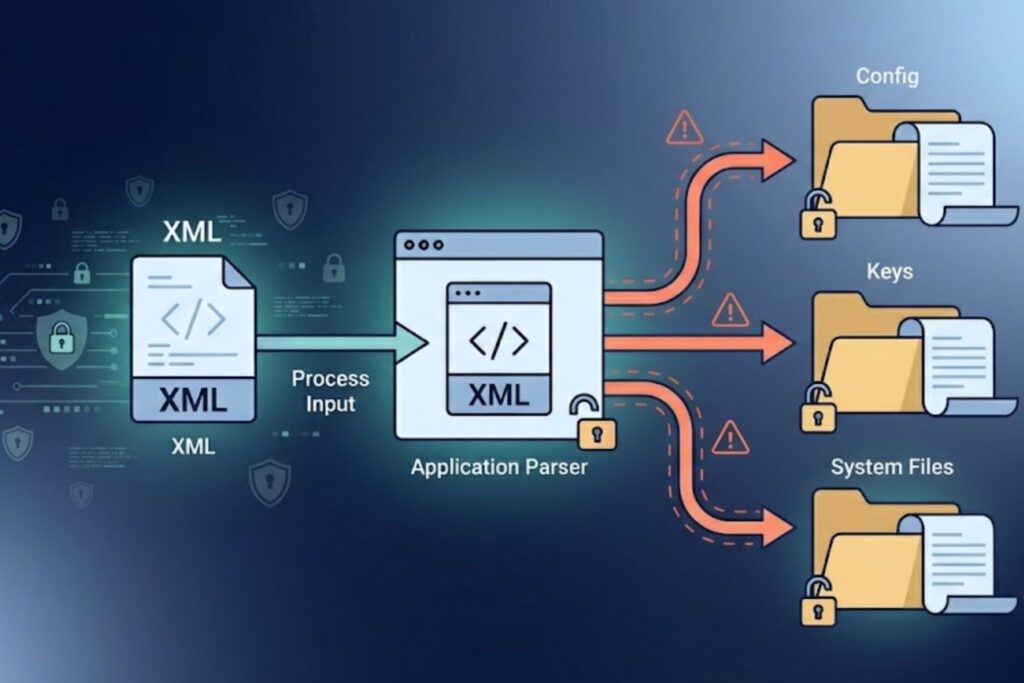
File access rarely stays isolated. It becomes a stepping stone, especially when organizations have weak XXE prevention controls in place.
Once attackers get credentials or config data, they usually pivot into other systems. That’s where the real damage begins.
In our internal exercises, we map the flow like this:
- Read sensitive file
- Extract credential
- Access service directly
- Expand access scope
It’s simple on paper. In practice, it’s where containment often breaks down.
XXE And Internal Network Requests
XXE impact extends beyond file access because XML processing can trigger external resource resolution when entity handling is enabled.
This mechanism is formally defined in vulnerability taxonomy standards:
“The software processes XML data containing external entity references.” – MITRE CWE-611
This definition is important because it captures the root cause structurally: the vulnerability is not in XML itself, but in how the parser is configured to resolve external entities, which can extend into internal network interaction.
Why Does Cloud Context Make XXE Impact Worse?
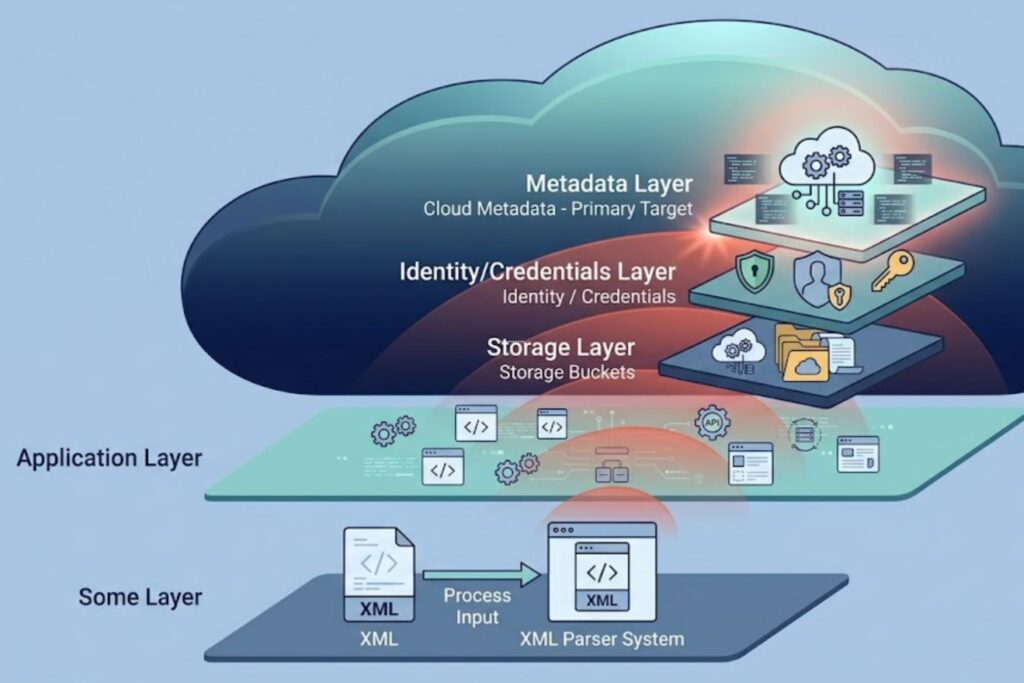
Cloud setups add another layer. Metadata services and internal credential endpoints can become reachable if requests are misused.
We’ve seen learners assume cloud systems are automatically safer. They’re not. They just move the risk into different layers.
Once XXE connects to internal cloud services, the impact expands fast. Credentials meant to be temporary can be exposed if boundaries are weak.
Quick Impact Overview
Here’s a simple breakdown we use during training to help teams remember outcomes:
| Impact Area | What Happens | Severity |
| File Access | Sensitive data exposed | High |
| Network Access | Internal systems reached | High |
| Service Risk | API abuse or disruption | Medium |
We use this table in workshops because it keeps things grounded. No fluff, just outcomes.
How Does XXE Lead To SSRF Behavior?
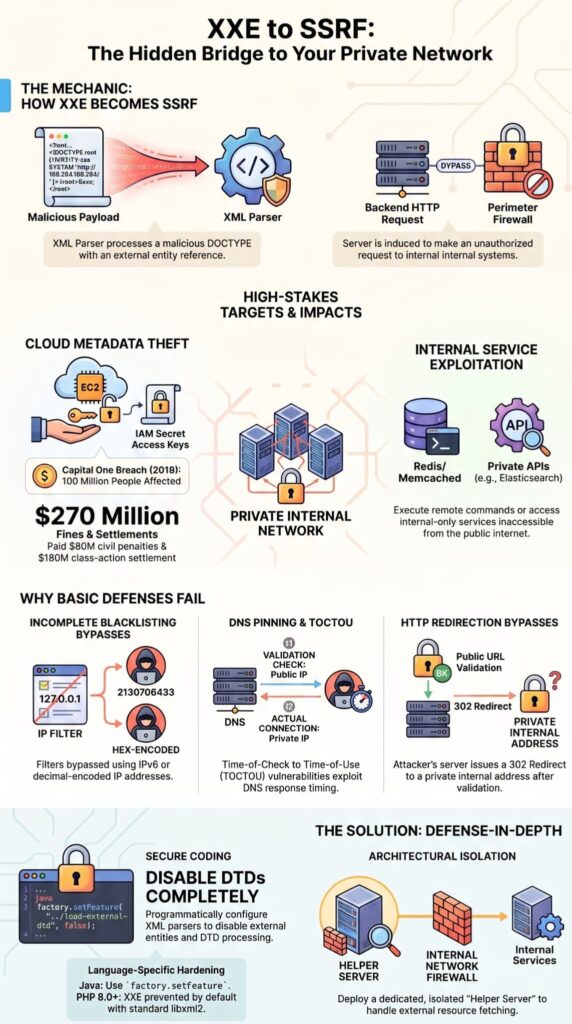
XXE often behaves like SSRF in real-world scenarios. The system becomes a requester on behalf of the attacker.
In our labs, we show how XML input can force outbound traffic. That includes internal-only endpoints and restricted services.
It’s not always obvious from logs either. Requests look legitimate unless you know what triggered them.
That’s where detection gets tricky.
Why Real Systems Still Struggle With XXE?
Even today, we still find XXE in production systems. Not because teams ignore security, but because XML is deeply embedded in older infrastructure.
We’ve worked with learners who maintain enterprise systems where XML is tied into core workflows. Replacing it isn’t simple.
The issue usually comes down to:
- Old dependencies still in use
- Parser defaults not hardened
- Lack of visibility into legacy services
And over time, those small gaps add up.
Nothing dramatic on day one. But it builds.
Final Risk Picture
When we step back during reviews, XXE isn’t just one bug. It’s a gateway pattern.
It touches confidentiality, availability, and sometimes full system integrity depending on environment setup.
From our experience running secure development training, the biggest lesson is simple: parser trust is the weak point.
Once that breaks, everything connected to it becomes reachable.
Prevention Focus In Practice
Source: Intigriti
We teach teams to focus on prevention early, not patching later. That usually means tightening XML handling at the design stage using approaches aligned with secure implementation patterns such as preventing XXE injection Java practices.
In real systems we review, the strongest protections come from:
- Disabling external entity processing
- Restricting DTD usage
- Hardening parser configuration by default
- Limiting outbound network access
Get those right, and most attack paths disappear before they start.
We’ve seen how much cleaner systems behave when these rules are applied early. Less firefighting later, fewer surprises during audits.
FAQs
What is the impact of a successful XXE attack on systems?
A successful XXE attack can expose sensitive data and allow attackers to read local files and configuration data from the server. This includes credentials, application settings, and system information that should remain private.
In more severe cases, the attack can lead to application compromise when the exposed data enables further unauthorized access. The impact depends on how the XML parser is configured and what access the server has to internal resources.
How does an XML external entity attack lead to data exposure?
An XML external entity attack uses unsafe XML parsing to process malicious XML payloads that include external entity references. When the parser is not properly secured, it can read files from the server’s file system, such as sensitive configuration files or system files like /etc/passwd.
This results in sensitive data exposure and data exfiltration. Proper XML parsing rules and disabling external entity processing are required to prevent this behavior.
Can XXE vulnerability enable server-side request forgery (SSRF)?
Yes, an XXE vulnerability can lead to server-side request forgery (SSRF) when the XML parser processes external entity references that trigger outbound HTTP requests. This allows attackers to access internal services that are not exposed to the public internet.
It can also enable internal network probing, port scanning, and access to cloud metadata services. This increases the risk of network compromise and infrastructure exposure.
What are the real-world risks caused by XML injection attacks?
XML injection attacks can cause several security problems, including information leakage, denial of service, and remote file inclusion. Attackers can exploit weaknesses in document type definition (DTD) processing to perform blind XXE or out-of-band XXE attacks.
These attacks can lead to reconnaissance data collection and exposure of internal system details. Without secure XML processing, the application becomes vulnerable to multiple exploit paths.
How does XXE affect web application security and business impact?
XXE weakens web application security by enabling attackers to bypass authentication, abuse single sign-on systems, and access restricted data. These actions can lead to data breaches involving confidential information and system credentials.
The business impact includes service disruption, incident response costs, and potential regulatory consequences. Secure coding practices, threat modeling, and proper XML parser configuration are required to prevent these risks.
XXE Risks Come From Weak XML Handling
XXE is rarely about one mistake, it shows up when XML is parsed with loose rules across a system. You start seeing unexpected file access or strange outbound requests when the parser is not locked down. It can feel confusing at first. Reality is, the system is just too open.
In secure development work, the fix comes from tightening configuration early and testing parser behavior under real input. If you want to build this habit faster, the Secure Coding Practices Bootcamp helps you practice scenarios so you can spot issues before production.
References
- https://www.w3.org/TR/xml/
- https://cwe.mitre.org/data/definitions/611.html