
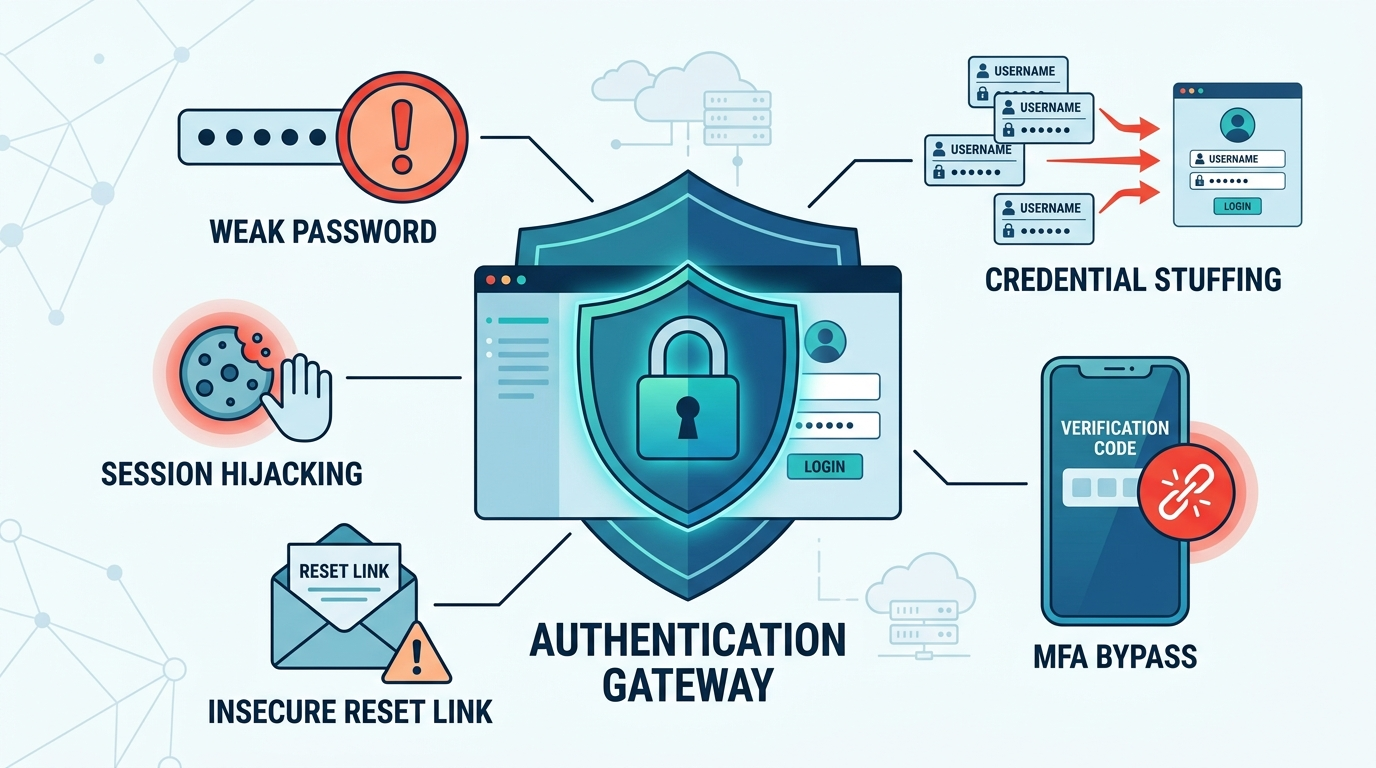

Common broken authentication vulnerabilities continue to expose apps to account takeover, weak sessions, and credential abuse.
Broken authentication lets hackers take over accounts. They do this by exploiting weak logins, bad session handling, or flawed password reset systems. It’s a top OWASP risk. Stolen credentials cause many breaches, partly because we still use weak passwords and mess up token management. Even newer architectures like microservices and JWTs introduce fresh problems. If you build software, you must get this. The next sections detail where things break and how to build them correctly. Keep reading.
Common Broken Authentication Vulnerabilities You Cannot Ignore
- Modern credential stuffing attacks use residential proxies, automation tools, and stolen credentials from breach databases and infostealer logs.
- Poor JWT authentication creates risks with token validation, signing keys, replay attacks, and token revocation across systems.
- Some of the biggest security gaps appear in logout and password reset functions.
Why Common Broken Authentication Vulnerabilities Are Everywhere
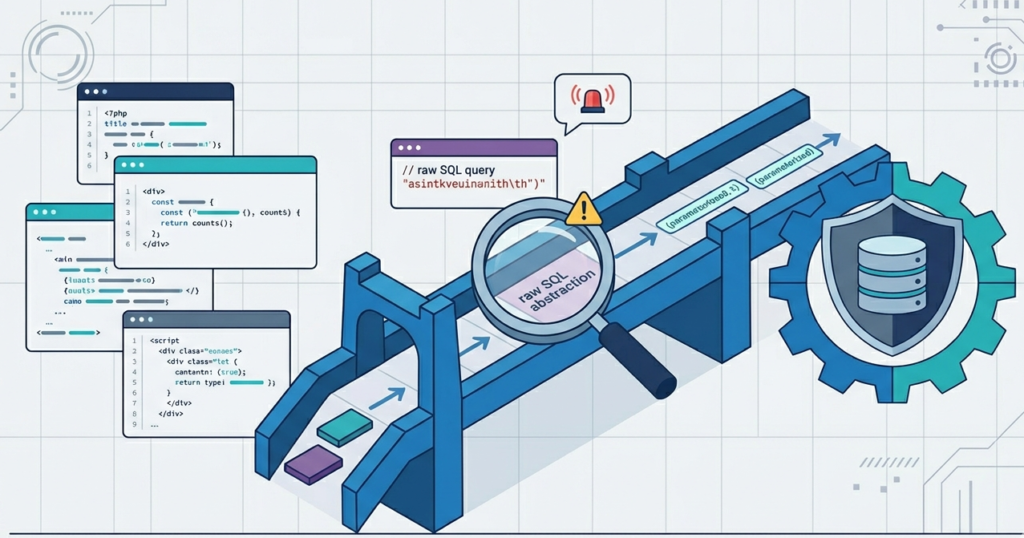
Broken auth is everywhere. We see it constantly. Teams under pressure use off-the-shelf authentication libraries, but few truly understand how to configure them. Everyone wants a frictionless login, so security steps like mandatory re-authentication get cut. In modern apps, the real trouble starts after login. A user changes their password, but their old session cached on a different service remains live for another hour. An attacker with that token is still in.
This is the standard failure mode now. It’s not a simple bug in a login function. The problem is no longer limited to login forms. Modern distributed systems, stateless tokens, and unsynchronized caches create authentication gaps across multiple services. Many of these issues mirror common vulnerabilities found in modern authentication systems where session trust breaks across services. The building has a hundred doors, and we forgot to make a master key.
As noted by National Institute of Standards and Technology
“Strength of session management procedures is as important as authentication, since the ability to hijack a session is as damaging as an authentication failure” –NIST
How Credential Stuffing Renders Basic Defenses Useless
| Attack Method | Why It Works | Weak Defense | Better Defense |
| Credential Stuffing | Uses leaked passwords | Basic rate limiting | Breached password checks |
| Brute Force | Repeated login attempts | Weak lockout rules | Adaptive MFA |
| Residential Proxy Abuse | Hides attacker IPs | IP blocking only | Behavior analysis |
JWT Risks Behind Common Broken Authentication Vulnerabilities
Credits: Ben Davis
JSON Web Tokens scale efficiently, but simple developer mistakes break them. Lazy configuration choices force web servers to accept unsigned tokens. Attackers regularly change the token algorithm to ‘none’ and gain instant administrative access.
Another frequent error is storing tokens in localStorage. It’s convenient for developers, but any XSS flaw lets an attacker steal it instantly. Weak token handling also undermines secure API communication, especially when authentication layers rely on exposed client-side storage. Even with proper storage, a weak HMAC secret like “secret123” is an open invitation for offline brute-forcing.
The core problem is stateless revocation. Once issued, a JWT is valid until it expires. If a user logs out or their access is revoked, that old token remains alive. For many systems, this delay is unacceptable.
Through engineering these systems at scale, we have established a strict baseline for secure token implementation:
- we mandate asymmetric signing (RS256) over symmetric HMAC to isolate signing keys,
- isolate tokens within HttpOnly cookies,
- enforce server-side revocable refresh tokens.
Understanding the full lifecycle is key. We build knowing tokens can be stolen and logic bypassed.
How to Prevent Common Broken Authentication Vulnerabilities
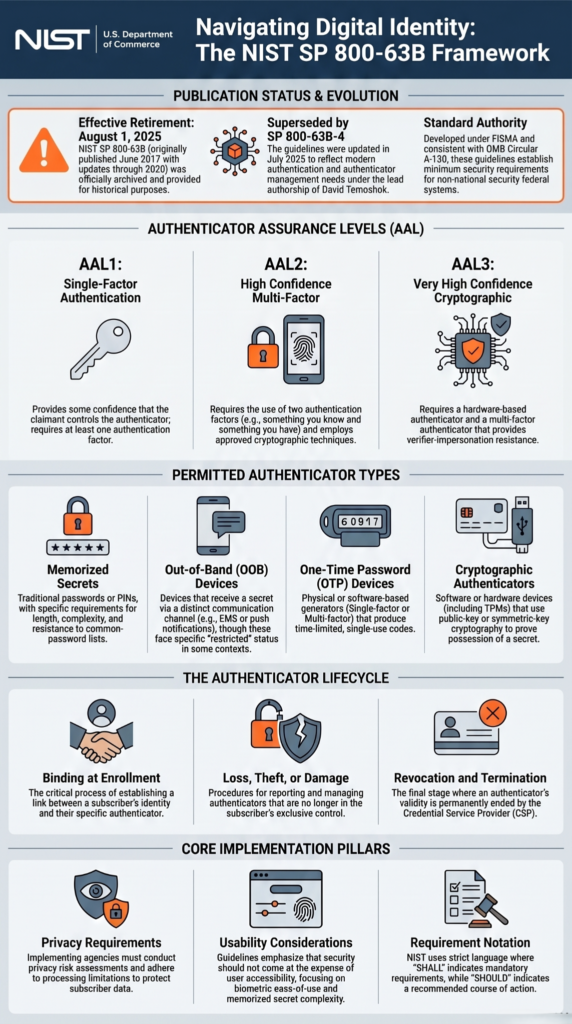
Start by not building your own authentication. Use audited libraries. We’ve seen custom code fail in predictable ways. For passwords, follow NIST’s latest advice: require length, check for breaches, but stop forcing regular resets; it makes passwords weaker.
Sessions need strict rules. Regenerate the ID on every login. Use HttpOnly, Secure, and SameSite cookie flags. Implement both idle and hard session timeouts. Prefer phishing-resistant MFA such as WebAuthn/FIDO2 or authenticator apps, and avoid SMS when stronger options are available.
Insights from Cybersecurity and Infrastructure Security Agency indicate
“Primary mitigation for credential harvesting attacks is to enable MFA, especially phishing-resistant MFA like FIDO authentication” –CISA
Don’t forget the recovery flows. A password reset token must be single-use, random, and expire in minutes. The reset must kill all existing sessions for that user, which is hard in a distributed system. Strong revocation handling is becoming critical for organizations improving vulnerability handling processes tied to modern compliance and resilience requirements. Logout must destroy the session server-side, not just delete a cookie.
FAQs
How does credential stuffing lead to account takeover attacks?
Credential stuffing starts with stolen login details. Attackers then use automated tools to try those same credentials on other websites. If you’ve reused a password, they can now break into your account on a different platform. This is how they hijack accounts. To stop it, use unique passwords everywhere and enable multi-factor authentication.
Why are weak JWT signing and unsigned JWT dangerous?
Think of a JWT like a concert ticket. A weak signature is like a ticket that’s easy to photocopy. An unsigned JWT is a ticket with no security features at all. Attackers can forge their own ticket, and your system will let them straight in. It’s a direct path to unauthorized access.
Can insecure password recovery create authentication bypass risks?
Absolutely. A weak password recovery system is a major risk. Attackers can guess security questions or steal the reset email. Once they do that, they can just change your password themselves. Now they own the account, and you’re locked out. It’s a complete bypass of the normal login process.
What problems come from insecure session management practices?
Insecure session management creates a big problem. It leaves your active login “ticket” vulnerable. Attackers can steal a weak session ID, or exploit a logout function that doesn’t work right. If they get it, they have the same access you do. It’s like someone finding your unlocked car and just driving off with it.
How do missing MFA and weak MFA implementation increase security risks?
Missing MFA is a direct risk. It means a stolen password is the only barrier to your account. Even weak MFA adds problems. SMS codes can be intercepted. Attackers can spam you with approval requests until you accidentally click “yes.” Both situations make it much easier for them to get in.
Why Secure Authentication Matters More Than Ever
Common broken authentication vulnerabilities don’t just slow systems down: they put user trust, sensitive data, and entire authentication systems at risk. One weak session setup or missed JWT check can open the door to account takeovers and data leaks. That’s the reality teams face when security gets treated like a one-time login step instead of an ongoing process built into every part of the application.
If you’re serious about building safer software, practical training makes a real difference. The Secure Coding Practices Bootcamp helps developers understand authentication risks through hands-on work, not just theory. It gives teams a clear way to strengthen session management, fix weak flows, and catch security gaps before attackers do.
References
- https://pages.nist.gov/800-63-3-Implementation-Resources/63B/Session/?trk=article-ssr-frontend-pulse_little-text-block
- https://www.cisa.gov/news-events/news/phishing-whats-name