

Cybersecurity requirements for software EU are becoming a core part of software development. Security is no longer something added later, it must be built into the product from the beginning. From our experience, teams that include security early avoid bigger problems later.
Regulations like the Cyber Resilience Act and NIS2 make this clear. Developers are now expected to take responsibility for security across the entire lifecycle. Keep reading to understand what this means in practice.
Cybersecurity Requirements for Software EU Essentials
Here are the key things to understand:
- Security is a legal requirement in the EU
- It must be applied throughout the lifecycle
- Developers are responsible even after release
- Risk management is mandatory
Overview of Key EU Regulations
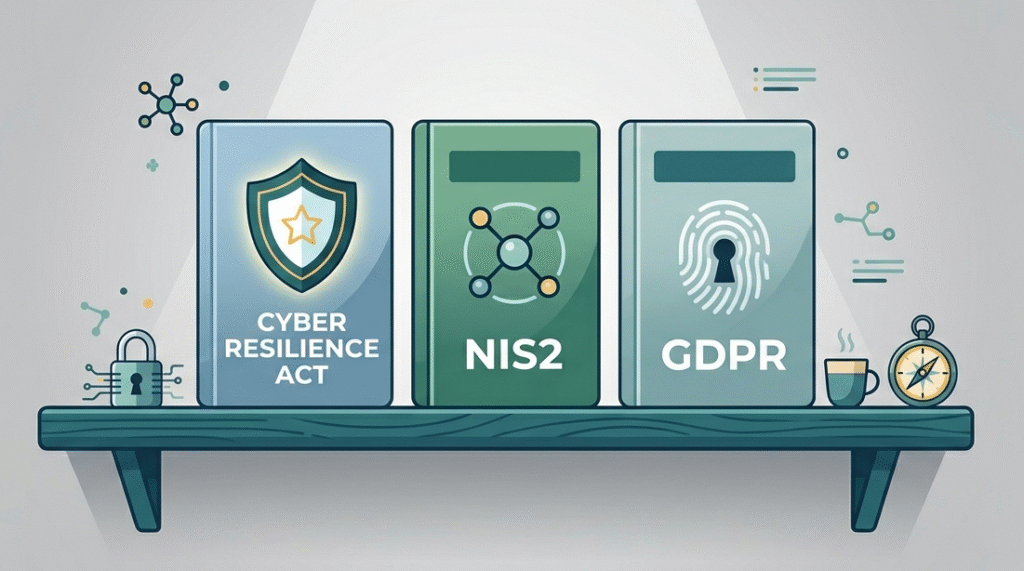
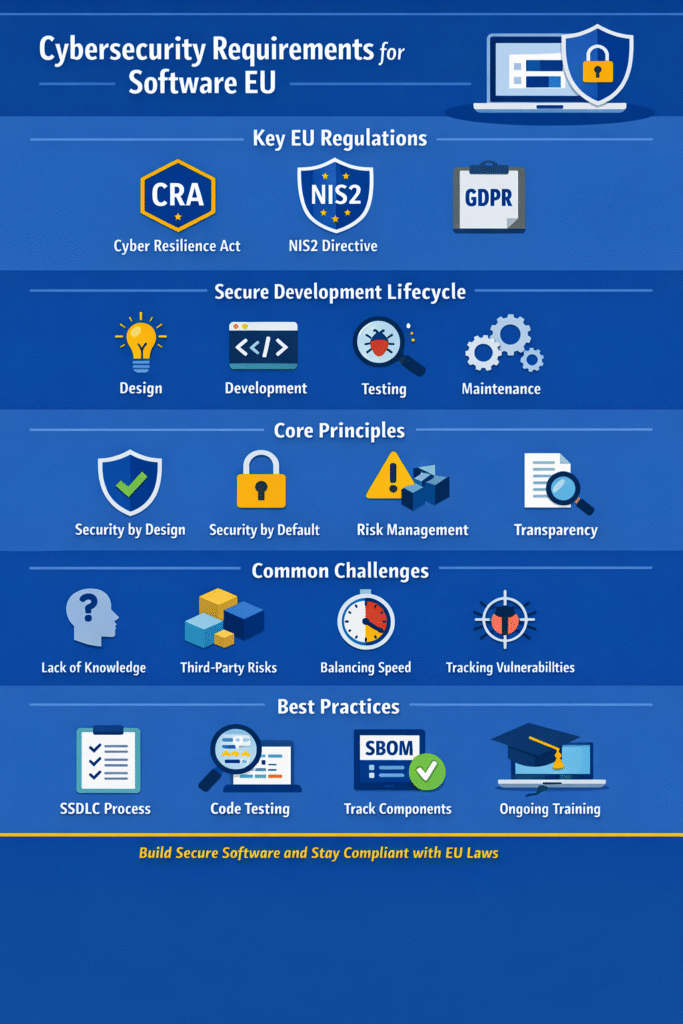
Cybersecurity requirements for software EU come from several major regulations. This eu cybersecurity law for software, led by the Cyber Resilience Act, focuses on securing digital products throughout their lifecycle.The NIS2 Directive requires organizations to manage risks and report incidents. GDPR adds strong requirements for data protection and privacy.
“The Cyber Resilience Act is the first European regulation to set a minimum level of cyber security for all connected products available on the EU market… Manufacturers who already know and apply these verification processes have an advantage.” – German Federal Office for Information Security (BSI)
Main focus of these regulations:
- Protect users and systems
- Manage and reduce risks
- Ensure fast incident reporting
- Secure third-party components
These laws push teams to take security seriously and reduce common vulnerabilities.
Cybersecurity Requirements in Practice
Credits: Somco Software
EU regulations require security at every stage of development. It’s not just about testing at the end, it’s about building securely from the start.
Main steps include:
- Design: identify risks and plan security
- Development: write secure code
- Testing: detect and fix vulnerabilities
- Deployment: configure systems securely
- Maintenance: monitor and update software
From our experience, maintenance is often overlooked. But under EU law, it is critical. Software must stay secure after release through updates and monitoring.
Core Cybersecurity Principles
Within the broader eu product security legislation overview, cybersecurity requirements for software EU are based on simple but important principles.
“Cybersecurity is no longer a static control layer but a continuous lifecycle discipline embedded from design through deployment and recovery… Secure by design and default cannot be confined to development alone.” – European Union Agency for Cybersecurity (ENISA)
Key principles:
- Security by design: build security from the start
- Security by default: systems are secure automatically
- Continuous risk management: always assess risks
- Transparency: report and document issues
We’ve seen that teams applying these early work more efficiently and face fewer compliance issues later.
Common Challenges and How Teams Handle Them
pting to cybersecurity requirements for software EU. Understanding the modern legal and regulatory context is essential, especially when shifting from traditional development to a compliance-first approach.
Common challenges:
- Limited security knowledge
- Managing open-source dependencies
- Balancing speed and compliance
- Tracking vulnerabilities over time
From our experience, tools alone are not enough. Teams also need training and better processes. When security becomes part of daily work, it feels much easier.
Comparison of Key EU Regulations
| Regulation | Focus Area | Key Requirements | Target Audience |
| Cyber Resilience Act | Product security | Secure design, updates | Developers, vendors |
| NIS2 Directive | System security | Risk management, reporting | Critical sectors |
| GDPR | Data protection | Privacy, breach reporting | All organizations |
Best Practices for Compliance
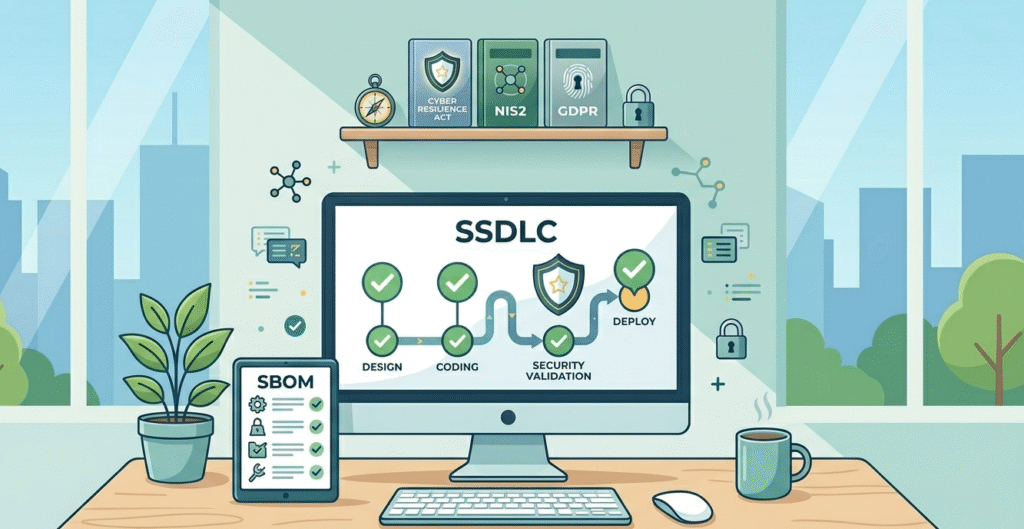
To meet cybersecurity requirements for software EU, teams should follow simple practices:
Best practices:
- Use a Secure Software Development Lifecycle (SSDLC)
- Apply secure coding standards (e.g., OWASP)
- Track components with SBOM
- Perform regular security testing
- Train developers continuously
From our experience, training has the biggest impact. Developers who understand security make fewer mistakes.
FAQ
What are cybersecurity requirements for software EU in simple terms?
Cybersecurity requirements for software EU are rules that make sure software is safe to use. They require developers to build secure systems, protect user data, and fix vulnerabilities quickly. These rules apply from the start of development until after release.
In simple terms, they ensure software stays secure, reliable, and compliant with EU expectations over time.
How do cybersecurity requirements for software EU affect small development teams?
Cybersecurity requirements for software EU can feel challenging for small teams, especially with limited resources. Teams need to focus on secure coding, regular testing, and updating software consistently. While it may seem like extra work, it actually helps avoid bigger problems later.
Small teams can stay compliant by using simple processes and making security part of daily development tasks.
What steps help meet cybersecurity requirements for software EU compliance?
To meet cybersecurity requirements for software EU, teams should follow a structured approach. This includes using a secure development lifecycle, testing for vulnerabilities, and keeping systems updated.
It also helps to track software components and manage risks early. Clear documentation and regular reviews make compliance easier and help teams stay aligned with EU security expectations.
Why is lifecycle security important in cybersecurity requirements for software EU?
Lifecycle security is important because cybersecurity requirements for software EU apply beyond initial release. Software must remain secure over time through updates and monitoring. Without this, new vulnerabilities can appear and create risks.
By focusing on the full lifecycle, teams can protect users, reduce threats, and stay compliant with EU regulations more effectively.
Cybersecurity Requirements for Software EU: Final Thoughts
Cybersecurity requirements for software EU are changing how software is built. Security must be part of every stage, from design to maintenance. From our experience, teams that apply security early work more efficiently and avoid major issues later.
If you want to improve your skills, start with secure coding practice and make security part of your daily workflow.
References
- https://www.bsi.bund.de/EN/Themen/Unternehmen-und-Organisationen/Informationen-und-Empfehlungen/Cyber_Resilience_Act/cyber_resilience_act_node.html
- https://www.enisa.europa.eu/publications/enisa-technical-advisory-for-secure-use-of-package-managers