

The Cyber Resilience Act compliance services is changing how businesses manage product security and compliance. Companies now need stronger protection across development, testing, and maintenance processes. From our experience, organizations that apply Secure Coding Practices early often reduce security risks and avoid larger compliance issues later.
Modern compliance services help businesses improve visibility, strengthen resilience, and prepare for evolving regulations. Keep reading to learn how smarter security preparation supports long-term compliance success.
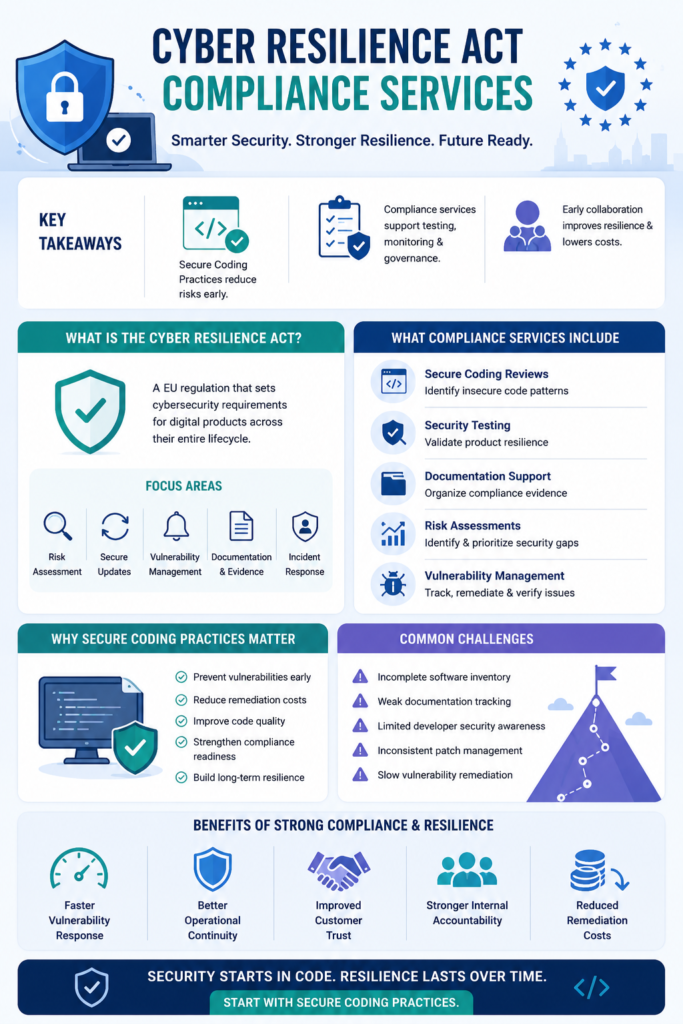
Key Insights for Modern Compliance
Many businesses initially focus only on documentation. However, compliance becomes more manageable when security is integrated directly into development operations.
- Secure Coding Practices help reduce risks before audits begin.
- Compliance services support testing, monitoring, and governance processes.
- Early collaboration between developers and security teams improves resilience.
Why the Cyber Resilience Act Changes Security Priorities
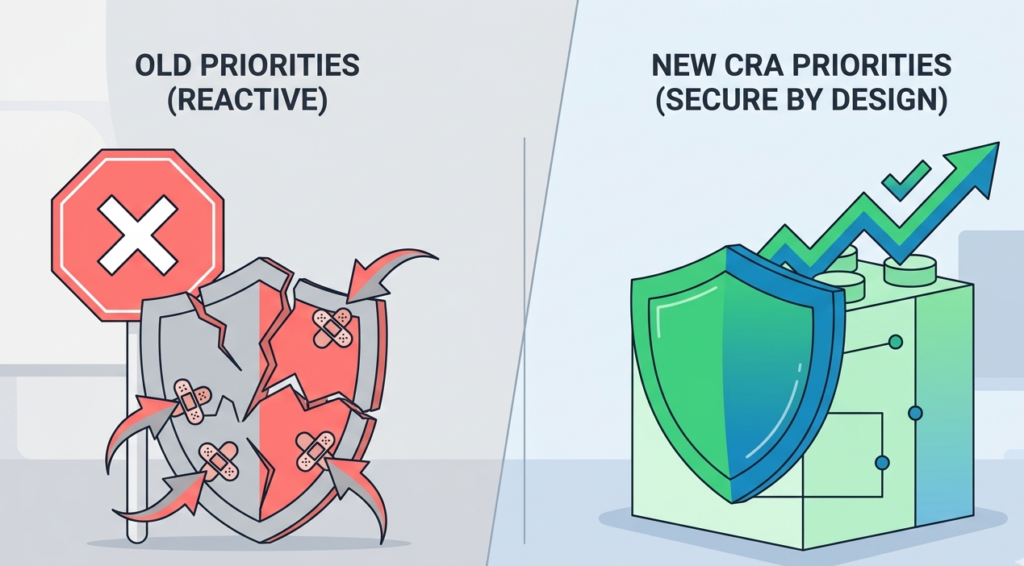
The Cyber Resilience Act increases cybersecurity responsibilities for digital products and connected systems. Organizations now need stronger security visibility across development, deployment, and maintenance stages.
“The CRA is primarily designed to address two concerns: the low level of cybersecurity in [products with digital elements] and the insufficient level of information available for users, both of which impose costs on society and users” – Liu.Diva
From what we have observed, reactive security approaches often create delays during compliance preparation. Teams that only review vulnerabilities near release deadlines usually face higher remediation pressure.
Common priorities include:
- Risk assessment processes
- Vulnerability disclosure handling
- Secure software updates
- Lifecycle security monitoring
- Incident response readiness
Many organizations now shift toward Secure Coding Practices, often using a secure coding checklist because preventing vulnerabilities early is more efficient than fixing them later.
What Cyber Resilience Act Compliance Services Typically Include
Compliance services support both technical and operational readiness. The goal is building repeatable security workflows and practical implementation instead of temporary compliance fixes.
| Compliance Area | Main Purpose | Benefit |
| Secure Coding Reviews | Detect insecure code patterns | Lower vulnerability exposure |
| Security Testing | Validate resilience | Better product reliability |
| Documentation Support | Organize compliance evidence | Easier audit preparation |
| Risk Assessments | Identify security gaps | Improved decision-making |
| Vulnerability Management | Track remediation efforts | Faster response times |
We often see organizations gain better visibility once these processes become standardized internally.
Why Secure Coding Practices Matter Most
Credits: Somco Software
Secure Coding Practices quietly become the foundation of long-term compliance success. Instead of treating security as a final-stage requirement, organizations increasingly build security into development from the beginning.
We have seen development teams improve compliance readiness faster when they utilize secure coding tools and focus on:
- Input validation
- Dependency management
- Authentication hardening
- API security controls
- Secure error handling
This proactive approach usually reduces operational disruption later. It also creates stronger collaboration between developers, DevSecOps teams, and compliance stakeholders. Businesses that invest in secure development processes often discover compliance becomes easier to maintain over time.
Common Challenges During Compliance Preparation
Organizations frequently underestimate how complex compliance preparation can become across multiple departments.
“Vulnerability detection was primarily concentrated in the testing phase (70.2%), whereas only 42.3% of respondents reported systematic security integration across all SDLC stages” – IeeExplore
Some common challenges include:
- Incomplete software inventories
- Weak documentation tracking
- Limited developer security awareness
- Inconsistent patch management
- Poor vulnerability remediation workflows
From our experience, businesses struggle most when security ownership remains isolated inside one department. Compliance works better when engineering, operations, and governance teams share responsibility.
Continuous communication also helps organizations adapt faster as regulations evolve.
How Compliance Services Support Long-Term Cyber Resilience

Cyber resilience focuses on maintaining secure operations even when threats continue evolving. Strong compliance services help businesses create long-term security stability instead of temporary fixes.
Organizations often benefit through:
- Faster vulnerability response
- Better operational continuity
- Improved customer trust
- Stronger internal accountability
- Reduced remediation costs
Many businesses now treat compliance as part of broader resilience planning rather than a standalone legal requirement. This mindset creates stronger operational consistency across teams and product lifecycles.
FAQ
What are cyber resilience act compliance services?
These services help organizations prepare for cybersecurity regulations through testing, risk assessments, governance support, and secure development improvements.
Why are Secure Coding Practices important?
Secure Coding Practices reduce vulnerabilities early in development, making compliance preparation more efficient and sustainable.
Which businesses may need compliance services?
Software providers, SaaS companies, IoT manufacturers, and connected product vendors may all require compliance support.
Can small businesses benefit from compliance preparation?
Yes. Smaller organizations often improve security visibility and reduce future remediation costs through structured compliance support.
Building Resilience Beyond Compliance
Cyber resilience act compliance services help organizations strengthen security processes while preparing for evolving regulatory expectations. Businesses that integrate security earlier usually experience smoother compliance preparation, stronger operational stability, and fewer remediation challenges later.
From our perspective, long-term resilience depends heavily on proactive development security rather than reactive fixes. Organizations that continuously improve development workflows, testing practices, and governance processes often build more sustainable protection over time through Secure Coding Practices.
References
- https://liu.diva-portal.org/smash/get/diva2:2055432/FULLTEXT01.pdf
- https://ieeexplore.ieee.org/document/10555026