
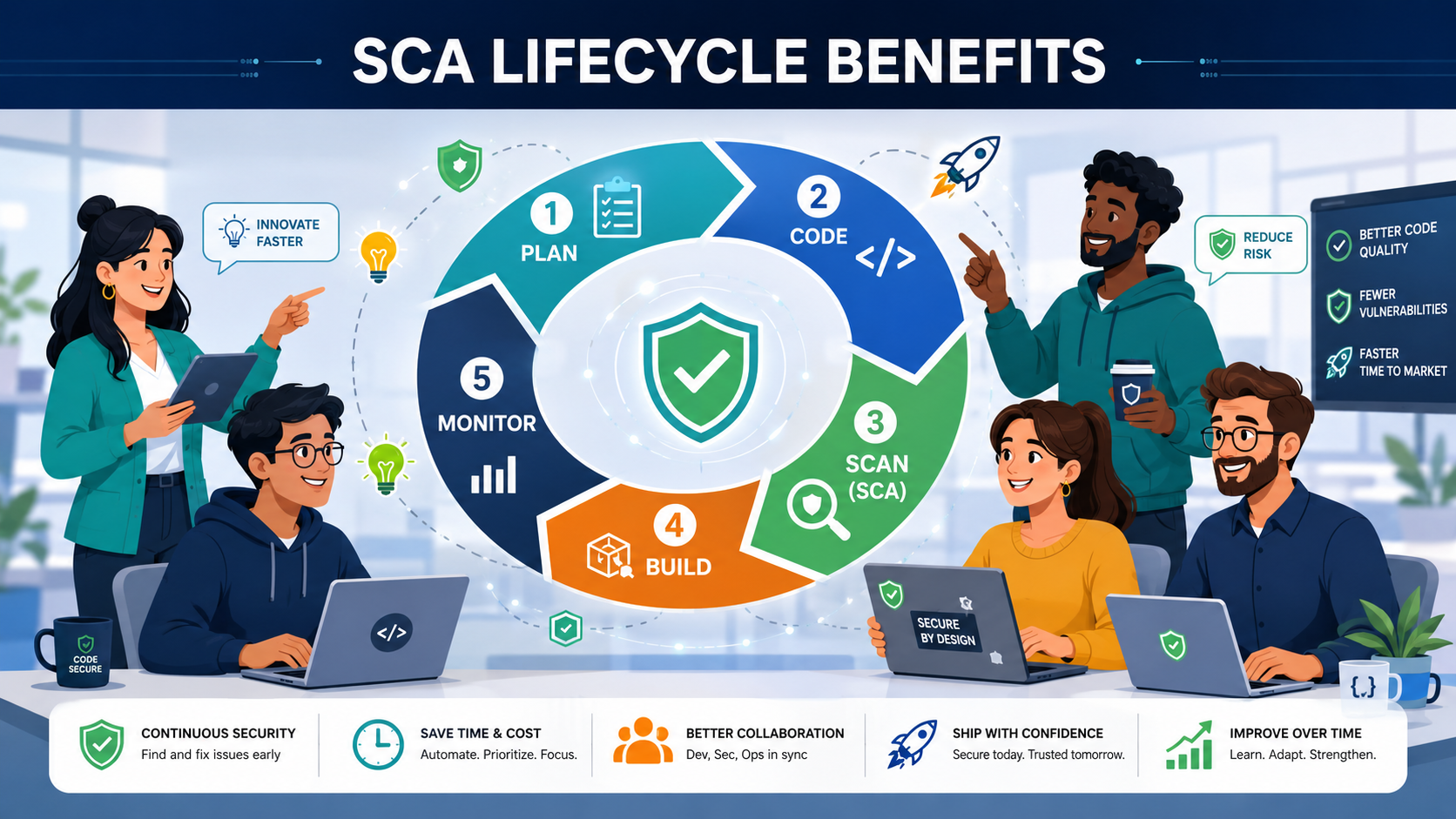

The benefits using SCA development lifecycle are straightforward. Your modern software is assembled, not built from scratch. Modern software often relies heavily on open-source and third-party dependencies. This reality makes SCA a foundational practice for building resilient applications, not just a security tool.
We integrate it continuously from the IDE to production. This catches vulnerabilities when they’re cheap to fix, automates legal compliance, and shows you what’s actually in your software. Without our secure coding practices, you’re flying blind in a storm of supply chain attacks. Anchor your process and keep reading.
Why SCA Matters at Every Stage
Applying SCA throughout the development lifecycle helps teams build more secure, compliant, and reliable software with less manual effort.
- Find vulnerable dependencies early in development to reduce security risks and avoid costly fixes before release.
- Gain complete software supply chain visibility by mapping direct and transitive dependencies automatically.
- Strengthen compliance with continuous license checks and automatic Software Bill of Materials (SBOM) generation.
Why Does SCA Belong in Every Phase?
The old model waited. A security team would run one big scan at the end, dumping a massive PDF of vulnerabilities on developers. That’s why software composition analysis belongs in every development phase. This created friction and blame.
Integrating SCA throughout the lifecycle changes that. It becomes a continuous feedback loop, not a disruptive audit. The goal is to give the right information to the right person at the right time.
It starts locally, in the developer’s IDE, warning about a risky library as they type the install command. Next, in source control, scanning every pull request. Then, in the CI/CD pipeline, analyzing every build. Finally, generating a final software bill of materials for the release.
This bakes security in as you go. It makes security a shared responsibility, using tools that work where developers already work.
How Does Shifting Left Slash Security Costs?
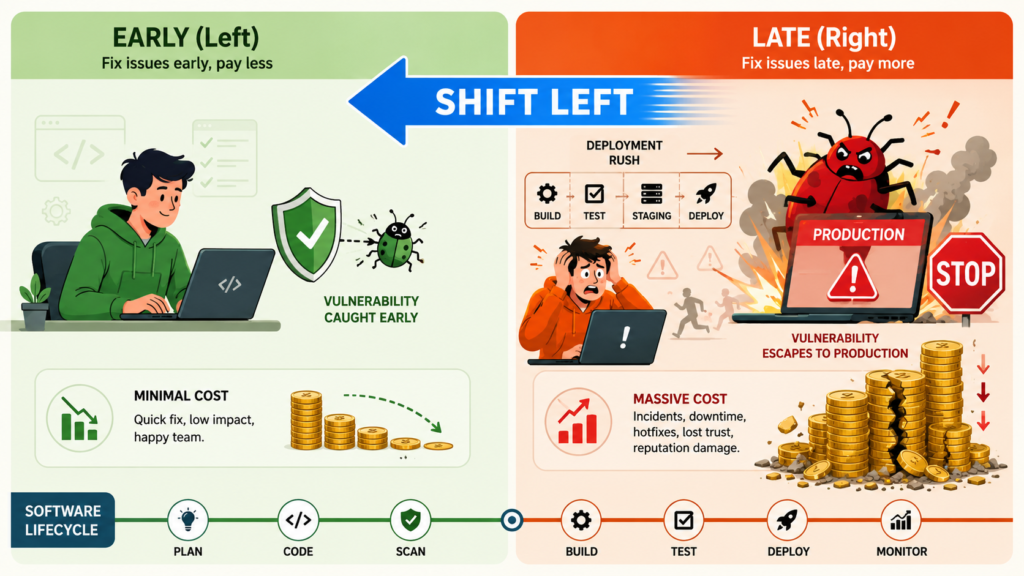
Finding a problem early is cheaper. That’s the core idea. Fixing issues later in the SDLC is typically much more expensive than fixing them earlier. For a bad dependency, it’s worse. A late find means rollbacks and hotfixes. Catch it as a developer types the install command? The fix is one command to pick a better version.
In a recent analysis by Microsoft.com
“Fixing vulnerabilities during development costs significantly less than fixing them in production.” – Microsoft.com
Our daily workflows show the benefit. Developers get instant feedback locally and can swap libraries immediately. In code review, we question a new dependency’s security before it merges. CI builds can fail on critical vulnerabilities.
The savings are clear. It’s not just about avoiding a crisis, it’s about saving the hours we’d otherwise waste on triage and rework. It’s a simple course correction, not an expensive U-turn.
How Do You See Your Dependency Tree?
Adding a framework like Spring Boot pulls in an entire ecosystem. Each dependency has its own dependencies, creating a deep tree. The ones you chose are direct. The ones they bring along, unseen, are transitive. Most risk hides in this transitive code you never reviewed.
These hidden chains expand your attack surface. A flaw in a library four levels down is as dangerous as one in your direct code.
Research from ar5iv.lab shows
“Lock files provide a precise snapshot of the entire dependency tree at installation time, capturing both direct and transitive dependencies unlike manifest files that only list direct dependencies with version ranges.” – ar5iv.lab
We see this in training. Without SCA, you’re defending a castle without knowing its secret tunnels. Your front gate might be strong, but the back door is open.
Why is Reachability Analysis Better?
Credit: Amr Alanwar
Early SCA tools are noisy. They match a package version to a CVE list and fire an alert. This creates false positives. It ignores the key question: can this flaw actually be exploited? A bad function is only a risk if your code calls it.
Reachability analysis is different. It traces data flows to see if there’s an executable path from your app’s input to the vulnerable code. If no path exists, you can likely ignore it. This turns an endless CVE list into a shortlist of real risks.
- Lowers alert fatigue by filtering theoretical risks.
- Focuses effort on flaws with a real attack path.
- Proves exploitability, doesn’t just assume it.
This nuance is what separates a compliance checkbox from real security.
How Do You Automate License Compliance?
Open-source software isn’t free of rules. Every component has a license. Some, like the GPL, can force you to share your own source code. Others have patent or attribution clauses. You can’t plead ignorance in court.
Automated SCA fixes this. You set your policy, like banning AGPL. The tool scans every component and flags violations. It can even block a pull request that adds a forbidden license.
This runs all the time. When legal asks for a compliance report, you click a button. The report uses data from every build, not an old file. We set this up for teams so it’s routine, not a crisis.
Why Are Software Bills of Materials the New Standard?
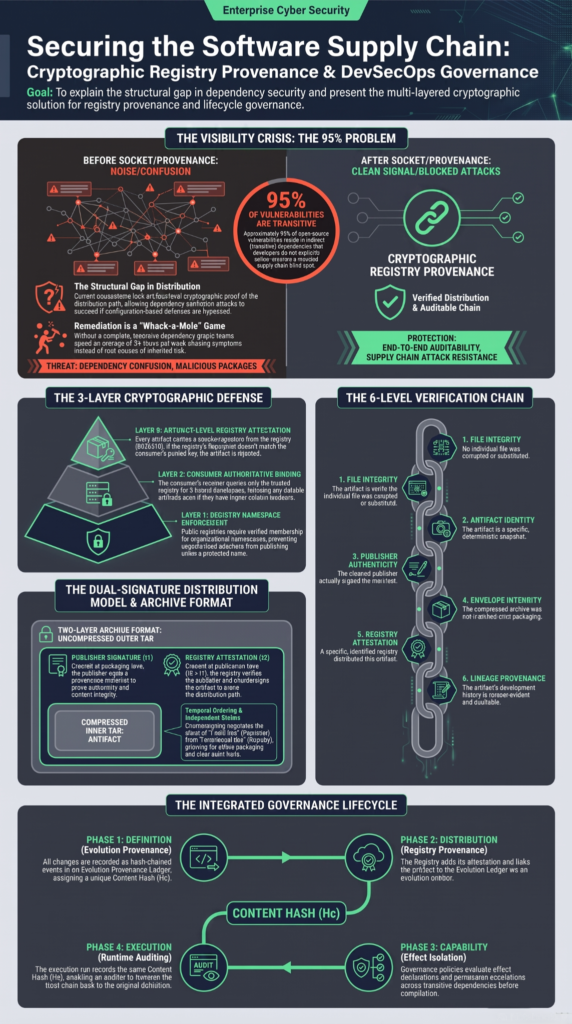
An SBOM is a formal inventory for your software. It’s the output of your SCA process. If a car has a parts list, your software needs an SBOM. It lists components, versions, and licenses. This transparency is now required, driven by government rules.
Big customers and agencies ask for SBOMs when they buy software. They need to manage their own risk. A good SBOM answers their security questions fast. It builds trust.
For you, it’s a living tool. When a new vulnerability hits, you check your SBOM to see what’s affected. This turns a crisis into a managed problem.
How Does Automated Remediation Speed Things Up?
Finding problems is one thing. Fixing them is where work stops. Old tools just give developers a list. They then have to research safe upgrades and make a patch. This kills momentum.
New tools automate this. They prioritize smartly, highlighting flaws with known public exploits. They rank the real risks. An efficient SCA tools work process keeps remediation moving without slowing releases.
For the worst issues, they suggest fixes. The best ones can even create a pull request that updates the dependency to a safe version automatically. They might test the change against your suite. This turns hours of work into a one-click merge. Developers keep building features while security gets better with every PR.
| Traditional Process | Automated SCA Workflow | Result |
| Developers manually research fixes | SCA suggests or prepares dependency updates | Faster remediation |
| Every vulnerability receives similar attention | Risks are prioritized by exploitability | Better use of developer time |
| Manual patching slows releases | Automated remediation supports continuous delivery | Faster and more secure releases |
What Are the Real SCA Challenges?
Many teams hate their SCA tools. The complaints are real: “alert fatigue” and “compliance theatre.” Getting spammed with daily pull requests for minor updates creates chaos. It breaks local builds and buries important code reviews.
Another issue is customer scanning. A vulnerability might be unreachable in your app, but a client’s scanner flags it. You’re forced to update anyway. It’s a compliance task, not a security fix.
This can become a failed setup. When SCA is just a checkbox for a report nobody reads, it’s theatre. An SBOM gets made, but who checks if it’s accurate? As one engineer said, “Nobody looks. But we have SBOMs.”
The cynicism comes when the process serves auditors, not the builders. The goal must be useful information for engineers, not more bureaucracy.
How Do You Tame the Noise?
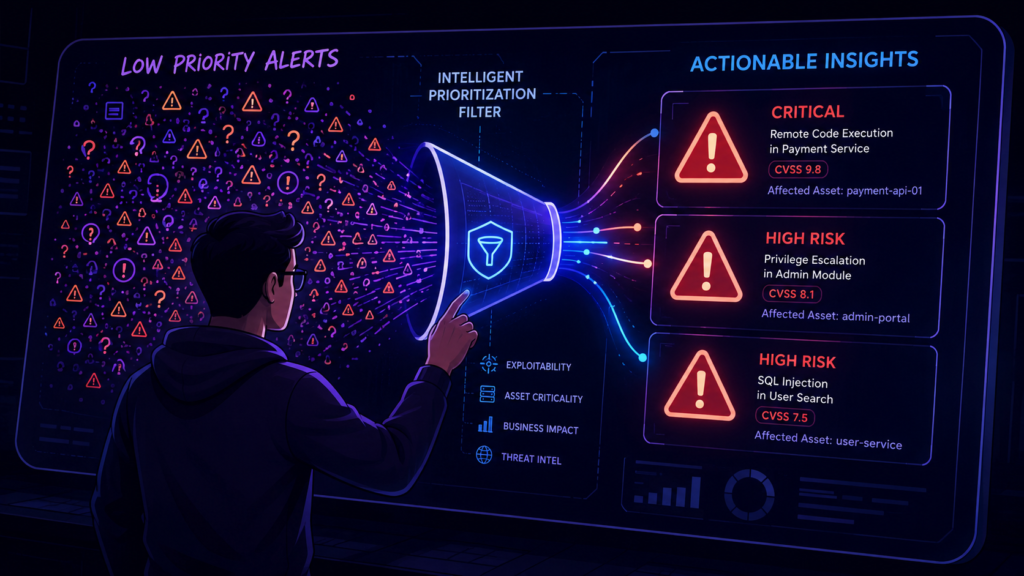
How do you move from theatre to something practical? You cut the noise to get a clear signal.
First, mandate reachability analysis. Suppress alerts for vulnerabilities that have no callable path in your code. This step can substantially reduce false positives.
Second, adopt risk-based prioritization. Don’t treat every “high” CVE the same. Use a framework that mixes exploitability, severity, and how critical the affected system is.
Third, pair SCA with other practices. Use SAST for bugs in your own code. Use secret scanning for leaked API keys. Add threat intel to know which flaws are being actively attacked. This layered context tells you what to fix first.
Finally, for your most critical dependencies the backbone of your system does an occasional manual, deep-dive review. No automation replaces human scrutiny for the packages that truly matter.
What’s Your Roadmap to a Secure Foundation?
This is a journey, not a switch.
- Inventory first. Run a full SCA scan to see what you have.
- Integrate early. Put the scanner in IDEs and pull requests.
- Build it in. Make SCA part of every CI/CD pipeline.
- Enforce policy. Block bad licenses automatically.
- Generate continuously. Attach SBOMs to all releases.
- Prioritize wisely. Use reachability to focus on real risks.
- Automate fixes. Enable auto-remediation for safe updates.
- Monitor always. Watch for new flaws in your inventory.
Avoid the traps. Don’t ignore transitive dependencies. Don’t try to fix every CVE at once. Keep dependencies updated steadily, it’s safer than a big, breaking upgrade later.
FAQs
Is SCA different from SAST?
Absolutely. SAST (Static Application Security Testing) analyzes the source code you write for bugs like SQL injection. SCA analyzes the third-party libraries you use for known vulnerabilities. They are complementary. You need both.
Does SCA replace penetration testing?
No. Penetration testing is a simulated attack on a running application. SCA is a code-centric analysis. A pen test might find runtime configuration issues or business logic flaws that SCA would never see. Use SCA to harden your code, and pen tests to validate your overall defense.
Can SCA help reduce software supply chain attacks?
It’s a primary defense. By identifying compromised or malicious packages, enforcing trusted sources via private registries, and ensuring integrity via checksums, SCA directly addresses key supply chain attack vectors. It can’t reduce every type, but it closes major gaps.
Is SCA only useful for open-source software?
Primarily, yes. Its core function is managing open-source and third-party component risk. Some tools can also analyze commercial off-the-shelf (COTS) software if you have access to its binaries or manifests.
How often should SCA scans run?
Continuously. The ideal is on every developer commit, every pull request, and every build. Vulnerability databases are updated daily; your scans should be equally frequent to catch new threats as soon as they’re disclosed.
Build Security Into Every Release
A strong SCA process gives your team confidence because every dependency is known and managed from the start. That means fewer surprises, faster fixes, and safer releases without slowing development. That’s the difference.
If you’re ready to strengthen secure coding skills across your team, the Secure Coding Practices Bootcamp is a practical next step. Developers learn through hands-on labs with real examples covering secure authentication, input validation, encryption, safe dependency use, and more.
References
- https://ar5iv.labs.arxiv.org/html/2511.20313
- https://learn.microsoft.com/lb-lu/training/modules/software-composition-analysis/5-integrate-software-composition-analysis-checks-into-pipelines