
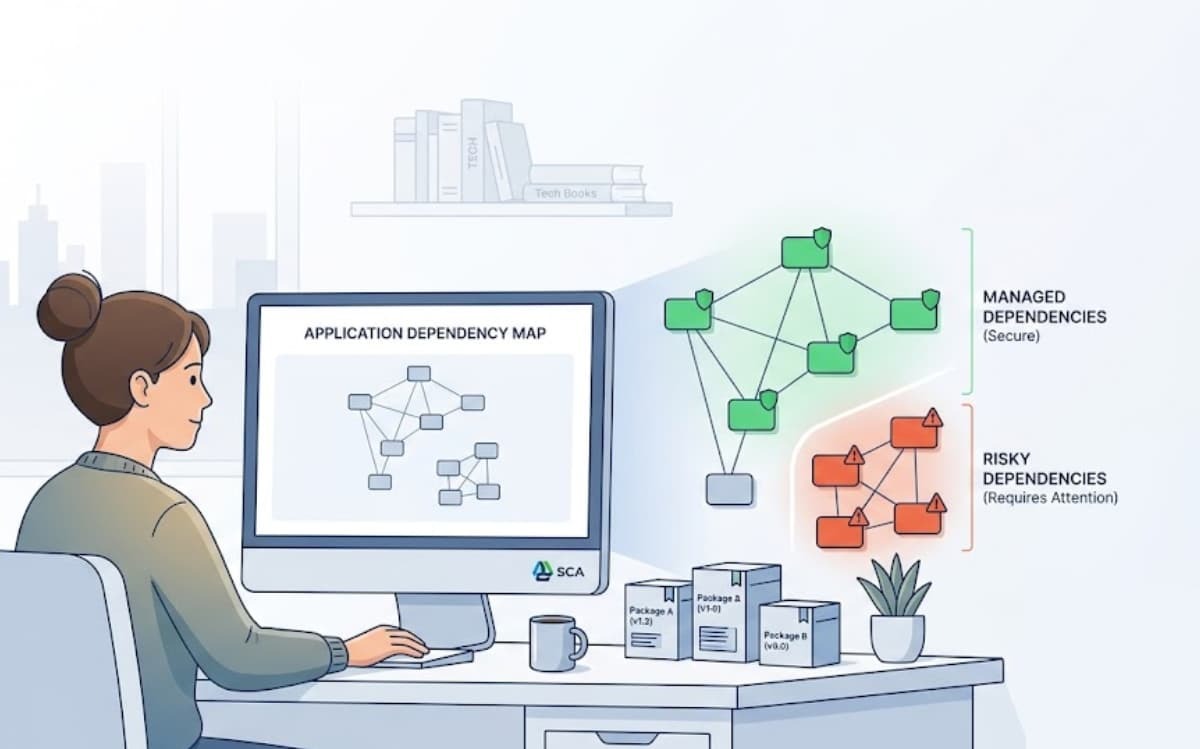

SCA dependency management helps teams track and control the open source components used in their applications. It identifies vulnerable libraries, outdated packages, and possible license issues before they create bigger problems.
As software projects grow, manually checking every dependency becomes difficult, especially when hidden packages are involved. At Secure Coding Practices, we see SCA as a practical way to improve visibility and support better security decisions during development.
This guide explains how SCA helps with dependency tracking, compliance, and remediation. Keep reading to learn how SCA fits into secure software development.
SCA Dependency Essentials
SCA dependency management improves visibility, security, and control over software components.
- SCA reveals hidden direct and transitive dependencies.
- It detects vulnerable libraries, license issues, and outdated components.
- SBOMs improve software supply chain transparency.
Why Are Software Dependencies Becoming Harder To Manage?
Modern applications rarely run with only code written by the internal team. Most projects use outside libraries, frameworks, and packages to save time during development. That is normal. But the number of dependencies keeps growing, and managing them is getting harder.
A project that starts with a few packages can eventually depend on hundreds of components. Some are added directly by developers. Others appear because another package needs them.
That second group is where problems often hide.
“The security of software depends on the security of its components, including open source software. Organizations should understand the software they use, manage risks from third party components, and maintain visibility throughout the software lifecycle.” – NIST Secure Software Development Framework (SSDF)
SCA dependency management helps teams see these connections. It creates a clear view of the software components inside an application, including versions, relationships, and possible security issues.
Without proper tracking, teams may miss:
- Known vulnerabilities
- Outdated packages
- Abandoned libraries
- License problems
- Hidden dependencies
A package might look safe when it is first added. Months later, a new vulnerability can change that.
How Do Open Source Components Create Security Risks?
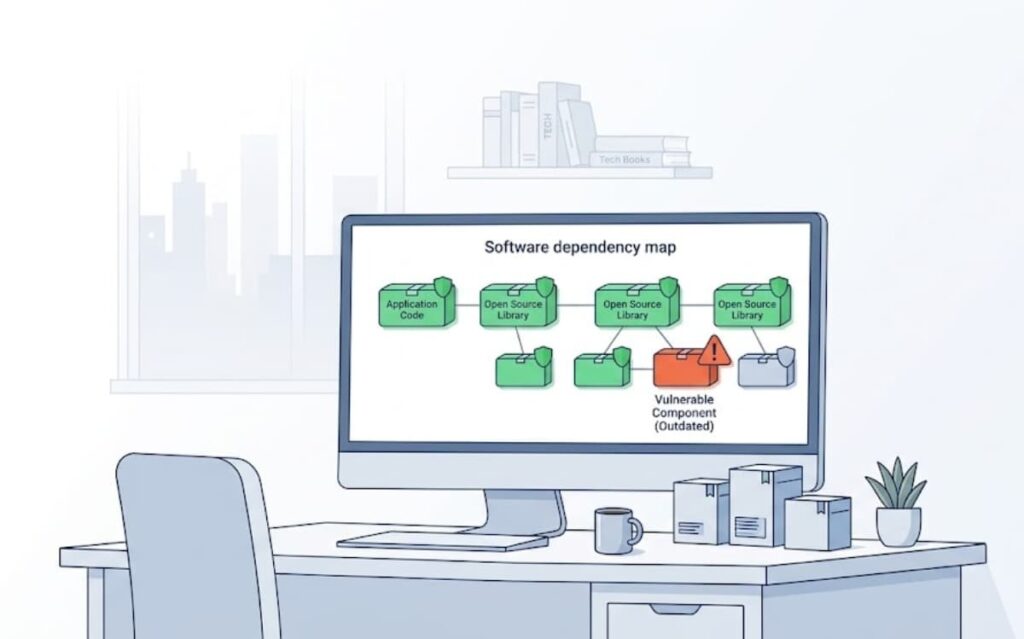
But every external component adds another piece that needs attention. Teams that want better visibility into these components can use Software Composition Analysis (SCA) to understand what libraries, packages, and dependencies exist inside their applications.
But every external component adds another piece that needs attention.
A vulnerable library can affect many applications at the same time, especially when companies use the same package version across multiple projects.
SCA tools help teams identify these risks by checking software components against vulnerability information. They look at details such as:
- Package security status
- Version history
- Available updates
- Library maintenance activity
Why Are Transitive Dependencies A Major Concern?
Transitive dependencies are packages that come with another package automatically.
They are useful because developers do not need to manually install every small component. However, they can also create visibility problems.
For example, a developer adds an authentication library. That library may depend on several smaller packages to work properly. Those packages become part of the application too.
SCA maps these relationships through a dependency tree.
The tree shows:
- Direct dependencies
- Transitive dependencies
- Package relationships
During secure development training, we often show teams their first dependency scan results. The reaction is usually the same. They are surprised by how many components exist in their application.
Why Is Continuous Monitoring Important For Dependencies?

Dependency security does not stay the same forever.
A package that was considered safe during development may receive a vulnerability report later. New security issues appear regularly, and old dependencies can become a problem over time.
Because of this, checking dependencies once is not enough.
Continuous SCA monitoring helps teams:
- Track new vulnerabilities
- Find affected applications
- Prioritize updates
What Does An SCA Dependency Inventory Include?
An SCA inventory collects important information about each software component. Understanding software composition analysis helps teams see how component tracking, dependency relationships, and security information work together.
| Component Information | Why It Matters |
| Package name and version | Identifies software components |
| Dependency links | Shows package relationships |
| License details | Supports compliance checks |
| Component metadata | Helps tracking and review |
This information supports:
- Dependency mapping
- Security reviews
- Risk assessment
- Vulnerability response
A clear inventory gives teams better control over the software they build and maintain.
How Does SBOM Improve Software Supply Chain Visibility?
An SBOM creates a record of the software components inside an application.
“An SBOM provides a formal record of the components and dependencies that make up software. It improves transparency by helping organizations understand what is inside their software and respond more effectively when security issues are discovered.” – Cybersecurity and Infrastructure Security Agency (CISA)
It helps teams understand:
- What components exist
- Where they are used
- Which versions are installed
- What risks may affect them
When a new vulnerability appears, teams can check the SBOM instead of reviewing every project manually.
Much faster.
That visibility can reduce confusion during security events because teams already have a record of their software components.
How Does SCA Automate License Policies?
SCA tools help teams check license rules automatically. Understanding how SCA tools work can help teams see how dependency scanning, component analysis, and policy checks support better software decisions.
Instead of manually reviewing every package, organizations can create policies that match their requirements.
For example, a company can set rules to:
- Allow approved licenses
- Flag restricted packages
- Review unclear cases
This gives developers faster feedback when they add new dependencies.
At Secure Coding Practices, we teach developers that secure software is not only about preventing attacks. It is also about knowing what goes into the application.
A dependency choice affects more than the code. It can affect security, maintenance, and compliance too.
How Does SCA Fit Into DevSecOps Dependency Management?
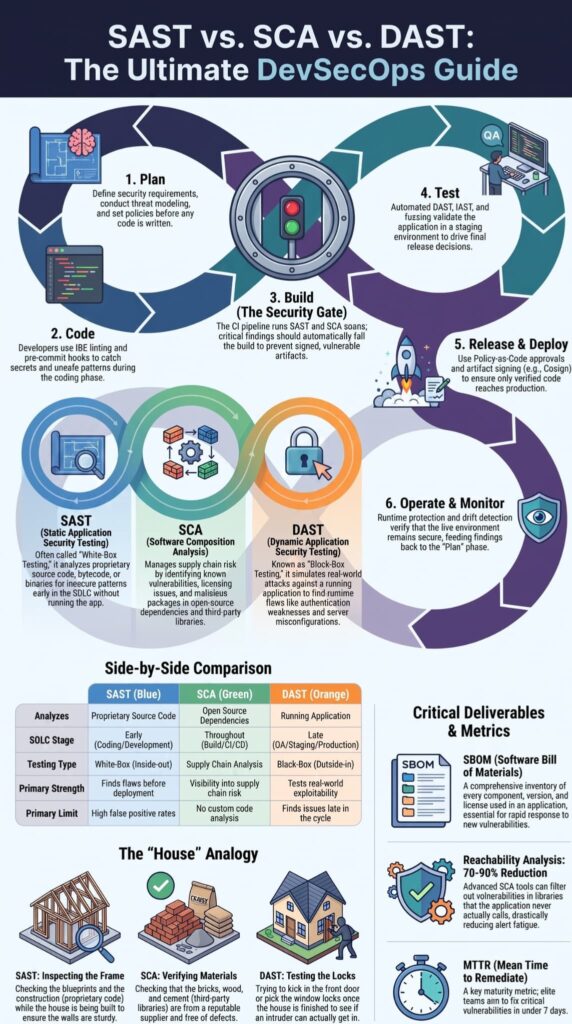
SCA works best when it becomes part of daily development.
Security checks that happen only before release usually come too late. By then, fixing a dependency issue may require more work.
DevSecOps brings security into the development process. SCA supports this by checking dependencies during different stages of building software.
Teams can add SCA into:
- Source code repositories
- CI/CD pipelines
- Build systems
- Artifact repositories
We have noticed that developers handle security issues better when the feedback appears where they already work.
A security message inside a pull request feels more useful than a long report sent weeks later.
Why Is Dependency Hygiene Important?
https://www.youtube.com/watch?v=-oU-jc_zXCI
Source: Emerging Tech Insider
Dependency hygiene means keeping software components organized and updated.
Poor dependency management can lead to:
- More security risks
- Harder maintenance
- Slower updates
- Confusing application structures
Regular reviews help teams understand what they use and remove what they no longer need.
FAQs
How does SCA improve dependency visibility?
Software Composition Analysis (SCA) improves dependency visibility by creating a clear dependency inventory of the software components used in an application. It helps teams understand direct dependencies, transitive dependencies, and third-party packages through dependency mapping. This visibility supports better dependency management, easier security reviews, and faster identification of open source risks before they affect software maintenance.
Why should teams track outdated dependencies?
Tracking outdated dependencies helps teams reduce security and maintenance issues caused by older software components. SCA supports version management by identifying outdated packages, available updates, and related security findings. With better dependency observability, teams can plan remediation workflows, improve dependency hygiene, and reduce the risk of vulnerable libraries remaining in production environments.
How can SCA support open source governance?
SCA supports open source governance by helping teams understand which open source packages are used and how they are maintained. It provides component metadata, license detection, and vulnerability intelligence to support compliance auditing. This helps organizations create effective policies, manage open source risks, and maintain stronger software assurance throughout the dependency lifecycle.
What makes transitive dependencies a security concern?
Transitive dependencies can create security concerns because they are often added indirectly through other packages. Teams may not always know these components exist without proper dependency mapping and package analysis. SCA helps identify transitive risks by showing dependency relationships, tracking vulnerable libraries, and supporting risk assessments before hidden issues affect application security.
How does SCA help prioritize security fixes?
SCA helps teams prioritize security fixes by providing security findings, risk scoring, and update recommendations based on component risks. Instead of treating every alert equally, teams can focus on issues with higher exploitability and business impact. This supports patch prioritization, security remediation, and a more efficient vulnerability management process.
Build Safer Software with Better Dependency Control
Managing software dependencies is easier when you know what exists inside your applications. SCA gives you that visibility, helping you spot risks before they create bigger security problems. Waiting until issues appear can make fixes harder.
The Secure Coding Practices Bootcamp helps developers turn security knowledge into daily practice. With hands-on training, teams can improve secure coding skills, understand dependency risks, and build safer software with stronger development habits from the start.
References
- https://csrc.nist.gov/projects/ssdf
- https://www.cisa.gov/topics/cyber-threats-and-advisories/software-bill-materials