
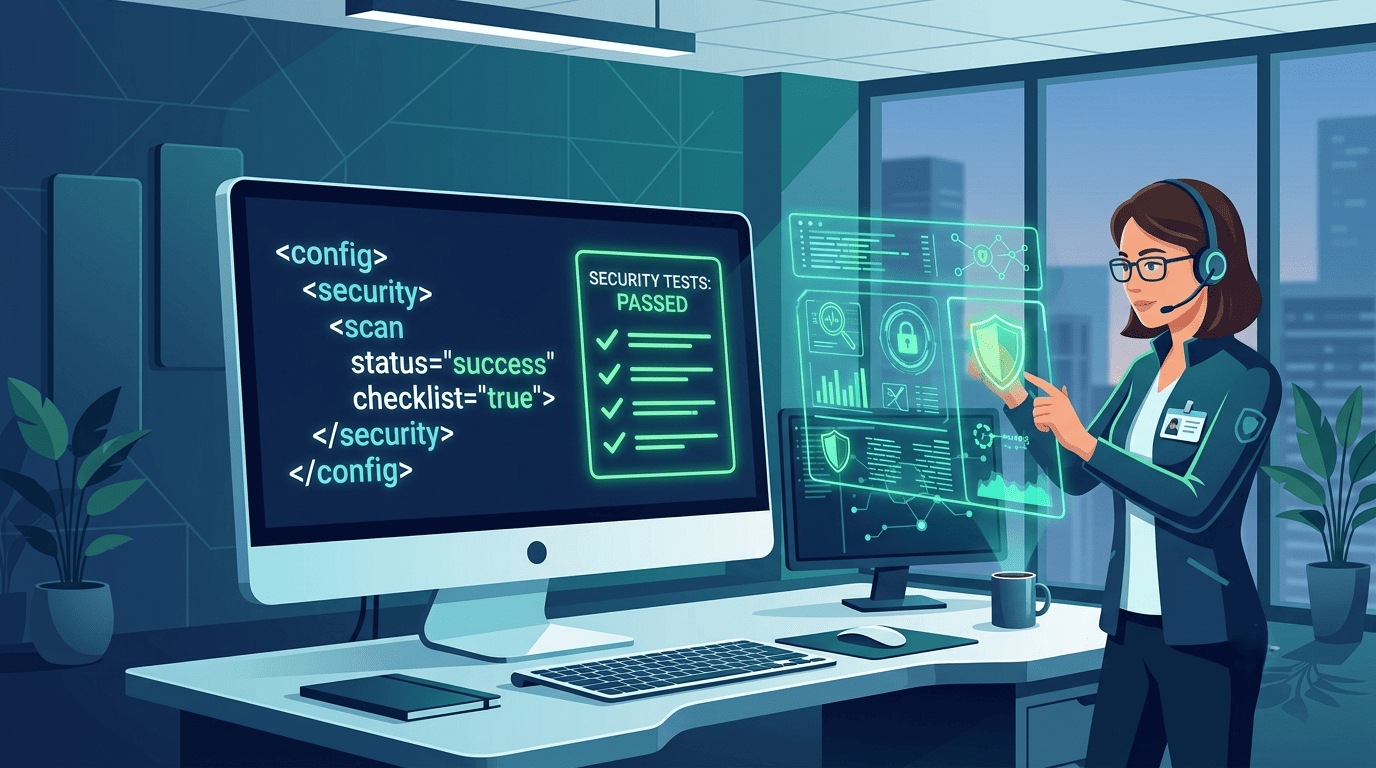

Testing for XXE vulnerabilities tools requires a precise approach, not just sending basic XML. You’re hunting for a parser misconfiguration, a hidden door left unlocked. The right method listens for the faint callback from a server that shouldn’t respond.
This guide compares effective techniques, from manual interception to automated scanning, to build a workflow that catches what others overlook. It connects directly to the foundation of Secure Coding Practices. Keep reading to map your strategy.
XXE Testing Essentials at a Glance
Testing for XXE vulnerabilities requires more than running a scanner. Effective assessments combine manual checks and secure coding practices. This reduces risk before deployment.
- Burp Suite’s tools help find XXE flaws. Blind XXE scenarios are often missed by scanners
- Testing should include file uploads and API content types. Hidden XML processing can occur here.
- A strong defense integrates secure coding. This happens at the source code level. Dynamic testing also prevents flaws.
What Makes an XML Parser Vulnerable in the First Place?
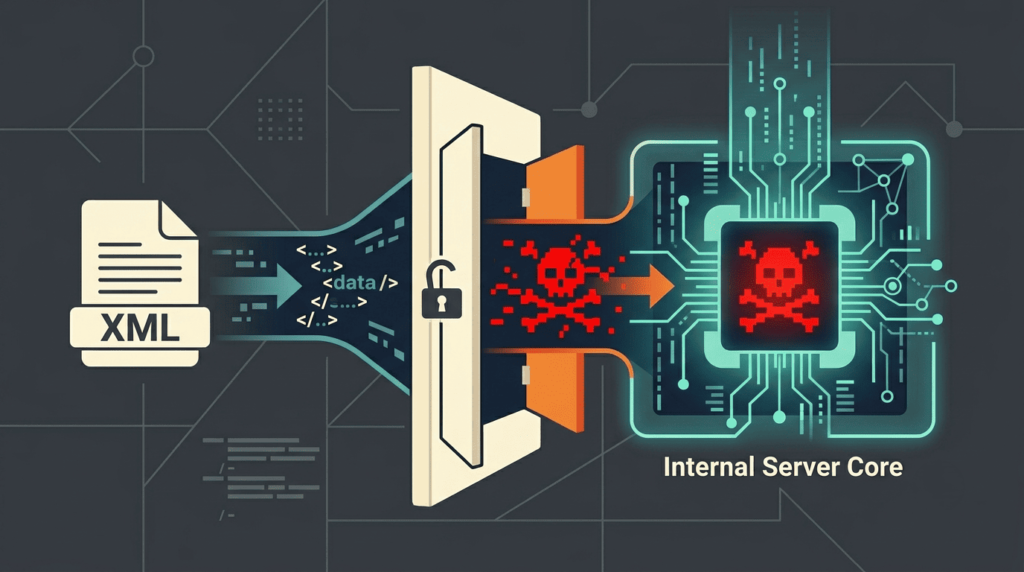
Poor XXE prevention is often a product of default settings. Many libraries, designed to be helpful, have external entity resolution turned on by default. A developer might instantiate a DocumentBuilderFactory in Java, just trying to read data, and unknowingly leave a door open. In our training, we see this exact scenario constantly.
Our tools test this by turning the doorknob. They send a payload defining an entity pointing to a file like file:///etc/passwd. If the server returns that file’s contents, the vulnerability is direct. More commonly now, the flaw is blind. The server processes the entity, makes a call to a system you control, but gives nothing back in the HTTP response. You need a different tool for that, one that listens for that silent, outbound call the server makes.
In a recent analysis by University of Paderborn
“Java and C++ parsers often do not provide secure default configurations, leaving them more vulnerable, whereas parsers in other languages typically offer safer defaults.” – University of Paderborn
Why Is an Interception Proxy the Foundation of Manual XXE Testing?
Credits: NullSecX
For manual testing, a good interception proxy is irreplaceable. It’s our primary workshop. You trap a request and see the raw bytes. A tester hunting for XXE flips the Content-Type header from JSON to XML. They reformat the payload and send it. Does the server accept it? This reveals hidden XML parsing paths.
We use proxy workspaces. The Repeater tool tweaks a request endlessly. You insert entity declarations. Intruder automates fuzzing. For blind XXE, Burp Collaborator is key. Embed a unique subdomain in your payload and wait. If the parser resolves it, the proxy catches the call. XXE attack scenarios confirmed.
- Manual Control: Precisely manipulate XML.
- Traffic Inspection: See every request.
- OOB Detection: Catch blind interactions.
- Fuzzing Capability: Automate payload iteration.
This process is methodical. It forces architectural thinking. XML isn’t in obvious places. We find it in SVG uploads or DOCX converters. The proxy finds these corners.
When Should You Rely on DAST Scanners for XXE Testing?
You can’t manually test every field in a large application. This is where Dynamic Application Security Testing (DAST) scanners take over. They crawl the site, discover endpoints, and fire a battery of test payloads. Tools like Acunetix have built-in checks for XXE. They try standard payloads and might flip content-types automatically. For broad, initial coverage, they have value.
Their weakness is context. They often struggle with blind XXE, as proving it needs an out-of-band callback system not all scanners have. They also generate false positives. A scanner might flag a parameter for reflecting an XML error, but that error could be harmless. In our experience, scanner results must be triaged and verified manually. A scanner is a suggestion, not a verdict.
For a more targeted approach, template-driven scanners like Nuclei are popular. The community writes and shares precise templates for specific XXE scenarios. You run these across thousands of targets quickly. They’re excellent for large-scale reconnaissance, finding common issues across an entire attack surface. They sit between a full DAST suite and a manual probe, offering speed with more precision.
What Should You Use After Finding a Potential XXE Vulnerability?
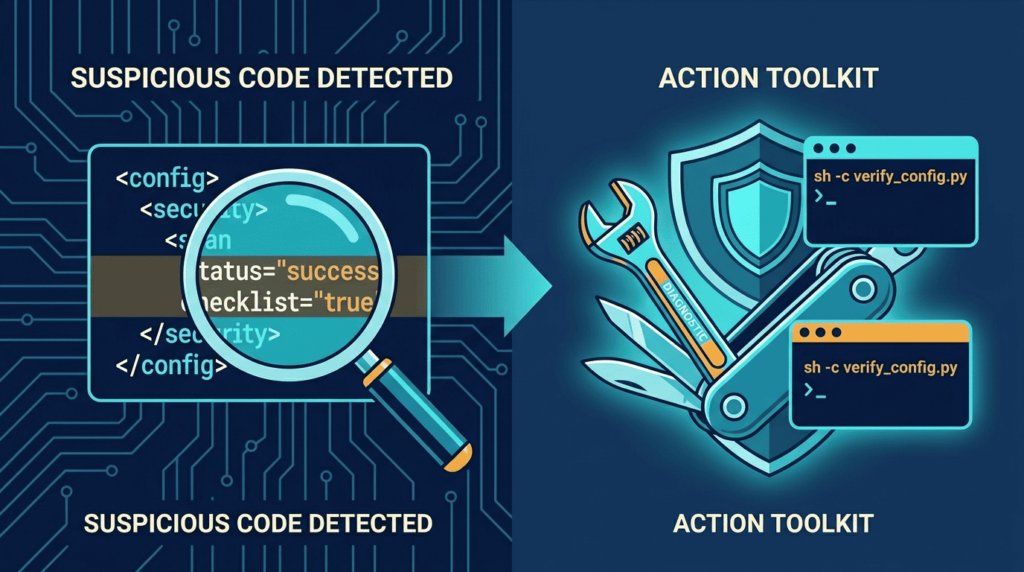
Once you’ve found a potential XXE hole, especially a blind one, you need to exploit it to understand the impact. This is where dedicated tools shine. A tool like XXEinjector is not a discovery scanner. It’s an exploitation framework.
You feed it a confirmed HTTP request that hits a vulnerable parser, and it automates the exfiltration process. It can try to retrieve files using various protocols, set up a server to host malicious external DTDs, and help exfiltrate data in chunks.
These tools handle the messy work of turning a proof-of-concept into a demonstrable data leak. They’re used after the initial finding, to answer the question, “What can an attacker actually do with this?” Their value is in their specialization, automating complex payload sequences that would be tedious to craft by hand in Repeater over and over again.
How Do SAST Tools and Secure Coding Practices Prevent XXE Before Testing Begins?
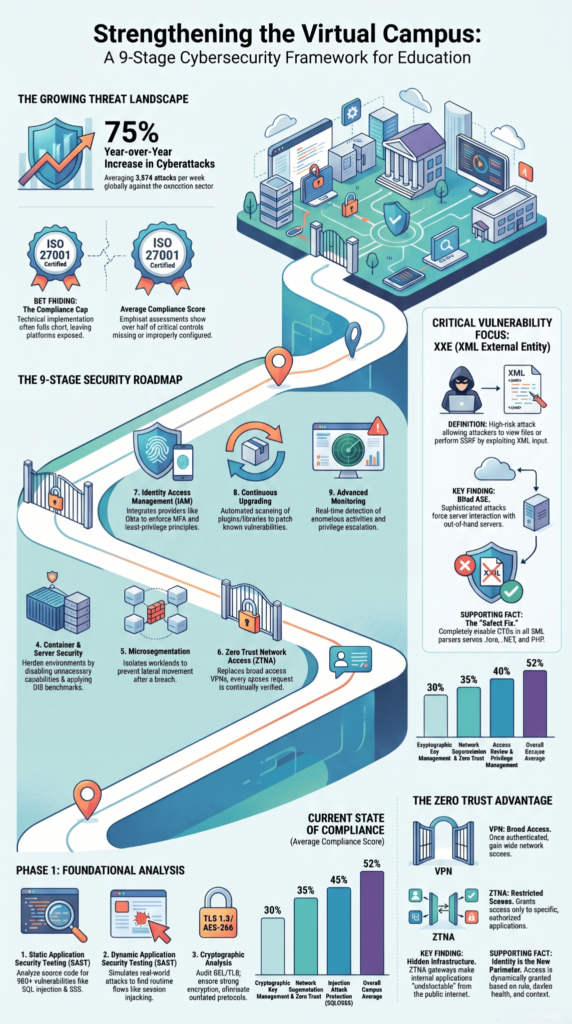
All the dynamic testing happens after the code is written. The most effective way to “test” for XXE is to prevent it from being written. This is where we, as developers, integrate Secure Coding Practices from the start. Static Application Security Testing (SAST) tools like Semgrep operate on source code.
Research from IEEE shows
“Completely disabling external entities within XML parsers is the most effective approach for preventing XXE attacks.” – IEEE
They don’t send HTTP requests. They analyze patterns. They look for a Java DocumentBuilderFactory and check if setFeature was called for preventing XXE injection. They scan for dangerous patterns. Running SAST in the CI/CD pipeline catches these early, often before code is merged. It’s a shift-left strategy.
This approach is fundamentally different. It’s proactive, not reactive. It requires developers to know that default parser settings are often unsafe. It’s about building the wall so you don’t test every brick for weakness later.
How Do You Build an Effective XXE Testing Workflow?
A mature security program layers these approaches. It starts with Secure Coding Practices and SAST to minimize vulnerabilities at the source. In pre-production, DAST scanners provide a first automated pass.
In dedicated penetration tests or bug bounty hunts, manual testing with an interception proxy and Collaborator provides the deep, contextual analysis to find complex blind issues and validate scanner findings. Finally, exploitation tools can be used to fully demonstrate critical impact.
The workflow looks like this: code review with SAST, broad scanning with DAST, targeted manual validation with a proxy, and exploitation proof with specialized utilities. Each tool answers a different question.
SAST asks, “Is the code configured safely?” DAST asks, “Can I find a hole from the outside?” The manual proxy asks, “How can I prove and exploit this specific weakness?” Together, they form a complete picture.
| Stage | Primary Tool Type | Key Question Answered |
| Development | SAST | Is the code configured safely? |
| Pre-Production | DAST | Can vulnerabilities be discovered externally? |
| Security Validation | Manual Proxy & OOB Tools | Can the weakness be proven and exploited? |
FAQs
How can I choose the right XXE testing tool for an assessment?
Choose an XXE testing tool that supports automated XXE detection, blind XXE detection, and response analysis. The tool should also perform XML request fuzzing, generate custom payloads, and monitor outbound connections. These capabilities help identify XXE vulnerabilities across different XML processing scenarios.
What should I check during manual XXE testing?
During manual XXE testing, examine how the application processes XML input and resolves external entities. Perform XML request tampering, execute a DTD injection test, and verify external entity resolution behavior. These checks can reveal a DTD processing vulnerability that automated scans may not detect.
How do scanners detect blind XXE vulnerabilities?
Scanners detect out-of-band XXE vulnerabilities by sending XML payloads that trigger external requests. Through OOB interaction testing and network callback detection, they identify server-side XML processing. This method confirms blind exfiltration test results even when the application returns no visible data.
Can XXE testing help identify file disclosure risks?
Yes. XXE testing can reveal whether an application exposes sensitive files through XML processing. Security teams perform a file disclosure test, attempt local file inclusion XXE attacks, and run a confidential file access test. A /etc/passwd test can demonstrate unauthorized file access.
What steps should follow after finding an XXE vulnerability?
After vulnerability verification, update the parser configuration and implement XML parser hardening measures. Enable secure XML processing, disable DTD support when it is unnecessary, and review all XML endpoints. Ongoing application security testing helps prevent future external entity attack attempts.
Choosing the Right XXE Security Strategy
XXE testing isn’t about finding one perfect tool, it’s about using the right approach at the right stage. Automated scanners help uncover issues at scale, but they can’t replace hands-on validation or secure development practices. The strongest defense starts with properly configured XML parsers, then verifies those protections through testing.
If you want developers to prevent XXE flaws before they reach production, consider joining the Secure Coding Practices Bootcamp
References
- https://cs.uni-paderborn.de/en/syssec/teaching/theses/finished-thesis/ba-in-depth-security-analysis-of-xml-parsers
- https://ieeexplore.ieee.org/document/10779957