



In 2026, you need architectural skills to avoid becoming just another automated drafting tool. The job isn’t about drawing buildings anymore. It’s about managing complex systems of people, data, and environmental rules. To stay relevant, you have to combine technical know-how with your own professional judgment.
This means mastering BIM and computational design as a starting point. Treating sustainability as a basic requirement, not an add-on. And using leadership, client management, and emotional intelligence as your real career protection. To see why architectural skills become more important, keep reading.
The Skills Separating Advisors From Drafters
- Technical skills are now about systems, not just software. Mastery of BIM processes and computational design is the baseline for managing digital transformation.
- Sustainability is a core competency, not a specialty. Designing for climate change and environmental sustainability is mandated by building codes and client demand.
- Your soft skills are your career armor. Leadership skills, client relationships, and emotional intelligence protect your role from automation and define project success.
The Orchestrator, Not Just the Designer
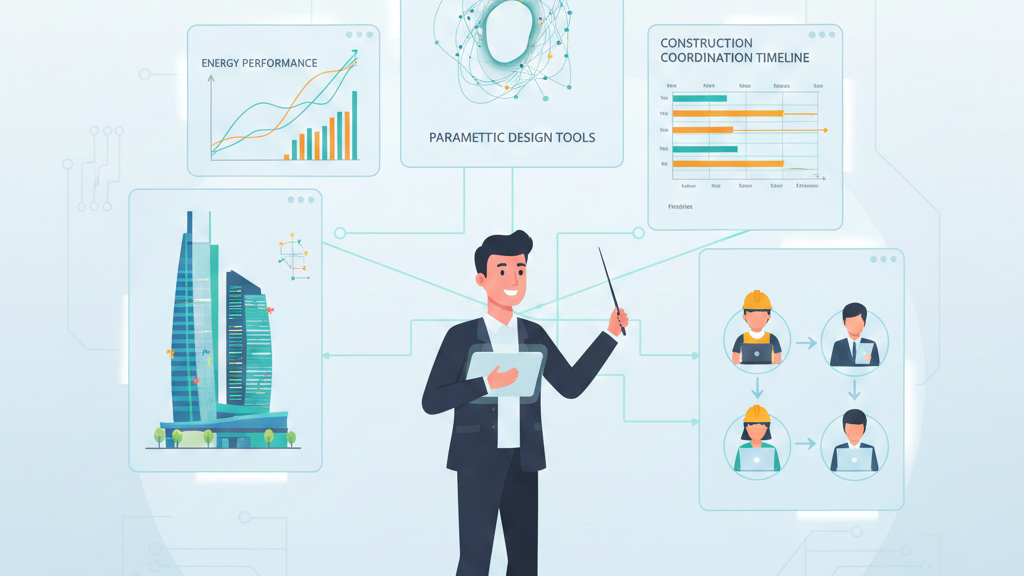
We see this shift on every project. The beautiful initial sketch gets dropped into a digital ecosystem almost immediately. Our first job isn’t to draw, but to set the rules for that system. We’ve moved from being the designer to the orchestrator, managing the flow of information between BIM, energy models, and the construction team.
An architect’s analytical skills get tested in real-time now. It’s not about a math test, but running a sensitivity analysis on a building’s performance as you design. The creativity happens up front, in setting the parameters and concepts that seed a generative process.
The old wall between the big idea and the engineering has completely collapsed. You have to speak both languages, recognizing how this changes the future of programming jobs and design roles alike. This integration is what firms actually mean by ‘technological innovation.
In our work, key tools for this role include:
- BIM (like Revit) for central model management.
- Parametric platforms to explore design options.
- Performance analysis software for immediate feedback on sustainability goals.
Why Hand-Drawing Still Matters in a Digital World
Credits: Thomas Rowntree
Some people think digital tools killed the pencil. They didn’t. Hand-drawing is more important now, but for a different reason. We don’t use it for final drawings anymore. We use it to think.
In a client meeting, sketching over a printed plan builds understanding. A polished render can’t do that. It shows you’re listening and adapting in real time. That quick site diagram you doodle on a napkin can align a team faster than ten emails.
“You can write flawless code and still ship a vulnerable application. That’s the reality of insecure design. If the architecture lacks proper authorization controls, no amount of input validation will prevent privilege escalation. If session management is flawed at the blueprint level, secure coding practices can’t patch it.” – Apiiro
This skill is really about communication. It cuts through digital clutter. When you’re deep in a BIM model, you can lose a sense of human scale. Picking up a pen brings it right back. It’s a tangible connection to the physical space you’re creating.
For us, it’s also a professional edge. When everyone uses the same software, the architect who can think and communicate visually holds a different kind of authority. It builds client relationships on clarity, not just complexity.
The Non-Negotiable Skill of Sustainability
You can’t opt out of this one. Environmental sustainability driven by climate change has moved from a chapter in a textbook to the first page of every project brief. Clients ask about embodied carbon before they ask about brick color.
Zoning laws are increasingly tied to green building benchmarks. This means your design thinking must incorporate lifecycle analysis from the very first sketch.
| Area | Past Approach | Current Expectation |
| Design Strategy | Visual focus first | Performance and lifecycle focus |
| Energy Use | Considered later | Modeled from early design |
| Materials | Cost-driven | Carbon and impact-driven |
| Regulations | Basic compliance | Environmental accountability |
| Career Impact | Optional knowledge | Essential professional skill |
It’s more than slapping on solar panels. It’s understanding passive design strategies, the thermal properties of Cross-Laminated Timber, and how to model a building’s energy use with algebraic concepts. You are now accountable for the environmental impact of your design work.
This knowledge protects you from professional liability. Ignorance isn’t just a design flaw, it’s a legal and financial risk. Firms are seeking architects who can navigate the Net Zero Carbon Buildings Standard and similar frameworks, because that skill directly addresses market sense and future-proofs a building against regulatory changes.
The Business Mind: Your Ultimate Career Shield
Here’s the hard truth from practice, the one architecture school usually misses. Your ultimate career shield is understanding the business of building.
It’s more than just project management, though following a structured plan is part of it. It’s about managing risk. When a client gives feedback, you need to see it as more than a design tweak. It’s a signal about their budget, their real priorities, or a constraint they haven’t voiced.
“Secure by design is an architectural approach in which security is not implemented additively, but is embedded in the design of architecture, interfaces, dependencies, and authorization models from the outset. Threats and vulnerabilities are thus structurally limited rather than addressed reactively during operations.” – Arvato Systems
We’ve seen careers accelerate when architects start speaking the language of value. Can you explain how your BIM work saved two weeks of costly rework on site? That’s a direct financial argument for your fee. Can you navigate the tension between a cautious engineer and an aggressive developer? That’s leadership.
This business skill set is what changes you from a service provider to a strategic partner. It’s the real reason a client can’t just swap you for a cheaper drafter. You see the whole picture, the budget, the stakeholder conflicts, the long-term impact. You manage the entire process, not just a set of drawings.
Navigating the Human Landscape
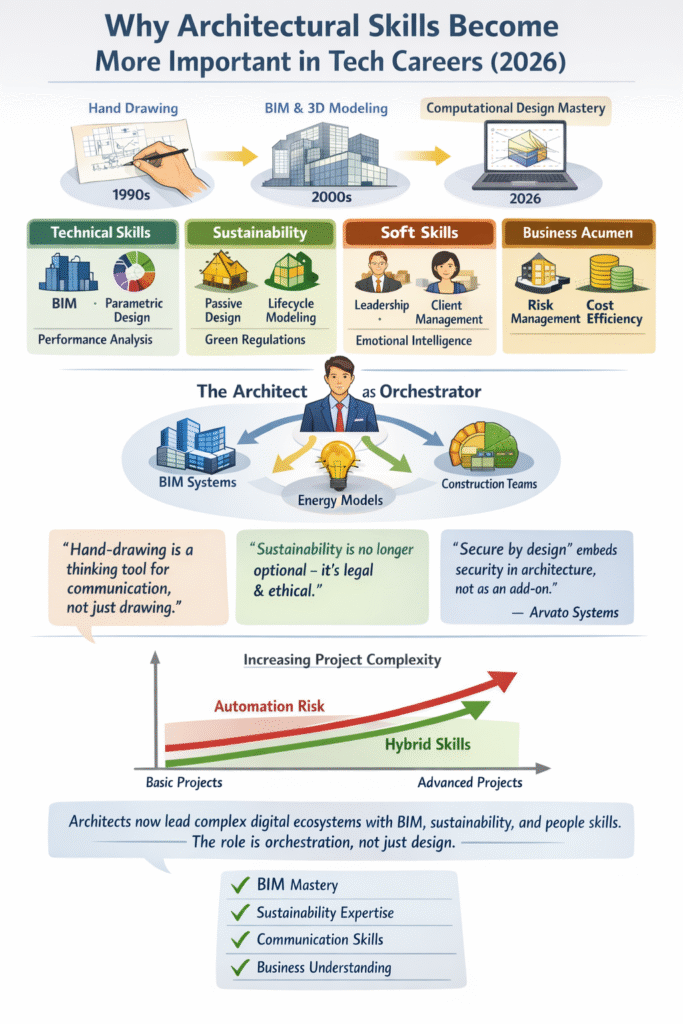
All the digital transformation in the world crashes into the messy reality of people. This is where your soft skills become career armor. Artificial intelligence might optimize a floor plate, but it can’t navigate a tense client engagement meeting. It can’t read the room during a Critique Session.
Your emotional intelligence is what synthesizes conflicting stakeholder input into a coherent path forward.
Think of it as the architecture of human relationships. You’re designing the team dynamics, facilitating client relationships, and incorporating social justice training into your approach. This skill set addresses the employment crises we hear about, where technically proficient graduates struggle.
They know Revit software but can’t manage client meetings. The architects who thrive are those who become trusted advisors. They use visual storytelling to align visions and interview techniques to uncover unspoken needs. This human-centric work is impossible to automate, making it a vital part of the career path for an ai-assisted coder or architect and the core of professional growth.
Your 2026 Skill Blueprint
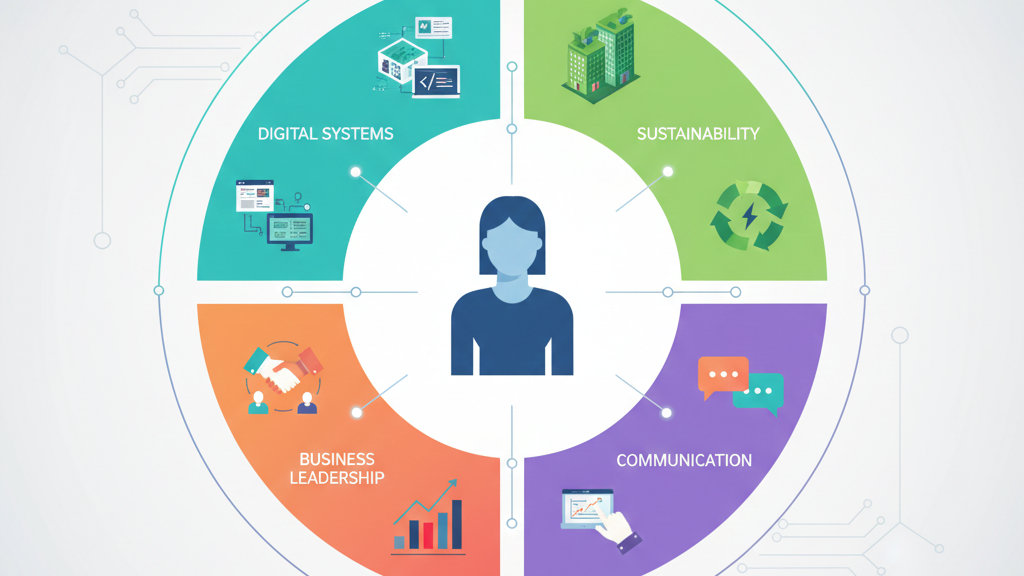
So where does this leave you? The goal isn’t to be a master of everything, but to build a versatile, resilient skill portfolio. The architecture industry in 2026 needs hybrids. It needs the technical expert who can also facilitate, the big thinker who understands local building codes. Your training goals should reflect this duality.
Start by auditing your own abilities against these domains. Be brutally honest. Then, build a learning plan. Maybe it’s a deep dive into computational design scripting one month, and a workshop on negotiation the next. Follow the workforce readiness report trends to understand the impact on developer skills and careers, but always filter them through your own professional practice experience.
Remember, the architectural curriculum is often playing catch-up. Your skill development is your own responsibility. This proactive approach is your best strategy, your real professional liability insurance against market shifts and technological innovation.
FAQ
Why do architectural skills matter more as the built environment becomes more complex?
Architectural skills matter more because today’s built environment involves climate change, zoning laws, local building codes, and digital transformation all at once. Architects now balance building design, environmental sustainability, and stakeholder input while coordinating project teams.
Strong analytical skills, design thinking, and knowledge of engineering principles help professionals manage complex systems, not just create drawings.
How do digital skills and BIM processes shape a modern architecture career?
Digital skills now sit at the core of the architecture industry. Architects use BIM processes, building information modelling, CAD software, and architectural drafting software to manage digital information across project development.
These tools support construction drawings, 2D and 3D drawings, and collaboration with construction personnel, making digital transformation essential for long-term professional career growth.
Why are communication skills and soft skills critical for architects today?
Communication skills and soft skills shape how architects lead project teams, manage client relationships, and guide client meetings. Emotional intelligence helps navigate feedback, stakeholder input, and team dynamics.
As artificial intelligence handles routine tasks, leadership skills and clear communication now drive success in professional practice across the AEC industry.
How does sustainability knowledge impact architectural design work?
Environmental sustainability now influences every stage of building design. Architects must understand climate change, passive design strategies, renewable energy systems, and building lifecycle thinking.
Knowledge of zoning laws, fire safety requirements, and Net Zero standards helps reduce risk while creating responsible architectural design projects that meet modern environmental and regulatory expectations.
Building a Future-Proof Practice
Your future as an architect depends on what you can do that a machine can’t. It demands technical skill, a real commitment to the environment, and the ability to manage people and complex systems. You have to see each project as a complete ecosystem, not just a set of drawings.
This career is an active practice of integrating the artistic with the analytical, the digital with the human. To start building this integrated skill set today, explore our Secure Coding Bootcamp.
References
- https://apiiro.com/blog/secure-software-design-best-practices/
- https://www.arvato-systems.com/blog/secure-by-design-principles-for-a-secure-architecture
Related Articles
