


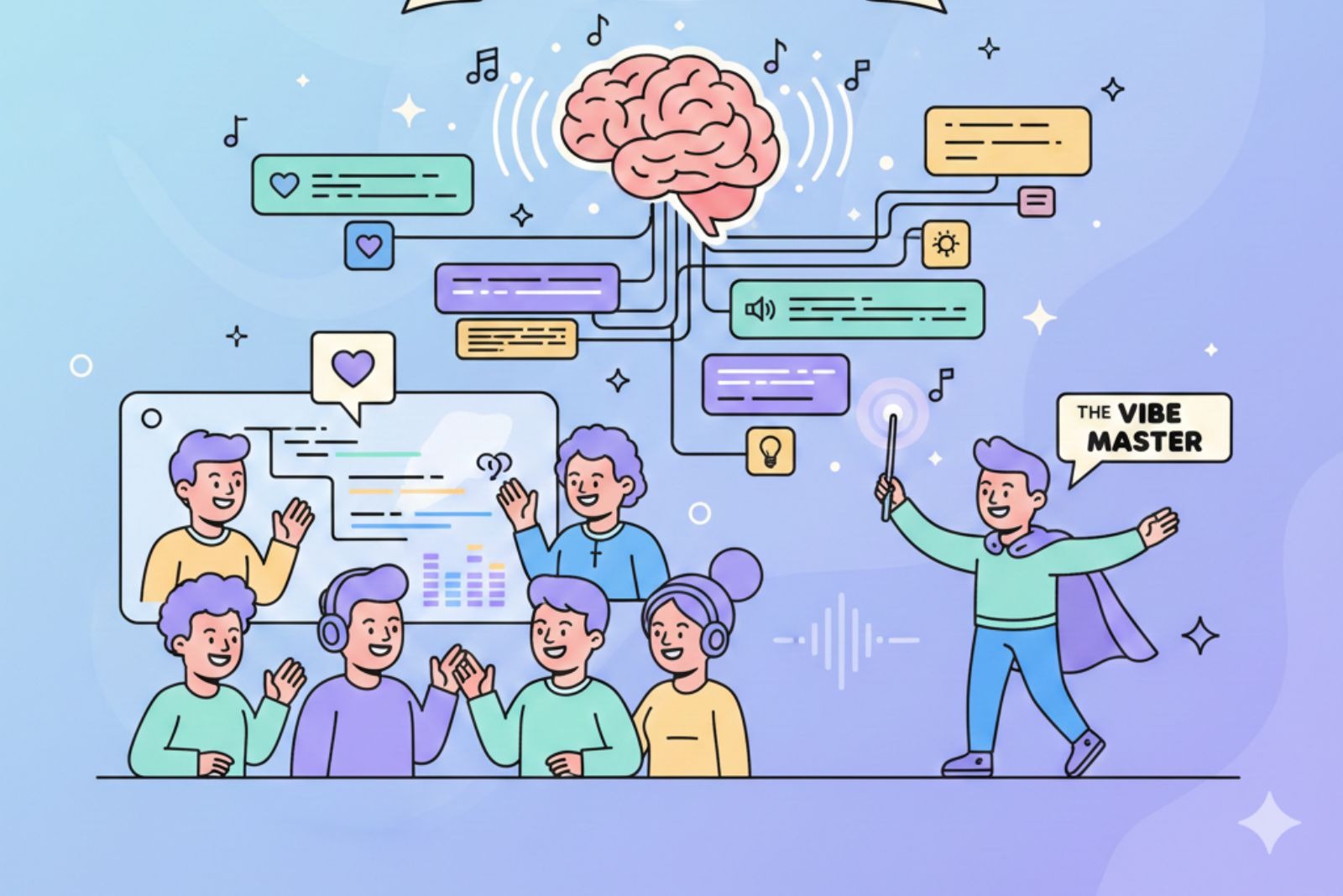
You’re not writing code anymore. You’re describing a feeling, an outcome, a vibe. This is the core philosophy of vibe coding.
It’s a new way of making software where you talk to an AI in plain English. You tell it what you want the program to do, and it writes all the code for you. The big shift is that you never have to look at the code itself.
Your only job is to check if the final program works the way you imagined. It turns a technical chore into a creative conversation. Keep reading to see how this approach changes everything for developers and beginners alike, also answering the question what is the core philosophy of vibe coding?
Key Takeaways
- Focus on the end result, not the code.
- Use simple language to build and fix software.
- Trust the AI to handle the complex technical parts.
The Moment Vibe Coding Clicked for Us
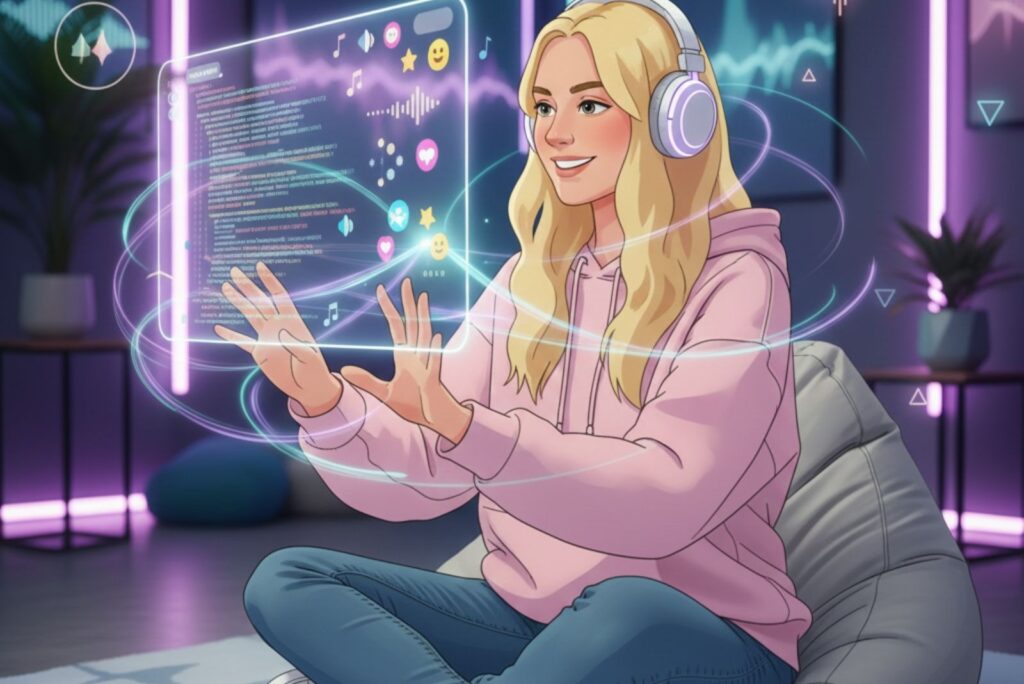
We were stuck. The task was to build a simple internal tool to track project deadlines. The old way meant days of planning database structures, writing API endpoints, and designing a user interface. It felt heavy, like moving through mud.
This time, we tried something different. We opened a blank document and started typing in plain sentences. “Create a web page that shows a list of projects.
Each project has a name, a due date, and a status like ‘not started,’ ‘in progress,’ or ‘done.’ We gave this description to the vibe coding process. In less than a minute, we had a link to a working webpage.
It wasn’t perfect, but it was there. We didn’t see a single line of code. We just described the vibe we wanted, and it appeared. This is the heart of vibe coding.
The Number One Rule: Don’t Look at the Code
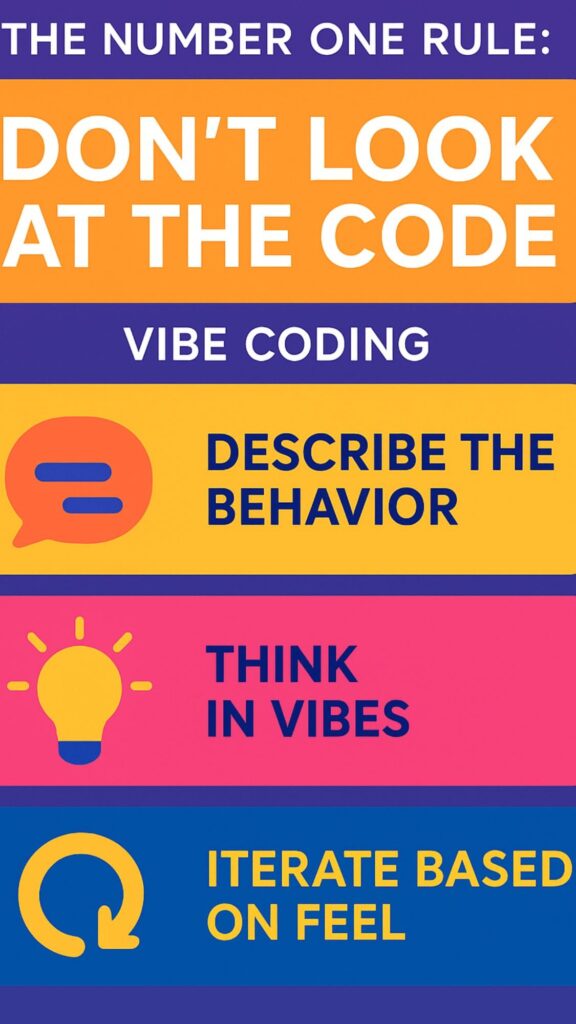
The most important rule in vibe coding is called the code invisibility principle. You treat the AI like a master chef in a kitchen. You tell the chef you want a delicious chocolate cake. You don’t tell them how to measure the flour or how long to mix the batter.
You just describe the perfect cake. Then, you taste it. If it’s not sweet enough, you tell the chef, “Make it sweeter.” You don’t go into the kitchen and adjust the sugar yourself. In vibe coding, the AI’s generated code is the kitchen. You stay out of it. Your job is to be the taste tester, focusing only on the final product.
This focus changes everything. You stop thinking about technical problems and start thinking about user problems. The questions become simpler and more powerful.
- Is the button easy to find?
- Does the page load quickly?
- Is the information clear?
- Does it feel good to use?
These are vibe questions. They get you closer to what users actually care about. You skip the complicated middle steps and go straight to the experience.
Your New Daily Workflow with Vibe Coding
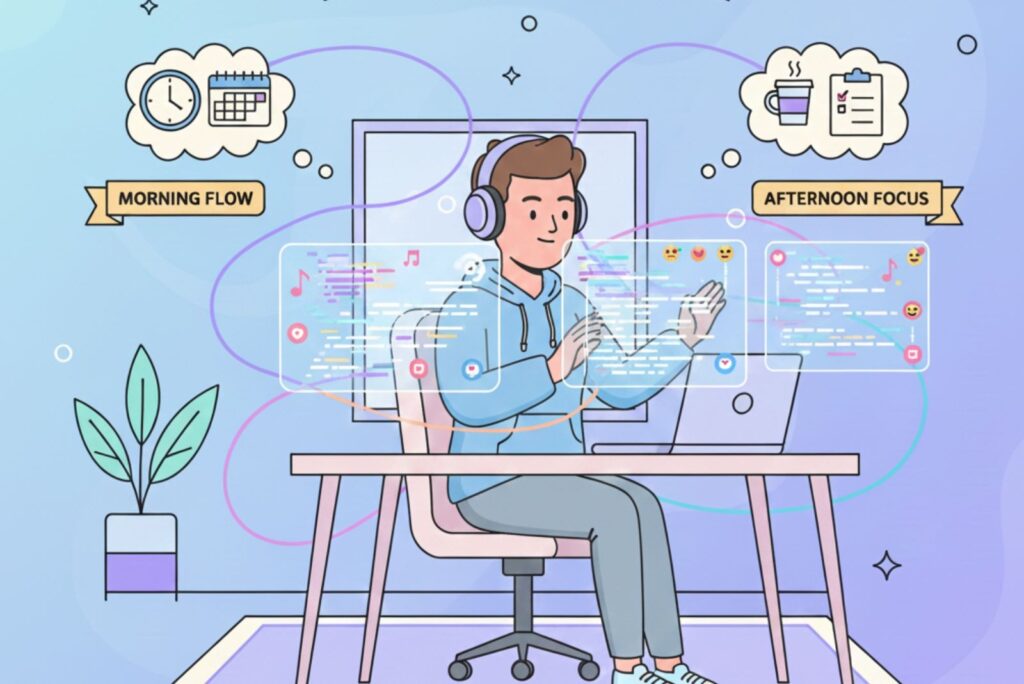
The process feels like a conversation, not a programming manual. It breaks down into four simple steps that anyone can follow. You don’t need to be a tech expert to get started. You just need to be able to explain what you want.
This is where you describe your idea. Be as clear as you can. “Build a form where people can enter their name and email address. When they submit the form, save their information and show a thank you message.” That’s all you need to start.
The AI reads your prompt and creates the code. It does all the heavy lifting. It figures out the HTML, the CSS, the JavaScript, the database commands. You just wait a few seconds for the result (1).
Now you try out what the AI built. You click the button. You type in the form. You see if it works. This is the most important part. You are testing the software, not the code.
. If something isn’t right, you talk to the AI again. “The thank you message is good, but can you make the form fields have a light blue background?” This starts the cycle over. You keep refining until it feels perfect.
This loop is fast. You can go through many cycles in an hour. Each cycle makes the software a little better. You’re having a conversation with the AI to build something together.
The Best Uses for Vibe Coding
Vibe coding is like a superpower for certain kinds of tasks. It’s perfect when you need to move quickly and test ideas. Here are the situations where it really shines.
- Building prototypes. Need to show someone a working idea tomorrow? Vibe coding can get you there.
- Automating boring tasks. Generating reports, formatting data, sorting files.
- Creating simple tools. Internal dashboards, basic calculators, contact forms.
- Learning programming concepts. Seeing how an idea turns into a working app.
- Brainstorming interfaces. Quickly trying out different layouts and designs.
The common thread is speed and experimentation. When the goal is to see if something can work, vibe coding is your best friend. It turns weeks of work into hours of conversation.
When You Should Stick to Traditional Coding
Vibe coding is amazing, but it’s not for every job. Some projects need a careful, human touch. This is especially true for anything involving security or very complex rules.
We always fall back on our secure coding practices for these situations, especially the principles behind managing trust relationships in critical systems
You should avoid vibe coding for:
- Applications that handle money or payments.
- Systems that store private medical or financial data.
- Software that controls important machinery or safety systems.
- Code that needs to follow strict government regulations.
- Projects with highly unique and complicated business logic.
For these, you must look at the code. You have to check every line to make sure it’s safe and correct. Security isn’t a feeling. It’s a careful process that requires human experts to review everything. Vibe coding’s “black box” approach is too risky here.
How Vibe Coding Helps Different Developers
This new approach affects junior and senior developers in different ways. Both can benefit, but in their own unique fashion. It changes the daily work for everyone.
For Junior Developers: Vibe coding is a great teacher. It helps you overcome the fear of starting. You don’t get stuck on syntax errors. You can focus on learning how software is put together. You can see a whole working system quickly. This builds confidence. It lets you learn by doing, without the frustration.
For Senior Developers: For experts, vibe coding is a productivity booster. It handles the repetitive, boring parts of coding. This frees you up to work on the hard, interesting problems. Think of it as having an assistant that does all the routine work. You can focus on architecture and innovation.
The main change is in the developer’s role. Everyone becomes more of a director and less of a manual worker. The value is in having good ideas and clear communication.
The Tools That Make Vibe Coding Possible
You don’t need special equipment to try vibe coding (2). The tools are already here and getting better every day. Most of them work right in your web browser. You can start experimenting today without installing anything.
Common features of these tools include:
- A text box where you type your prompts.
- A preview window that shows the live results.
- Easy ways to share what you’ve built.
- Options to export the code if you need it.
- The ability to have a back-and-forth conversation with the AI.
The barrier to entry is incredibly low. If you can type a sentence, you can start building software. This is what makes vibe coding so powerful. It opens up creation to many more people.
Common Problems and How to Solve Them
Like any new method, you’ll hit some bumps at first. The problems in vibe coding are usually about communication. When the AI builds something wrong, it’s often because your description wasn’t clear enough. Here’s how to fix common issues.
Problem: The AI didn’t understand what you wanted.
Make your prompt more specific to the vibe coding fundamentals. Add examples. Instead of “a list,” say “a list with three columns: name, date, status.”b
Problem: The software looks ugly.
Solution: Ask for styling changes. “Make the headers bold and use a larger font.” You can be very direct about the visual vibe.
Problem: A feature is missing.
Solution: Describe the missing feature in a new prompt. “Add a search bar above the list so users can filter projects.”
Problem: There’s a bug.
Solution: Don’t debug the code. Tell the AI about the bug. “When I click submit, nothing happens. Fix the submit button.”
The pattern is always the same. Talk to the AI. Refine your description. The AI will generate a new version. It’s a partnership.
What the Future Holds for This New Approach
Source: Tina Huang
Vibe coding feels like a big step in a long journey. We’ve been making computers easier to use for decades. First, we moved from typing commands to clicking icons. Now, we’re moving from writing code to describing ideas. It’s a natural progression.
This doesn’t mean traditional coding will disappear. There will always be a need for hands-on, detailed programming. Especially for critical systems. The future will likely be a mix. Developers will know when to use vibe coding for speed and when to use traditional coding for precision.
The most exciting possibility is democratization. More people will be able to build software. Not just professional programmers. Designers, managers, entrepreneurs. Anyone with a good idea can bring it to life. This could lead to a huge explosion of creativity and new tools.
FAQs
What is vibe coding in simple terms?
Vibe coding is a modern way of building software by describing what you want in plain language instead of writing traditional code. You focus on the outcome, user feel, and overall experience, while an AI tool generates all the technical code behind the scenes.
This shift allows anyone,even non-developers,to create working software by communicating goals, behaviors, and design preferences. The result is a faster, more intuitive development process centered around clarity, creativity, and rapid iteration.
How does vibe coding actually work?
Vibe coding works through a simple conversation loop with an AI. You explain what you want the software to do, the AI generates the code, and you test the result. If something feels off, you refine your instructions and let the AI rebuild the feature.
You never touch the code itself. Instead, you describe features, behaviors, and style in plain language. This iterative process continues until the final product matches your intended experience and overall vibe.
Is vibe coding good for beginners with no technical background?
Yes, vibe coding is great for beginners because it removes the complexity of traditional programming. You don’t need to understand syntax, frameworks, or debugging processes. Instead, you simply describe what you want your software to do, and the AI handles the technical execution.
Beginners can quickly create prototypes and simple apps, learning how digital products work through hands-on experimentation. It’s an accessible starting point that builds confidence without overwhelming you with detailed programming rules.
What types of projects are best for vibe coding?
Vibe coding works best for quick prototypes, simple tools, internal dashboards, and creative experiments where speed matters more than precision. It’s ideal for building small utilities, testing product concepts, automating simple tasks, or experimenting with user interface layouts. Any project that benefits from rapid iteration is a perfect match.
Because you can quickly refine features through conversation, vibe coding helps teams and individuals explore ideas fast without writing traditional code or getting stuck on technical obstacles.
When should I avoid using vibe coding?
You should avoid vibe coding for projects that require high security, strict regulations, or complex business logic. Systems involving financial transactions, medical data, government compliance, or safety-critical operations need manual code review.
Because vibe coding hides the underlying code, it’s risky for applications where accuracy, auditing, and security are essential. In these cases, traditional programming is still the safest choice. It ensures every line of code is inspected for reliability, performance, and compliance.
Does vibe coding replace traditional programming entirely?
Vibe coding doesn’t replace traditional programming,it enhances it. While vibe coding is excellent for fast builds, prototypes, and simple tools, traditional coding remains essential for advanced, customized, and security-sensitive systems.
Developers will likely use both approaches: vibe coding for quick development and exploration, and manual coding for precision and long-term stability. The future is a blend of conversational software creation and hands-on craftsmanship, allowing teams to work faster without sacrificing control where it truly matters.
How accurate is AI when generating code through vibe coding?
AI-generated code can be impressively accurate, especially for common patterns like forms, lists, dashboards, workflows, and user interfaces. However, accuracy depends on the clarity of your instructions and the complexity of the task.
Vibe coding thrives on iteration,you test the output, refine your request, and guide the AI toward the intended result. While the AI handles most technical tasks, human judgment is still essential to validate behavior, fix misunderstandings, and ensure the final product feels right.
What are the benefits of vibe coding for professional developers?
Professional developers benefit greatly from vibe coding because it automates repetitive tasks and speeds up early development stages. Instead of writing boilerplate code, they can focus on architecture, problem-solving, and creative decisions.
Vibe coding allows experts to rapidly explore ideas, generate variations, and offload routine work to AI. It also enhances productivity in teams by reducing time spent on setup and allowing faster iteration. Developers can then refine or optimize the code manually when needed.
Do I need special tools or software to start vibe coding?
You don’t need any special software to start vibe coding. Most tools run directly in a web browser and include a prompt box, live preview, sharing features, and export options. You simply type your instructions, review the generated result, and refine through conversation. Because there’s no installation or setup required, vibe coding is accessible to beginners, teams, and non-technical creators.
If you can describe your idea clearly, you can build functional software almost instantly.
What does the future of vibe coding look like?
The future of vibe coding points toward a world where anyone can build software by describing their ideas. AI tools will continue improving, making the process feel more natural, collaborative, and intuitive.
Traditional coding will still play an important role for complex or highly secure systems, but everyday software creation will become more conversational. As more people can turn ideas into tools without technical skills, we may see an explosion of creativity, rapid innovation, and new digital experiences.
Final Thought on What Is The Core Philosophy of Vibe Coding
The best way to understand vibe coding is to try it. You don’t need a big project. Start with something small. Think of a simple tool you wish you had. Maybe a daily to-do list or a calculator for a specific task.
Then, just start describing it. Write down what it should do in plain language. Be as detailed as you can. Then, find an AI coding tool and paste in your description. See what happens. Test the result. If it’s not right, change your description and try again.
Remember, the goal is the vibe. Does the software feel the way you wanted? Does it solve your problem? If yes, you’ve succeeded. You’ve built something without writing a single line of code. You’ve experienced the core philosophy firsthand. The future of building software is becoming a conversation, and everyone’s invited to speak.
If you want to take your skills further, especially by learning how to build software that’s not just functional but secure, the Secure Coding Practices Bootcamp is a great next step. It’s a hands-on, developer-friendly course that teaches real-world secure coding habits without the jargon.
References
- https://medium.com/@adnanmasood/coding-by-vibes-can-ai-really-write-80-of-tomorrows-software-3562425cff51
- https://medium.com/@ceo_44783/i-tried-every-vibe-coding-platform-so-you-dont-have-to-4654ebf0dc9c
Related Articles
