
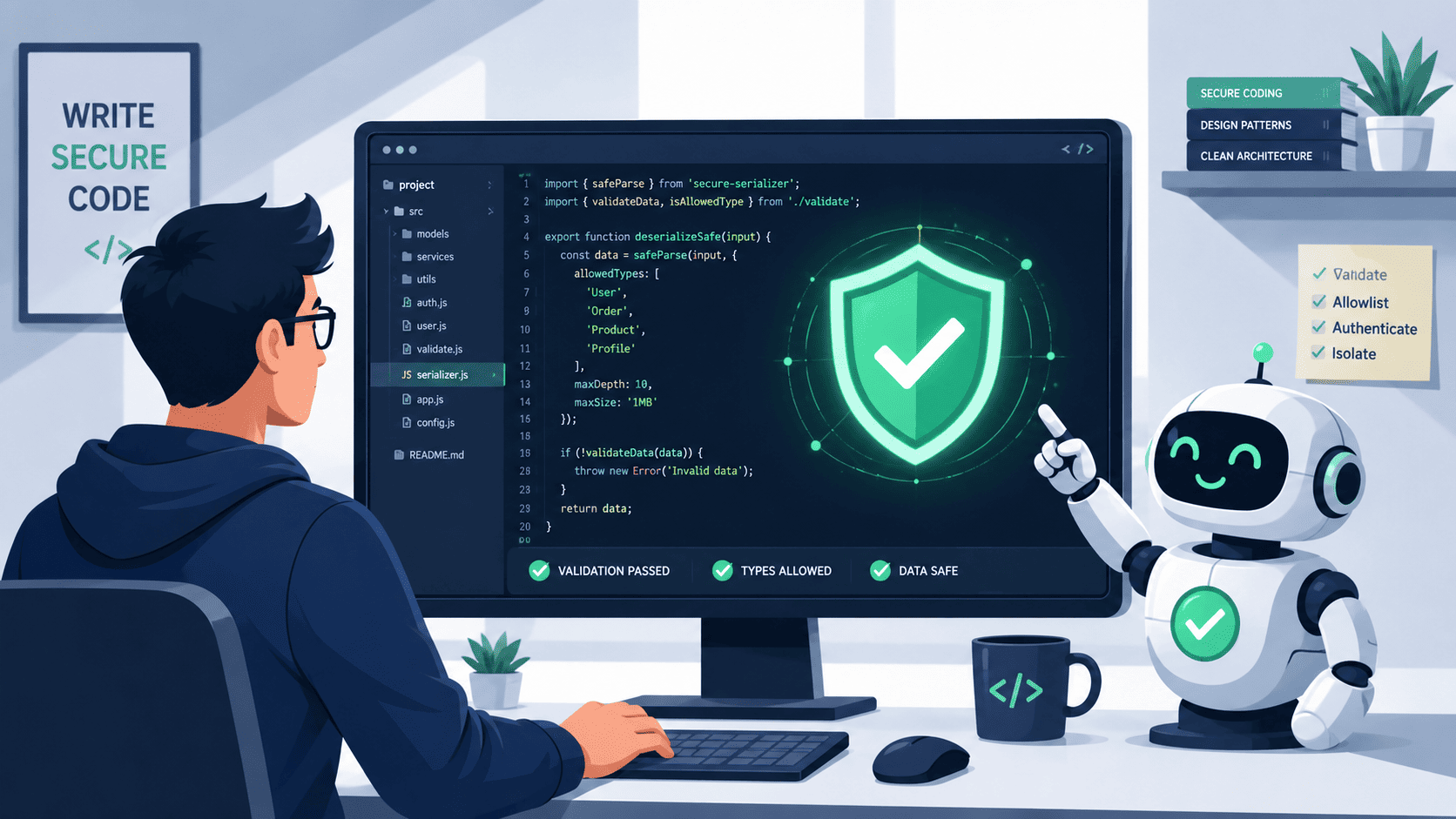

Safe object serialization practices coding are our best defense against one of the most severe vulnerabilities a system can have. It’s about treating any serialized data as hostile until proven otherwise. This ensures the simple act of loading saved data can’t be turned into a weapon.
We’ve seen the logs after an attack, the frantic late-night calls. The good news is you can build a robust defense. At Secure Coding Practices, we focus on the how and why, so you can sleep a little easier. Keep reading to fortify your code.
Safe Serialization in a Nutshell
These practices work together. They reduce deserialization risks. This creates a safer process. It also makes serialization more predictable.
- Treat all serialized data as untrusted. You must authenticate and validate it. Do this before it touches your object graph.
- Prefer data-only formats. JSON or Protocol Buffers are good examples. Avoid native serializers. These can execute code.
- If you must use native serialization, enforce strict class allowlists. Blacklists will eventually fail.
Following safe object serialization practices coding creates a consistent security baseline across applications and services.
Why Is Your Convenient Serializer a Ticking Time Bomb?
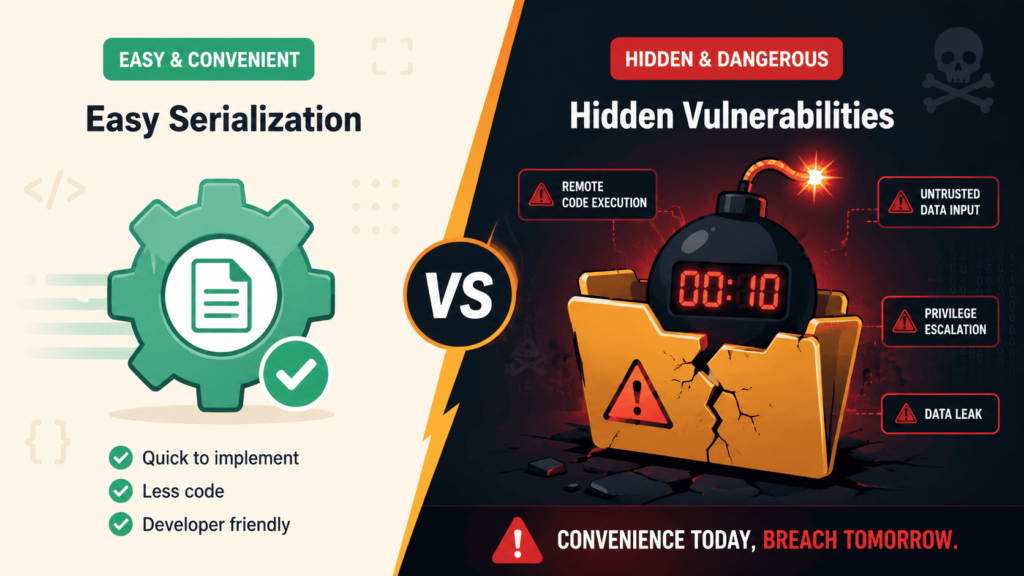
Let’s be honest, native serialization is just too easy. In Java, you implement Serializable. In Python, you pickle.dump(). That’s the trap. You aren’t just saving data; you’re saving an object’s entire blueprint and behavior. The deserialization process rebuilds it from the ground up, often bypassing normal security checks.
We’ve seen this firsthand in our training. An attacker doesn’t need to inject new code. They manipulate the bytes to make your own code attack itself. They chain together harmless-looking methods from common libraries “gadget chain” that end with a system command. This isn’t speculation; it’s how major breaches happen.
As noted by Security Boulevard
“The industry consensus is brutal. At Devoxx UK 2018, Oracle’s chief architect, Mark Reinhold, called Java’s serialization mechanism a ‘horrible mistake’ and a virtually endless source of security vulnerabilities.” – Security Boulevard
Consider the evidence:
- Java’s ObjectInputStream can instantiate unexpected classes.
- Python’s pickle module can execute arbitrary code upon deserialization.
- .NET’s BinaryFormatter has been flagged as dangerous for years.
Using native serialization across any trust boundary is a legacy hazard. It swaps a little developer convenience for massive, long-term risk. The solution isn’t a patch against deserialization dangers. It’s a complete change in approach.
What Is the Safer Path: Sticking to Data, Not Behavior?
Stick to data, not behavior. That’s our core principle. Only serialize the data, never the executable logic.
Use formats designed for data interchange, like JSON or Protocol Buffers. They don’t understand your classes. They handle lists, strings, and numbers. An attacker can’t make a JSON array run a system call.
| Format | Behavior | Best Use |
| JSON | Data only | APIs, web apps |
| Protocol Buffers | Schema-based data | High-performance services |
| Native Serialization | Objects + behavior | Trusted internal use only |
JSON is the universal workhorse. It’s readable and limited to data. The difference is clear in Python:
# Dangerous: pickle can execute code.
import pickle
reconstructed_object = pickle.loads(untrusted_data)

# Safe: json only handles data.
import json
data = json.loads(untrusted_data)
For performance, Protocol Buffers are better. You define structures in a .proto schema. The output is compact binary data, not executable logic. The schema is a contract; the deserializer just populates fields.
This move simplifies versioning and cross-language work. You lose “magic,” but gain control. You marshal state into a data object, serialize that, then rebuild through proper interfaces. It’s the manual, secure path we teach.
This approach reflects modern safe object serialization practices coding by separating data from executable behavior.
How Can You Build a Fortress When You Can’t Abandon the Castle?
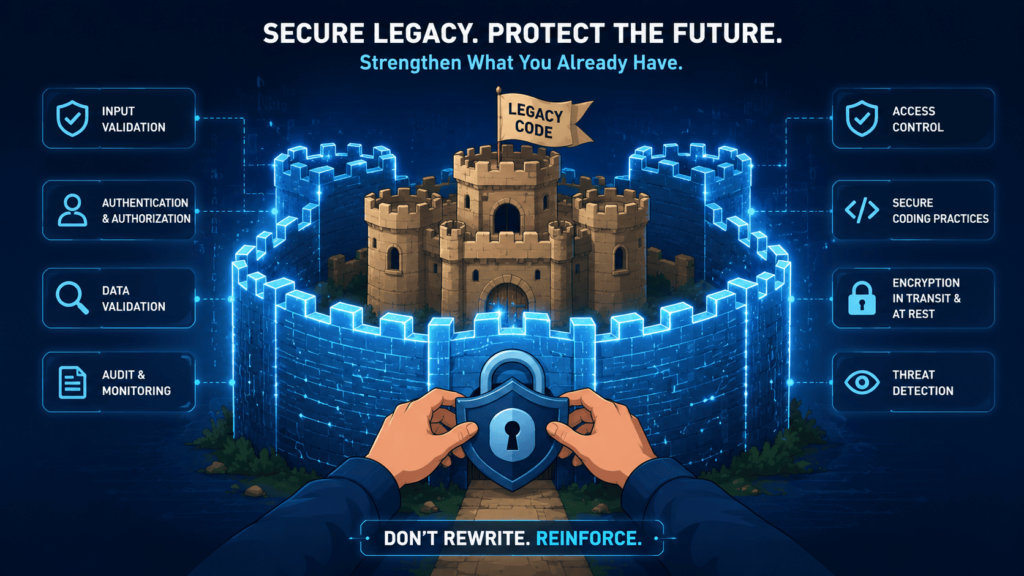
A legacy system or a third-party library forces you to use a risky native format. When you can’t avoid the dangerous path, you have to guard it relentlessly.
Your primary weapon for deserialization prevention is the allowlist, or what Java calls an ObjectInputFilter. The concept is look-ahead deserialization. Before a single byte turns into an object, the process checks the incoming stream against a list of permitted classes. Anything not on the list gets rejected instantly.
Research from Apache Geode
“Without a configured filter, session deserialization has NO restrictions,” leaving applications vulnerable to remote code execution and denial-of-service attacks. – Apache Geode
We’ve learned blacklists are useless. You can’t possibly know every dangerous class in your dependencies. An allowlist is the only way. In modern Java, it looks like this:
ObjectInputStream ois = new ObjectInputStream(inputStream);
ObjectInputFilter filter = ObjectInputFilter.Config.createFilter("com.example.safe.MyDataObject;!*");
ois.setObjectInputFilter(filter);
MyDataObject obj = (MyDataObject) ois.readObject();
That filter string is strict. It only allows com.example.safe.MyDataObject and rejects everything else (!*). For other languages, like Python, you may need a custom solution, such as overriding find_class in the Unpickler. The goal remains the same: build a wall with one very small, very secure gate.
Why Are Authentication and Validation Essential Checkpoints?
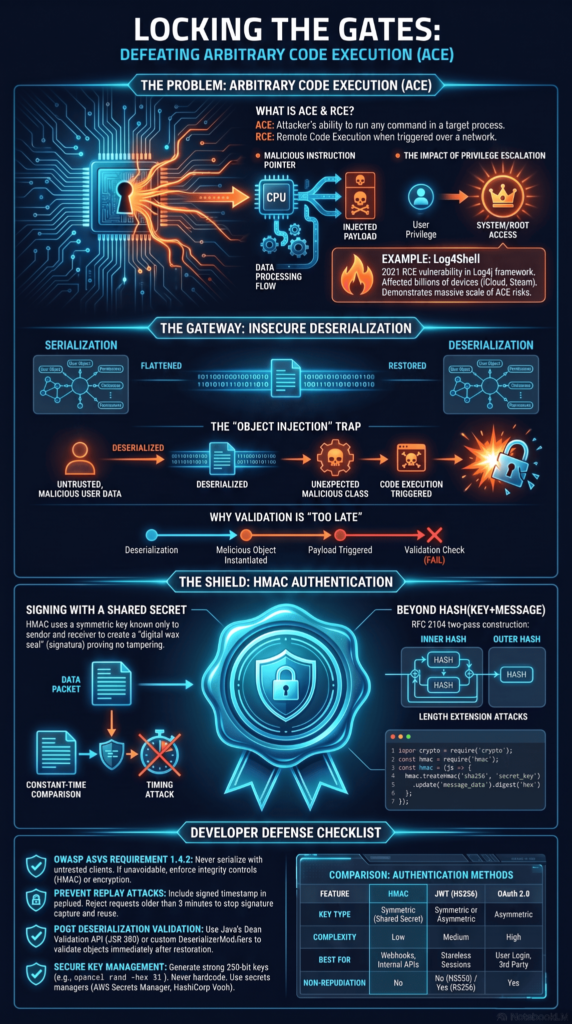
Even with a safe format or an allowlist, you must not trust the data itself. This is a two-step process: authenticate, then validate. First, prove the data hasn’t been tampered with. If you’re sending serialized data over a network or storing it where a user might modify it (like a cookie), you must sign it. Use an HMAC (Hash-based Message Authentication Code).
Serialize your object, generate an HMAC of the bytes with a server-side secret key, and send both. On receipt, verify the HMAC before you even think about deserializing. If the signature doesn’t match, discard the payload. Don’t log it, don’t try to parse it. Just throw it away.
Second, validate the deserialized content. Just because the bytes turned into an object doesn’t mean the data inside is sane. Treat it like any other user input.
- Check types and ranges. Is that ‘age’ field really a positive integer?
- Enforce string length limits.
- Verify business logic. Does this user have permission to access the data referenced by this ID?
This post-deserialization validation is your last line of logical defense. It catches the problems that slip past the structural guards.
Safe object serialization practices coding stop tampered payloads from gaining trust.
What Is the Final Layer: Assuming a Breach and Limiting the Damage?
Credit: IP Performance
Secure coding practices accept that defenses can fail. So you layer your defenses to limit the blast radius. This is defense in depth. Run the service that handles deserialization with the absolute minimum privileges it needs. If it doesn’t need to write to the filesystem or call external services, don’t let it.
Use operating system-level sandboxing or containers to isolate the process. A good strategy is to run deserialization tasks in a separate microservice. This microservice should have strict controls.
Monitor everything. Log attempts to deserialize disallowed classes. Set up alerts for unusual memory use. Also, alert on unexpected processes starting during deserialization. These can be the only signs of a complex gadget chain executing.
These layered defenses complete your safe object serialization practices coding strategy by reducing the impact of any successful deserialization attack.
Your architecture should limit remote code execution impact, even if a payload slips through.
FAQs
What are safe object serialization practices coding beginners should follow?
Safe object serialization starts with choosing trusted data formats. Apply input validation for serialization. Understand object deserialization risks. Developers should only accept expected data. Reject any unexpected or malformed input. Do this before processing.
How does secure deserialization reduce serialization vulnerability mitigation challenges?
Secure deserialization helps mitigate serialization vulnerabilities. It allows only approved object types. Use a serialization allowlist. Restrict deserializable classes. These controls reduce the chance that attackers can load unexpected or harmful objects.
Why should developers avoid native serialization with untrusted input?
Developers should avoid native serialization with untrusted input. This increases security risks. Avoid pickles for untrusted data. Use JSON instead of binary serialization. Use data transfer objects. This simplifies validation. It also reduces attack opportunities.
Which validation steps strengthen serialized data before applications process it?
Applications should use strict schema validation. Use JSON Schema validation. Canonicalize before deserializing. Authenticate serialized input. Verify integrity checks on serialized objects. Enforce input size limits. Do this before processing serialized data.
How can teams detect serialization attacks before they become serious incidents?
Teams must watch for deserialization problems. They should turn on logging and alerts for deserialization. Auditing serialization is also important. Run fuzz testing on deserialization. Keep unit tests for deserialization up to date. Quickly fix known deserialization vulnerabilities. This will lower security risks.
Secure Serialization Starts With Secure Coding
Effective safe object serialization practices coding requires ongoing reviews, secure defaults, and regular updates as applications evolve. Safe serialization isn’t something you can fix with one quick change. Your app makes security choices when it reads outside data. These choices impact your whole system. So, check where deserialization occurs. Make sure each step uses safe coding. Small changes now can stop major security problems later.
If you want practical guidance, the Secure Coding Practices Bootcamp is a great next step. It gives developers hands-on training with real coding exercises covering topics like the OWASP Top 10, input validation, secure authentication, encryption, safe dependency management, and more.
References
- https://geode.incubator.apache.org/docs/guide/20/tools_modules/http_session_mgmt/session_security_filter.html
- https://securityboulevard.com/2018/06/amplified-ddos-attacks-are-here-to-stay-experts-say/