


The new rules are here, and most teams aren’t ready. PCI DSS v4.0 and the updated Secure Software Standard v2.0 have fundamentally raised the stakes for application security and secure coding. Yet, 86% of organizations are still getting breached because of skills gaps, not missing tools. The $3.8 billion PCI compliance software market is booming, but it can’t write secure code for you.
This is a human problem, a training deficit, and it’s creating a dangerous chasm between compliance checkboxes and actual security. Keep reading to see why your software budget is wasted without a developer training plan.
Key Statistics on PCI DSS v4.0 AI Controls Gap
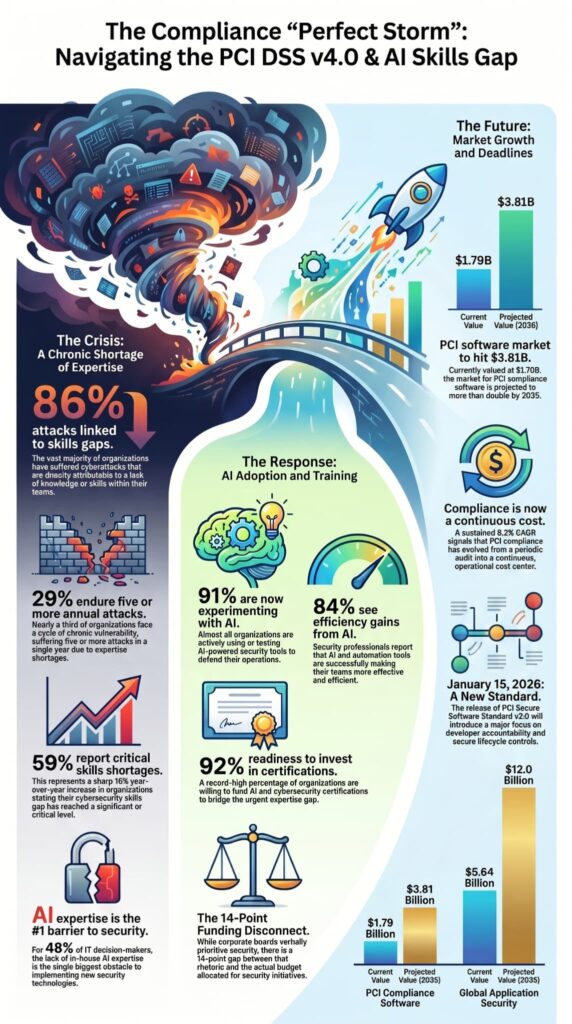
The collision of new compliance mandates with a persistent cybersecurity skills shortage is creating a perfect storm for organizations handling payment data. While investment in compliance software surges, the human expertise needed to implement these tools effectively is lagging far behind, leaving critical gaps in AI governance and secure coding practices.
- 86% – The overwhelming majority of organizations have suffered cyberattacks directly attributed to a lack of cybersecurity skills or knowledge within their teams.
- 29% – Nearly a third of organizations endured five or more attacks in a single year due to these expertise shortages, indicating a chronic, unaddressed vulnerability.
- 59% – A sharp increase, up 15% year-over-year, in organizations reporting that their cybersecurity skills gaps are at a critical or significant level.
- 48% – For nearly half of IT decision-makers, a lack of in-house AI expertise is the single biggest barrier to implementing new security technologies.
- 92% – A record-high percentage of organizations express willingness to invest in AI and cybersecurity certifications for their employees, recognizing the urgent need.
- 14-point delta – A glaring disconnect exists between corporate boards that verbally prioritize cybersecurity and those that actually allocate sufficient budget, creating a 14-point funding gap.
- 91% – Almost all organizations are now actively using or experimenting with AI-powered security tools in their operations.
- 84% – Security professionals report that AI and automation tools are making their teams more effective and efficient.
- $1.79B → $3.81B – The market for PCI compliance software is projected to more than double by 2035, reflecting escalating complexity and demand.
- 9.2% CAGR – The sustained compound annual growth rate signals that PCI compliance is becoming a continuous, operational cost center, not a periodic audit.
- $5.64B → $12.0B – The global application security market is on a similar trajectory, underscoring the new focus on secure software development within compliance frameworks.
- January 15, 2026 – The release date of the PCI Secure Software Standard v2.0, the first major update in over 18 months, which places greater emphasis on developer accountability and secure lifecycle controls.
86% of Organizations Breached Due to Skills Gaps
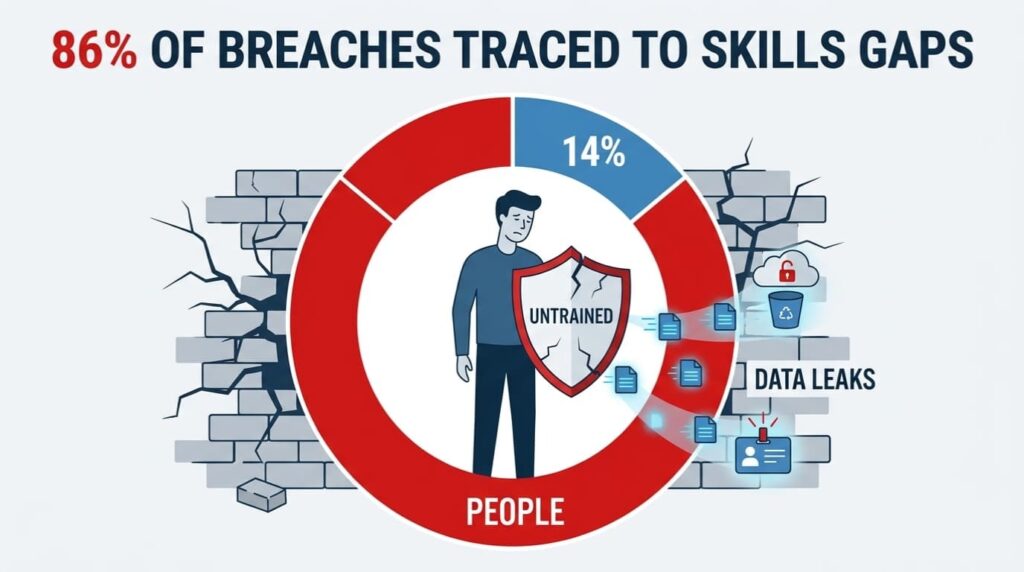
According to Fortinet, that number isn’t just high, it’s damning. For three years running, the primary root cause of breaches hasn’t been a fancy zero-day exploit or a missing firewall. It’s been people.
Specifically, people who haven’t been trained on:
- how to configure a cloud storage bucket,
- how to write code that doesn’t leak credentials,
- or how to interpret the alerts from their shiny new compliance dashboard.
PCI DSS v4.0 makes this worse. It demands more granular logging, stricter access controls, and continuous monitoring, tasks that require skilled humans to set up and maintain.
You can buy the best PCI compliance software on the market, but if your team doesn’t understand the principles behind Requirement 6 (about secure development) or Requirement 10 (about logging and monitoring), you’re just automating your ignorance.
The breach will find the gap your tool missed because it wasn’t configured right.
29% of Organizations Suffered Five or More Skills-Related Attacks
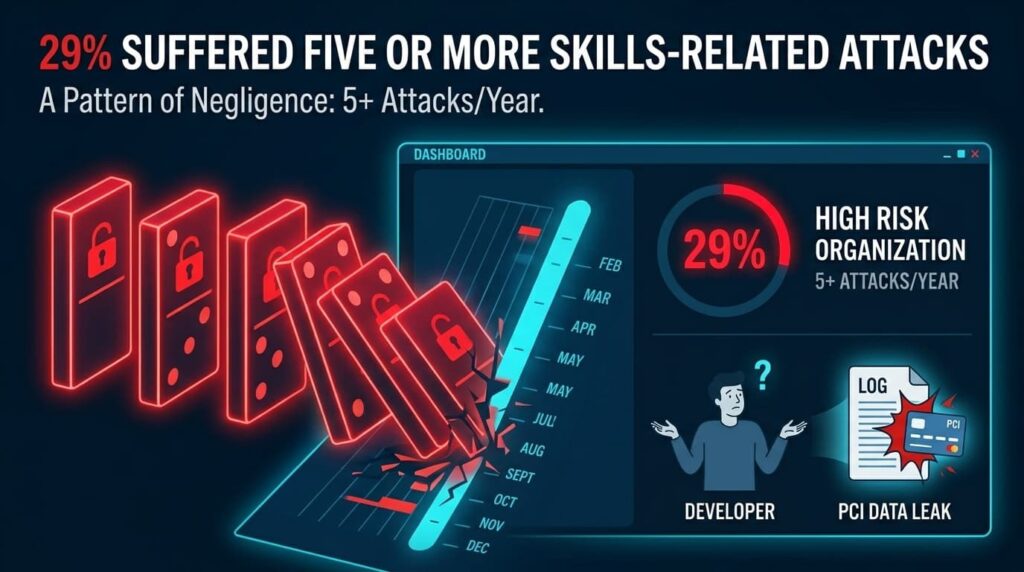
According to Fortinet research, one breach is a wake-up call. Five in a year is a pattern of negligence.
That 29% figure represents organizations stuck in a vicious cycle. They get hit, they patch the specific hole, but they don’t invest in the foundational training that would prevent the next four variants.
In the context of PCI compliance, this often looks like:
- a developer who inadvertently stores cardholder data in a log file,
- a misconfigured API endpoint that gets exploited,
- or an admin using a default password on a payment system.
Each incident is a separate PCI violation. Each one triggers a forensic investigation and reporting nightmare. Each one could have been prevented by consistent, role-based security education.
When you’re facing five incidents, you’re not dealing with bad luck. You’re dealing with a broken security culture. The compliance software logs the failures, but it can’t fix the mindset that caused them.
59% of Organizations Report Critical Cybersecurity Skills Gaps
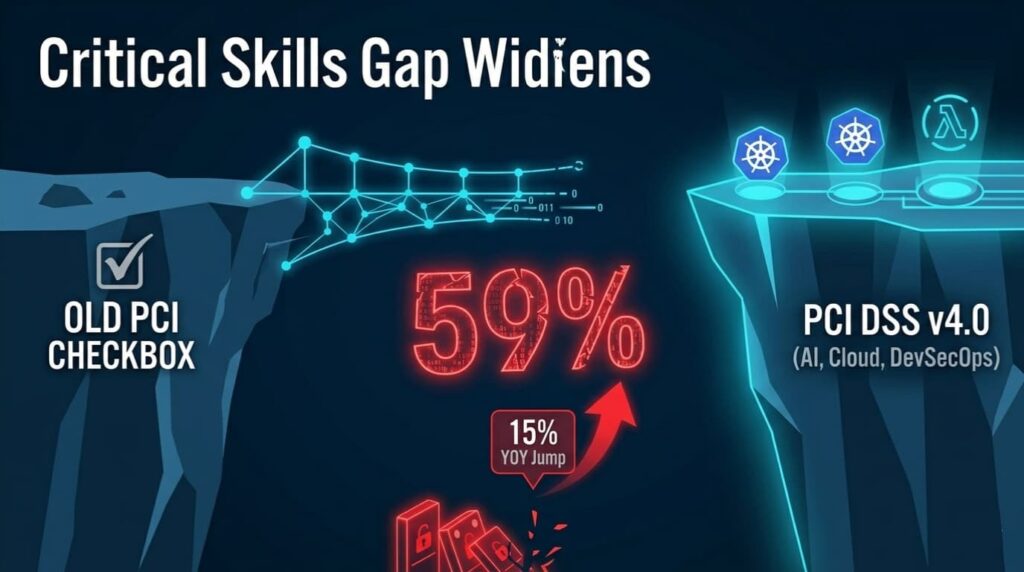
According to the ISC2 Cybersecurity Workforce Study, the 15% year-over-year jump in critical skills gaps is a leading indicator of the PCI DSS v4.0 compliance crisis.
The standard is evolving faster than the workforce.
It introduces concepts like:
- customized controls,
- targeted risk analyses,
- and continuous governance expectations, which require more judgment and expertise than the old checkbox approach.
Where do you find people who understand both the intent of the PCI standard and the technical reality of Kubernetes clusters and serverless payment functions?
They’re in short supply. This 59% statistic isn’t just a staffing issue. It’s a competency issue.
| Evolving PCI Demand | Required Skills Gap |
| Customized Controls (Req 12.3.2) | Risk assessment & control design expertise |
| Secure Software Lifecycle (SSS v2.0) | DevSecOps & secure coding proficiency |
| Continuous Monitoring | Advanced log analysis & threat hunting |
| AI Governance & Monitoring | Understanding of AI/ML model security |
This gap means organizations are attempting to meet 21st-century compliance demands with a 20th-century skillset. It’s a mismatch that auditors will find.
48% of IT Leaders Cite Lack of AI Expertise as Top Challenge
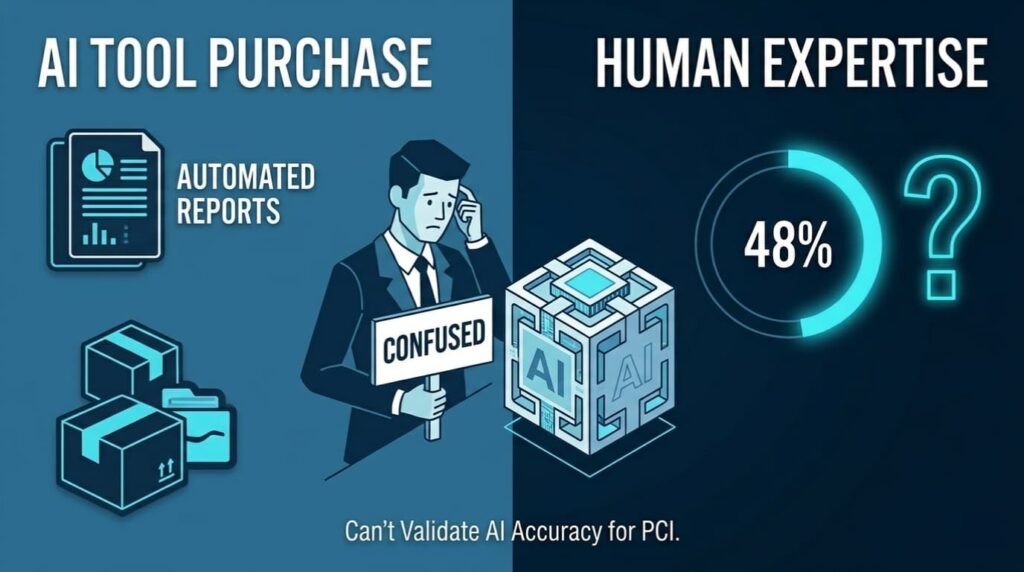
According to Fortinet findings, everyone is rushing to adopt AI for security, for fraud detection, anomaly monitoring, automating compliance reports, but many organizations still don’t know how to manage these systems safely.
This 48% statistic points directly to a dangerous implementation gap.
Organizations are buying AI tools that promise to:
- classify PCI data automatically,
- monitor suspicious activity,
- and accelerate compliance operations.
But teams often don’t know:
- how to validate AI accuracy,
- how to secure AI models from poisoning,
- or how AI-driven decisions align with PCI governance requirements.
PCI DSS v4.0 may not explicitly regulate AI, but it absolutely requires control over systems handling cardholder data.
If you can’t explain how your AI system makes decisions, if you can’t audit its data handling, you’re introducing an uncontrolled variable into your compliance environment.
92% of Organizations Willing to Invest in AI and Cybersecurity Certifications
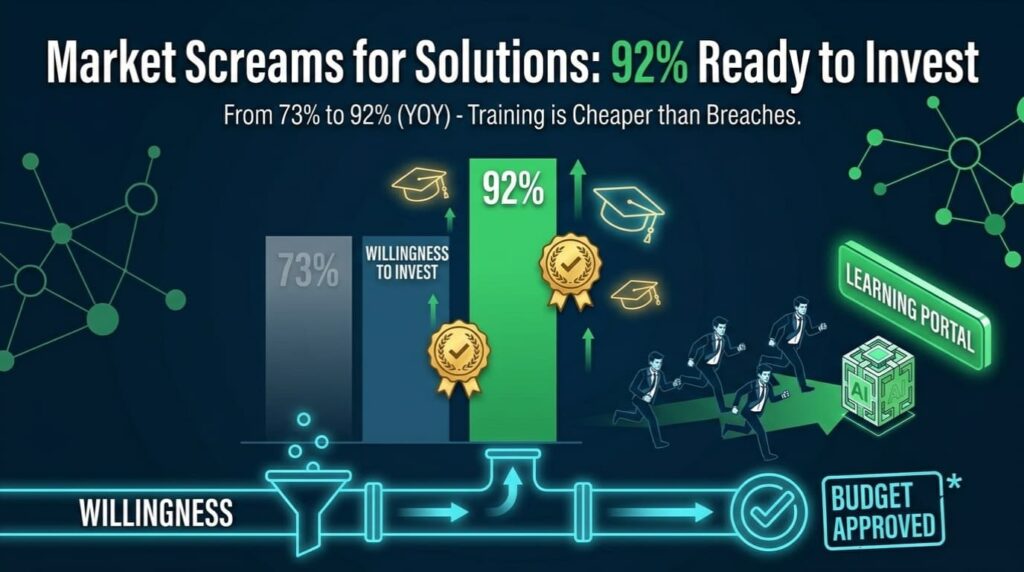
According to workforce certification research, the willingness is there. Jumping from 73% to 92% in a year is a market screaming for solutions. Organizations see the financial impact of breaches and failed audits, and they’re doing the math. Training is cheaper.
But willingness isn’t the same as action. Many companies still treat certifications as a checkbox exercise for security analysts instead of hands-on, developer-first secure coding education. The real need under PCI’s updated software standards is for the people writing payment applications to understand secure development practices deeply.
As Leon I. Hicks might note: “Organizations are spending billions on PCI compliance software, but 86% of breaches still trace to developer skills gaps. The new standards require secure coding competence, not just tools.”
14-Point Board Funding Gap Creates Security Risk
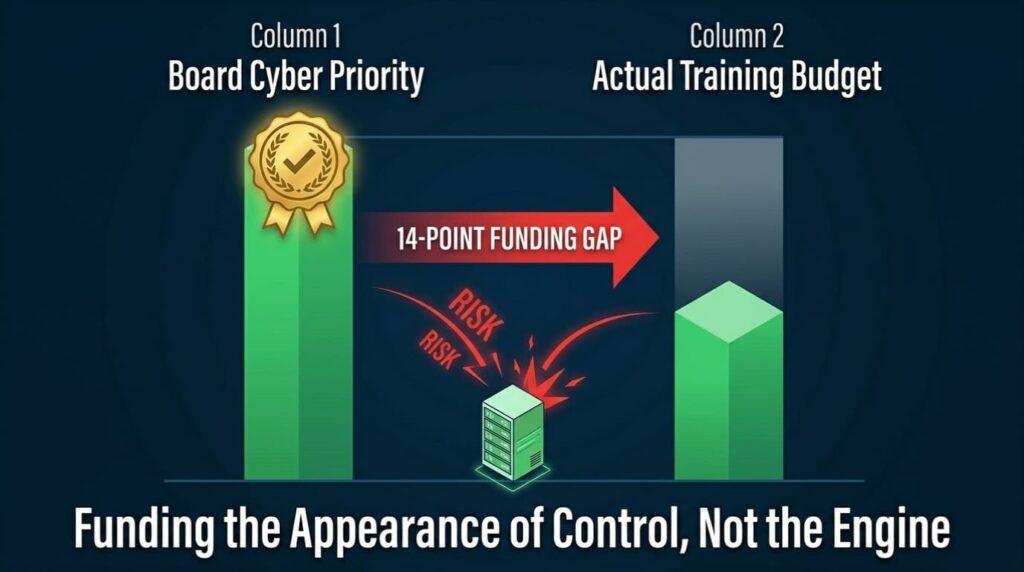
According to cybersecurity governance research, this may be the most frustrating statistic for modern security leaders.
The board nods gravely about the importance of cybersecurity in the quarterly meeting. They greenlight a million-dollar PCI compliance software purchase. But when the line item for ongoing developer secure coding training or for sending engineers to an advanced AppSec course comes up, it gets cut.
That 14-point delta is the distance between lip service and operational readiness. It means the board is funding the appearance of control, the reports, the dashboards, but not the engine of control, which is a skilled workforce.
Under PCI DSS v4.0, evidence of continuous education and skills validation can become part of your compliance story. A board that won’t fund training is, quite literally, deciding not to fund compliance. They are choosing to accept the risk of breach and penalty, even if they’d never say that out loud.
91% of Organizations Using AI-Enabled Security
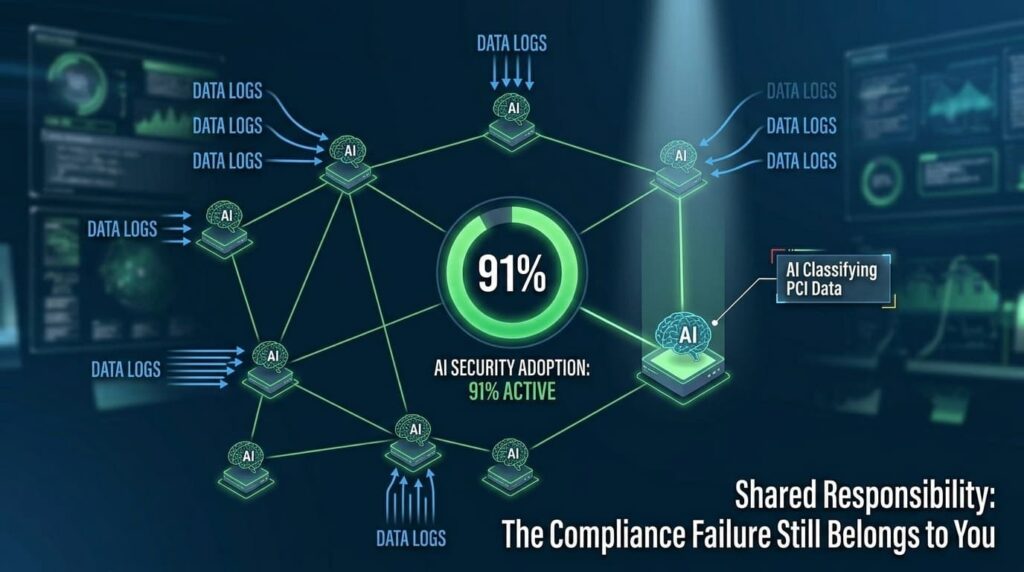
According to enterprise security adoption studies, AI is no longer a futuristic concept inside the security operations center. It is already operational reality.
Organizations are using AI to:
- scan logs for anomalous access patterns,
- classify sensitive data,
- automate detection workflows,
- and identify potential payment data exposure.
This is necessary to handle modern operational scale. But from a PCI compliance perspective, it creates a new layer of shared responsibility.
The provider may secure the infrastructure, but the organization remains responsible for the configuration, governance, and output of the AI systems it deploys.
If an AI model misclassifies sensitive authentication data as non-sensitive, the compliance failure still belongs to you.
84% of Security Teams Say AI Improves Performance
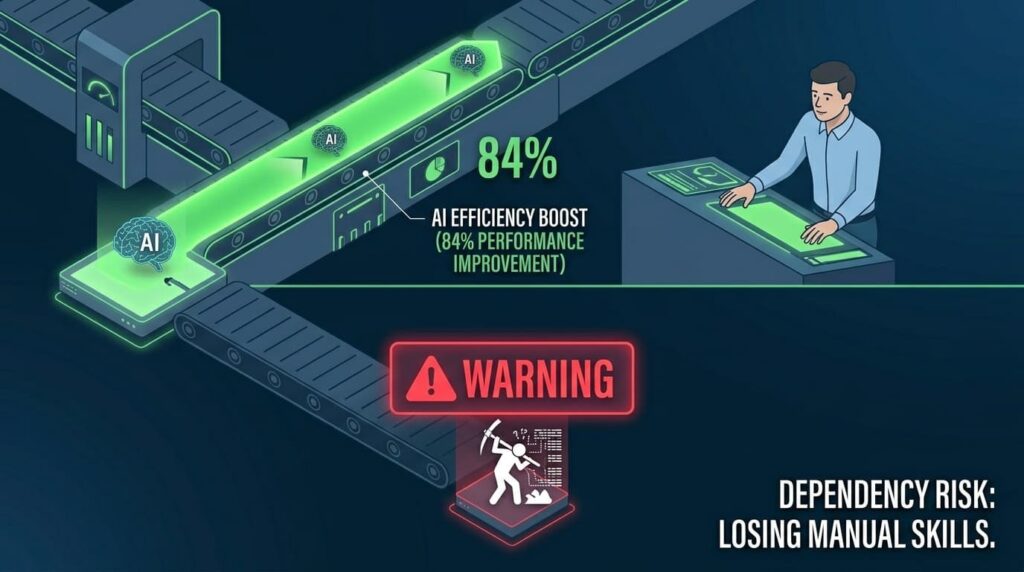
According to security operations research, this is the payoff. When AI works, it lifts the burden of repetitive tasks. It can sift through millions of log entries to find the dozen that matter for a PCI audit trail. It can check firewall configurations against compliance policies continuously.
This performance boost is real, and it’s why adoption is so high. However, this improvement creates a dependency. The team’s efficiency is now tied to a tool they may not fully understand. If the AI model drifts, or if an attacker learns to evade its detection patterns, that performance gain vanishes, and the team might be left less capable than before because they’ve lost the manual skills.
For PCI compliance, this means you cannot outsource your understanding of the controls to the AI. You must have the expertise to audit the auditor, to ensure the AI’s “improved performance” is actually improving your security posture and not just creating a comforting illusion.
PCI Compliance Software Market Growing From $1.79B to $3.81B
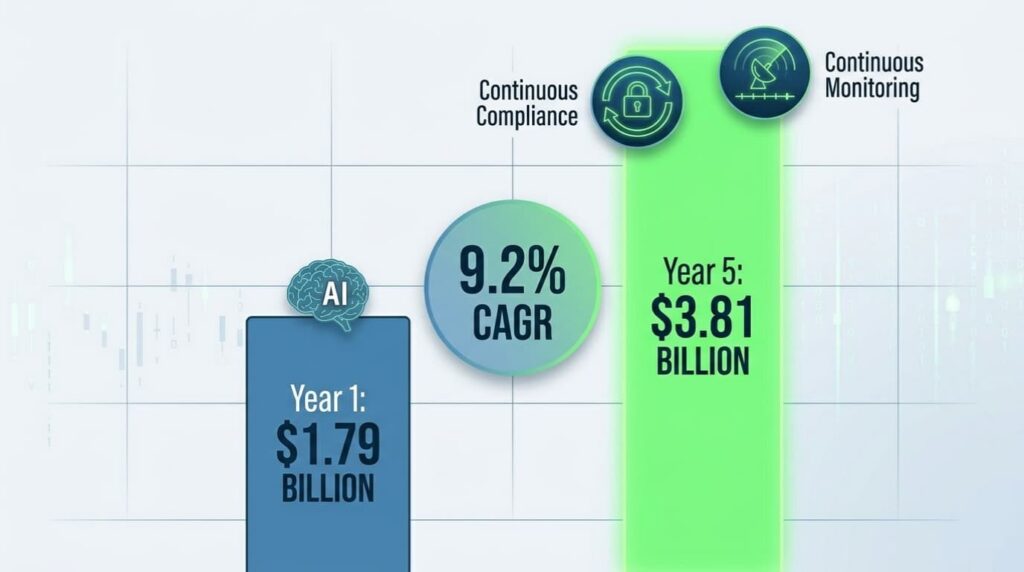
According to Business Research Insights, the projection from $1.79B to $3.81B tells a very clear story: compliance is getting harder, not easier.
PCI DSS v4.0’s emphasis on continuous compliance over point-in-time audits represents a permanent operational shift.
Organizations now require:
- always-on visibility,
- automated evidence collection,
- vulnerability management,
- and real-time audit readiness.
This growth reflects the tooling arms race happening across enterprise security environments.
But the central paradox remains:
These platforms are excellent at identifying problems. They are far less effective at teaching developers how to stop creating those problems in the first place.
9.2% CAGR Significant for PCI Compliance Software
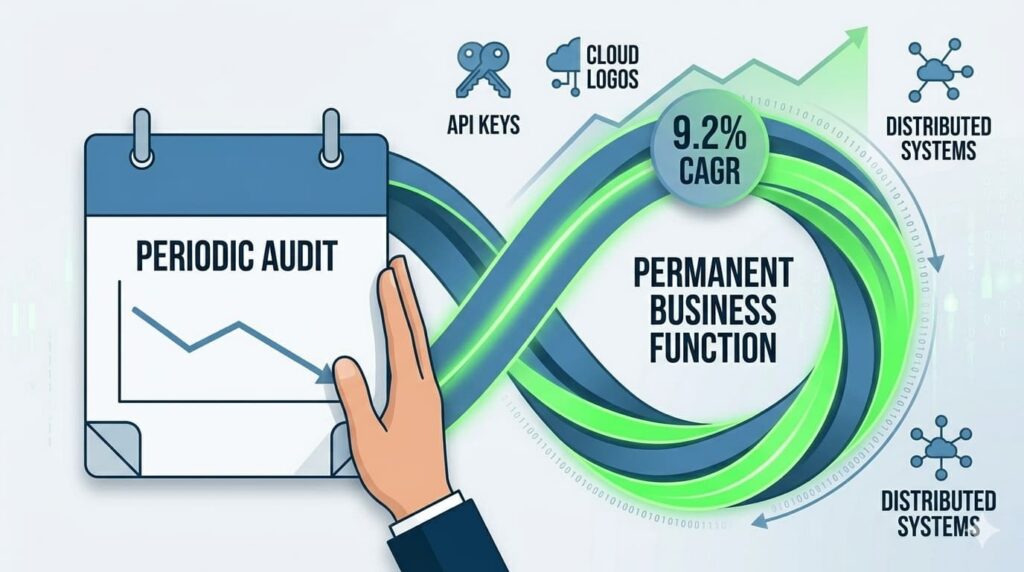
According to market growth forecasts, a sustained 9.2% CAGR signals that PCI compliance software is becoming embedded operational infrastructure.
PCI compliance is evolving from a periodic audit project into a permanent business function.
As payment ecosystems become:
- API-driven,
- cloud-native,
- AI-enabled,
- and increasingly distributed the compliance surface area expands continuously.
Organizations are investing in larger monitoring systems and more sophisticated automation to keep pace.
But the growth remains reactive. The software catches more failures. It does not necessarily prevent insecure development behavior from happening.
Application Security Market Growing From $5.64B to $12.0B
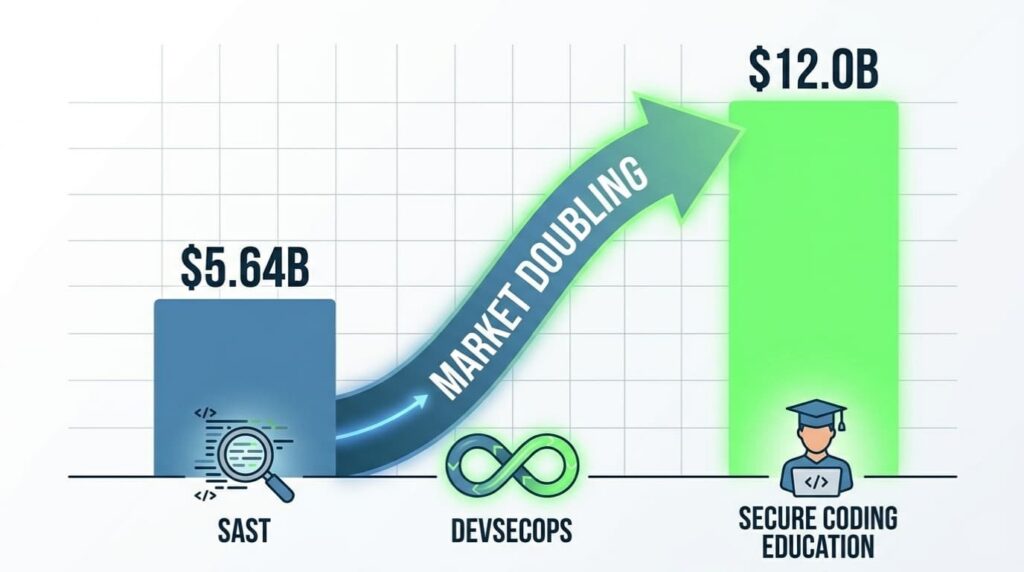
According to application security market forecasts, the AppSec industry doubling from $5.64B to $12.0B mirrors the PCI compliance software boom because they are fundamentally connected.
PCI DSS v4.0 and Secure Software Standard v2.0 make application security a primary compliance concern. This market includes: SAST, DAST, SCA, DevSecOps tooling, and secure coding education platforms.
For companies processing payments, developers are now directly tied to compliance outcomes. Investing in AppSec tools without developer education is like giving someone a scalpel without anatomy lessons.
PCI Secure Software Standard v2.0 Matters After January 15, 2026
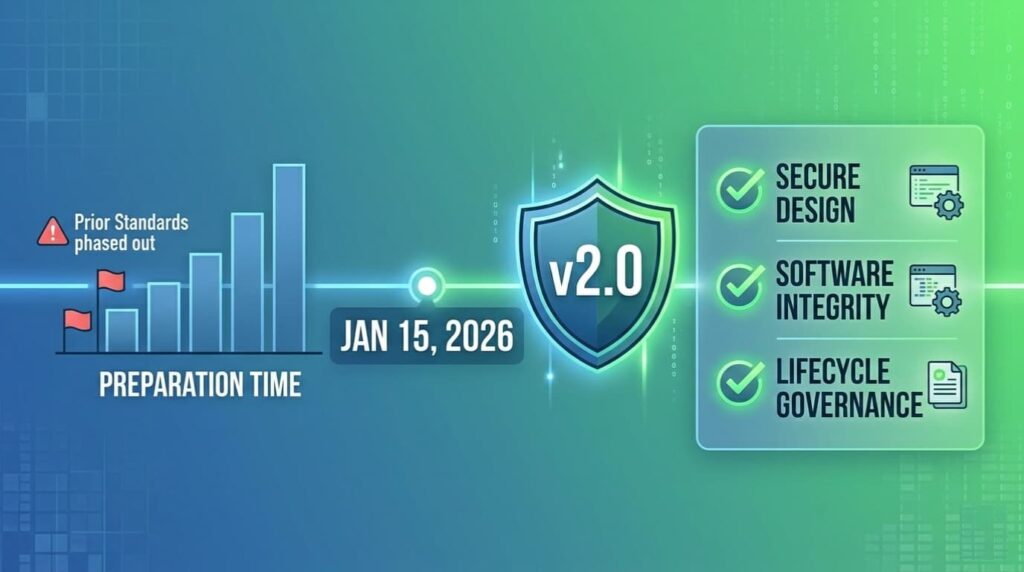
According to the PCI Security Standards Council, the January 15, 2026 update was not a minor tweak.
As the first major revision in over 18 months, it significantly raised expectations around:
- secure design,
- secure coding,
- software integrity,
- and lifecycle governance.
Organizations can no longer rely on secure infrastructure protecting insecure software.
The software itself is now part of the compliance perimeter. That changes expectations for software vendors, in-house development teams, DevSecOps workflows, and secure coding education programs. The transition period is not a waiting period. It is preparation time.
FAQ
Why does PCI Compliance matter for online businesses?
PCI Compliance helps businesses protect cardholder data, payment data, and customer data from security threats and data breaches. The Payment Card Industry Data Security Standard requires companies to follow strict security requirements for credit card payments and credit card processing.
Strong PCI DSS practices also reduce Reputational damage, improve Customer experience, and support safe payments across digital platforms in the digital age.
What features should PCI compliance software include?
PCI compliance software should include vulnerability scanning, evidence collection, audit trail tracking, and continuous monitoring features. Many businesses also need control mapping, penetration testing support, file integrity monitoring, and log analysis tools.
Strong PCI Compliance platforms improve audit readiness, strengthen security posture, and simplify compliance reports for Payment Card Industry security standards and annual recertification processes.
How often should PCI DSS security testing happen?
Businesses should perform vulnerability scans, External Vulnerability Scanning, and penetration testing regularly under PCI DSS 4.0 requirements. Continuous monitoring, risk assessment reviews, and Vulnerability & quarterly scan procedures help identify security breach risks early.
Regular testing also helps detect SQL injection, cross-site scripting, remote file inclusion, malicious code, and weaknesses inside the cardholder data environment before attackers exploit them.
How does PCI DSS help prevent payment security risks?
PCI DSS improves payment security through access control measures, multi-factor authentication, Point-to-point encryption, and network perimeter protection. These PCI Security Standards reduce the risk of payment account data theft and other security threats.
Businesses handling contactless payments, NFC capabilities, and EMV payment tokens also benefit from stronger payment lifecycle protection and safer payment processing environments.
Who needs PCI compliance software and monitoring tools?
Any business that stores, processes, or transmits payment cards and cardholder data should follow PCI Compliance requirements. This includes companies using software applications, Mobile app payment systems, Bill payment API services, and Interactive voice response systems.
PCI tools also help businesses manage vendor risk management, compliance automation platform reporting, transaction volume requirements, and long-term audit readiness.
Closing the PCI Compliance Skills Gap Before It Becomes a Security Gap
PCI DSS v4.0 compliance is no longer just a technology challenge. It is a skills challenge that directly affects risk exposure, audit readiness, and long-term security resilience. Organizations that invest in secure coding expertise, practical developer training, and governance alongside automation will be better positioned to reduce vulnerabilities and maintain compliance as requirements continue to evolve.
At Secure Coding Practices, we help organizations strengthen the human side of security through hands-on developer training focused on real-world application security and PCI-ready coding practices.