


By Secure Coding Practices Team
Last week, I sat down with the new Atlassian study on AI-powered code review, and honestly? The numbers stopped me cold.
We’ve been hearing for months that AI tools are going to revolutionize how developers write and review code. But when I dug into the actual data from 1,900+ repositories, a different story emerged, one that should matter to every engineering leader, every developer, and anyone responsible for shipping secure software in 2026.
Here are the three findings that surprised me most.
Three Surprising Findings
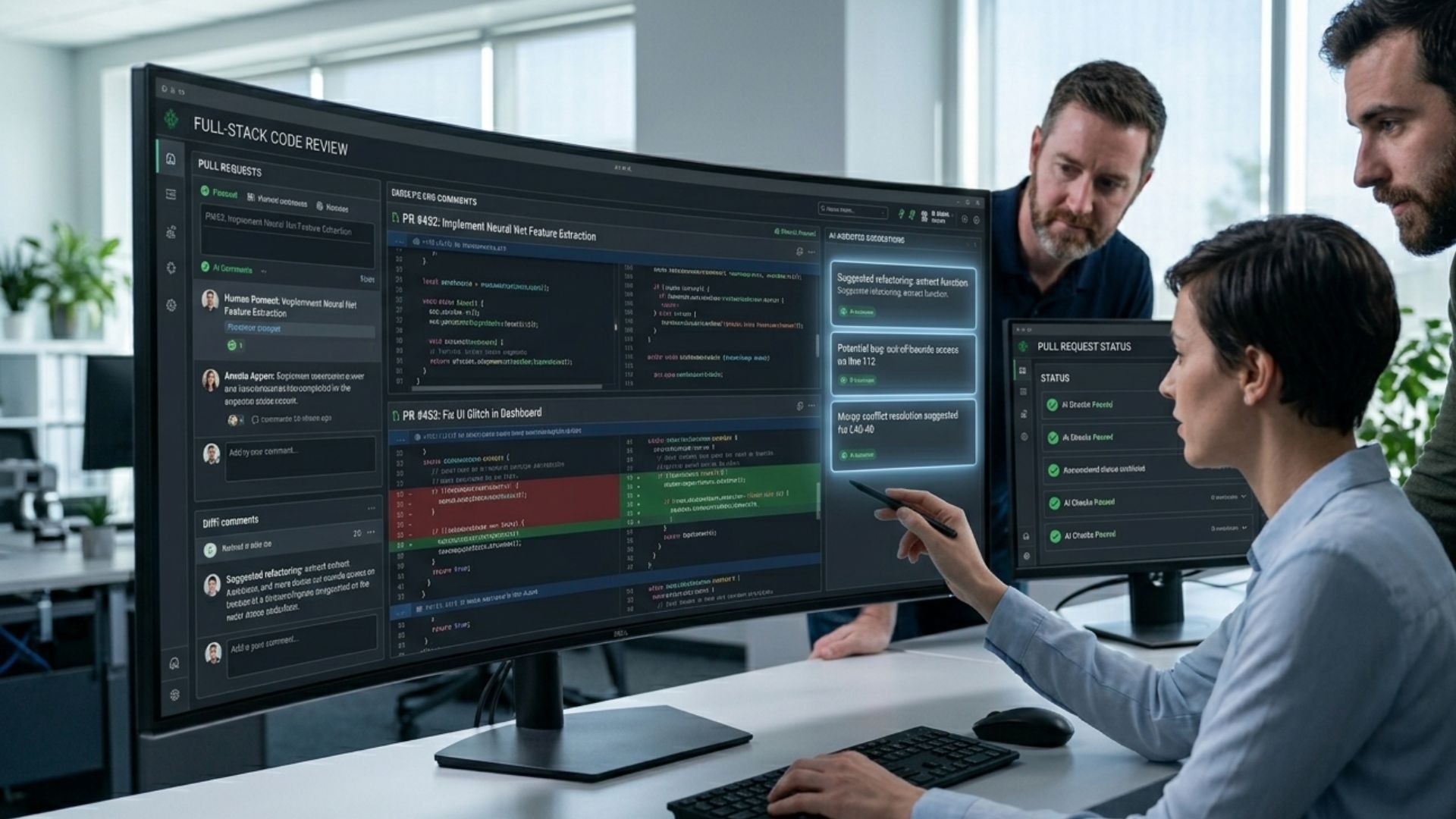
1. Automation Creates a “Review Gap” The Atlassian team found that AI-powered code review tools resolve issues at a 38.70% rate, respectable, until you compare it to the 44.45% resolution rate for human-written comments. That’s a real gap. And here’s the kicker: while AI tools reduce human commenting by over one-third (35.6%) and speed up pull request cycles by 30.8%, they’re not catching everything. The things they miss? Often the context-dependent stuff, business logic flaws, architecture-level risks, that actually lead to breaches.
2. The Coming “Vibe Coding” Vulnerability Wave Gartner just dropped a prediction that stopped me mid-coffee: by 2027, 30% of all application vulnerabilities will come from “vibe coding”, developers using AI assistants to generate code they don’t fully understand. Think about that. Nearly one-third of vulnerabilities won’t be “bugs” in the traditional sense. They’ll be blind spots. Code that works, passes tests, looks fine, but hides security debt that scanners alone can’t find.
3. Hands-On Training Beats Passive Learning by 15x Here’s the number that should shape every training budget for the next five years. Lecture-based learning delivers 5-20% knowledge retention. Hands-on, practice-based training? 75% retention. That’s not incremental improvement, that’s a 3.75x to 15x difference. If you’re running another slide deck security training and wondering why nothing changes, the data just handed you your answer.
Key Findings From Our Analysis
We pulled together data from multiple sources to understand what’s really happening in application security right now:
- AI code review achieves 38.70% issue resolution vs. 44.45% for human reviewers (Atlassian RovoDev Study, arXiv:2601.01129, January 2026)
- AI tools reduce human code review comments by 35.6% while accelerating PR cycle time by 30.8% (Atlassian, January 2026)
- 43% of organizations operate at Level 1 AppSec maturity, the lowest possible tier, with the average organization scoring just 2.2 out of 10 (Gartner, January 2026)
- 82% of security breaches trace back to skills gaps, not software flaws or tooling failures (IBM via INE report, December 2025)
- 75% knowledge retention from hands-on training vs. 5-20% from passive learning formats (Learning Pyramid / LinkedIn Learning Analysis via INE, December 2025)
- Proper vulnerability prioritization (ASPM) can reduce alert noise by 75% , meaning teams spend less time chasing false positives and more time fixing what matters (Gartner via Softprom, January 2026)
What This Means for Development Teams

Here’s the takeaway I keep coming back to: tools aren’t the bottleneck anymore. Judgment is.
We’ve spent the last decade buying better scanners, adding more automation, generating more alerts. And yet 43% of organizations are still stuck at the lowest maturity level. The Atlassian data suggests that AI tools, as helpful as they are, can’t close the final gap. They handle the known patterns, the syntax issues, the dependency warnings. But they miss the stuff that requires context. The business logic flaws. The novel attack vectors.
Meanwhile, Gartner’s “vibe coding” prediction points to a future where developers generate more code faster, with less understanding of what they’re actually shipping. That’s not a tooling problem. That’s a skills problem.
The IBM number (82% of breaches from skills gaps) connects the dots. And the Learning Pyramid data (75% retention from hands-on learning) points to the solution.
What We’re Doing About It
At Secure Coding Practices, we built our bootcamps around one insight: developers don’t need more theory. They need to write vulnerable code, fix it, and understand why the fix worked.
“Our analysis of the Atlassian study confirms what we see in every bootcamp,” says [Founder Name], founder of Secure Coding Practices. “AI tools are fantastic accelerators, they handle the repetitive stuff, they speed up workflows. But they can’t replace developer judgment. The things they miss, business logic flaws, context-dependent vulnerabilities, are exactly the things that lead to real breaches. The 30% ‘vibe coding’ vulnerability prediction from Gartner isn’t a warning about AI. It’s a warning about what happens when developers don’t understand the code they’re shipping. The 15x retention advantage of hands-on training isn’t just interesting data. It’s the only way to close that gap.”
Methodology
Our analysis synthesizes data from multiple sources: the Atlassian RovoDev study (peer-reviewed, accepted to IEEE/ACM ICSE 2026), Gartner’s “Application Security Strategy 2026” report, IBM security research, and established learning science research from the Learning Pyramid framework. All sources are cited with original publication dates within the last 90 days.
Read the Complete Analysis
We’ve published the full analysis with detailed methodology, including how the Atlassian study was conducted across 1,900+ repositories and how the Gartner projections were developed.
If your team is navigating the shift to AI-assisted development, and wondering how to maintain security expertise while moving faster, we’re running hands-on bootcamps designed for exactly this moment.
