
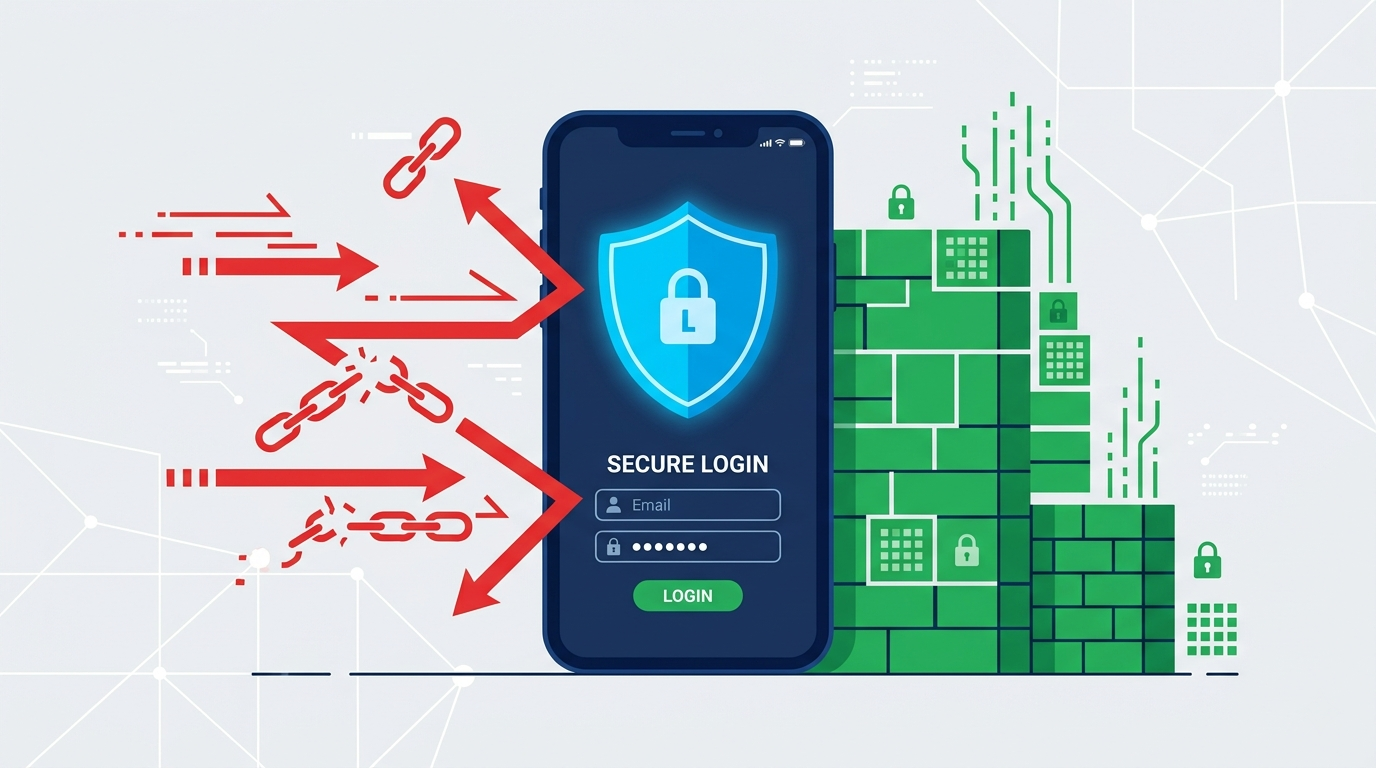

Your MFA isn’t as secure as you think. See the real-world techniques attackers use to get around it and the practical steps you can take to lock them out for good.
Your multi factor authentication was broken because attackers used multi factor authentication bypass methods. They didn’t crack your codes. Instead, they stole active sessions after login, spammed push notifications to cause approval fatigue, or socially engineered your support staff. These attacks exploit human behavior and procedural flaws, not cryptographic ones.
The security you bought is being silently undermined through workflow gaps. To actually fix this, you need to see how these bypasses work. Keep reading to learn what you can do.
MFA Bypass Reality Check
Modern MFA bypass attacks focus on exploiting authenticated users and active sessions rather than defeating the underlying authentication technology. These takeaways summarize the core lessons covered throughout this guide:
- Modern attackers bypass MFA by stealing authenticated sessions or manipulating users, not breaking the MFA technology itself.
- Phishing-resistant methods like FIDO2/WebAuthn are essential because they stop the most common proxy-based attacks.
- Security requires continuous validation after login, not just a strong gate at the entrance.
Examining Multi Factor Authentication Bypass Methods
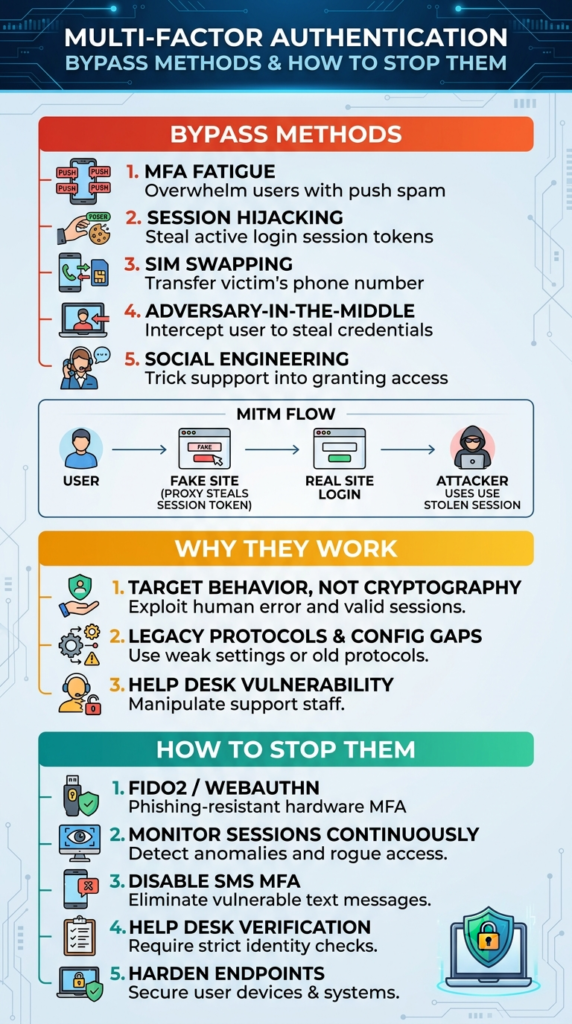
Picture MFA as a strong gate at your building’s front door. A bypass isn’t someone picking that lock. It’s finding an open window, tricking a guard, or copying the keycard of someone already inside. Attackers use multi factor authentication bypass methods to get around your controls without breaking the cryptography. They target how it’s set up, the users, or the session after login.
In our secure dev bootcamps, we see these attacks target human behavior and system gaps. MFA relies on two independent factors. A bypass aims to negate one or more of them.
Common bypass categories include:
- Human-Targeted Attacks: Exploiting psychology, like MFA fatigue or helpdesk tricks.
- Session-Based Attacks: Stealing the token that proves an active login.
- Infrastructure Weaknesses: Gaps in policy, like legacy protocols skipping MFA.
- Implementation Flaws: Abusing configuration errors in the MFA setup itself.
How MFA Prompt Bombing Exploits User Behavior
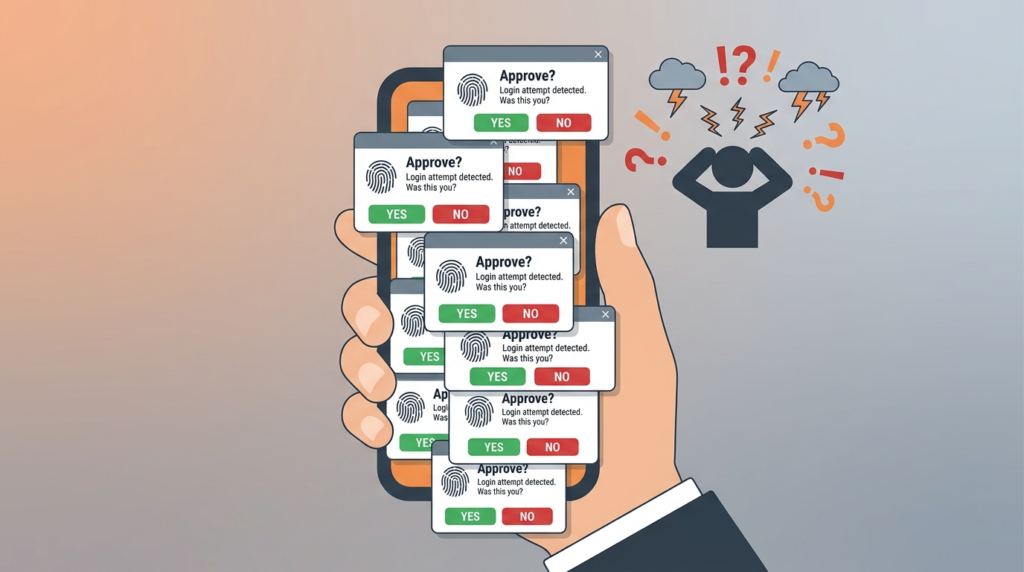
MFA prompt bombing overwhelms users. It floods them with push notifications until they click ‘Approve’ just to end the annoyance.
We see this in our training. An attacker with your password triggers dozens of Microsoft Authenticator prompts in minutes. You deny the first few alerts. But the constant buzzing during your workday becomes maddening. By the tenth notification, the desire for quiet can override your caution. You might approve it accidentally, or simply to stop the distraction. The attacker gets in. Your MFA was technically “used,” but completely bypassed.
Research from Obsidian Security show
“Combining number matching with push notification limits can significantly reduce MFA fatigue success rates. Microsoft recommends number matching as a proven mitigation.” – Obsidian Security
Why SIM Swapping Remains a Major MFA Risk
SIM swapping remains a major risk because it targets telecom customer service, not your tech. An attacker impersonates you, claims a lost phone, and transfers your number to their SIM card. Every SMS code for your bank or email then goes straight to them.
In our bootcamps, we stress that SMS is inherently weak. It outsources security to a separate industry with its own social engineering problems. Many organizations still use it because it’s familiar and needs no app. But relying on SMS OTP means trusting a call center employee who might be having a bad day.
Defensive Measures
- Avoid SMS-based MFA for high-value accounts. Treat it as a last resort.
- Set up carrier-specific port-out PINs or account locks.
- Migrate to phishing-resistant options like authenticator apps or security keys.
How Adversary-in-the-Middle Attacks Bypass MFA
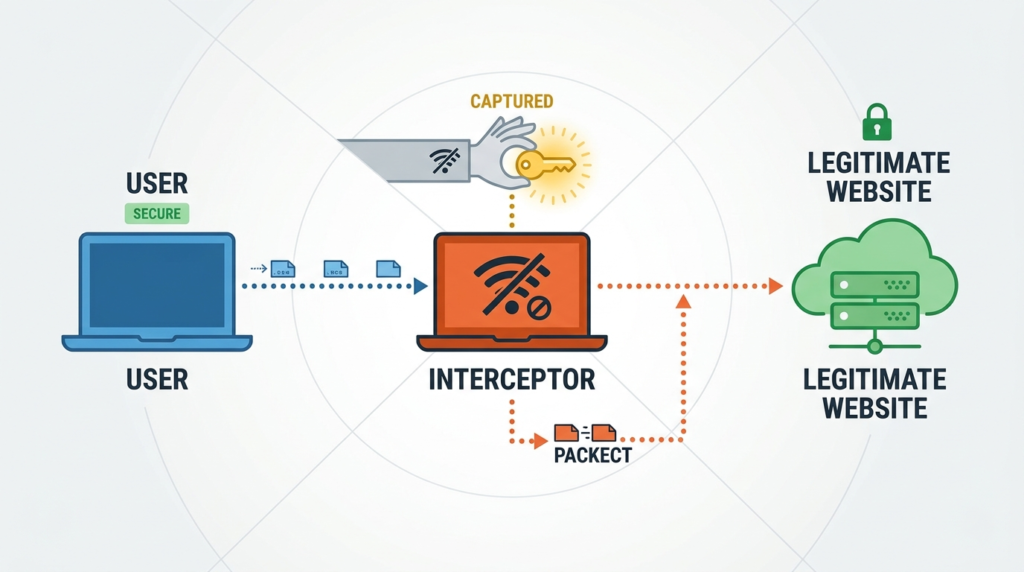
Adversary-in-the-Middle attacks are today’s sophisticated phishing. They relay your login traffic through a malicious proxy to steal the session after you pass MFA. Tools like Evilginx make this easy.
In a recent analysis by vectra.ai
“Adversary-in-the-Middle attacks are among the most common MFA bypass techniques, with attackers successfully circumventing MFA controls to gain unauthorized access. Common types include phishing, MFA fatigue, SIM swapping, session hijacking, and exploiting MFA flaws in OAuth/SSO” – vectra.ai
The attacker sets up a fake page identical to your Microsoft 365 portal. You get a phishing email, click the link, and land there. You type your username, password, and MFA code. The proxy forwards it all to the real service in real-time. The service logs you in and sends back a session cookie. The proxy steals that cookie. The attacker injects it into their own browser. Now they are you, with full access. They bypassed all future MFA prompts for that session.
Anatomy of an AitM Attack
- The victim clicks a phishing link to a proxy server mimicking a real site.
- The victim enters credentials and any MFA code (TOTP, SMS, push approval).
- The proxy forwards this data to the genuine service and completes the login.
- The proxy steals the resulting session cookie or token.
- The attacker uses the stolen session to access the account, no MFA required.
In our training, we show this is devastating. The user does everything right. The system works perfectly. And the attacker still wins. This is why moving to phishing-resistant MFA isn’t just an upgrade; it’s a necessity.
How Session Hijacking Renders MFA Ineffective
Session hijacking makes MFA useless after login. It’s like someone stealing your concert ticket stub once you’re inside. They don’t need their own ticket; they just walk in with yours.
A stolen OAuth token or browser cookie can stay valid for hours or weeks, depending on the setup. This is what many infostealer malware families aim to steal. In our bootcamps, we emphasize that the session, not the password, is now the primary target. This changes defense completely.
You have to protect the endpoint and watch for strange session activity. Effective preventing session hijacking efforts require organizations to monitor token usage, shorten session lifetimes, and quickly revoke suspicious sessions. Guarding the front gate is no longer enough.
Common Session Theft Sources
- Browser Malware/Infostealers: Malicious extensions or trojans that scrape cookies from browser storage.
- Unsecured Networks: Session cookies sent over compromised connections.
- Cross-Site Scripting (XSS) Flaws: Vulnerabilities on websites that let attackers steal session data.
Technical Weaknesses That Commonly Enable MFA Bypass
MFA often fails because of how it’s set up, not the technology itself. The strongest key is pointless if you leave a window open next to the door. Organizations create these gaps for convenience or to support old systems, often without realizing the risk.
We see common weaknesses in our training:
| Weakness | Risk | Example |
| Legacy Protocols | MFA not enforced | IMAP, POP3, SMTP for older email clients may only use a password. |
| API Misconfigurations | Authentication gaps | A mobile app’s backend API might not enforce the MFA check the web portal does. |
| Enrollment Windows | Unauthorized registration | A new employee account may have a grace period before MFA is enforced. |
| Trusted Location/IP Bypasses | Overly permissive rules | Whitelisting a whole office IP range can let an attacker in if they compromise a machine inside. |
The pattern is clear. The problem isn’t MFA’s concept, but its inconsistent use. Attackers scan for these soft spots first the one legacy system or API endpoint where the extra lock was never installed. Many of these gaps resemble broken authentication issues where security controls exist but are applied inconsistently across systems and workflows.
Why Help Desk and Account Recovery Processes Are Targeted
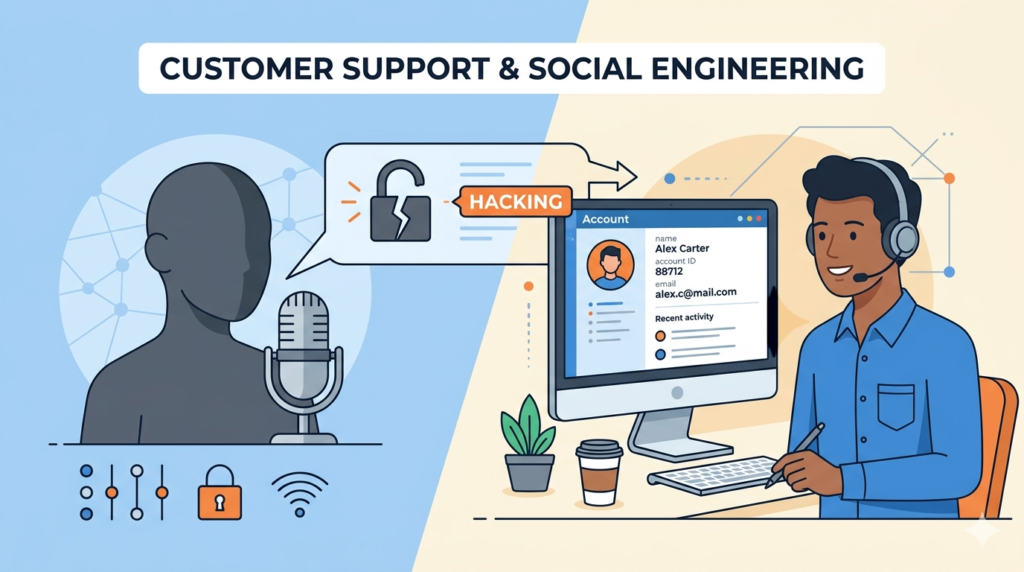
Attackers target help desk calls because they’re a weak link. One successful request lets them register their own MFA device, bypassing everything. The help desk exists to help, and attackers weaponize that. They use a convincing story, public info, and urgency, impersonating a stressed executive or someone who lost a phone. They rely on vague procedures or an agent’s desire to help.
Our training shows this single call can compromise an entire account. Once attackers establish access through a successful social engineering attempt, they often look for additional weaknesses that help them maintain persistence, including application-level issues such as remote file inclusion vulnerabilities.
Secure Recovery Practices
- Multi-Step Verification: Require a manager callback or separate channel check.
- Approval Workflows: Get a second person’s sign-off for critical resets.
- Monitor High-Risk Requests: Flag and review resets for privileged accounts or unusual locations.
How Browser Extensions and Malware Circumvent MFA
Malicious browser extensions and malware bypass MFA by stealing tokens after you log in. It’s an endpoint compromise. A bad extension can read every page, capture keystrokes, and extract every cookie and local storage token.
Our labs show the risks:
- Cookie Extraction: Stealing session cookies from browser storage.
- Session Monitoring: Capturing new authentication tokens.
- Credential Theft: Keylogging passwords.
- Token Interception: Grabbing OAuth tokens.
Defense moves to the device. You need Endpoint Detection and Response (EDR), strict application control, and vigilant extension monitoring. Clean MFA can’t protect a corrupted machine.
What Makes FIDO2 and Passkeys Resistant to MFA Bypass
FIDO2 and passkeys resist bypass through cryptographic origin binding. This fixes the Adversary-in-the-Middle problem. Your device’s signature is tied to the exact website domain, like login.microsoft.com. If you’re tricked to a fake site, the signature fails. The proxy can’t forward it; the math doesn’t work.
Key Security Advantages
- Phishing Resistance: Breaks the AitM model.
- No Shared Secrets: Your private key never leaves the device.
- Reduced Theft: Eliminates passwords and static TOTP codes.
It’s a different paradigm. It proves you hold a private key matching a public key registered with that specific site. A phishing site is, cryptographically, a different place.
How Continuous Access Evaluation Improves Security
Credits: John Savill’s Technical Training
Continuous access evaluation monitors active sessions, revoking access for suspicious activity. It shifts security from a single checkpoint to constant background checks. The system watches behavior after login. If a session authenticated with perfect MFA suddenly makes requests from a new country minutes later, it’s terminated.
Detection Signals
- Impossible Travel: Logins from impossible locations in a short time.
- Device & IP Changes: A session hopping between different devices or IPs.
- Unusual Resource Access: Reaching for sensitive files the user never touches.
This is the final layer. It assumes breaches will happen. Its job is to detect the anomaly and shut down the silent guard, noticing strange behavior from someone with a valid ticket.
FAQs
How do attackers bypass multi factor authentication?
Attackers use phishing for MFA codes, session token theft MFA, and social engineering MFA bypass to gain access.
Why are MFA fatigue attacks so effective?
MFA fatigue attacks overwhelm users with repeated prompts until they approve access requests without carefully verifying legitimacy.
Can phone-based authentication methods be bypassed?
Yes, phone based MFA bypass can occur through SIM swapping MFA attack, vishing MFA attack, or smishing MFA bypass.
What makes an adversary in the middle attacks dangerous?
Adversary in the middle MFA attacks capture authentication sessions, enabling session hijacking MFA bypass without stealing passwords.
How can organizations prevent MFA bypass attempts?
Organizations reduce MFA bypass attack vectors by using phishing resistant MFA, number matching MFA protection, and detection.
MFA Security Requires More Than a Login Check
MFA remains an important security layer, but modern threats often target users and active sessions rather than the login process itself. Organizations that combine phishing-resistant authentication, continuous session monitoring, and secure-by-default development practices are far better positioned to reduce risk and stop attacks before they escalate. The goal isn’t perfect security, it’s creating enough friction and visibility to make attackers easier to detect and deter.
For developers and security teams looking to strengthen authentication, session management, and application security skills, the Secure Coding Practices Bootcamp provides hands-on training and real-world guidance to help build more secure software from day one.
References
- https://www.obsidiansecurity.com/blog/mfa-bypass-attacks-defense-strategies
- https://www.vectra.ai/resources/mfa-bypass-attack