


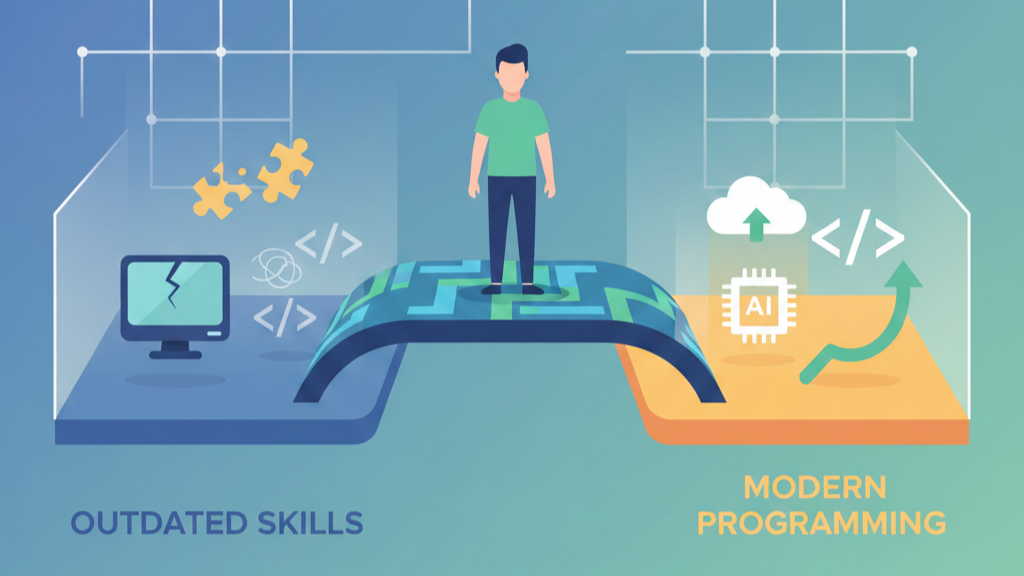
The programming skill gap isn’t a mystery, it’s a mismatch. It’s the quiet panic when a job description lists a framework you’ve never touched, or the hollow feeling after finishing a tutorial with nothing real to show. The gap widens when learning becomes passive, when we collect syntax like stamps without understanding the architecture of the system.
You bridge it by shifting from consumption to creation, from knowing functions to designing systems. The real fix isn’t more tutorials, it’s a deliberate practice of building, breaking, and rebuilding with intent. Keep reading to map your path from where you are to where the industry needs you to be.
Key Takeaways
- Audit your skills quarterly using concrete benchmarks, not gut feelings, to find your precise weak spots before they become career blockers.
- Master the non-negotiable fundamentals, data structures, version control, and secure coding practices, because they outlive every trending framework.
- Build in public and in practice by contributing to open-source or building full-stack projects; real feedback is the only cure for tutorial confidence.
Why the Programming Skill Gap is Getting Wider

You can feel the ground shifting. One day, Python and an API are enough. Next, you need the whole stack, cloud, containers, AI. The gap isn’t about new languages; it’s about depth.
We need builders, not just typists. People who see how a database query chokes a frontend, how a microservice becomes a bottleneck. In our work on threat models, a flaw in one component never stays put. It ripples. That system’s vision is what’s scarce.
“Any fool can write code that a computer can understand. Good programmers write code that humans can understand.” – Martin Fowler [1]
Now, generative AI adds a weird twist. Beginners can produce code they don’t comprehend. It creates a fragile middle layer, they can assemble parts but can’t diagnose a crash under load. The core logic gets lost.
Over time, this leads to hidden design debt, including issues like why AI generates duplicative classes that bloat codebases and make long-term maintenance harder.
- What we consistently see in the field is a shortage of senior, systems-level talent.
- There’s a glut of juniors repeating basic patterns.
- What’s taught in school can lag a decade behind production.
We build risk analysis tools. The biggest risk we see isn’t a fancy new exploit. It’s this foundational gap. If you don’t understand the system, you can’t hope to secure it. The chasm isn’t closing. It’s getting wider.
How to Honestly Assess Your Technical Debt
In our teams, we’ve learned you can’t fix what you don’t measure. Start by opening your GitHub contribution graph. Is it green with meaningful commits, or sparse with tutorial snippets. That’s your first clue. Next, try a skill inventory assessment. Use platforms that offer Skill IQ tests or simply take a senior-level job description for your target role and highlight every term you couldn’t confidently explain or implement.
Be brutally honest. Your technical debt includes those shortcuts you took, the functions you never wrote tests for, the design pattern you avoided because you didn’t get it. Write it all down. This list isn’t a failure, it’s your personalized IT training programs blueprint.
- Pinpoint weak areas in algorithms, data structures or system design.
- Audit your version control proficiency, can you handle a messy rebase?
- Identify missing secure coding practices in your past projects.[2]
- Check your awareness of APIs scalability and microservices system design.
A developer we know did this every six months. He found his debugging techniques were advanced, but his software design principles were weak. He spent three months just on SOLID principles practice. His code’s scalability changed completely.
Self-Taught Gaps vs. What the Industry Actually Needs
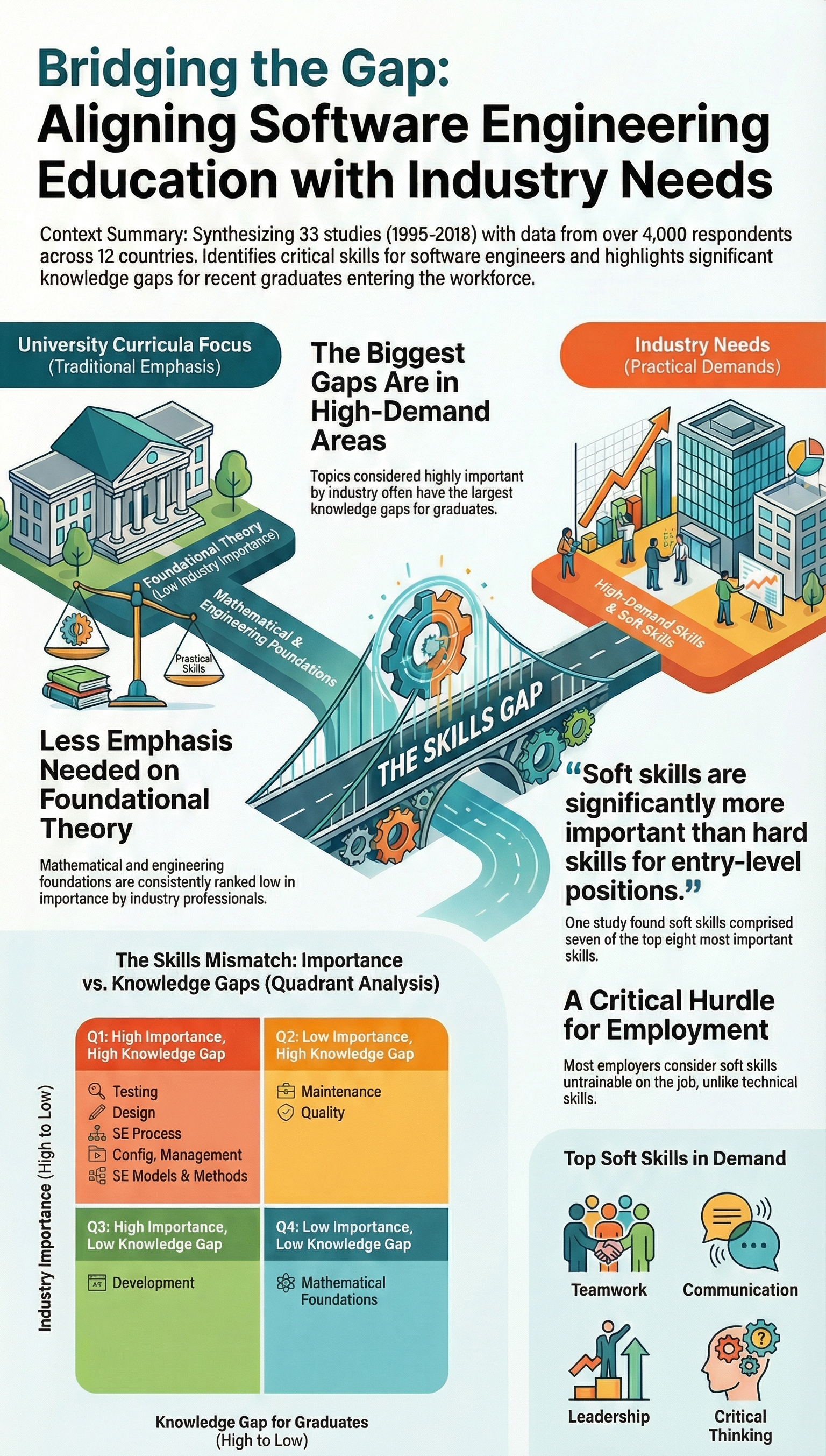
There’s a quiet divide between building something that works and building something that lasts. The self-taught journey, glorious and accessible, often focuses on the former. You get the app to run. But industry needs the latter, code that your teammates can read, modify, and scale a year from now. This is where the developer competency deficit becomes visible.
| Gap Area | Common Self-Taught Issue | Professional Mitigation Strategy |
| Version Control | Basic commits, fear of branching/merging. | Master Git branching merging. Contribute to a public repo and handle a pull request conflict. |
| Algorithms & Data Structures | Shallow grasp, seen as “interview only.” | Daily problem-solving exercises. Use LeetCode not to memorize, but to internalize time/space trade-offs. |
| Debugging | Console.logging until it works. | Recreate issues in real-world code. Clone a buggy open-source app and trace the error stack. |
| Design Principles | Ignoring scalability, writing monolithic code. | Implement SOLID and DRY patterns. Refactor an old project to be more modular. |
| Environment Awareness | Tunnel vision on local code. | Map code to the environment holistically. Learn how your code interacts with the cloud, CI/CD pipeline, and database. |
The goal isn’t to shame the self-taught path, it’s to align it. That full-stack understanding means seeing how your React component triggers a database query that bottlenecks the whole API.
The Core Fundamentals That Prevent Skill Decay
Trends fade. JavaScript frameworks have a half-life of about 18 months. What remains. The fundamentals do. Investing here is the ultimate continuous learning programming strategy because it makes every new tool easier to pick up. Think of it as strengthening the soil, not just planting new seeds.
First, logic programming core and algorithms data structures. This isn’t about acing interviews, it’s about training your brain to see patterns and efficiencies. A solid grasp here makes learning a new language just a matter of syntax, not logic. Second, version control proficiency with Git. It’s the collaboration backbone. If you’re not comfortable with rebasing and resolving merge conflicts, you’re not ready for a team.
Third, and we can’t stress this enough, secure coding practices. We often bolt this on as an afterthought, a final checklist item. It needs to be the first draft. Understanding secure coding challenges and common pitfalls early prevents teams from treating security as a final checklist item instead of a core design principle. This is the framework that holds everything else together.
Building Hands-On Proficiency That Actually Sticks
Credit: Russell Sarder
We see tutorial hell derail otherwise capable developers all the time. It’s that cozy, familiar feeling of following along, the false confidence of typing what someone else wrote. Escaping it requires a deliberate shock to the system. You must build something that breaks, and then you must fix it. This is where immersive learning methods live.
Start small but start complete. Don’t build another to-do app. Maybe build a tool that fetches data from an API, processes it, and writes it to a local file. Then break it. What happens if the API is down. Handle that error. Now, put it on GitHub. This simple act forces resource integration skills. Next, open-source contributions. Find a library you use, look at its “good first issue” tags.
Reading a real codebase is a different muscle. You’ll see how experienced developers structure things, how they write tests. You might spend two days just getting the project to run locally. That’s the learning. Hackathon participation, even solo, forces a time box and a full-stack understanding. You’re not just writing functions, you’re connecting a front-end to a back-end to a database. This is the quantifiable skill metrics you can’t get from a video.
Using AI as a Mentor, Not a Crutch
These AI coding tools are a double-edged sword. Brilliant for explaining a dense regex or generating a unit test template in seconds, a tireless tutor, really.
But let it write your core logic, and you’ve outsourced the learning. That’s when the skill gap becomes a canyon. We see this in security: tools can find flaws, but if you don’t grasp the why, you’re just ticking boxes. You won’t anticipate the next attack.
This is the danger zone described in the main risks of vibe coding, where developers can assemble working systems without understanding why they fail under real-world pressure.
The trick is to use it as a mentor, not a crutch. Augment, don’t automate.
- Stuck debugging? Paste the error and ask, “Explain this in simple terms.” Don’t just copy the fix.
- Have it draft three function structures, then critique them yourself.
- Use it to brainstorm edge cases you missed.
It personalizes the grind. But you keep the problem-solving muscle. Think of it as the ideal senior dev on call, infinitely patient, but they’ll never let you copy their homework. Learn the why. That’s how you build something new and stay ahead of the threats we model.
The Soft Skills That Unlock Technical Growth
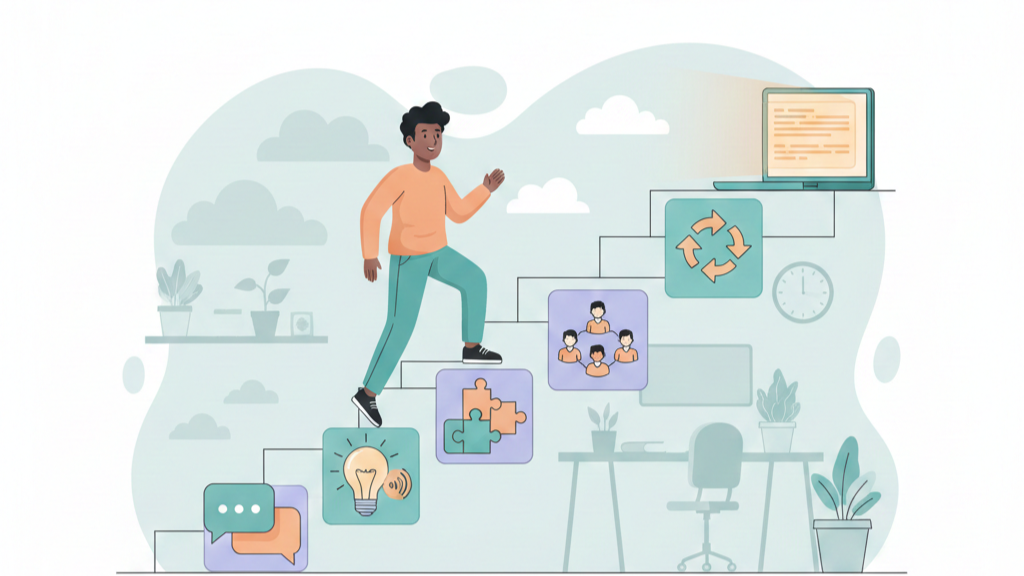
You can write perfect code. But if you can’t explain your design to the product manager, or work with the DevOps team, your work hits a wall. We’ve watched brilliant solutions stall right there.
The real force multiplier isn’t another technical trick. It’s the soft skills, what we call code communication. It’s articulating why you chose that database. Writing a commit message that tells a story, not just a command. Creating documentation someone (maybe you, six months from now) can actually use.
The skills that unlock growth look like this:
- Explaining your architecture in a way that builds trust.
- Writing clear PRs and docs that prevent problems, not cause them.
- Knowing how to research a gnarly problem when you’re totally stuck.
This is how your technical work moves from your laptop into the real business. It turns a developer who knows their stuff into someone who leads. It’s about being clear, not loud. That’s what makes you indispensable.
FAQ
How can beginners close the programming skills gap without formal degrees?
The programming skills gap often starts with a coding knowledge deficiency and weak fundamentals mastery coding. Beginners should focus on logic programming core, syntax mastery languages, and algorithms data structures.
Continuous learning programming and sandbox experimentation build real skill. These steps address entry-level programmer needs, reduce self-taught developer gaps, and lower the developer competency deficit.
What causes the software skill shortage between schools and real jobs?
The software skill shortage is driven by academic-industry mismatch and poor curriculum redesign IS. Many programs ignore software design principles, SOLID principles practice, version control proficiency, and secure coding practices. This leads to an IT talent shortfall and labour shortage developers. Skill inventory assessment and a knowledge gap survey help measure skill mismatch measurement early.
Which tech upskilling strategies matter most for modern developers?
Strong tech upskilling strategies focus on full-stack understanding, cloud programming skills, and security programming basics. Developers should practice Git branching merging, unit testing basics, and advanced debugging techniques.
Learning APIs scalability backend, microservices system design, and framework tools context improves real-world readiness. Immersive learning methods, open-source contribution, and hackathon participation accelerate growth.
How can developers prove skills to employers beyond resumes?
Employers value quantifiable skill metrics more than resume programming listing alone. Developers should show projects using Python SQL Java proficiency, SQL .NET C# Java, and data programming proficiency.
Job description matching and ATS resume keywords improve visibility. Clear examples of code scalability design, resource integration skills, and environment mapping code prove practical ability.
How does AI change learning paths for closing skill gaps?
GenAI coding impact supports workforce digital bridging through AI learning augmentation and ChatGPT skill bridging. These tools enable personalized skill paths, tag-based language recs, and continuous learning programming. When combined with leadership buy-in training, communities of practice, and soft skills development, they improve graduate employability skills for Industry 4.0 gaps.
Your Practical Path Forward
Closing the programming skill gap isn’t a frantic race to learn everything. It’s a steady, intentional march toward becoming a resilient builder. Start with an honest audit. Choose one fundamental weakness, unit testing basics or Git branching and merging, and crush it with a small, messy project.
Integrate secure coding practices from the first line of your next build. Use AI to explain concepts, not write code. Then communicate what you’ve built. Learn, build, share. The gap closes one committed project at a time. Start today with our Secure Coding Bootcamp now.
References
- https://martinfowler.com/books/refactoring.html
- https://owasp.org/www-project-secure-coding-practices-guide/
Related Articles
