


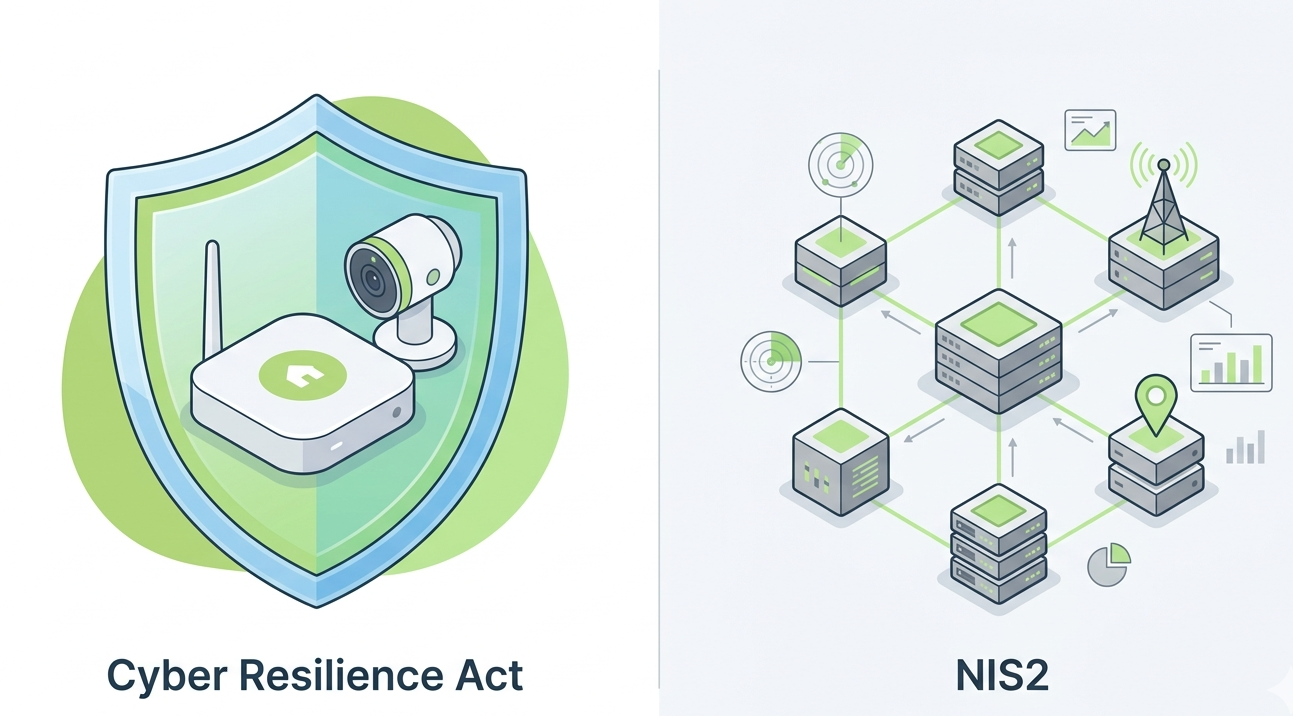
If you build or manage software for the European market, cybersecurity is no longer optional, it’s part of the rules. The EU now enforces strict requirements that affect how products are developed and how organizations operate.
Two major frameworks, the Cyber Resilience Act vs NIS2 Directive, are often confused but serve different purposes. Knowing how they work helps you avoid compliance risks and build secure systems from the start. To understand what applies to you and why it matters, keep reading.
Cyber Resilience Act vs NIS2: Key Insight
Here’s a quick way to understand the difference:
- The Cyber Resilience Act focuses on securing digital products
- The NIS2 Directive focuses on organizational cybersecurity
- Many companies must comply with both frameworks at the same time
What Is the Cyber Resilience Act?
The Cyber Resilience Act focuses on the security of digital products, including software and connected devices. It applies to developers, manufacturers, and companies selling products in the EU.
“Products with digital elements must be secure throughout their lifecycle, including the provision of security updates.” – European Commission
Main goals:
- Ensure secure design from the start
- Require vulnerability management
- Enforce regular security updates
- Support CE marking compliance
This regulation covers the full product lifecycle, from development to post-deployment. In simple terms, CRA is about making sure your product is secure before and after release.
What Is the NIS2 Directive?
The NIS2 Directive focuses on how organizations manage cybersecurity risks. It applies to critical sectors, digital services, and essential infrastructure providers.
“Entities should take appropriate and proportionate technical and organisational measures to manage the risks posed to the security of network and information systems.” – European Parliament & Council (NIS2 Directive)
Key requirements:
- Risk management processes
- Incident response planning
- Mandatory reporting
- Management accountability
NIS2 ensures organizations can handle cyber threats effectively.
In simple terms, it focuses on keeping operations secure, not just products.
Cyber Resilience Act vs NIS2: Key Differences
Credits: Hogan Lovells
The main difference is scope and responsibility.
| Aspect | Cyber Resilience Act | NIS2 Directive |
| Focus | Digital products | Organizations |
| Applies to | Developers, manufacturers | Operators, providers |
| Goal | Secure lifecycle | Risk & incident management |
| Enforcement | Market surveillance | National authorities |
Simple way to remember:
- CRA = product security
- NIS2 = operational security
Understanding this helps teams prioritize the right actions.
How CRA and NIS2 Work Together
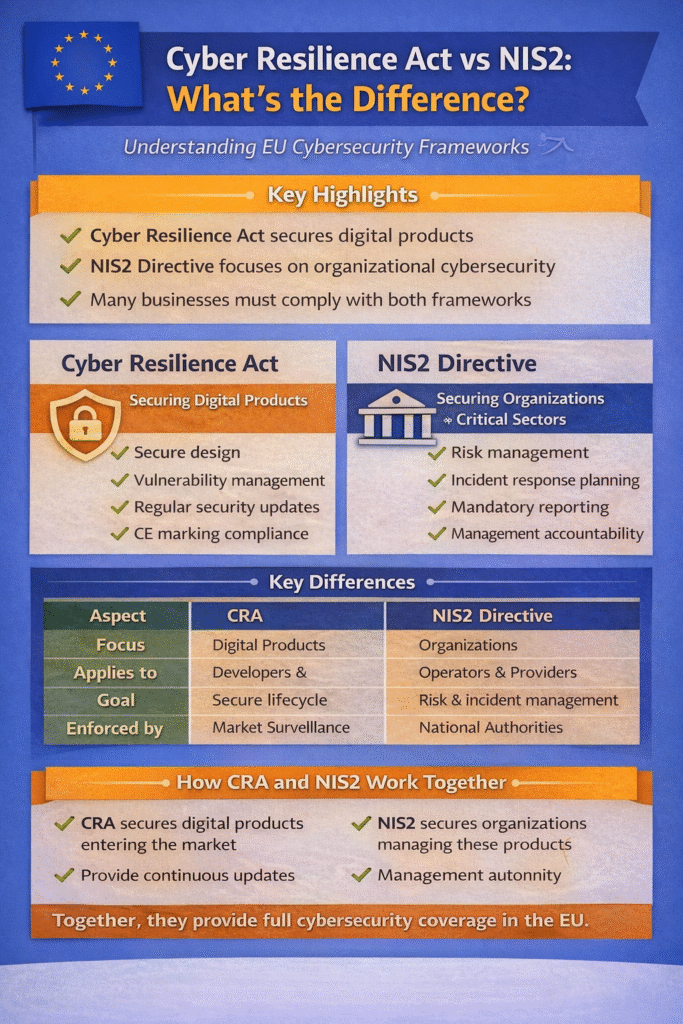
These frameworks are designed to complement each other, not replace one another.
For example:
- A company building IoT products must follow CRA
- If it runs essential services, it must also follow NIS2
Together, they ensure:
- Secure products entering the market
- Secure organizations managing those products
This combined approach reduces cyber risks and strengthens digital trust across the EU.
Why This Matters for Developers
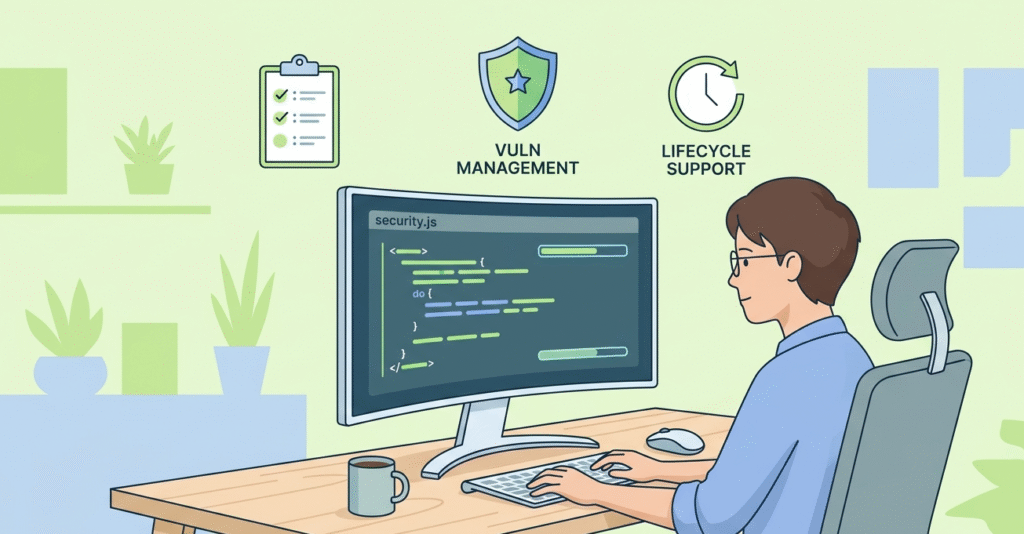
Developers are directly affected by these regulations. Security is no longer just a technical choice, it is part of compliance.
Under CRA, teams must:
- Build secure software from the start
- Track dependencies and supply chains
- Provide continuous updates
Under NIS2, organizations must:
- Monitor systems
- Respond to incidents quickly
- Report cybersecurity events
Ignoring these can lead to delays, penalties, or blocked market access.
FAQ
What is the main difference between Cyber Resilience Act and NIS2?
The Cyber Resilience Act focuses on securing digital products, while the NIS2 Directive focuses on organizational cybersecurity. CRA ensures products are secure throughout their lifecycle, while NIS2 ensures organizations can manage risks and respond to incidents. Together, they create a complete cybersecurity framework across the European Union.
Who needs to comply with the Cyber Resilience Act?
The Cyber Resilience Act applies to developers, manufacturers, and companies selling digital products in the EU. If your product includes software or connected components, you must follow requirements like secure design, vulnerability management, and regular updates. This applies even if your company is based outside the EU.
Does NIS2 apply to small companies or startups?
Yes, NIS2 can apply to smaller companies if they operate in critical sectors or provide essential services. The focus is on impact rather than company size. If your services affect important systems or infrastructure, you may need to meet requirements like risk management, incident response, and reporting obligations.
How do CRA and NIS2 affect development workflows?
They require teams to integrate security from the beginning. Under CRA, this includes secure coding, testing, and lifecycle management. NIS2 adds requirements for monitoring, incident response, and reporting. This means development and operations must work together to meet both product and organizational security expectations.
Can a company be required to follow both CRA and NIS2?
Yes, many companies must comply with both. For example, a company building connected products must follow CRA. If it also operates essential services, it must follow NIS2. This means handling both product security and organizational cybersecurity at the same time to meet EU requirements.
Final Thoughts
Understanding cyber resilience act vs nis2 helps you build a clear and practical compliance strategy. The Cyber Resilience Act focuses on securing products, while the NIS2 Directive ensures organizations can manage risks and respond to threats.
Together, they create a complete cybersecurity framework in the EU. Ready to build secure, compliant software from day one? Join the Secure Coding Practices Bootcamp.
References
- https://digital-strategy.ec.europa.eu/en/library/cyber-resilience-act
- https://eur-lex.europa.eu/eli/dir/2022/2555/oj
