
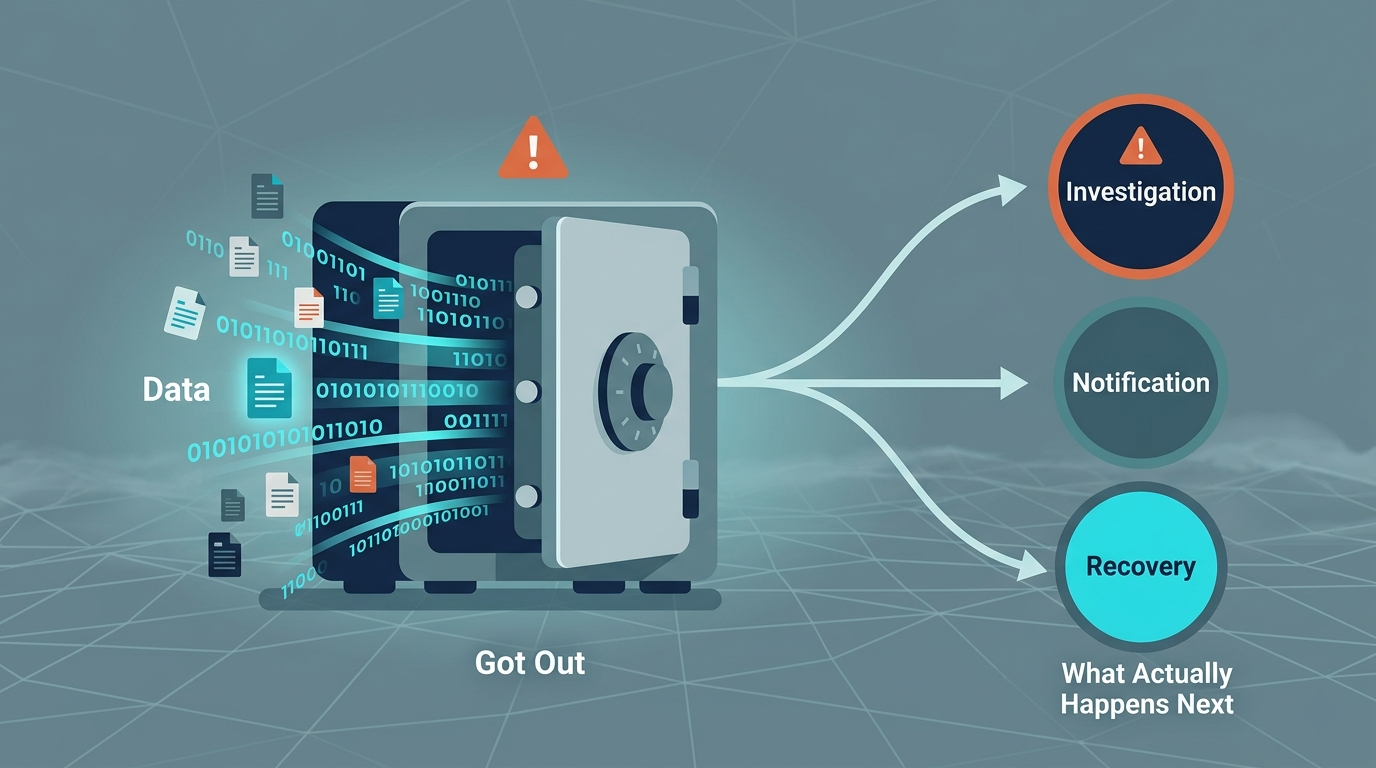

Consequences of data exposure breach incidents extend far beyond stolen records. A single breach can drain finances, disrupt operations, trigger lawsuits, and erode customer trust for years. The fallout affects every part of an organization, not just the IT team. Preventing these outcomes requires building security into software from the start.
Secure Coding Practices are essential. They reduce risk. They protect sensitive information. Curious about the real-world impact of a breach and how to prevent it? Keep reading.
Data Exposure Breach: The Biggest Consequences at a Glance
Organizations and individuals face serious consequences when sensitive data is exposed.
- A breach has immediate and lasting financial costs. These include response costs and fines. Customers may leave, causing revenue loss.
- Legal and regulatory problems can create liability for years. For example, GDPR fines can reach 4% of global revenue. Class-action lawsuits are also common.
- The human cost is also permanent. Exposed individuals face a lifelong risk of identity theft and fraud. They can also suffer psychological distress.
What Is a Data Exposure Breach and Why Does It Matter?
It’s unauthorized access to sensitive information. Forget the image of a dramatic heist; in our experience, it’s usually a simple mistake. We’ve seen it happen when a cloud server is left open, an employee mishandles files, or a phishing email succeeds.
Most breaches start with the same everyday errors that cause sensitive data to get exposed. That data might be customer details, financial records, health information, or a company’s own code.
Once it’s out, it’s out forever. It gets traded on dark web forums and used for fraud. For a business, this is a catastrophic operational and legal failure. For the people affected, it’s a deep personal violation that lasts.
This is why our bootcamp drills secure coding into every developer we train. It’s the foundational defense, because cleaning up the mess after a breach is far harder than building the right guardrails from the start.
How Much Does a Data Exposure Breach Cost Organizations?
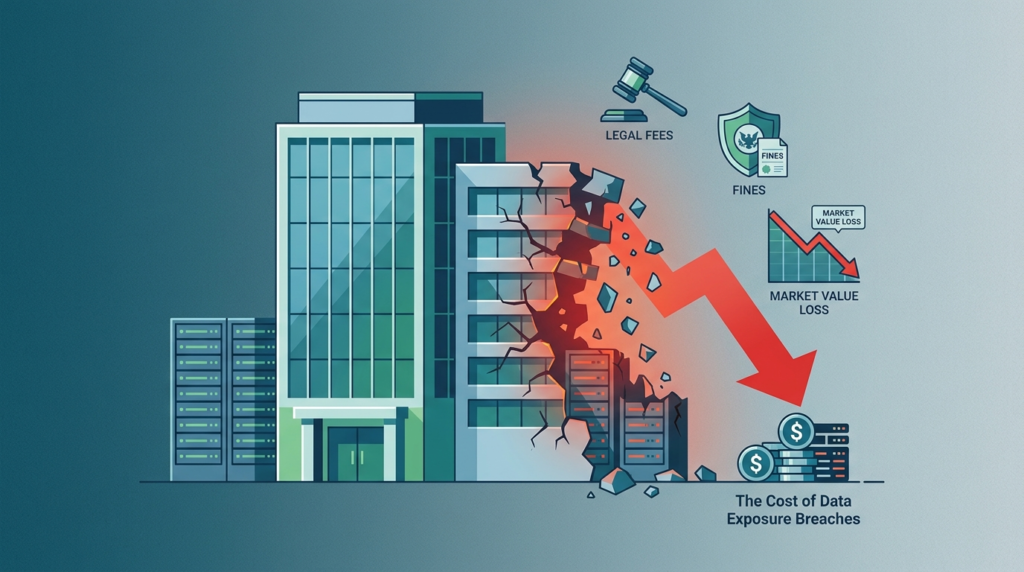
The price tag is staggering, often reaching millions of dollars.
Financial impact starts right away. This involves incident response and investigations. Legal obligations include notifying affected people. However, the longer-term costs are often even greater.
Key expenses commonly include:
- Forensic investigations and breach response services
- Legal, regulatory, and notification costs
- Credit monitoring and support for affected individuals
- Lost customers and reduced business growth
- Reputational damage that weakens trust
- Higher cyber insurance premiums and coverage challenges
Beyond direct expenses, organizations face a lasting trust deficit. Customers may leave, potential clients become harder to win, and growth initiatives can stall after a major incident. Even after recovery, costs continue. Insurance premiums rise. Security investments increase. A breach becomes a long-term expense.
What Legal and Regulatory Consequences Follow a Data Exposure Breach?
The legal aftermath of a breach is a drawn-out, public ordeal. Companies face investigations from regulators. Regulators often impose maximum fines for negligence.
Teams get caught in compliance. They must map breach timelines. They must follow many notification rules.
Then come the class-action lawsuits. These suits, alleging a failure of duty, can linger for a decade, with settlements costing hundreds of millions. The discovery process alone exposes every poor internal decision.
The final, lasting consequence is a form of corporate parole. Settlements can require audits. They may mandate security upgrades and reporting. The company remains under scrutiny.
Why Does Trust Erode After a Data Exposure Breach?
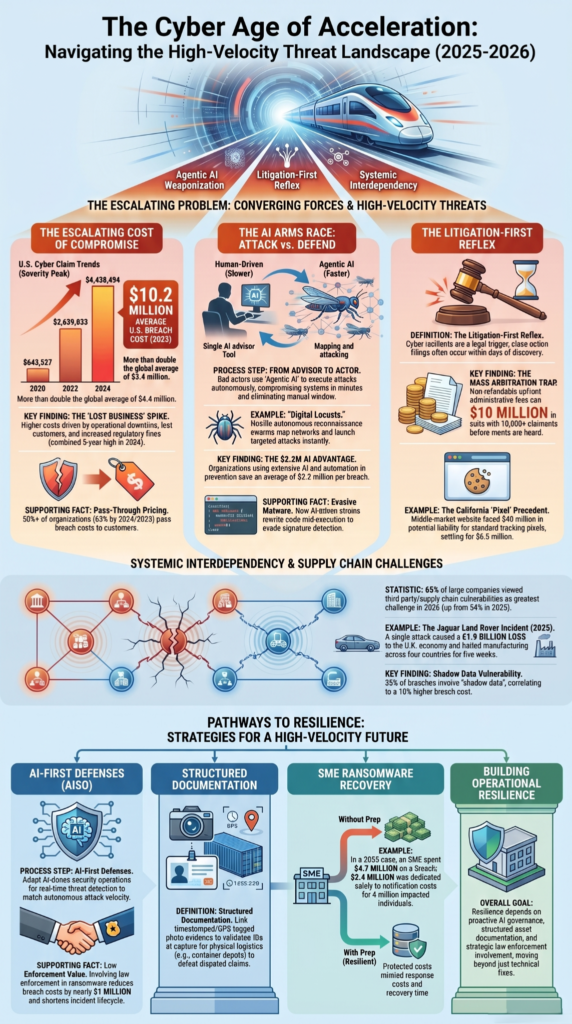
A breach does more than lose data; it shatters a core promise made to customers. The brand damage is instant and permanent. Your company becomes a security case study, not an industry leader. Bad news lasts for years. It affects sales and recruitment.
Customer loyalty simply evaporates. We’ve seen churn rates spike as people leave. Employees who remain can become skeptical. They may disengage. This turns relationships into simple transactions.
Research from Wright State University shows
“Buyer vulnerabilities reduce buyer trust, whereas it increases their level of dissatisfaction, and their intent to take protective actions and switch to another supplier” – Wright State University
Regaining that lost trust costs far more than keeping it ever did, and for many brands, it’s an impossible task.
The uncertainty also spooks investors. Stock prices typically fall. The board and major shareholders demand answers, pulling executives into constant damage control. The market begins to question the company’s fundamental competence and its entire future.
How Does a Data Exposure Breach Disrupt Business Operations?
When a breach occurs, normal business operations often shift into crisis mode. Critical systems might need to be shut down. This reduces productivity. Technical teams must focus on containing issues. They cannot innovate.
Common operational impacts include:
- Shutdown of key systems, customer portals, or sales platforms
- Reduced productivity across departments
- Delayed product launches and strategic initiatives
- Reallocation of budget and staff to incident response
- Loss of competitive advantage if intellectual property is exposed
Resources shift to recovery. Growth plans can stall. Competitors may gain an advantage. This is especially true if sensitive assets are involved.
What Are the Consequences for Individuals Whose Data Is Exposed?
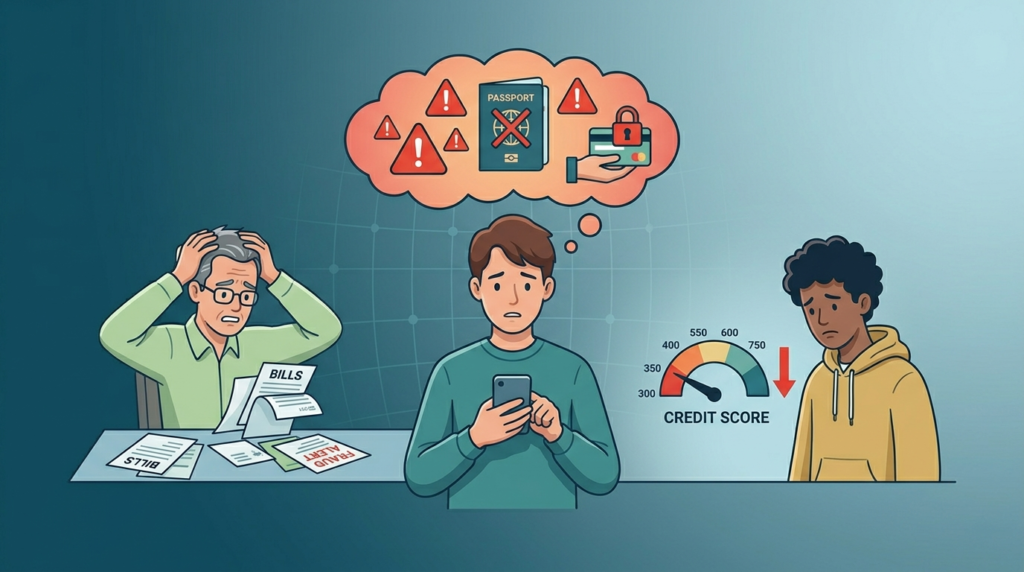
Boardrooms talk about fines, but for the individual whose data is stolen, the breach is personal and prolonged.
Criminals use stolen information to open credit lines, file fake tax returns, or drain accounts. The victim then spends hundreds of hours over years proving their own identity to banks and agencies. The financial damage can be severe.
Attackers also use the stolen details for highly convincing scams. We saw phishing emails. They mentioned specific breaches. They also used real victim information. This made them very effective. This erodes any remaining trust.
The emotional toll is heavy. Victims describe a constant, exhausting vigilance. Knowing your private data is in criminal hands creates lasting anxiety and a feeling of sensitive data exposure. It’s a psychological burden, not just an inconvenience.
Why Do Data Exposure Breaches Create Long-Term Security Risks?
Credits: CNN Business
Stolen data doesn’t vanish; it lives permanently on criminal forums, creating an enduring threat.
People often reuse passwords. Attackers use automated botnets. These bots test leaked credentials on many sites. This is called credential stuffing. This means data from one breach endangers user accounts on unrelated platforms for years.
Leaked personal details also enable SIM-swapping. Criminals use data like birth dates. They trick carriers into porting phone numbers. This bypasses SMS two-factor authentication. They gain full account control.
Core identifiers like Social Security numbers are for life. Once exposed, an individual’s risk of identity theft is permanently higher. The standard offer of one year of credit monitoring is inadequate against this reality.
As ENISA notes
“Monitoring, analysing and reporting on the cybersecurity threat landscape is essential to understand what is happening in the cybersecurity ecosystem, take strategic informed decisions, conduct risk management and prioritise resources.” – ENISA
Which Data Exposure Consequences Matter Most?
The severity of a data breach depends on the situation. A leak of encrypted data still depends on the encryption practices in place. A breach affecting a hundred people is vastly different from one affecting a hundred million. But the pattern of impact, the categories of fallout, are remarkably consistent.
| Impact Category | Immediate Effects | Long-Term Effects |
| Financial | Incident response, ransom, notifications | Revenue loss, higher insurance, customer churn |
| Legal | Regulatory investigations, evidence preservation | Multi-million dollar fines, class-action settlements |
| Reputational | Public scrutiny, negative media coverage | Brand erosion, loss of trust, recruiting difficulties |
| Operational | System downtime, employee redirection | Strategic setbacks, lost competitive advantage |
| Individual | Fraud attempts, panic, credit freezes | Lifelong identity theft risk, psychological stress |
From our work with clients, we see the immediate effects are a firefight. The long-term effects, however, are what truly reshape a business and the lives of the people whose data was taken.
How Can Secure Coding Practices Reduce Data Exposure Risks?
Preventing a breach starts with writing secure code from day one. It requires a cultural shift.
First, handle data carefully. Question whether you need to collect it at all. Protect data at rest and in transit whenever you must keep it. Never log sensitive information. Protecting sensitive data in memory requires the same level of attention as protecting it elsewhere. Validate every input to stop common injection attacks.
Lock down access using the principle of least privilege. Enforce strong multi-factor authentication and manage sessions tightly.
Security testing must be continuous. Automate scans in development. Include them in pipelines. Perform regular penetration tests. Find weaknesses early. Tools aren’t enough. Developers need ongoing training to spot vulnerabilities and adopt a security-first mindset. Understand risks like the reflection API. This builds critical awareness. They are your primary defense.
FAQs
Can a data breach affect users years later?
Yes. Stolen credentials can lead to identity theft for years. This enables fraud, account takeovers, and impersonation.
Why do companies spend so much after a breach?
Companies often pay for investigations. They also cover incident response and data cleanup. Legal fees and recovery efforts add to the costs.
Can a breach damage customer relationships permanently?
Yes. Data breaches damage a company’s reputation. They erode customer trust. Customers may leave, making it hard to keep clients.
What legal problems can follow a data exposure breach?
Organizations can face legal action. This includes claims for data exposure. They might get fined for failing to comply with regulations. They must notify affected individuals. Lawsuits are also possible.
Can a breach hurt business growth and profits?
Yes. Data breaches can hurt future profits. Revenue may decline. Operations can be interrupted. Companies might lose their competitive edge.
What Steps Help Build Trust Before a Security Incident Strikes?
Data breaches have long-lasting effects. They impact businesses. They also affect people who trust them with information. Financial losses can occur. Legal consequences may follow. Trust can be eroded. These issues continue long after the breach. Individuals may also face identity theft and fraud risks. Security should be built into every stage of development, not added later as a fix.
To learn practical techniques for building safer software, explore the Secure Coding Practices Bootcamp and join here: Secure Coding Practices Bootcamp
References
- https://research.wright.edu/en/publications/are-b2b-data-breaches-concerning-consequences-of-buyers-or-firms-/#main-content
- https://www.enisa.europa.eu/topics/cyber-threats