Skip to content
No results
  • Home
  • About Us
  • Blog
  • Bootcamp
  • Contact Us
Secure Coding Practices
  • Home
  • About Us
  • Blog
  • Bootcamp
  • Contact Us
Secure Coding Practices
  • Sanitizing Data to Prevent XSS

Rich Text Editor Sanitization Security: Key Risks 

Rich text editor sanitization security shown as a shield filtering script and iframe threats before safe HTML reaches a document editor. 

Rich text editor sanitization security prevents stored cross-site scripting (XSS) by removing unapproved HTML tags, attributes, and unsafe URLs before content reaches users. Browser-side filtering alone is not enough because attackers can bypass editor controls and submit malicious markup through…

  • Leon I. Hicks
  • November 13, 2026
  • Sanitizing Data to Prevent XSS

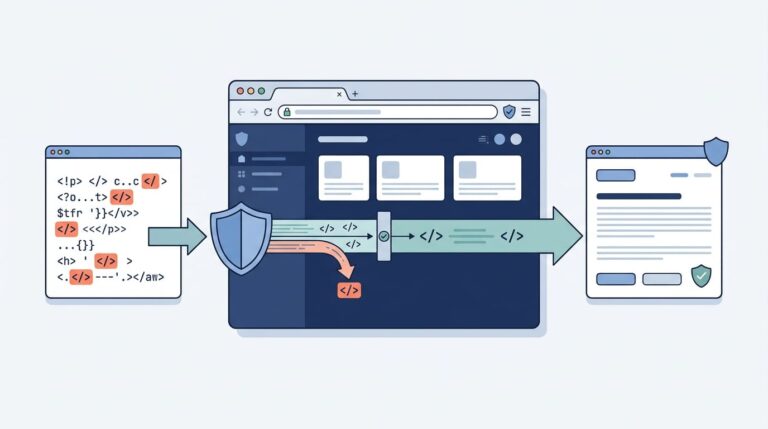
Preventing Stored XSS Input Sanitization: A Guide 

Diagram of preventing stored XSS input sanitization, with a security gateway stopping a script before the protected database and safe comment display.

Stored XSS prevention starts with server-side validation, context-specific output encoding, and proper HTML sanitization. Applications must treat all user-submitted data as untrusted, including content already saved in a database. Relying on input filtering alone leaves gaps that attackers may exploit…

  • Leon I. Hicks
  • November 12, 2026
  • Sanitizing Data to Prevent XSS

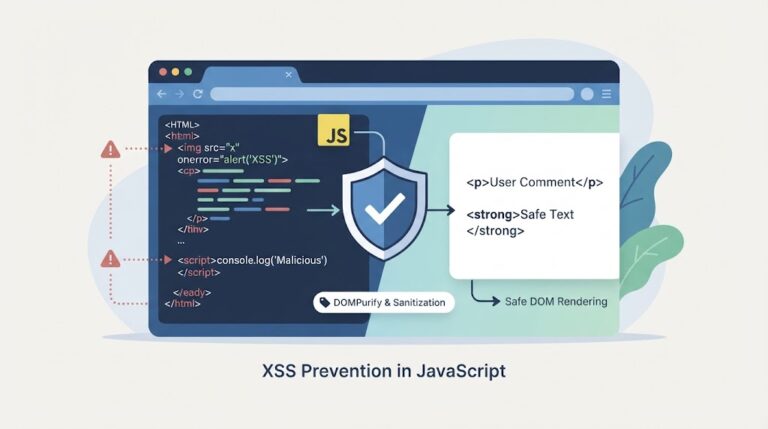
Sanitizing HTML Input Securely JavaScript: Best Practices

Shield filters malicious script tags while sanitizing HTML input securely in JavaScript, leaving only safe comment text.

Sanitizing HTML input securely JavaScript means using the right method for each type of content. Use textContent to display plain text and a trusted HTML sanitizer when user input needs to retain formatting. This helps prevent cross-site scripting (XSS) caused…

  • Leon I. Hicks
  • November 11, 2026
  • common pitfalls input sanitization techniques, Sanitizing Data to Prevent XSS

Common Input Sanitization Mistakes and How to Avoid Them

Laptop with XSS warning shield illustrating common pitfalls input sanitization techniques.

Input sanitization helps reduce security risks, but it won’t stop every attack on its own. Server-side validation, parameterized queries, and context-aware output encoding are still necessary. The OWASP Foundation highlights common filtering mistakes that can leave web applications open to…

  • Leon I. Hicks
  • November 10, 2026
  • using sanitization libraries effectively code, Sanitizing Data to Prevent XSS

How to Use Sanitization Libraries to Write Safer Code

Developer practicing using sanitization libraries effectively code in HTML beside a green security shield.

Sanitization libraries help developers render untrusted HTML safely, but they can’t stop every injection attack. A 2023 study from Technische Universität Braunschweig found that 9 of 11 tested HTML sanitization libraries were vulnerable to mutation cross-site scripting (mXSS) bypasses under…

  • Leon I. Hicks
  • November 9, 2026
  • input sanitization vs output encoding, Sanitizing Data to Prevent XSS

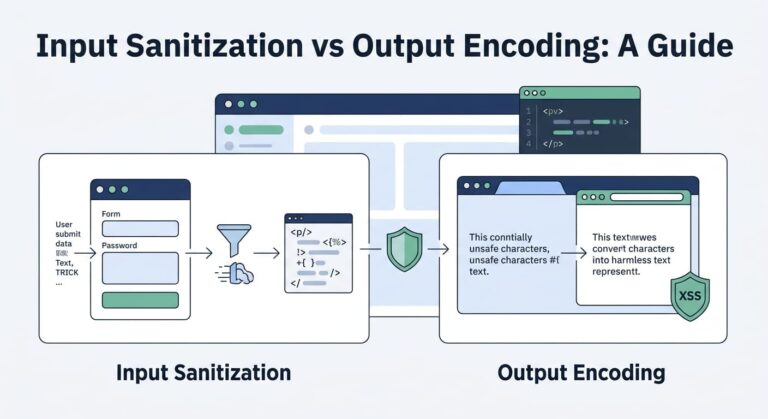
Input Sanitization vs Output Encoding: A Guide

Diagram comparing input sanitization vs output encoding, showing how each protects web forms from unsafe data.

Input sanitization and output encoding serve different security purposes. Sanitization changes data based on a defined policy, while encoding makes data safe for a specific output context. OWASP recommends context-aware encoding to reduce cross-site scripting (XSS) risks. Input validation also…

  • Leon I. Hicks
  • November 8, 2026
  • how sanitization prevents xss attacks, Sanitizing Data to Prevent XSS

How Sanitization Prevents XSS Attacks Safely

Diagram showing how sanitization prevents xss attacks by filtering untrusted input into safe output.

Cross-site scripting (XSS) lets attackers inject malicious scripts into web pages when browsers treat untrusted data as executable code. HTML sanitization helps block these attacks, but it’s not enough on its own. Developers also need contextual output encoding and safe…

  • Leon I. Hicks
  • November 7, 2026
  • Sanitizing Data to Prevent XSS, Input Validation & Sanitization

Sanitizing Data to Prevent XSS: A Practical Guide

Sanitizing Data to Prevent XSS: a shield filters malicious code tags before safe content reaches the browser.

Cross-site scripting (XSS) prevention starts with validating untrusted input, sanitizing HTML, and encoding output based on its context. Each step helps stop attackers from injecting malicious scripts into web pages. OWASP recommends using these controls alongside secure rendering practices to…

  • Leon I. Hicks
  • November 6, 2026
  • building custom validation rules securely

Building Custom Validation Rules Securely That Actually Protect Your App

Developer writing code for building custom validation rules securely against common vulnerabilities. 

Building custom validation rules securely help your application handle business needs that basic validators cannot cover. But they can also create security risks when they replace built-in protection or trust user input too quickly. Secure Coding Practices focuses on using…

  • Leon I. Hicks
  • November 5, 2026
  • Security Considerations Choosing Framework

Security Considerations Choosing Framework

A developer reviewing security considerations choosing framework options for a new web project. 

Choosing a software framework is not only about features, speed, or ease of development. Security considerations choosing framework should also be part of the decision from the start. A secure framework can reduce common risks, provide useful security tools, and…

  • Leon I. Hicks
  • November 4, 2026
Prev
1 2 3 4 5 … 60
Next
Secure Coding Practices

Join a thriving global community of developers dedicated to writing cleaner, safer, and more resilient code. Whether you're just starting out or leveling up your skills, this bootcamp gives you the practical knowledge and hands-on experience needed to identify vulnerabilities, apply secure coding principles, and build software that stands up to real-world threats.

Join the Next Bootcamp →

  • About us
  • Blog
  • Bootcamp
  • Disclaimer
  • Contact us
  • Privacy Policy
  • Terms & Conditions

Copyright © 2026 SecureCodingPractices.com — All rights reserved.