
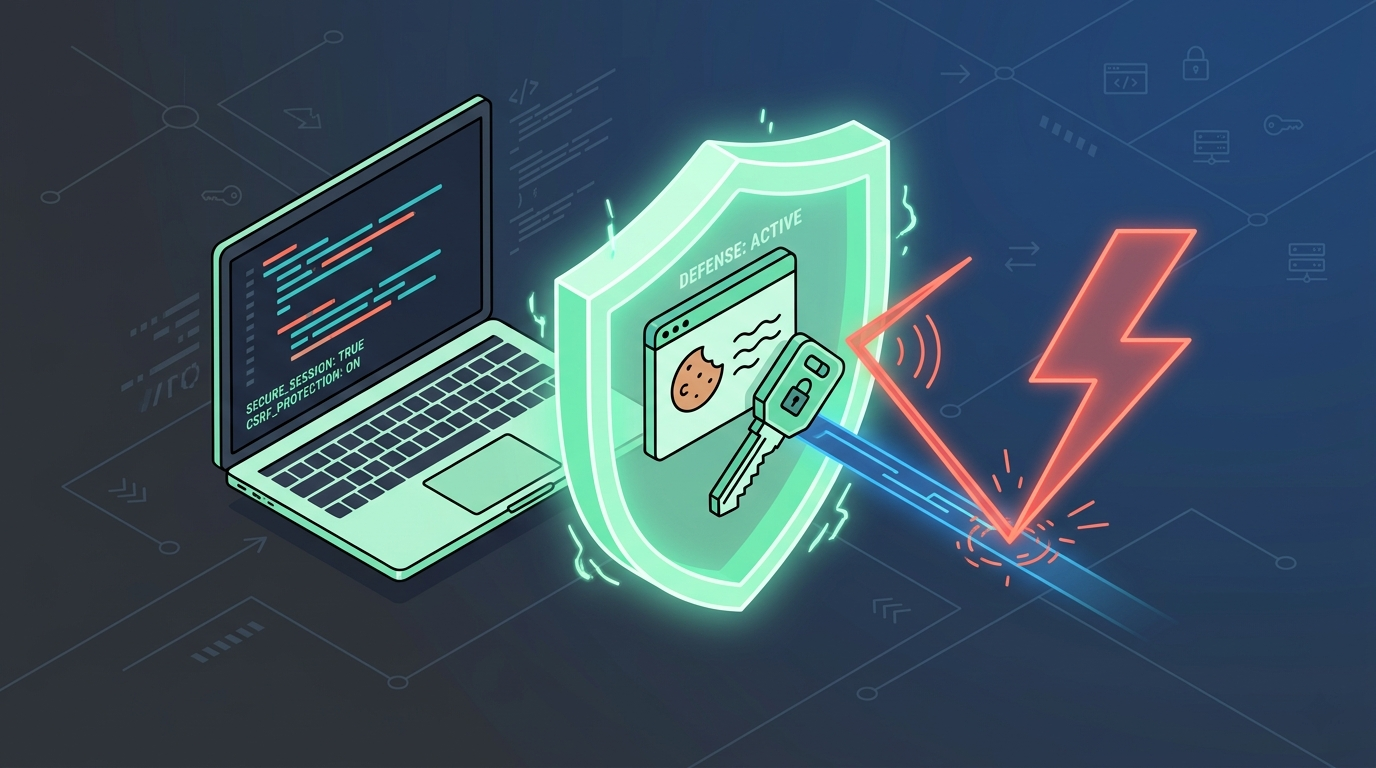

Learn preventing session hijacking techniques that protect web applications from modern session theft. Go beyond basic cookie flags and implement defenses that work against real-world attacks.
Stop session hijacking by securing the token’s entire lifecycle: its creation, storage, transmission, validation, and final expiration. This is your primary defense. Standard secure cookie flags can’t stop a user from giving their token away in a phishing attack. Once that token is stolen, an attacker is indistinguishable from a legitimate user. Generic security recommendations are no longer sufficient. The guide below provides a workable defense strategy for modern threats. Read it to build your defense.
Session Security in a Snapshot
Modern attacks target authenticated sessions, not just login credentials. Therefore, protecting the whole session lifecycle is vital. These key points capture the most important defenses discussed throughout this guide:
- HTTPS and secure cookie attributes are your absolute baseline, but they won’t stop an infostealer scraping a local browser database.
- Modern session hijacking often bypasses multi-factor authentication entirely by stealing the token after login.
- A true defense requires layered controls: short session lifecycles, server-side validation, and continuous monitoring for anomalies.
What Preventing Session Hijacking Techniques Must Defend Against Today
Forget the textbook definition. Today, session hijacking is less about cracking your code and more about infecting the user’s device.
At our bootcamp, we stress this reality. Think about that “free” software download or a “View Document” link. That’s often the entry point. Attack paths involving remote file inclusion flaws can create similar opportunities for malicious code execution before session data is stolen. Infostealer malware runs with the user’s own access, quietly copying every stored session cookie from the browser’s database. It bypasses your HTTPS and secure flags entirely.
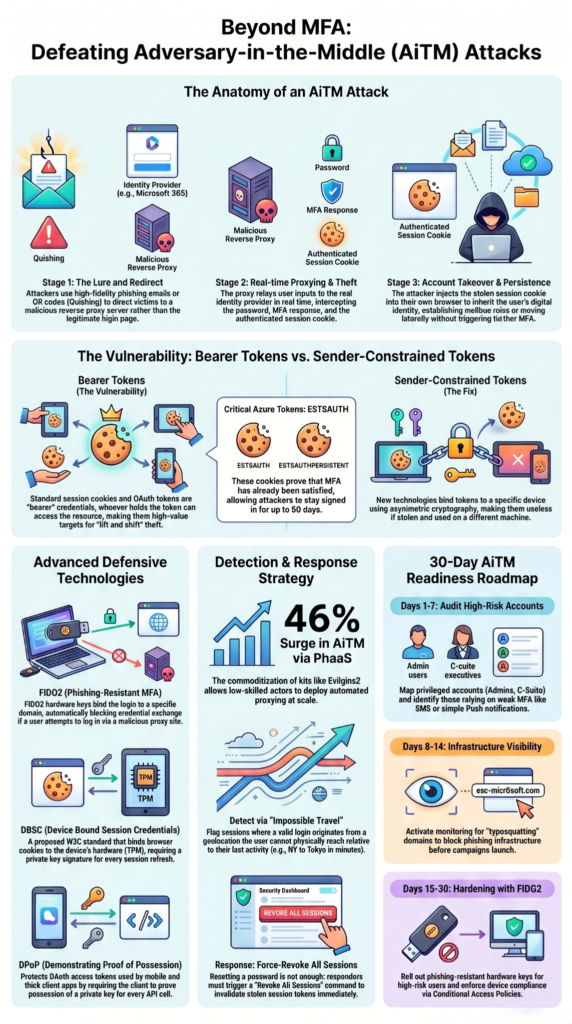
We also see sophisticated Adversary-in-the-Middle (AitM) attacks. A user logs into a perfect fake page, even completing MFA. Tools like Evilginx proxy the login, steal the real session token, and the attacker gets a live, authenticated connection. Changing the password doesn’t help; the stolen session is still valid.
This is exactly what modern preventing session hijacking techniques must address. Preventing session hijacking now means defending your own code while operating as if the client environment could already be compromised.
Research from ACM Digital Library shows
“Session hijacking attacks still affect thousands of users of web services every year” – ACM Digital Library
Core Preventing Session Hijacking Techniques Every Developer Should Implement
Credits: Mr Code
We can’t ignore secure coding basics. They’re the foundation we control. If this layer fails, no other defense holds up. Many session theft incidents still begin with broken authentication weaknesses that expose users to unnecessary account takeover risks.
Force HTTPS for every single request, not just login. Deploy HSTS so browsers never attempt HTTP. Then, set the Secure flag on all session cookies. This seems obvious, but we’ve seen tokens transmitted in clear text on mixed-content pages. It still happens.
As noted by FIDO Alliance
“HTTP messaging protocol and required browser and server behaviors to result in binding the use of application session cookies to the user’s computing device.” – FIDO Alliance
Make cookies invisible to client-side scripts with the HttpOnly flag. It stops basic XSS theft dead. An injected script can’t just grab document.cookie and send tokens out. This forces attackers toward more complex, less reliable methods.
Use the SameSite attribute, set to Lax or Strict. This controls cookie sending on cross-site requests, crippling many CSRF attacks. A logged-in user can’t be tricked into a hidden request if their session cookie doesn’t ride along.
Here’s what teams often miss: logout must destroy the session server-side. Don’t just clear the client cookie. Find that session in your store Redis, your database and delete it. Otherwise, the token remains valid until it times out, and a hijacker can keep using it.
When the Basics Aren’t Enough: Defending Against the Modern Playbook
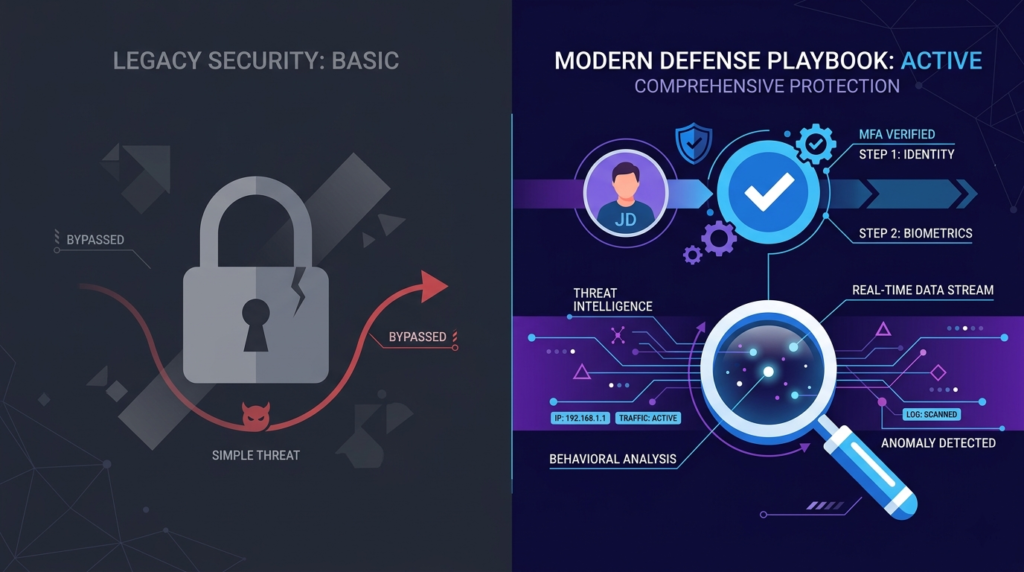
You have the foundation. But modern attacks bypass traditional MFA like push notifications or SMS codes. If the attack is a stolen session cookie or an AitM proxy, the attacker is already past authentication. The defense has to live inside the session itself.
We teach continuous validation. Implement checks on sensitive requests. Is the User-Agent consistent? Did the IP geo-location jump from New York to London in five minutes? These signals can trigger step-up authentication. Be careful with IP binding, though. Mobile users switch networks constantly. We’ve seen teams cause massive false positives by being too strict.
For high-value apps, the industry is moving to device binding. Cryptographically tie a session to a key in the device’s TPM. Even if the cookie is stolen, it can’t be replayed elsewhere. The token becomes useless data. Platforms are starting to support this natively.
Adopt a zero-trust mindset for sessions. Don’t trust a token just because it’s valid. Verify the context continuously. Organizations often strengthen these controls through separation of duties practices that reduce the chance of a single compromised account causing widespread damage.
- Integrate with EDR tools to check device health.
- Use conditional access to block sessions from unmanaged devices.
- Monitor for behavioral anomalies, like sudden bursts of data export.
Advanced Controls for Session Protection
| Security Control | Purpose | Benefit |
| Device Binding | Ties sessions to a trusted device | Prevents token replay on another machine |
| Continuous Validation | Checks session context during use | Detects suspicious activity quickly |
| Short-Lived Tokens | Limits token validity periods | Reduces attacker dwell time |
| Conditional Access | Evaluates device and user risk | Blocks high-risk session activity |
The goal is to make a stolen token useless, fast. Short session lifespans help. Why let a token live for days? Keep access tokens short-lived (minutes) and use a separately guarded refresh token you can revoke instantly.
Building a Resilient Session Architecture
The backend choices for your session data have major security implications.
Many developers like JWTs for being stateless. But that’s also the problem. You can’t revoke them easily. If a token is stolen, you wait for its expiration. To fix this, our bootcamp teaches a hybrid approach. Use short-lived JWTs (10-15 minutes) for access, but pair them with a server-side refresh token. You can kill that refresh token instantly, cutting off the attacker’s ability to get a new access token. It adds some state, but it’s a necessary trade-off we make for control.
Your session store must be fast and reliable. Redis is common. Lock it down so only your app servers can reach it, ideally in a private network. Log every session creation, validation, and destruction. Feed these logs into your SIEM. We look for patterns. Multiple active sessions for one user from different continents? That’s a major flag.
Your architecture must assume a breach. Assume a token will leak. The goal is to limit the blast radius and the time it’s useful. This is why server-side control is non-negotiable. The client environment is hostile. You make the rules on your server.
FAQs
How can I improve session token security against account takeover attacks?
You can enhance session token security. Use randomized session tokens. Ensure session identifiers are unpredictable. Implement strict server-side session validation.
Which cookie settings are most effective for session hijacking prevention?
To prevent session hijacking, enable HTTPS-only cookies. Use the secure cookie attribute. Employ the HttpOnly flag. Set the same-site cookie attribute.
Why should applications use regenerating session ID after authentication?
Regenerating session IDs prevents session fixation. This replaces old identifiers. It limits opportunities for token abuse.
What session timeout configuration offers the best balance of security?
A strong session timeout configuration is important. Combine idle session timeouts with absolute session timeouts. This reduces exposure risks.
How can security teams identify stolen or abused sessions quickly?
Security teams can detect suspicious activity. They can do this through real-time session monitoring. Session behavior monitoring also helps. Anomaly detection and session audit logging are useful tools.
Session Security Requires Constant Verification
Preventing session hijacking techniques are not a one-time task, it’s an ongoing process that extends far beyond login. Strong defenses require secure coding. They also need short-lived session tokens. Continuous monitoring is important. Rapid session revocation is key when suspicious activity appears. Treat every session as something to be constantly validated. This reduces risk. It also better protects user accounts.
For developers looking to strengthen authentication, session management, and application security skills, the Secure Coding Practices Bootcamp offers hands-on training and practical guidance to help build more secure software from day one.
References
- https://dl.acm.org/doi/10.1007/978-3-032-07894-0_7
- https://fidoalliance.org/white-paper-dbsc-dpop-as-complementary-technologies-to-fido-authentication/?query-cdbd12d0-page=14&cst