
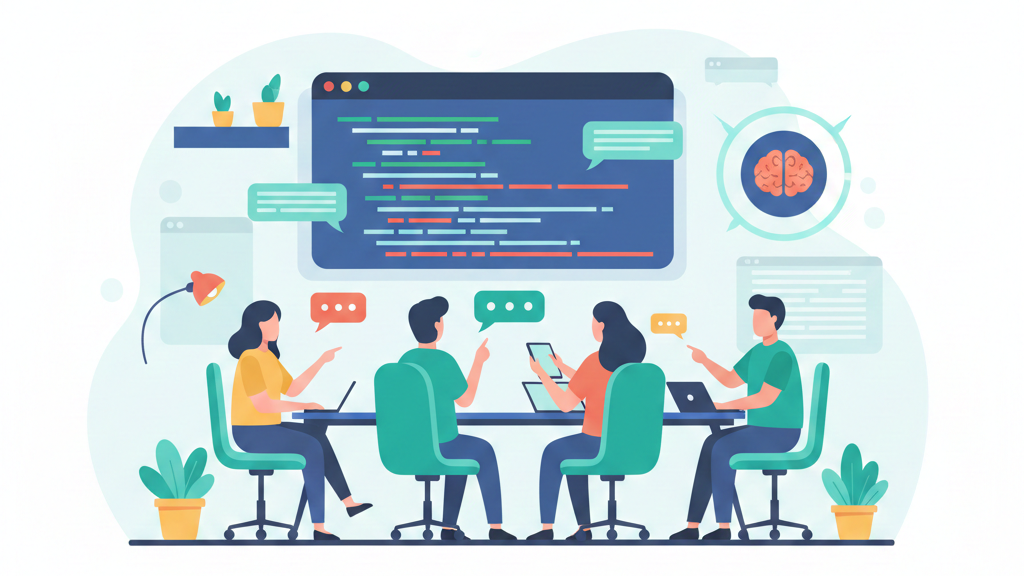

AI doesn’t replace your team; it changes what you talk about. Instead of a tool for policing code, it becomes a silent partner that handles routine reviews and ticket updates. This frees people to argue over system design, not syntax. Early data shows it cuts down on post-launch bugs.
But its effect on team culture is bigger, it can cause resentment or build a tighter, more strategic group. The outcome depends entirely on your implementation. We’ll look at the pros, the pitfalls, and how to set up a process that improves your team. See how it impacts team collaboration and code reviews today.
What This Means for Team Collaboration and Code Reviews
- AI shifts human focus from syntax to intent, automating routine checks to free up time for high-level design and security discussions.
- Over-reliance creates “ghost reviews” and skill gaps, where teams rubber-stamp AI output without deep understanding.
- A hybrid workflow with clear human gates maintains mentorship and ensures Secure Coding Practices are never automated away.
The New Team Dynamic: AI as a Silent Third Wheel
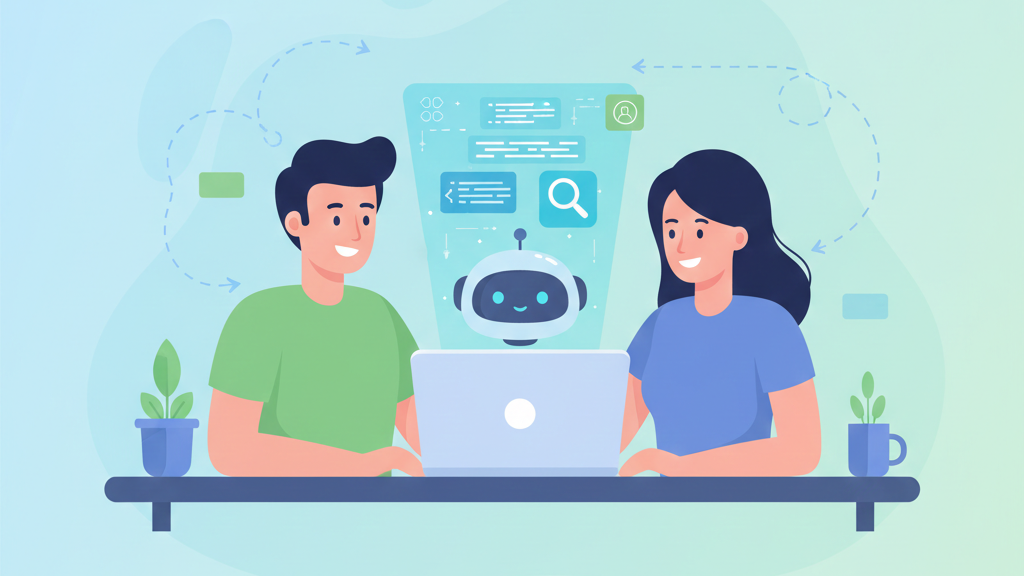
Our collaboration used to happen in meetings and pull requests. Now there’s a constant third presence. AI tools watch our Jira tickets, predict bottlenecks, and even summarize stand-ups for teammates overseas.
“Implementing secure coding practices causes developers to share and seek out secure coding knowledge, driving better communication amongst developers, developers and management, and the development team and their stakeholders. 60% of developers surveyed believe that employing secure code practices has increased their communication with other developers.” – Secure Code Warrior Blog
It’s making communication more efficient. Sentiment analysis can flag a heated thread, suggesting we jump on a call. Real-time translation helps global teams understand each other.
We’ve noticed a cost to this constant mediation, though. That quick, clarifying chat by a desk gets replaced by an async thread that an AI summarizes for everyone. A senior developer’s offhand comment, the kind that often sparks a real breakthrough, might get lost. The collaboration feels more streamlined, but also thinner.
The risk isn’t that AI breaks the team, but that it creates a significant impact on developer skills and careers by making our interactions so transactional the creative spark dims.
Transforming the Code Review Grind
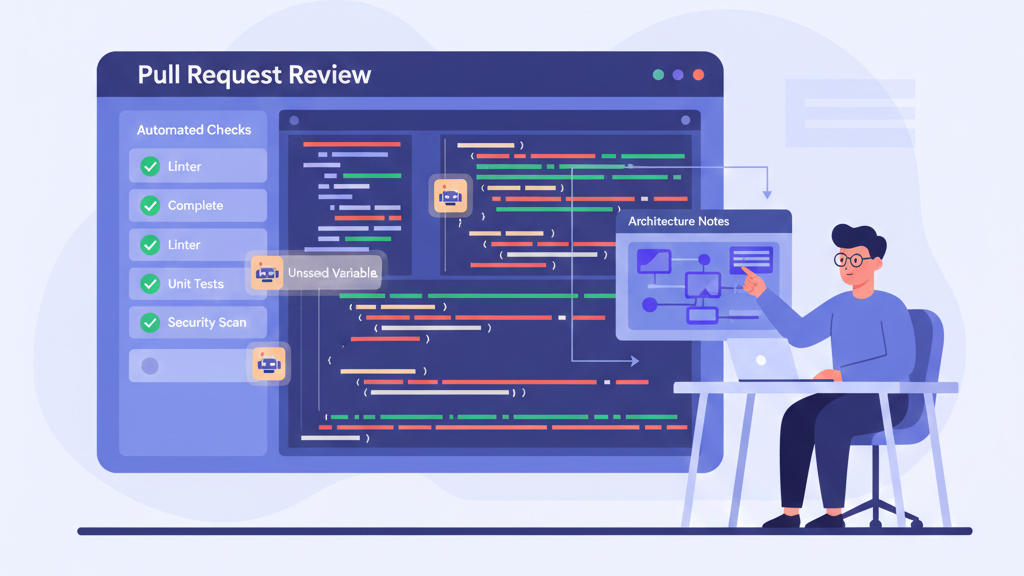
This is where you really feel the change. AI now acts as a relentless first-pass reviewer, scanning every pull request for syntax errors and style violations before a human sees it. It’s a “pre-review” that filters out the noise.
In our teams, review cycles have sped up by 30% or more. Senior engineers, who were constantly bogged down pointing out missing semicolons, are suddenly free to explore how senior developers can leverage this workflow to focus on high-level architecture instead.
Their comments shift from “fix your formatting” to “explain your concurrency model” or “how does this service handle failure?” The focus moves from the how of the code to the why behind it. It’s a profound upgrade, turning a basic quality gate into a real discussion about architecture.
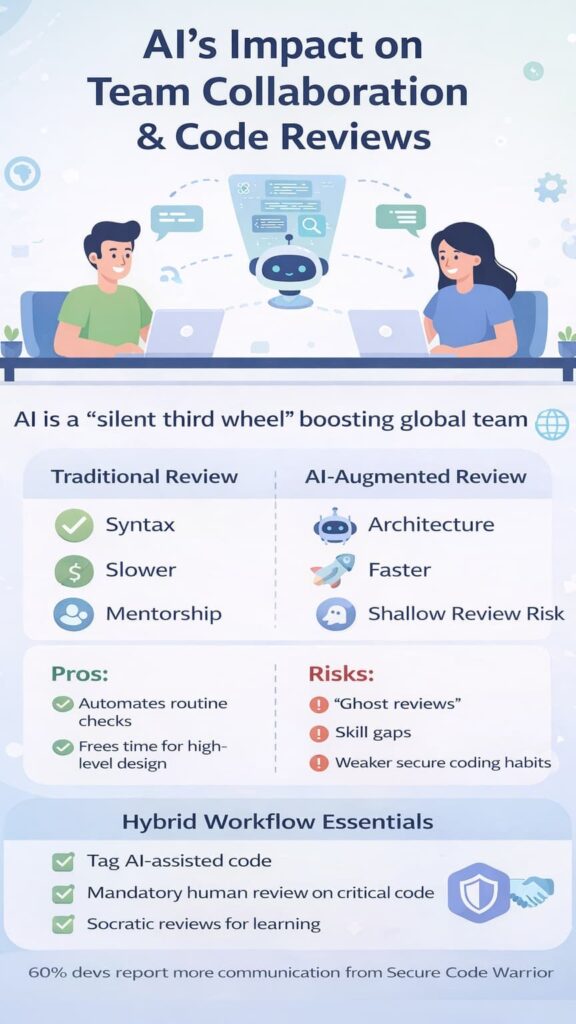
| Aspect | Traditional Human Review | AI-Augmented Review |
| Primary Focus | Syntax, style, basic logic. | Architecture, security, scalability intent. |
| Speed | Bottlenecked by reviewer availability. | Streamlined, with AI handling routine checks. |
| Knowledge Transfer | Strong, but ad-hoc and mentor-dependent. | Risk of becoming superficial (“LGTM” culture). |
| Defect Catch Rate | High variability, prone to human fatigue. | Consistent on common issues, freeing humans for complex bugs. |
The table shows the trade-off. You gain consistency and speed. You risk losing the depth of human mentorship if you’re not deliberate.
The Hidden Risks to Team Health and Code Safety
AI speeds up reviews fast, we saw it across our training teams almost immediately. But after the early wins, new issues started surfacing.
“When experienced developers review code with security in mind, they can then teach secure coding practices to the entire team. Developers can then begin to see vulnerability patterns and write safer code by default… In these cases, it’s easier for human reviewers to distinguish real vulnerabilities from tool noise, saving time and preventing alert fatigue.” – SecureFlag
One major problem is ghost reviews. When AI marks everything clean, people approve pull requests without truly reading the code. Edge cases slip through, and the learning moments that build strong developers quietly disappear.
Skill gaps follow close behind. Many junior engineers can ship more code than ever, which raises questions about whether learning to code from scratch is still necessary when they struggle to explain how failures are handled.
Common risks we now watch for:
- Logic hallucinations that fail in real conditions
- Review overload from too many AI-assisted PRs
- Context blindness around business intent
How It Impacts Team Collaboration and Code Reviews. AI isn’t dangerous on its own. Weak human oversight is.
Building a Hybrid Workflow That Actually Works
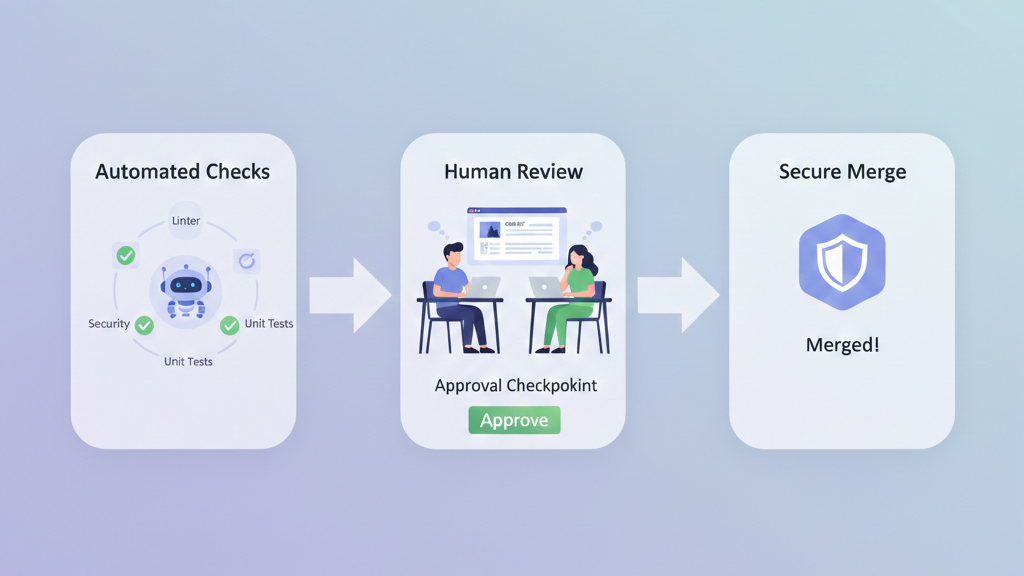
Strong teams don’t pick AI or humans, they use both with clear boundaries. We’ve found that real success comes from process, not tools alone. Human judgment always stays in charge.
One rule we use is AI disclosure. When code is heavily suggested or written by AI, it gets tagged in the pull request. This helps reviewers slow down and look closer where it matters. Another guardrail is mandatory human approval for anything touching security, data, or core systems. AI feedback supports the process, but never replaces responsibility.
The biggest improvement came from what we call Socratic reviews. Instead of fixing code, seniors ask juniors to explain choices, edge cases, and risks. It turns every review into a learning moment and keeps secure coding habits strong.
Hybrid workflow essentials:
- Tag AI-assisted code
- Keep humans reviewing critical paths
- Test edge cases manually
- Always ask “why”
FAQ
How does AI change the code review process for modern software development teams?
AI reshapes the code review process by scanning source code for style issues, code quality risks, and common coding standards violations. It supports peer reviews with static analysis, automated tests, and faster review cycles. Teams see shorter review time, clearer review comments, and stronger feedback loops across the software development process.
Can AI improve collaboration between team members during pull request reviews?
Yes. AI helps team members stay aligned by organizing review requests, tracking review progress, and highlighting code diffs clearly. It reduces review workload, flags merge conflicts early, and supports knowledge sharing during review sessions. This improves review dynamics and keeps the development workflow moving smoothly without bottlenecks.
What role does AI play in maintaining coding standards and code quality?
AI enforces code standards through automated style checking, linting software, and static analysis tools. It catches white space issues, style rules violations, and risky coding practices before PR approvals. This creates a cleaner code base, improves merge quality, and ensures consistent coding standards across the entire software development lifecycle.
How does automation affect review efficiency and review cycles?
Automation tools speed up review cycles by running automated tools inside CI/CD pipelines and continuous integration workflows. They reduce manual review workload, shorten change lead time, and improve review efficiency. Teams can track review metrics, review patterns, and feedback loops to spot delays and continuously improve the review process.
Forging Stronger Collaboration
Ultimately, AI’s effect on your team is a choice. A clumsy rollout breeds friction and skill gaps. Done right, it strips away the tedious work that annoys everyone, letting your team focus on what actually matters: designing secure, resilient systems together.
The technology keeps advancing, but building a strong team culture is still a human job. To refine your own process, get expert guidance.
Schedule a free consultation to build a tech stack that works.
References
- https://www.securecodewarrior.com/article/ship-quality-code-faster-with-confidence-the-transformative-power-of-secure-coding-practices
- https://blog.secureflag.com/2026/02/13/secure-code-review-in-practice/