
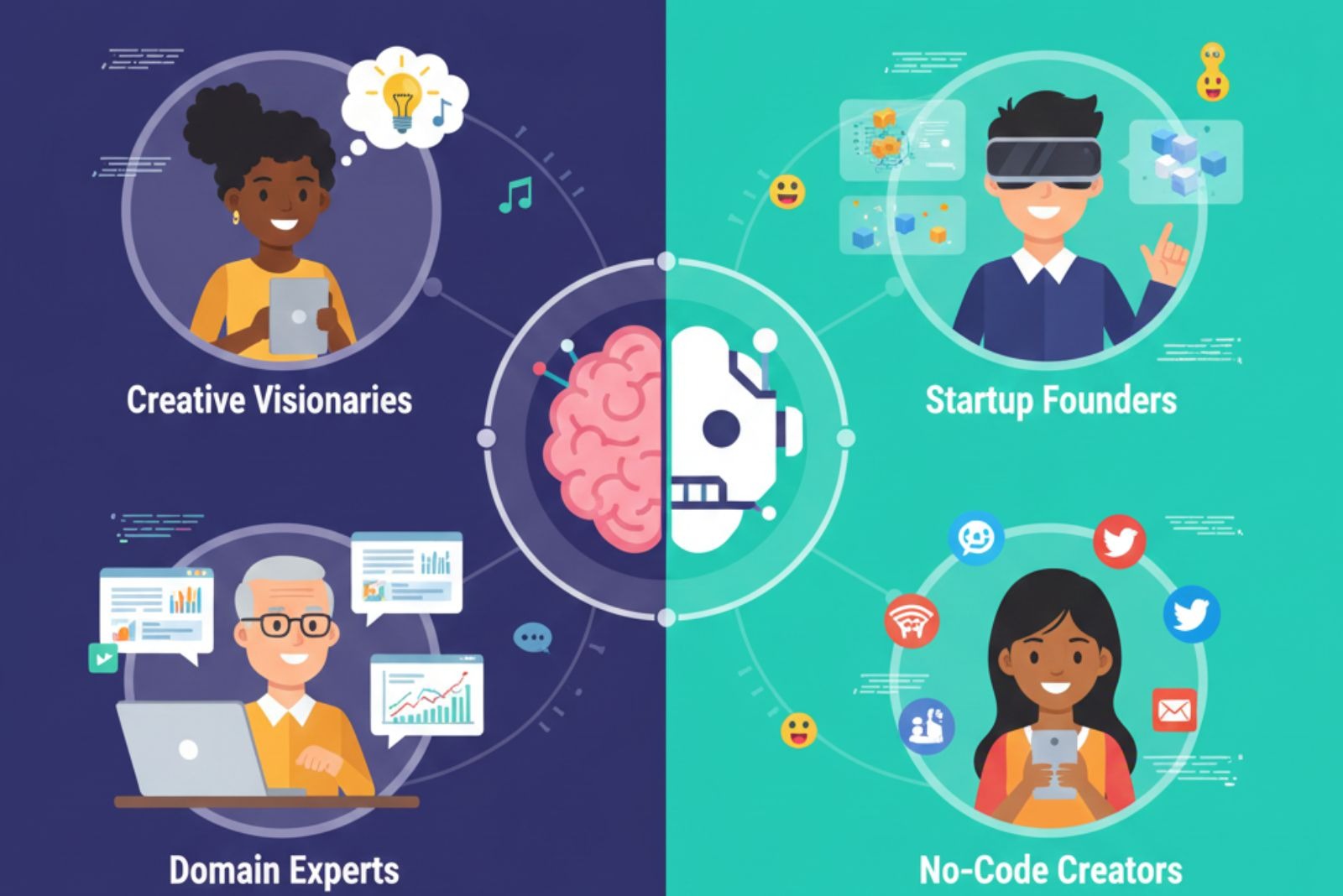

You are the ideal user for vibe coding if you care more about getting a working prototype fast than writing perfect code. This style of AI-assisted development, where you describe your vision and the AI handles the implementation, is finding its strongest foothold among specific groups.
These are the people who see code not as an end goal, but as a means to a rapid, tangible outcome. If you’ve ever felt stalled by technical barriers or just want to build things faster, you might already be part of vibe coding’s core audience. Keep reading to see who is the ideal user for vibe coding
Key Takeaways
- Vibe coding works best for people who need speed over perfection
- Non-technical users and startup teams benefit the most
- It’s perfect for prototypes but not for complex systems
Who Thrives with Vibe Coding
We’ve been watching this space closely, and it’s clear vibe coding isn’t for everyone. But for the right person, it’s a game changer. It’s like having a super-fast draft mode for software. You sketch the idea, the AI fills in the details. The people who benefit most are those who were previously blocked from building altogether.
The numbers tell an interesting story. Most vibe coding users aren’t traditional developers. They’re regular people who need to create something specific.
A marketer needing a landing page. A teacher creating a classroom tool. A small business owner tracking appointments. For them, vibe coding removes the biggest hurdle: knowing how to code.
The Non-Technical Creator
This group represents the heart of the vibe coding movement. These are people who have great ideas but lack programming skills. Before vibe coding, they had two options: learn to code (which takes months or years) or hire someone (which costs money). Now they have a third option: describe what they want and get a working version.
The AI acts as a translator between human language and computer code, following patterns similar to the fundamental principles of vibe coding, but it works. For a personal project or quick test, that’s often enough. This is putting software creation power into new hands.
Common users in this category include:
- Marketers testing landing page designs
- Designers creating interactive mockups
- Teachers building custom learning tools
- Small business owners making simple apps
- Artists creating digital art projects
The immediate satisfaction keeps them coming back. They go from idea to working product in hours instead of months. That quick win encourages more experimentation and creativity.
The Speed-Focused Builder
Some users know how to code but choose vibe coding for one reason: speed. When you’re racing against deadlines or trying to validate business ideas quickly, traditional development can feel too slow. Vibe coding cuts through the slowdowns.
Startup founders are prime examples. They need to test ideas fast and pivot quickly based on user feedback. Spending weeks building a perfect version of something users might reject is risky. Building a rough version in days is smarter.
This approach works well for:
- Creating minimum viable products (MVPs)
- Testing new feature concepts
- Building internal tools quickly
- Hackathon projects
- Portfolio pieces for job seekers
For these users, the trade-off is clear. They accept less-perfect code in exchange for much faster results. If the idea proves successful, they can always rebuild it properly later.
How Different Groups Use Vibe Coding
Junior Developers Learning Faster
For new programmers, the learning curve can feel steep. There are so many rules and syntax details to remember. Vibe coding helps them focus on the important parts first.
Instead of getting stuck on small errors, they can concentrate on the big picture. They learn how applications are structured by describing what they want to build, focusing more on the overall architecture rather than the tiny details, an approach in AI helps developers stay focused on the big picture
Then they study the code the AI generates to understand how it works. It’s like having a tutor who shows you examples instead of just explaining theory. They learn by doing and seeing results immediately.
The 25-34 Age Group Leading Adoption
One interesting pattern emerges around age groups. People between 25 and 34 are adopting vibe coding more than any other group (1). They’re old enough to have professional experience but young enough to embrace new tools quickly.
This group often serves as a bridge in organizations. They understand both traditional methods and new approaches. They’re comfortable enough with technology to experiment but experienced enough to know what matters in business settings.
They’re using vibe coding for:
- Workflow improvements at their jobs
- Personal side projects
- Helping non-technical colleagues build tools
- Testing new business ideas
Their adoption is important because they’re showing how these tools can fit into professional environments. They’re making vibe coding more mainstream.
Situations That Need Traditional Approaches
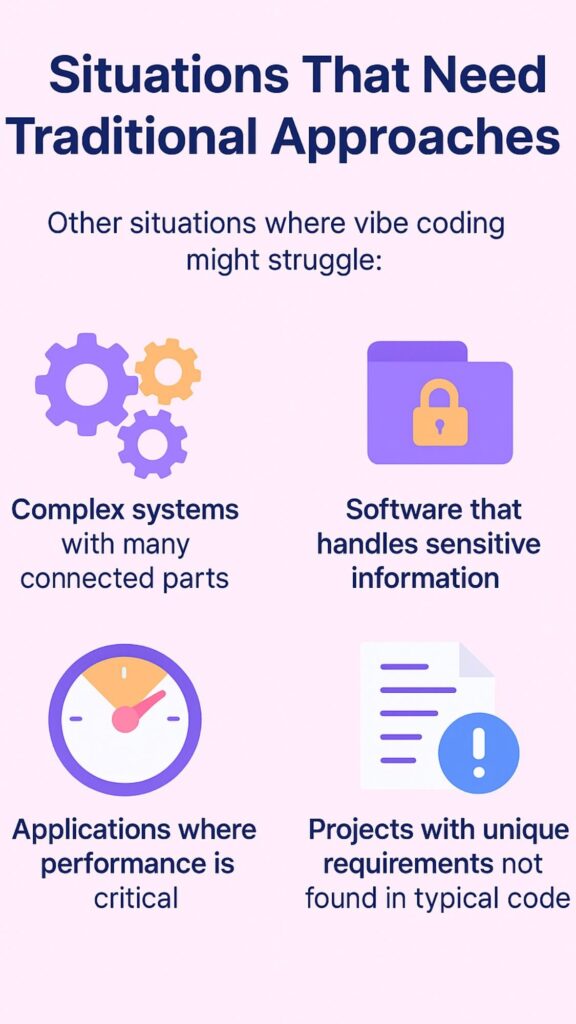
Vibe coding excels at quick prototypes and simple tools. But some situations still need careful, human-written code. Knowing the difference saves time and prevents problems.
Regulated industries like banking and healthcare have strict rules about software. The code must meet specific security standards. While AI can help, humans need to verify everything works correctly. This verification can take as long as writing the code from scratch.
Other situations where vibe coding might struggle:
- Complex systems with many connected parts
- Software that handles sensitive information
- Applications where performance is critical
- Projects with unique requirements not found in typical code
Senior developers often prefer writing code themselves for important projects. They need to understand every detail for troubleshooting and future improvements. AI-generated code can be harder to debug and modify later.
Understanding the Limits
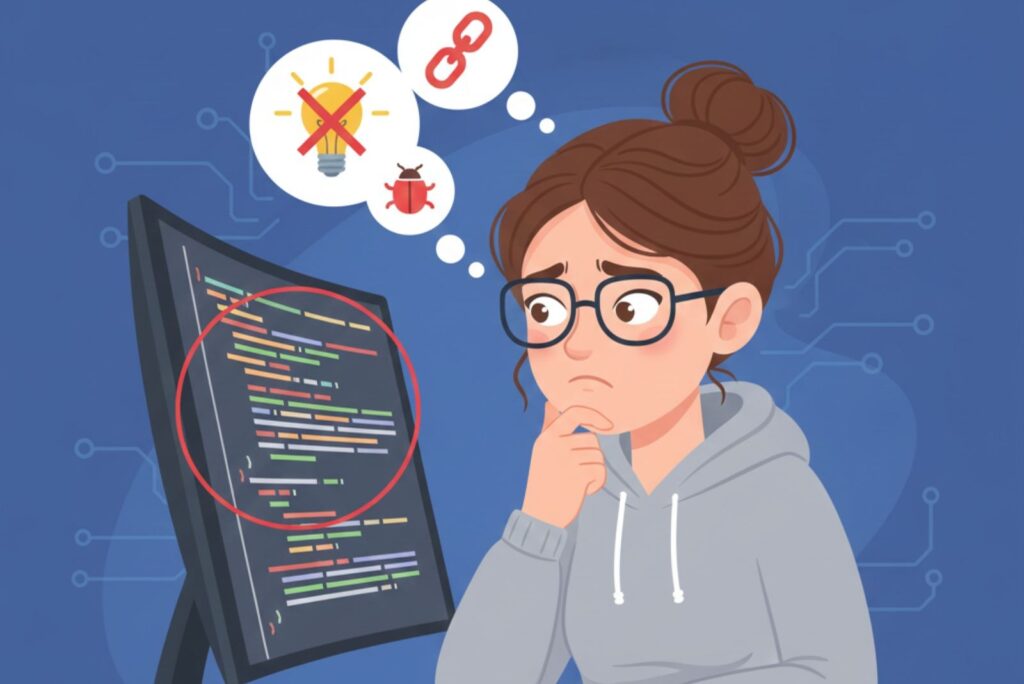
Vibe coding works best when you have a clear picture of what you want to build. If your idea is vague or keeps changing dramatically, the results will be disappointing. The AI needs clear instructions to produce good results.
The technology keeps improving, but it still makes mistakes. Sometimes it creates code that looks right but doesn’t work as expected. Users need to test everything carefully before relying on it.
Important limitations to remember:
- AI can’t replace human judgment completely
- Generated code might have security gaps
- Complex logic sometimes gets simplified incorrectly
- The AI works with patterns it has seen before
We always recommend following secure coding practices, even when using AI assistants (2). Thinking about safety from the beginning leads to better results. Simple habits like validating user input and protecting data make a big difference.
Getting Started Successfully
If you think vibe coding might help you, start with a small project. Choose something simple but useful. This gives you a chance to learn the process without pressure.
Describe your project clearly. Instead of saying “I need a website,” try “I need a one-page website with my contact information and a photo gallery.” Specific instructions get better results.
Expect to make several attempts. Your first description might not produce exactly what you want. Refine your instructions based on what you get, a process that reflects the core vibe coding fundamentals. This back-and-forth is normal and helps you learn how to communicate with the AI effectively.
Building Your Skills Over Time
Source: Alex Finn
As you get comfortable with basic projects, you can tackle more complex ideas. Each project teaches you something new about how to describe what you want. You’ll learn which details matter most to the AI.
Even non-technical users benefit from learning basic concepts. Understanding terms like “database,” “user interface,” and “API” helps you give better instructions. You don’t need to become an expert, but some vocabulary helps.
The goal isn’t to replace learning altogether. It’s to complement your natural creativity with tools that help you build faster. The combination of human imagination and AI implementation is powerful.
FAQs
What is vibe coding?
Vibe coding is when you tell an AI what you want to build, and it writes the code for you. You don’t need to know how to code. You just describe your idea in regular words. The AI turns your words into working software. It’s like having a helper who knows all the coding stuff. You focus on your idea. The AI handles the hard computer parts.
Who should use vibe coding?
Vibe coding works great for people who can’t code but have good ideas. Teachers, marketers, and small business owners love it. It’s also perfect for people who know coding but need to work fast. If you want to test ideas quickly, vibe coding helps. Anyone who needs a working tool fast should try it. You don’t need any special computer skills to start.
Can beginners learn coding with vibe coding?
Yes! Vibe coding helps new learners understand how programs work. You describe what you want, then look at the code the AI makes. This shows you real examples instead of just reading books. You learn by doing and seeing results right away.
It’s like having a teacher show you examples. You get to build real things while you learn. This makes learning more fun and faster.
What can I build with vibe coding?
You can build websites, simple apps, and helpful tools. Many people make landing pages for their business. Teachers create classroom games and learning tools. You can build appointment trackers or contact forms.
Photo galleries and personal websites work great too. Simple projects work best. Really complicated programs with many parts might be too hard. Start with something small and useful.
How long does vibe coding take?
Most simple projects take just a few hours to build. You can go from idea to working product in one day. Traditional coding might take weeks or months for the same thing. That’s why people love vibe coding for testing ideas fast. If your idea needs changes, you can update it quickly. The fast speed lets you try more ideas and be more creative.
Is vibe coding good for business?
Yes, especially for startups and small businesses. You can test new ideas without spending lots of money. Build a simple version first to see if customers like it. If they do, you can make it better later. This saves time and money. Many business owners use it for internal tools too. It helps teams work faster without hiring expensive programmers.
What are the limits of vibe coding?
Vibe coding can’t build everything perfectly. Very complicated systems still need human programmers. Banks and hospitals need special security that requires careful checking. The AI sometimes makes mistakes in the code.
You need to test everything before using it for real work. Complex ideas with lots of moving parts are harder. Simple, clear projects work much better than complicated ones.
Do I need to know any coding terms?
Not to start, but learning a few words helps you get better results. Words like “database,” “button,” and “form” are useful. The more clearly you describe what you want, the better the AI understands. You don’t need to be an expert. Just learn basic words as you go. Each project teaches you new terms naturally. Simple language works fine for most projects.
Can vibe coding replace real developers?
No, vibe coding can’t replace skilled programmers completely. It’s great for simple projects and quick tests. But big, important systems need human experts. Programmers understand how to fix problems and make things secure.
They can build complex features that AI struggles with. Think of vibe coding as a helpful tool, not a replacement. It works alongside programmers, not instead of them.
How do I start with vibe coding?
Pick a small, simple project that you actually need. Be very clear about what you want to build. Instead of “make a website,” say “make a page with my photo and contact info.” Try it and see what happens. If it’s not perfect, describe the changes you want. Keep trying until it works right. Start small, learn from each try, and build bigger projects as you improve.
Wrapping Who Is The Ideal User For Vibe Coding
The statistics show something important happening. Most vibe coding users aren’t professional developers. This means more people can create software than ever before. This expansion brings fresh perspectives to technology.
Startups are adopting these tools rapidly because speed matters in competitive markets. Younger developers are growing up with AI assistants as normal parts of their workflow. Even large companies are exploring how these tools can help their teams work smarter.
We see this as a positive development. It lets people focus on solving problems instead of getting stuck on technical details. It brings more diverse voices into software creation. This leads to tools that better serve human needs.
The door to building is open wider than ever. Whether you’re a complete beginner or an experienced developer looking to work faster, vibe coding offers new possibilities.
The best way to know if it fits your needs is to try it with a small project that excites you. That hands-on experience will tell you more than any article ever could.
And if you want to pair that experimentation with the skills to build software that’s not just fast but secure, the Secure Coding Practices Bootcamp is a great next step. It gives you practical, real-world secure coding techniques you can apply immediately.
References
- https://medium.com/data-science-collective/the-ai-vibe-coding-paradox-why-experience-matters-more-than-ever-33c343bfc2e1
- https://medium.com/@addyosmani/vibe-coding-is-not-the-same-as-ai-assisted-engineering-3f81088d5b98